Economics of Competitive Strategy (STR421)
Abel Garcia
Warren Pinto
Shankaranarayan (Sairam) Ramasubramanian
Nishant Saboo
$700,000.00
$12,000,000.00
$110,000,000.00
$-
$20,000,000.00
$40,000,000.00
$60,000,000.00
$80,000,000.00
$100,000,000.00
$120,000,000.00
2012 2013 2014
Instacart Revenues
Instacart Revenues ["Sales / Turnover"]
Up Up & Away!
Executive Summary
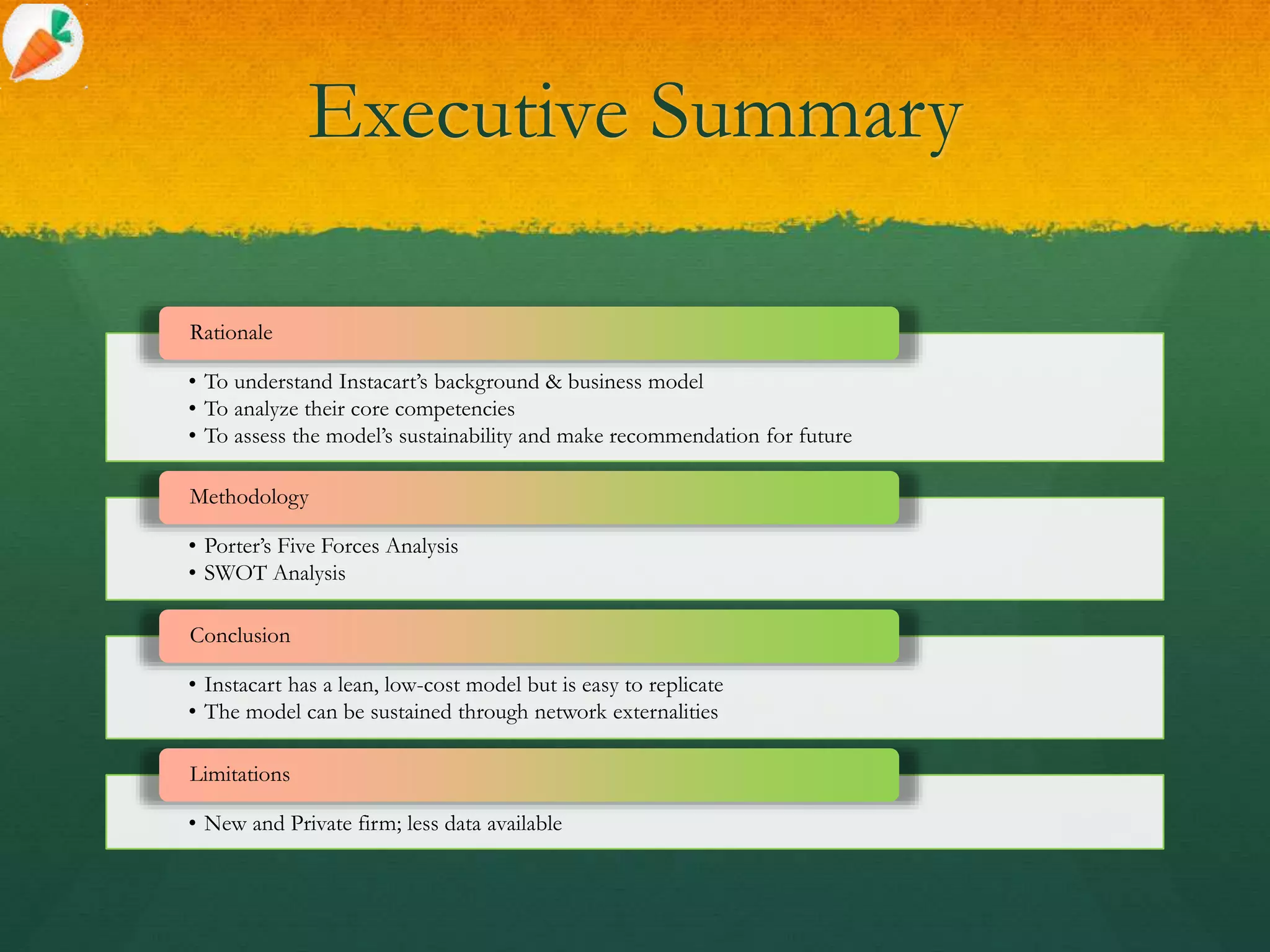
• To understand Instacart’s background & business model
• To analyze their core competencies
• To assess the model’s sustainability and make recommendation for future
Rationale
• Porter’s Five Forces Analysis
• SWOT Analysis
Methodology
• Instacart has a lean, low-cost model but is easy to replicate
• The model can be sustained through network externalities
Conclusion
• New and Private firm; less data available
Limitations
Industry Overview
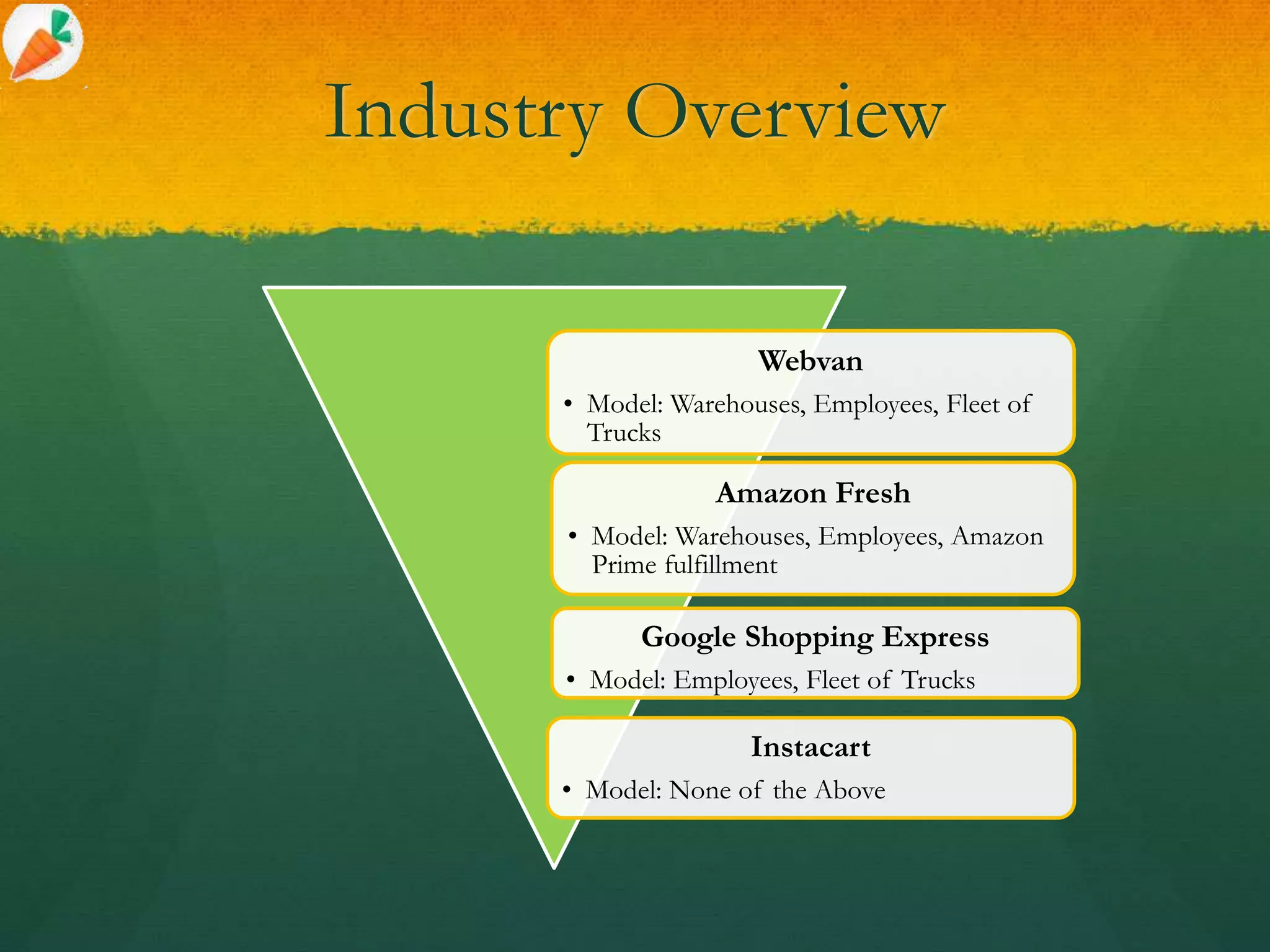
Webvan
• Model: Warehouses, Employees, Fleet of
Trucks
Amazon Fresh
• Model: Warehouses, Employees, Amazon
Prime fulfillment
Google Shopping Express
• Model: Employees, Fleet of Trucks
Instacart
• Model: None of the Above
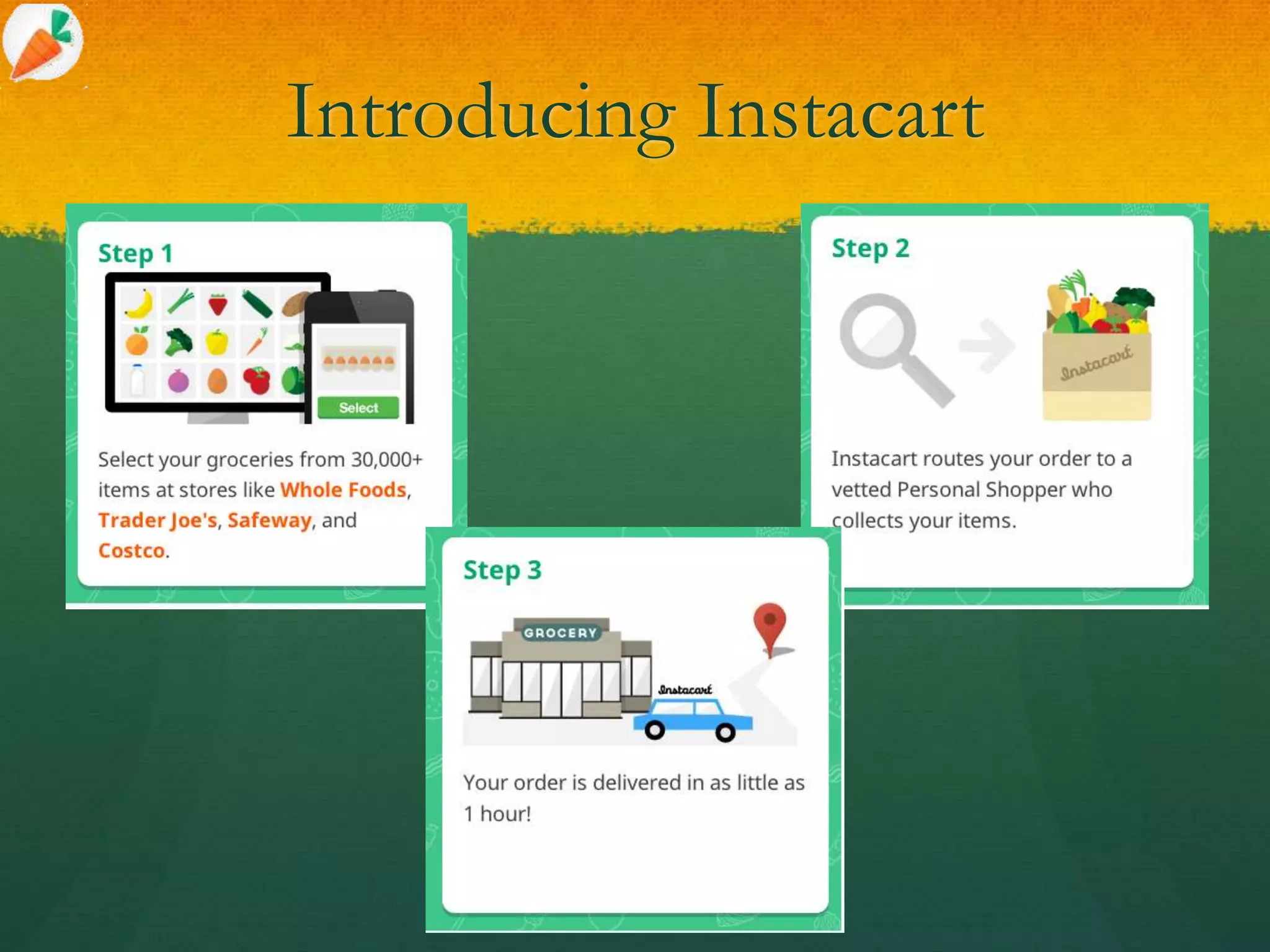
Introducing Instacart
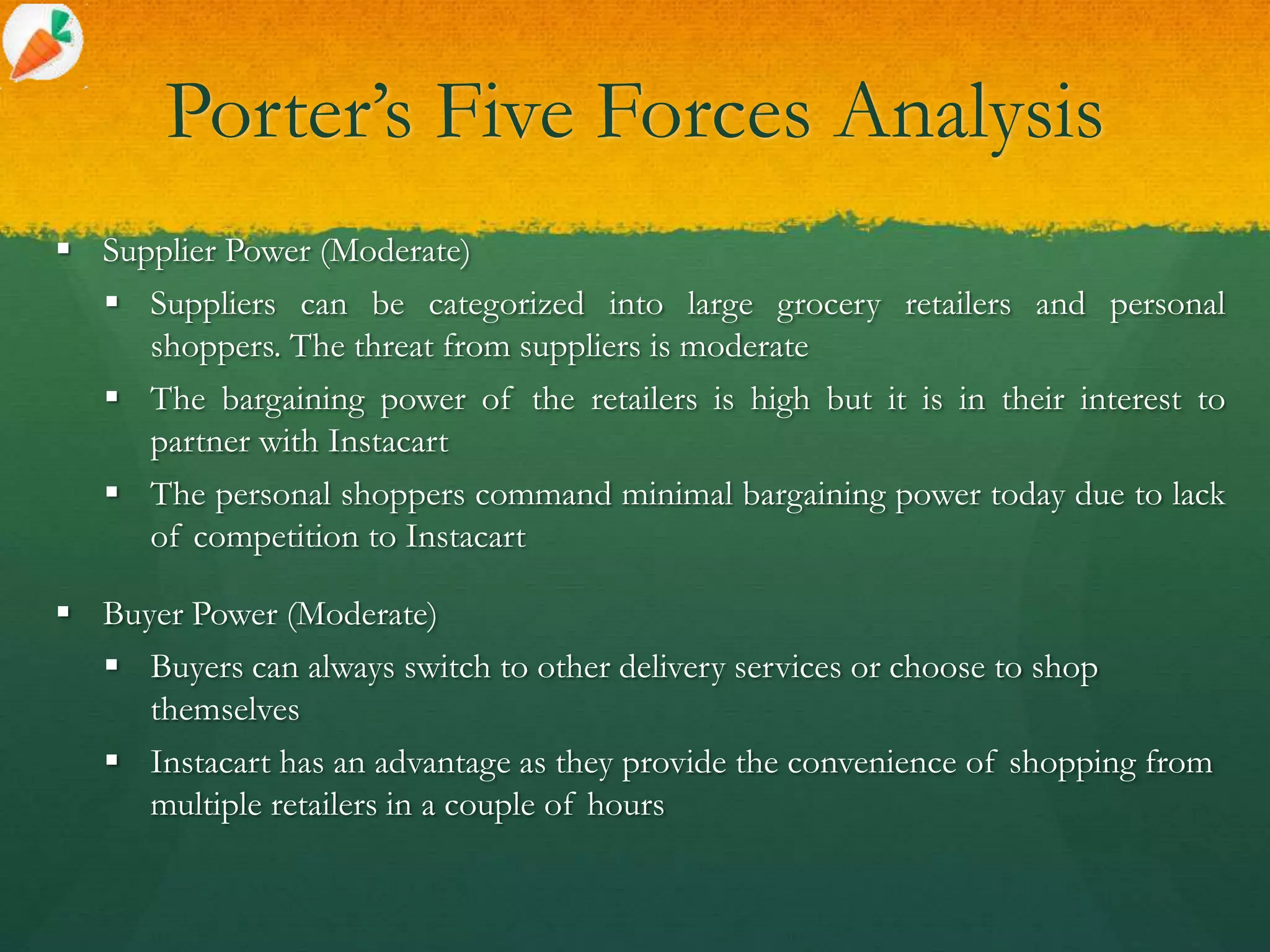
Porter’s Five Forces Analysis
 Supplier Power (Moderate)
 Suppliers can be categorized into large grocery retailers and personal
shoppers. The threat from suppliers is moderate
 The bargaining power of the retailers is high but it is in their interest to
partner with Instacart
 The personal shoppers command minimal bargaining power today due to lack
of competition to Instacart
 Buyer Power (Moderate)
 Buyers can always switch to other delivery services or choose to shop
themselves
 Instacart has an advantage as they provide the convenience of shopping from
multiple retailers in a couple of hours
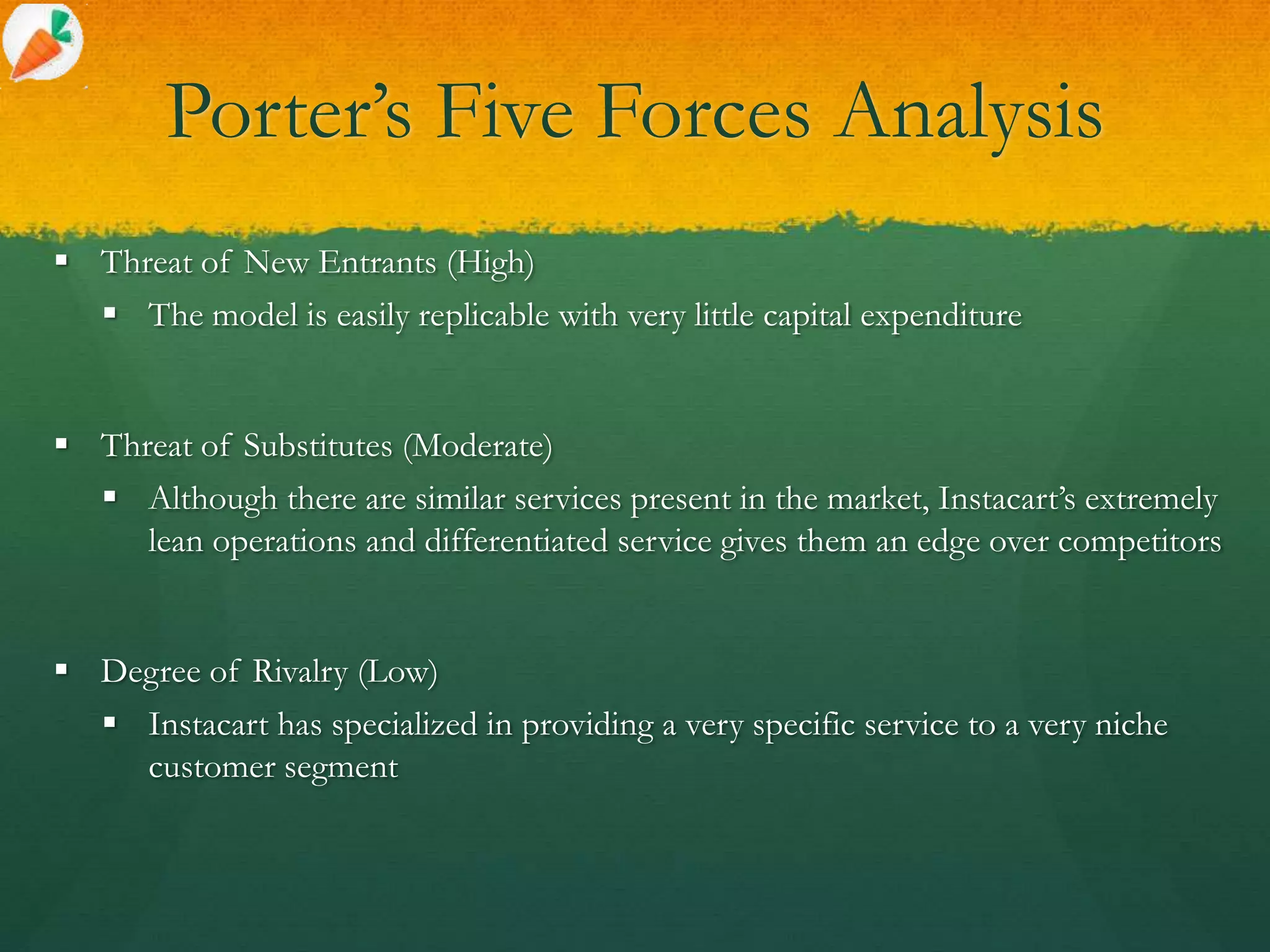
Porter’s Five Forces Analysis
 Threat of New Entrants (High)
 The model is easily replicable with very little capital expenditure
 Threat of Substitutes (Moderate)
 Although there are similar services present in the market, Instacart’s extremely
lean operations and differentiated service gives them an edge over competitors
 Degree of Rivalry (Low)
 Instacart has specialized in providing a very specific service to a very niche
customer segment
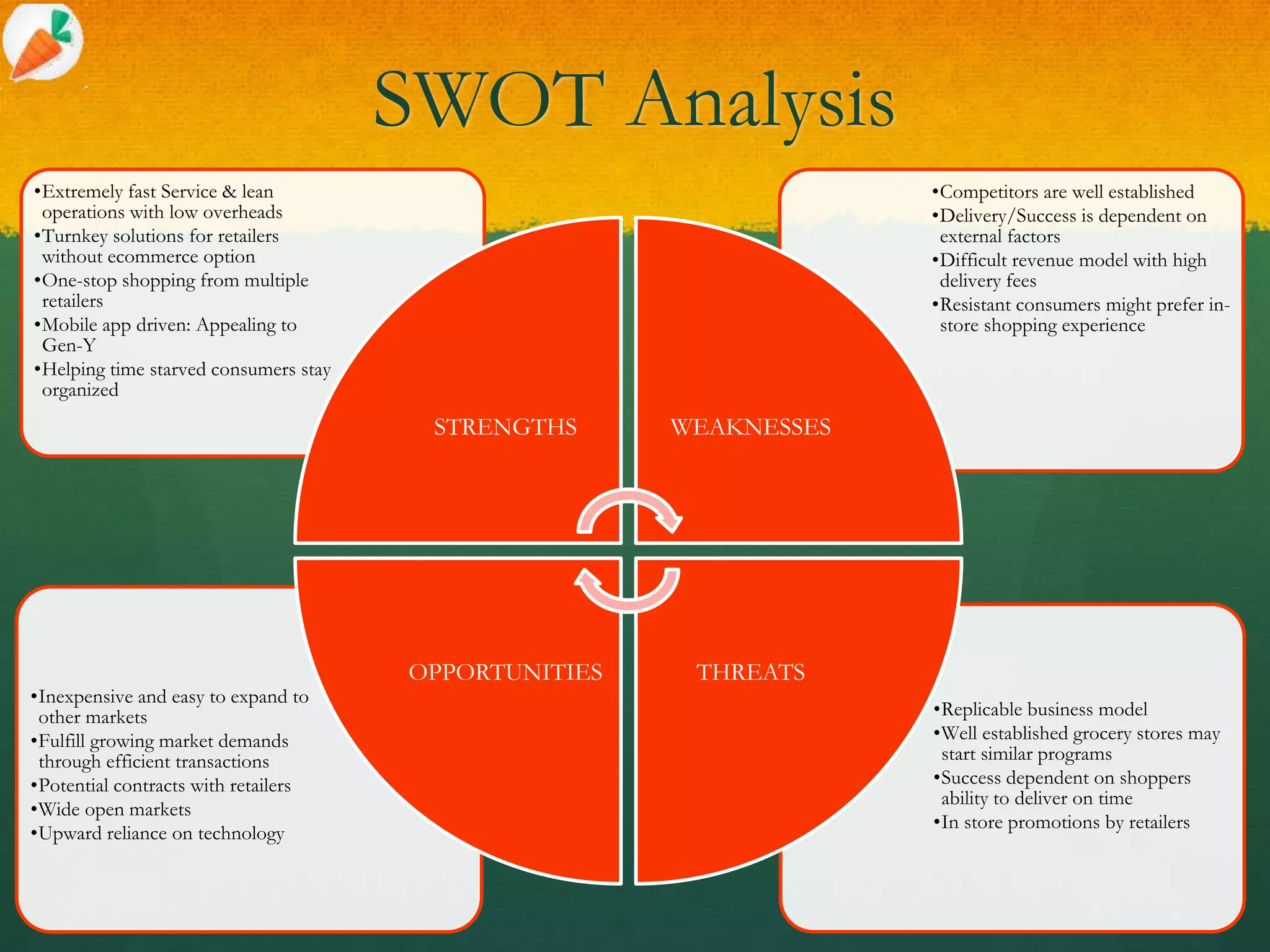
SWOT Analysis
•Replicable business model
•Well established grocery stores may
start similar programs
•Success dependent on shoppers
ability to deliver on time
•In store promotions by retailers
•Inexpensive and easy to expand to
other markets
•Fulfill growing market demands
through efficient transactions
•Potential contracts with retailers
•Wide open markets
•Upward reliance on technology
•Competitors are well established
•Delivery/Success is dependent on
external factors
•Difficult revenue model with high
delivery fees
•Resistant consumers might prefer in-
store shopping experience
•Extremely fast Service & lean
operations with low overheads
•Turnkey solutions for retailers
without ecommerce option
•One-stop shopping from multiple
retailers
•Mobile app driven: Appealing to
Gen-Y
•Helping time starved consumers stay
organized
STRENGTHS WEAKNESSES
THREATSOPPORTUNITIES
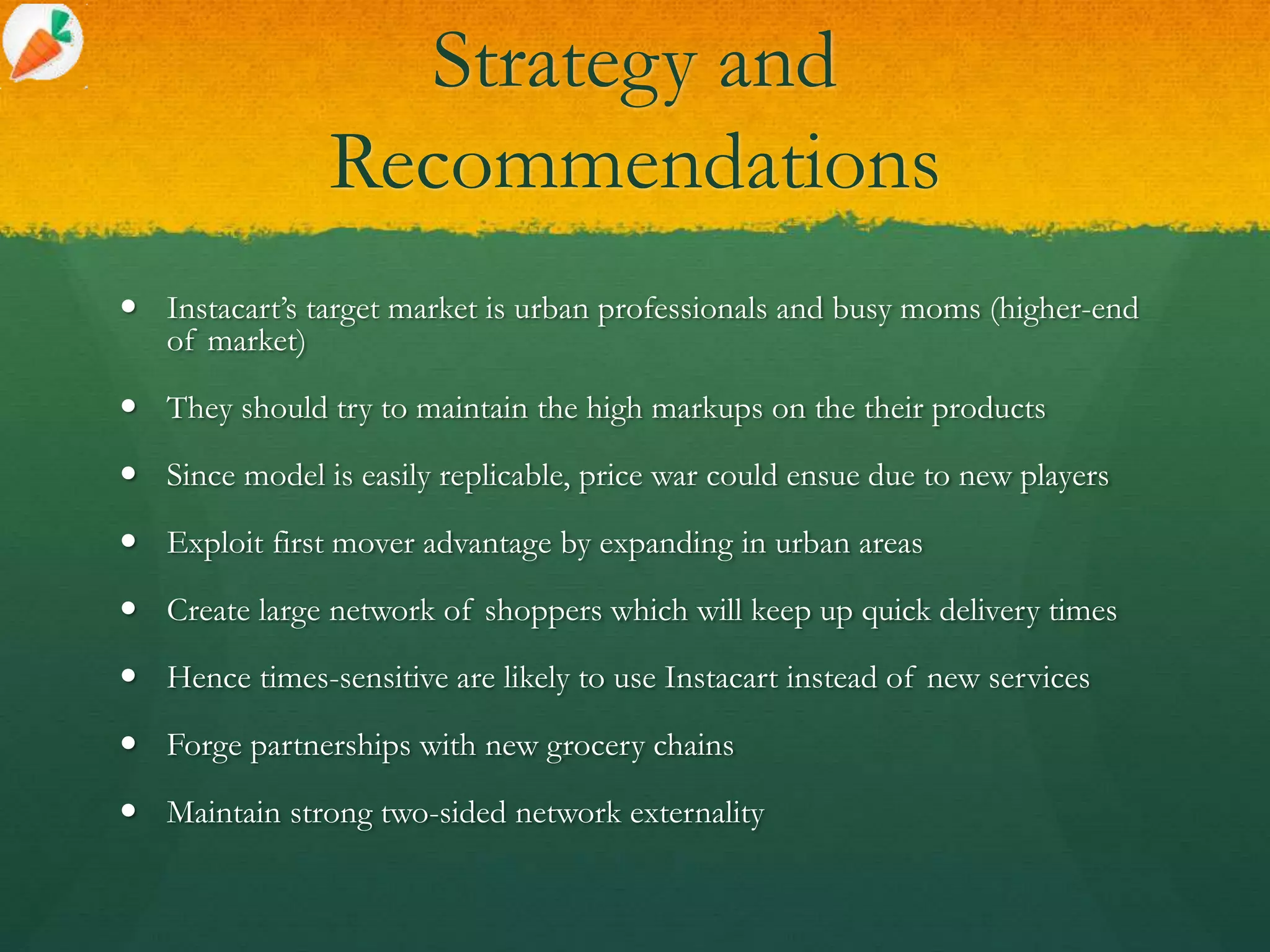
Strategy and
Recommendations
 Instacart’s target market is urban professionals and busy moms (higher-end
of market)
 They should try to maintain the high markups on the their products
 Since model is easily replicable, price war could ensue due to new players
 Exploit first mover advantage by expanding in urban areas
 Create large network of shoppers which will keep up quick delivery times
 Hence times-sensitive are likely to use Instacart instead of new services
 Forge partnerships with new grocery chains
 Maintain strong two-sided network externality
QUESTIONS

Instacart_Presentation[1]

  • 1.
    Economics of CompetitiveStrategy (STR421) Abel Garcia Warren Pinto Shankaranarayan (Sairam) Ramasubramanian Nishant Saboo
  • 2.
  • 3.
    Executive Summary • Tounderstand Instacart’s background & business model • To analyze their core competencies • To assess the model’s sustainability and make recommendation for future Rationale • Porter’s Five Forces Analysis • SWOT Analysis Methodology • Instacart has a lean, low-cost model but is easy to replicate • The model can be sustained through network externalities Conclusion • New and Private firm; less data available Limitations
  • 4.
    Industry Overview Webvan • Model:Warehouses, Employees, Fleet of Trucks Amazon Fresh • Model: Warehouses, Employees, Amazon Prime fulfillment Google Shopping Express • Model: Employees, Fleet of Trucks Instacart • Model: None of the Above
  • 5.
  • 6.
    Porter’s Five ForcesAnalysis  Supplier Power (Moderate)  Suppliers can be categorized into large grocery retailers and personal shoppers. The threat from suppliers is moderate  The bargaining power of the retailers is high but it is in their interest to partner with Instacart  The personal shoppers command minimal bargaining power today due to lack of competition to Instacart  Buyer Power (Moderate)  Buyers can always switch to other delivery services or choose to shop themselves  Instacart has an advantage as they provide the convenience of shopping from multiple retailers in a couple of hours
  • 7.
    Porter’s Five ForcesAnalysis  Threat of New Entrants (High)  The model is easily replicable with very little capital expenditure  Threat of Substitutes (Moderate)  Although there are similar services present in the market, Instacart’s extremely lean operations and differentiated service gives them an edge over competitors  Degree of Rivalry (Low)  Instacart has specialized in providing a very specific service to a very niche customer segment
  • 8.
    SWOT Analysis •Replicable businessmodel •Well established grocery stores may start similar programs •Success dependent on shoppers ability to deliver on time •In store promotions by retailers •Inexpensive and easy to expand to other markets •Fulfill growing market demands through efficient transactions •Potential contracts with retailers •Wide open markets •Upward reliance on technology •Competitors are well established •Delivery/Success is dependent on external factors •Difficult revenue model with high delivery fees •Resistant consumers might prefer in- store shopping experience •Extremely fast Service & lean operations with low overheads •Turnkey solutions for retailers without ecommerce option •One-stop shopping from multiple retailers •Mobile app driven: Appealing to Gen-Y •Helping time starved consumers stay organized STRENGTHS WEAKNESSES THREATSOPPORTUNITIES
  • 9.
    Strategy and Recommendations  Instacart’starget market is urban professionals and busy moms (higher-end of market)  They should try to maintain the high markups on the their products  Since model is easily replicable, price war could ensue due to new players  Exploit first mover advantage by expanding in urban areas  Create large network of shoppers which will keep up quick delivery times  Hence times-sensitive are likely to use Instacart instead of new services  Forge partnerships with new grocery chains  Maintain strong two-sided network externality
  • 10.