Insitu Sampling And Standard
Addition
-Megha Virupakshappa Baligar
-P01GX21E0053
INSITU SAMPLING
A significant disadvantage of grab samples and composite samples is the need to
remove a portion of the target population for analysis. As a result, neither type of
sample can be used to continuously monitor a time-dependent change in the
target population. In situ sampling, in which an analytical sensor is placed directly
in the target
population, allows continuous monitoring without removing individual grab
samples.
For example, the pH of a solution moving through an industrial
production line can
continually monitored by immersing a pH electrode within the solution’s flow.
INSITU APPLICATIONS
1. Water quality sampling
2. Soil and sediment
analysis
3. Environmental pollutants and monitoring
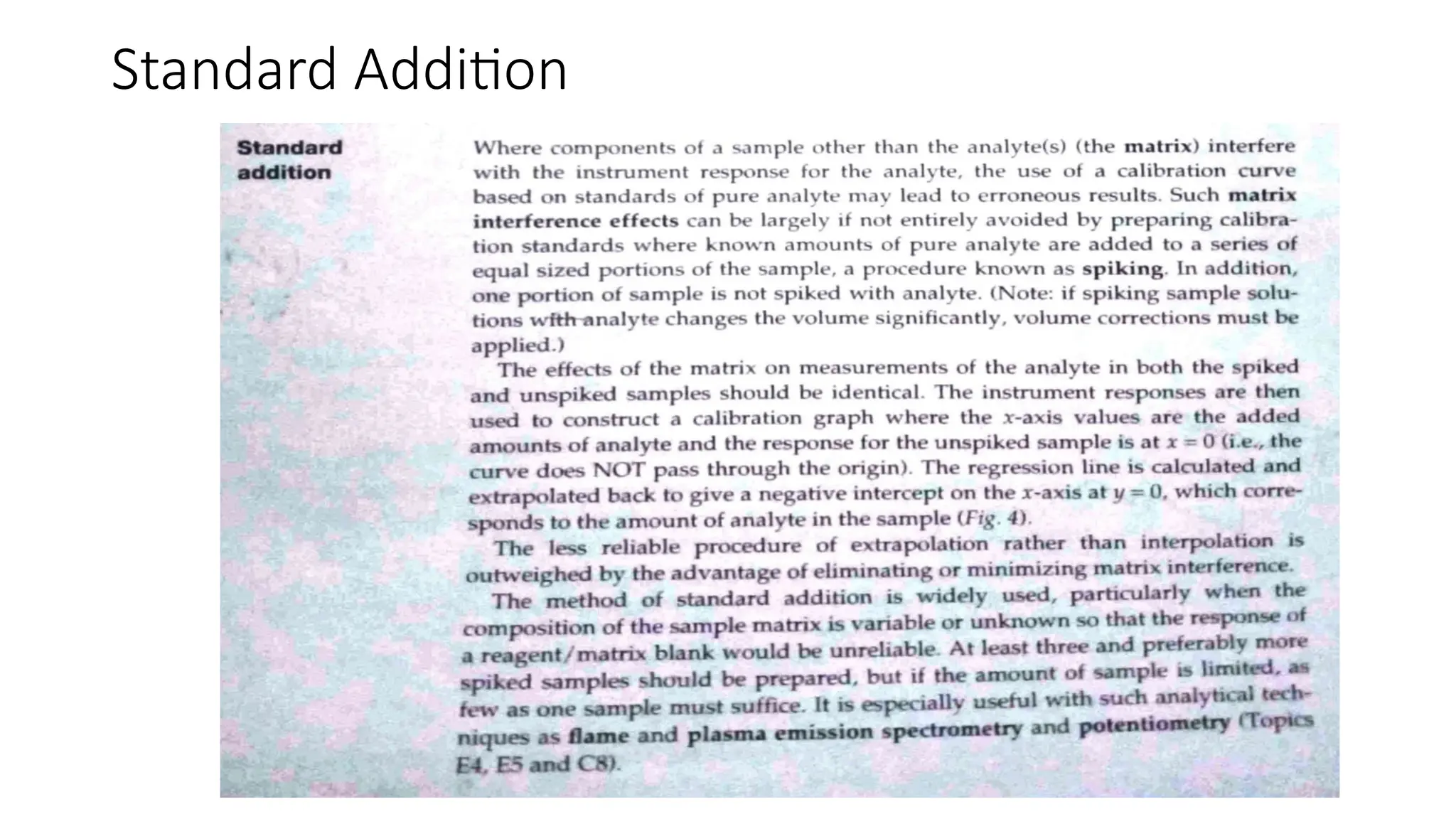
Standard Addition
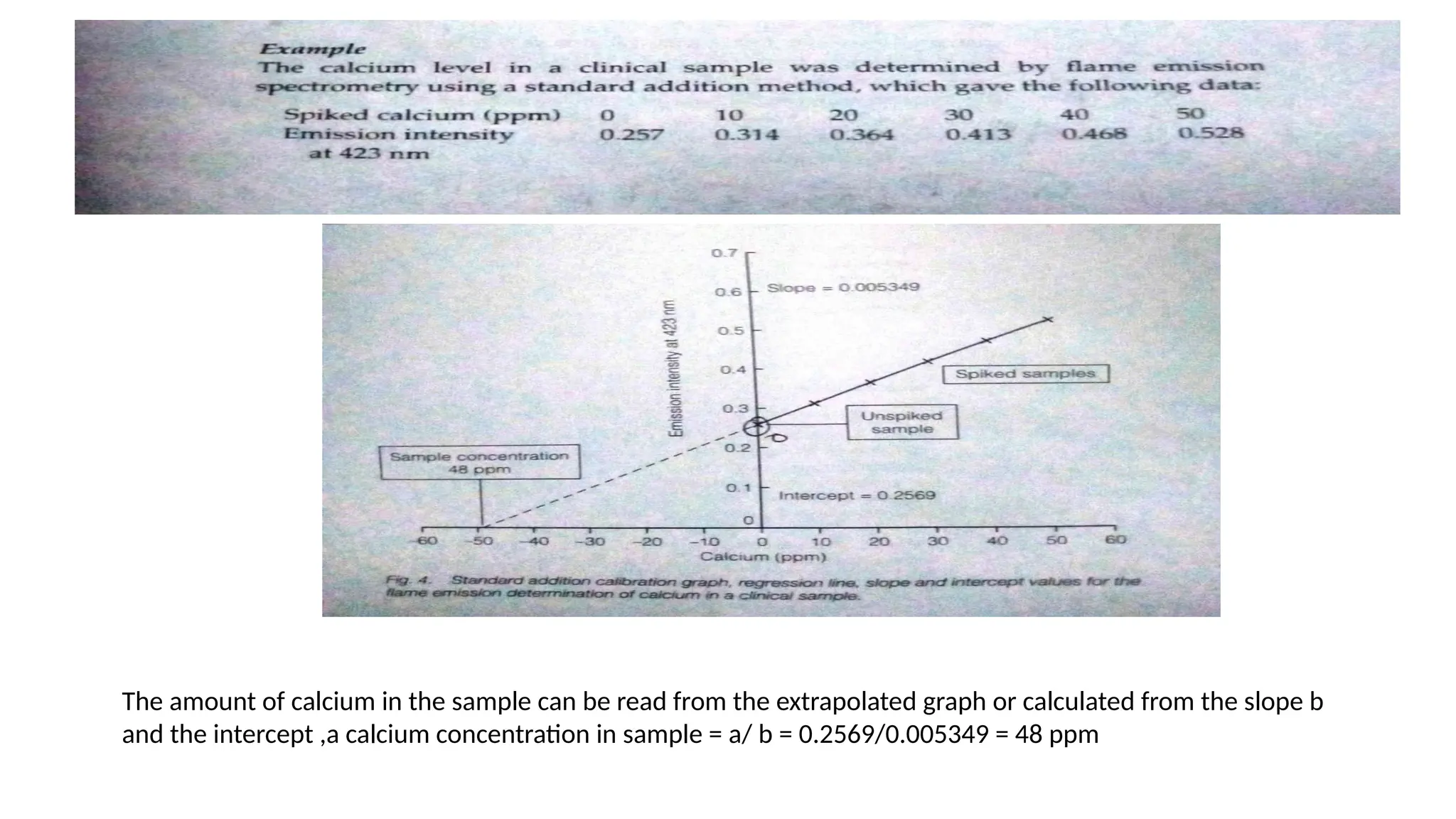
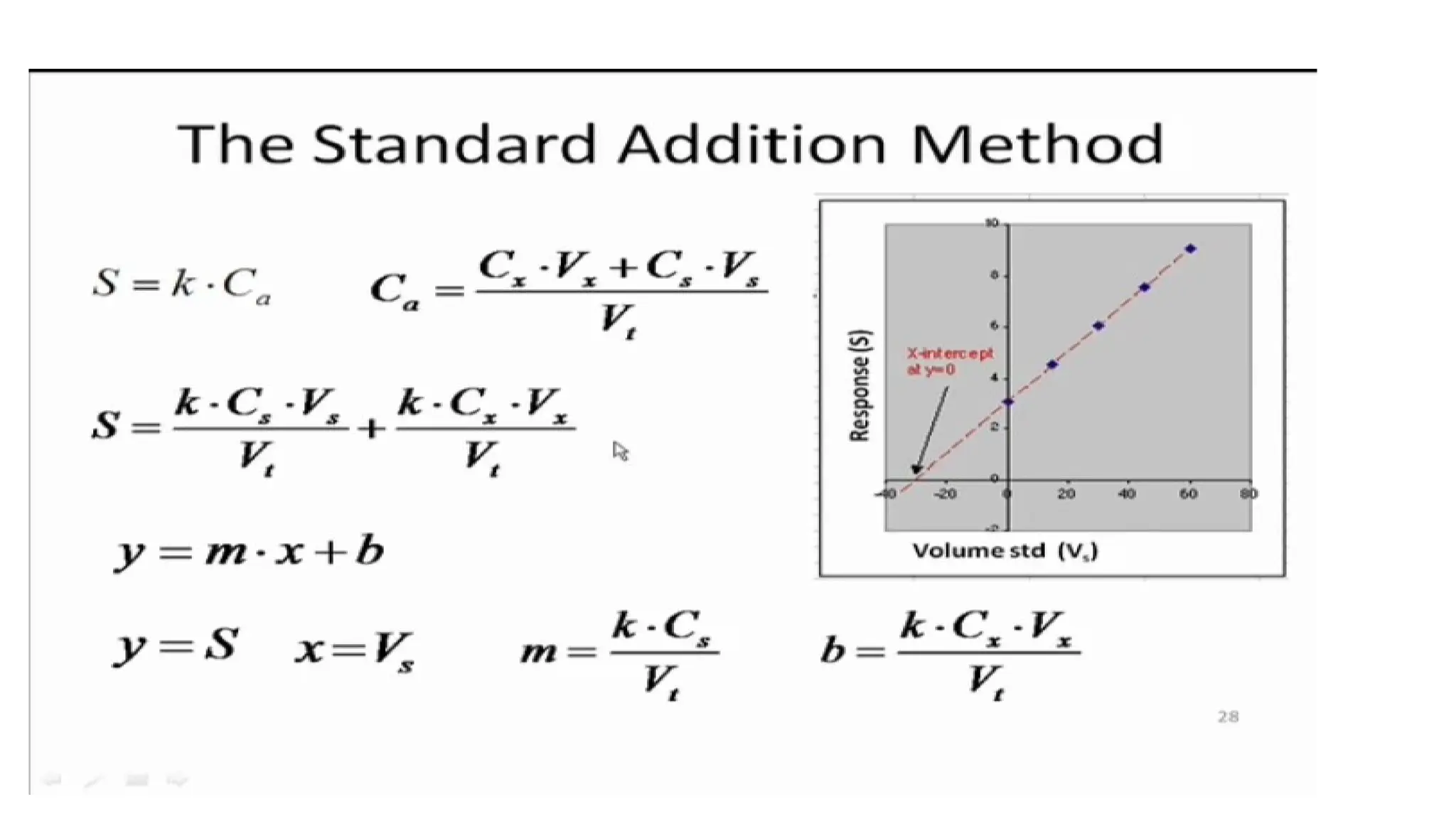
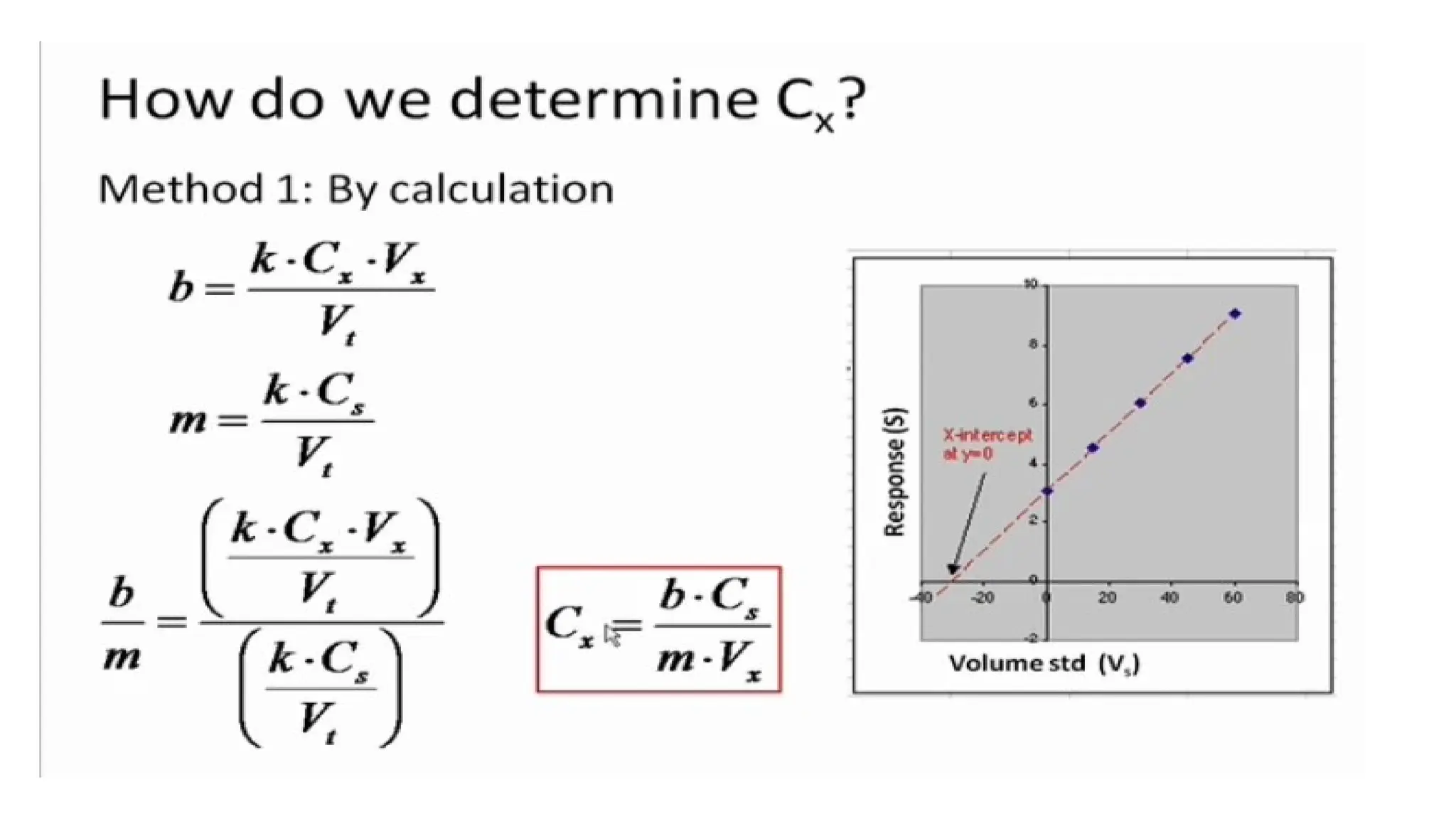
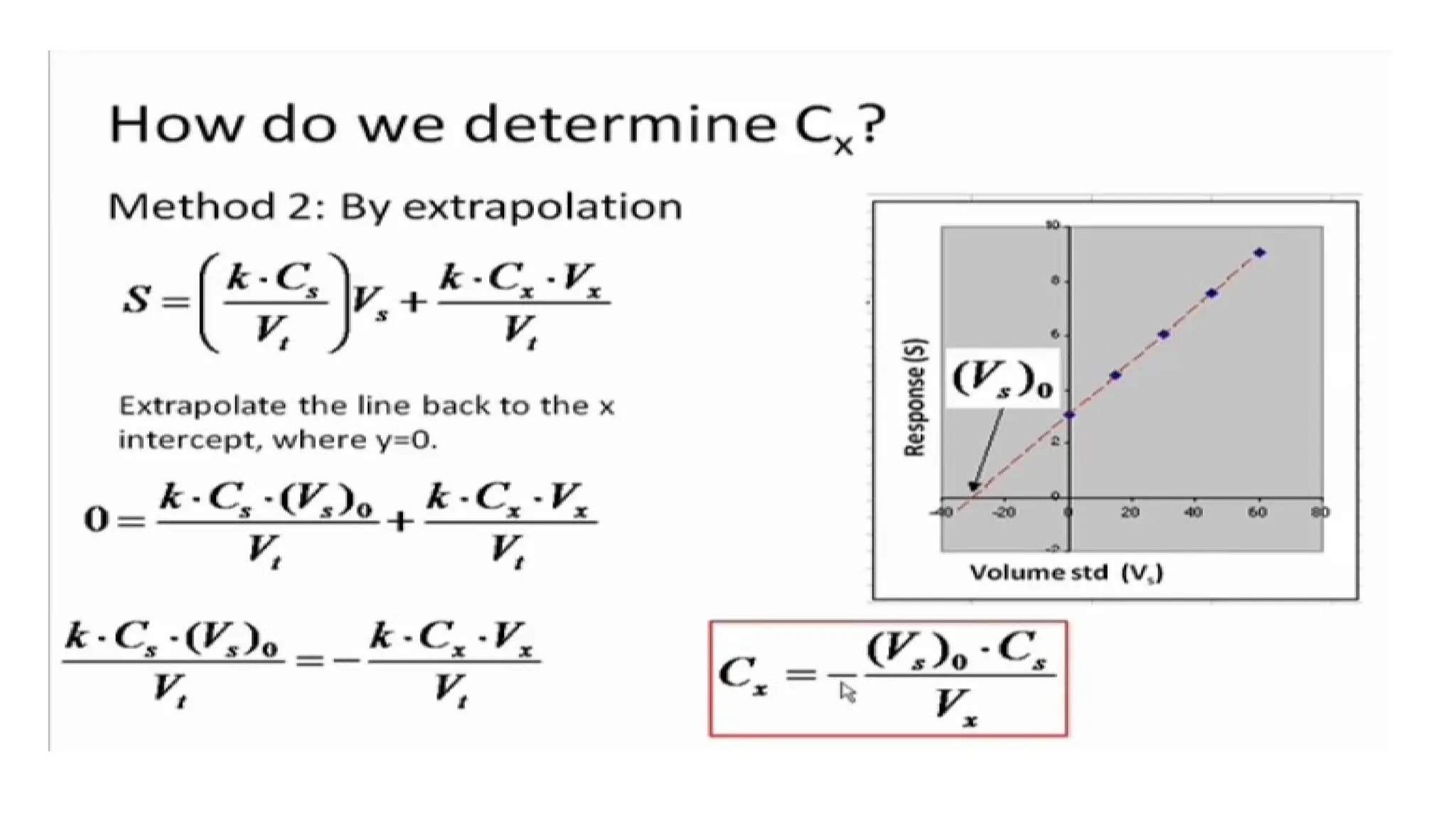
The amount of calcium in the sample can be read from the extrapolated graph or calculated from the slope b
and the intercept ,a calcium concentration in sample = a/ b = 0.2569/0.005349 = 48 ppm
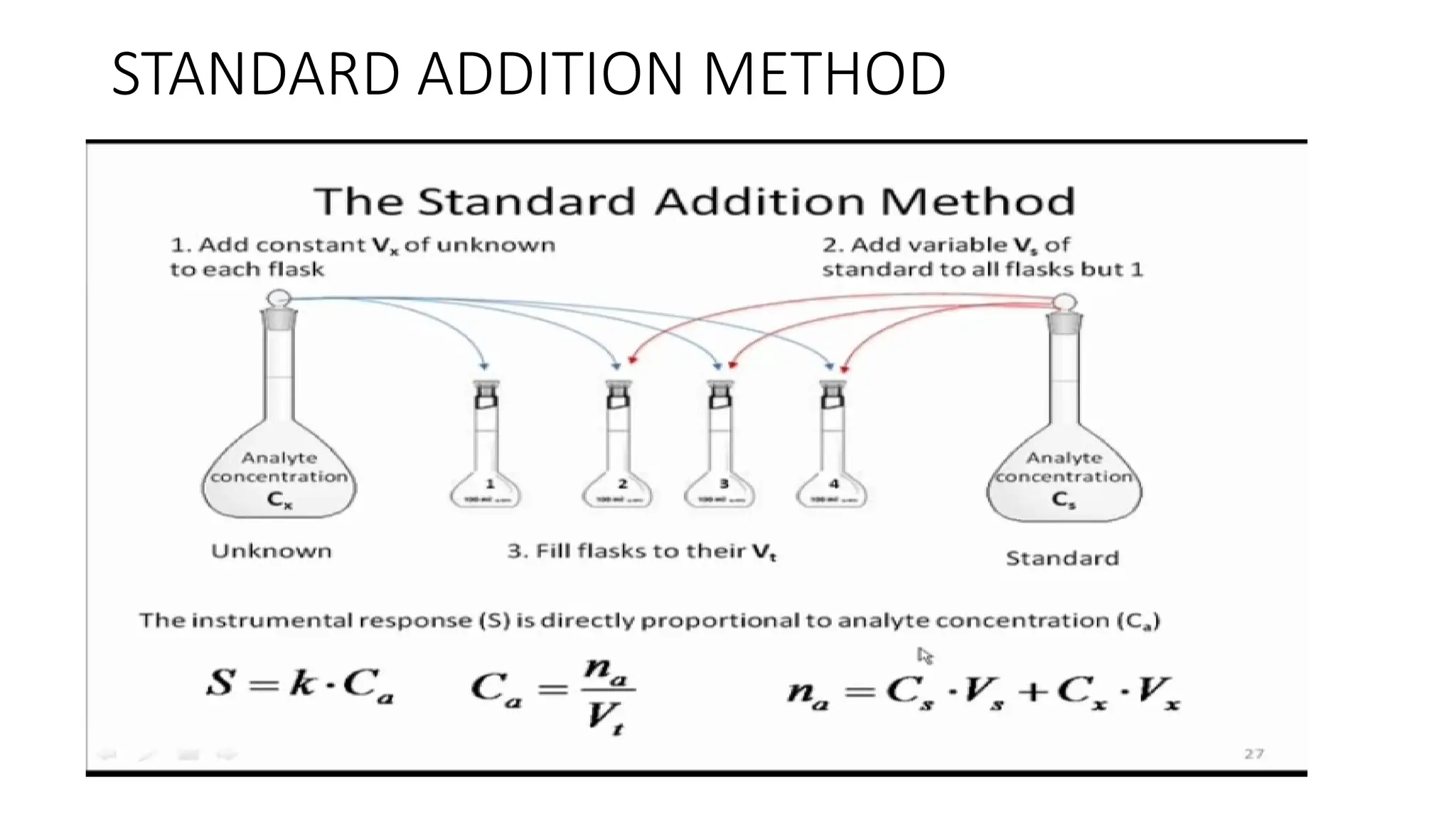
STANDARD ADDITION METHOD
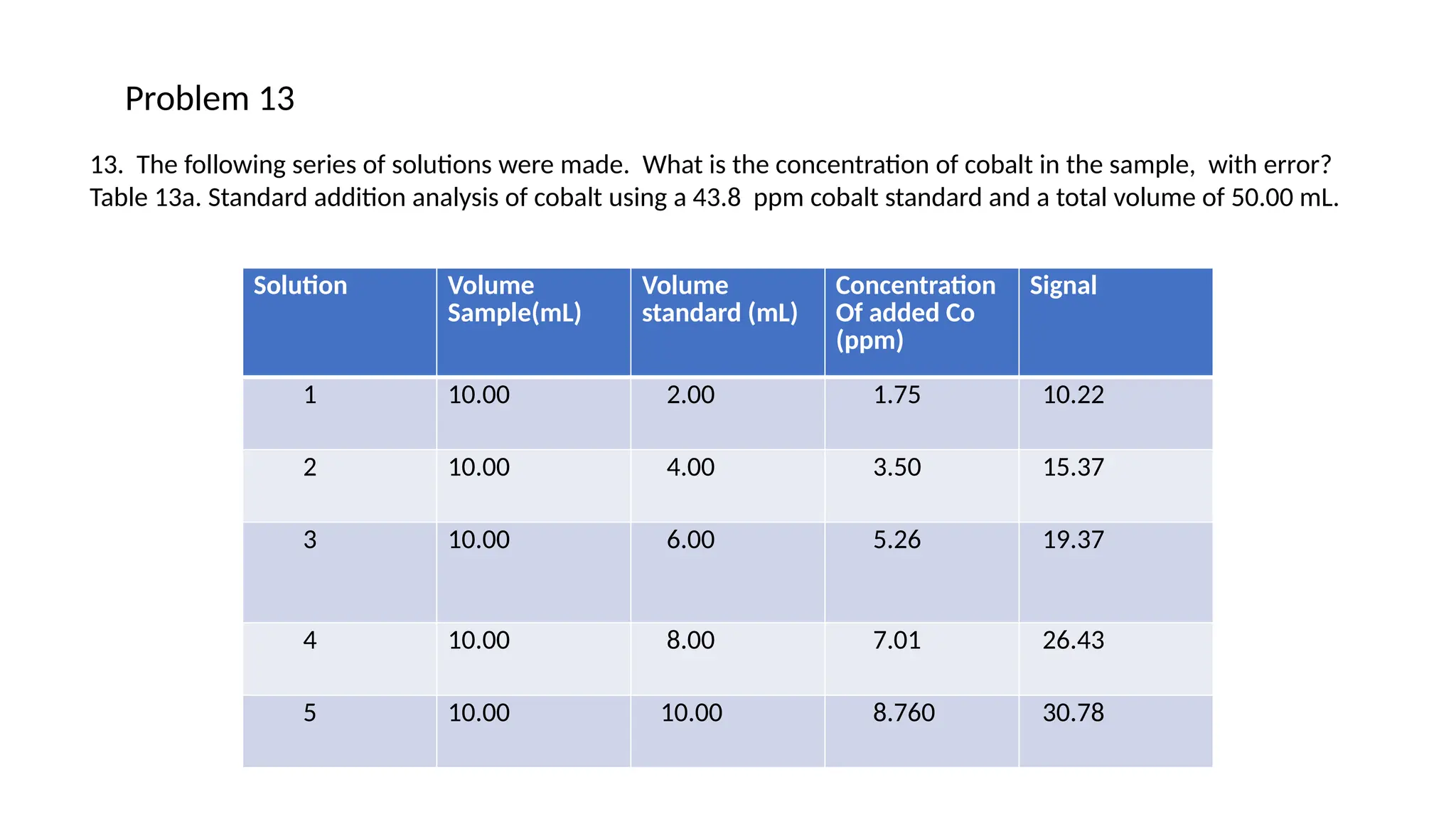
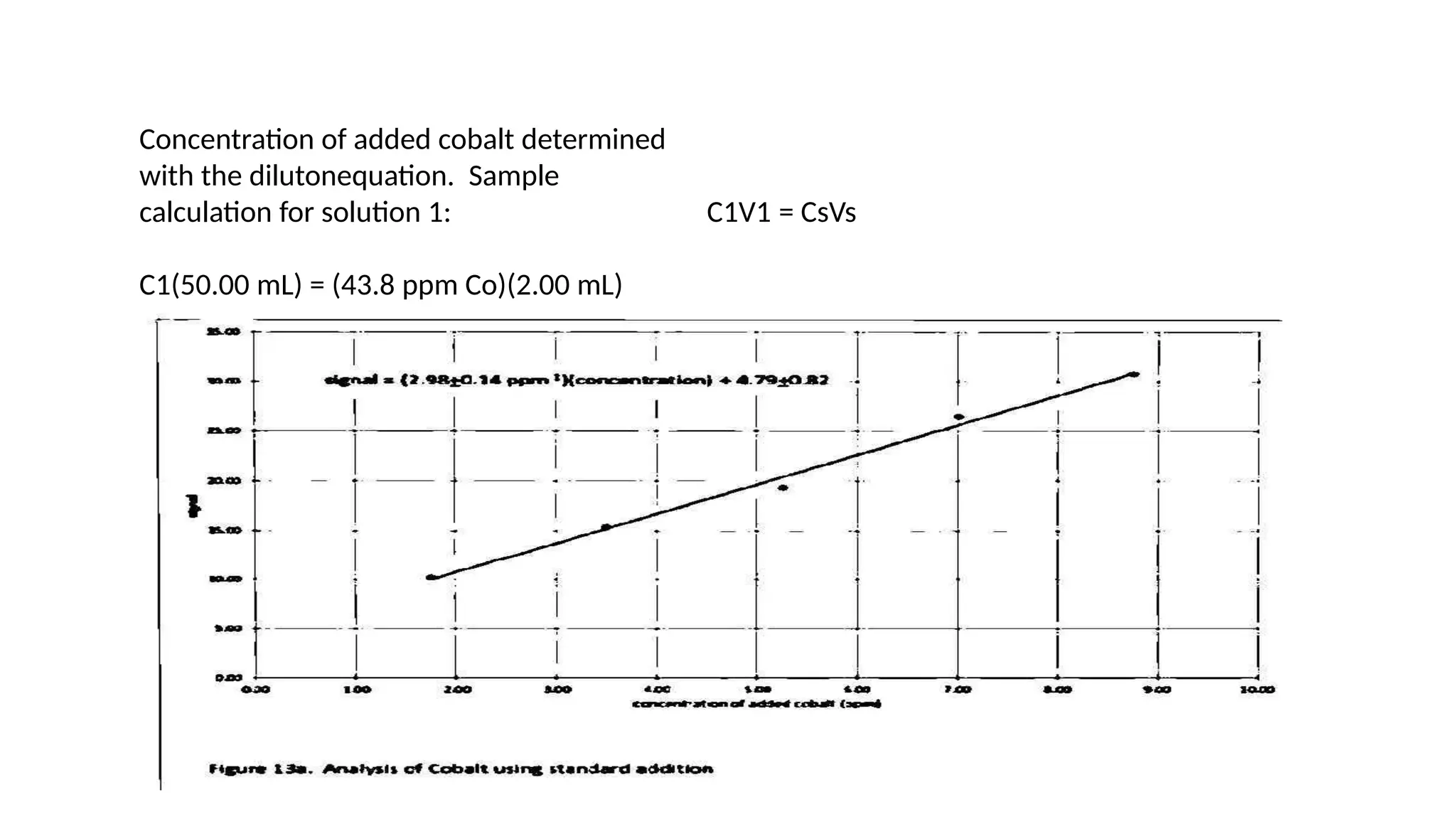
13. The following series of solutions were made. What is the concentration of cobalt in the sample, with error?
Table 13a. Standard addition analysis of cobalt using a 43.8 ppm cobalt standard and a total volume of 50.00 mL.
Solution Volume
Sample(mL)
Volume
standard (mL)
Concentration
Of added Co
(ppm)
Signal
1 10.00 2.00 1.75 10.22
2 10.00 4.00 3.50 15.37
3 10.00 6.00 5.26 19.37
4 10.00 8.00 7.01 26.43
5 10.00 10.00 8.760 30.78
Problem 13
Concentration of added cobalt determined
with the dilutonequation. Sample
calculation for solution 1: C1V1 = CsVs
C1(50.00 mL) = (43.8 ppm Co)(2.00 mL)
C1 = 1.75 ppm
Using the equation of the line to determine the concentration of cobalt contributed by the
sample, set the signal (Y) equal to zero to solve for the x intercept:
‐
0 = 2.98C + 4.79
-4.79 = 2.98C
-1.61 = c
Obviously, concentration cannot be negative. The concentration so the concentration of cobalt
due to the sample in the measured solutions is 1.61 ppm. However, this does not refer to the
original sample which what diluted when making the solutions to measure. Accounting for dilution:
CxVx = CVs
Cx (10.00 mL) = 1.61 ppm (50.00 ppm) Cx = 8.04 ppm
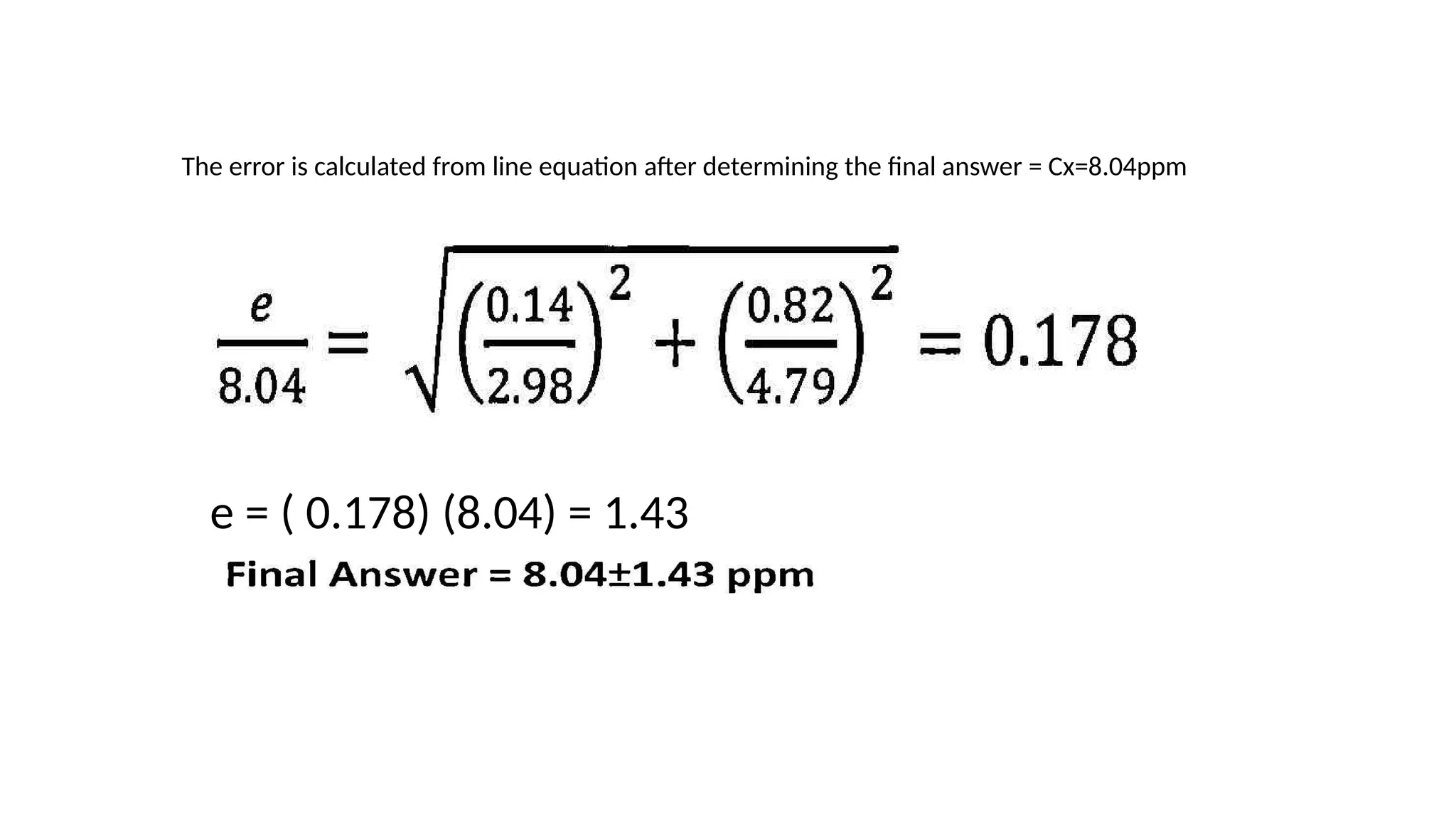
The error is calculated from line equation after determining the final answer = Cx=8.04ppm
e = ( 0.178) (8.04) = 1.43
Insitu sampling is a probe method in which the sample is analysed by inserting a probe

  • 1.
    Insitu Sampling AndStandard Addition -Megha Virupakshappa Baligar -P01GX21E0053
  • 2.
    INSITU SAMPLING A significantdisadvantage of grab samples and composite samples is the need to remove a portion of the target population for analysis. As a result, neither type of sample can be used to continuously monitor a time-dependent change in the target population. In situ sampling, in which an analytical sensor is placed directly in the target population, allows continuous monitoring without removing individual grab samples. For example, the pH of a solution moving through an industrial production line can continually monitored by immersing a pH electrode within the solution’s flow.
  • 3.
    INSITU APPLICATIONS 1. Waterquality sampling 2. Soil and sediment analysis 3. Environmental pollutants and monitoring
  • 4.
  • 5.
    The amount ofcalcium in the sample can be read from the extrapolated graph or calculated from the slope b and the intercept ,a calcium concentration in sample = a/ b = 0.2569/0.005349 = 48 ppm
  • 6.
  • 10.
    13. The followingseries of solutions were made. What is the concentration of cobalt in the sample, with error? Table 13a. Standard addition analysis of cobalt using a 43.8 ppm cobalt standard and a total volume of 50.00 mL. Solution Volume Sample(mL) Volume standard (mL) Concentration Of added Co (ppm) Signal 1 10.00 2.00 1.75 10.22 2 10.00 4.00 3.50 15.37 3 10.00 6.00 5.26 19.37 4 10.00 8.00 7.01 26.43 5 10.00 10.00 8.760 30.78 Problem 13
  • 11.
    Concentration of addedcobalt determined with the dilutonequation. Sample calculation for solution 1: C1V1 = CsVs C1(50.00 mL) = (43.8 ppm Co)(2.00 mL) C1 = 1.75 ppm
  • 12.
    Using the equationof the line to determine the concentration of cobalt contributed by the sample, set the signal (Y) equal to zero to solve for the x intercept: ‐ 0 = 2.98C + 4.79 -4.79 = 2.98C -1.61 = c Obviously, concentration cannot be negative. The concentration so the concentration of cobalt due to the sample in the measured solutions is 1.61 ppm. However, this does not refer to the original sample which what diluted when making the solutions to measure. Accounting for dilution: CxVx = CVs Cx (10.00 mL) = 1.61 ppm (50.00 ppm) Cx = 8.04 ppm
  • 13.
    The error iscalculated from line equation after determining the final answer = Cx=8.04ppm e = ( 0.178) (8.04) = 1.43