Initial PsychiatricInitial Psychiatric
AssessmentsAssessments
Teresa Chahine MSN, PMHNPTeresa Chahine MSN, PMHNP
Oakland University, School of NursingOakland University, School of Nursing
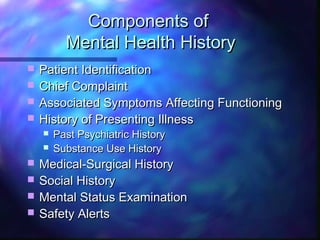
Components ofComponents of
Mental Health HistoryMental Health History
 Patient IdentificationPatient Identification
 Chief ComplaintChief Complaint
 Associated Symptoms Affecting FunctioningAssociated Symptoms Affecting Functioning
 History of Presenting IllnessHistory of Presenting Illness
 Past Psychiatric HistoryPast Psychiatric History
 Substance Use HistorySubstance Use History
 Medical-Surgical HistoryMedical-Surgical History
 Social HistorySocial History
 Mental Status ExaminationMental Status Examination
 Safety AlertsSafety Alerts
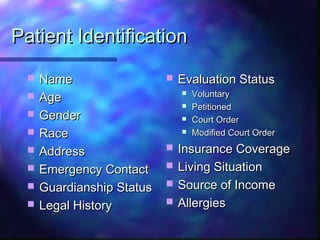
Patient IdentificationPatient Identification
 NameName
 AgeAge
 GenderGender
 RaceRace
 AddressAddress
 Emergency ContactEmergency Contact
 Guardianship StatusGuardianship Status
 Legal HistoryLegal History
 Evaluation StatusEvaluation Status
 VoluntaryVoluntary
 PetitionedPetitioned
 Court OrderCourt Order
 Modified Court OrderModified Court Order
 Insurance CoverageInsurance Coverage
 Living SituationLiving Situation
 Source of IncomeSource of Income
 AllergiesAllergies
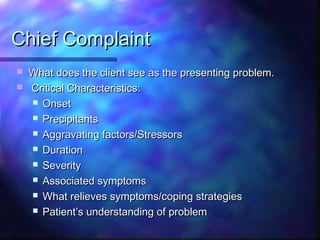
Chief ComplaintChief Complaint
 What does the client see as the presenting problem.What does the client see as the presenting problem.
 Critical Characteristics:Critical Characteristics:
 OnsetOnset
 PrecipitantsPrecipitants
 Aggravating factors/StressorsAggravating factors/Stressors
 DurationDuration
 SeveritySeverity
 Associated symptomsAssociated symptoms
 What relieves symptoms/coping strategiesWhat relieves symptoms/coping strategies
 Patient’s understanding of problemPatient’s understanding of problem
Associated SymptomsAssociated Symptoms
 Self Harm*Self Harm*
 Aggression/AgitationAggression/Agitation
 Violence towards othersViolence towards others
 Impulsivity*Impulsivity*
 Hopelessness*Hopelessness*
 HelplessnessHelplessness
 Activities of Daily LivingActivities of Daily Living
 Social CircumstancesSocial Circumstances
 Work PerformanceWork Performance
 Anxiety*Anxiety*
 Panic Attacks*Panic Attacks*
 AnhedoniaAnhedonia
 PsychosisPsychosis
 Emotional StateEmotional State
 Coping StrategiesCoping Strategies
 AppetiteAppetite
 Sleep DisturbanceSleep Disturbance
 Global Insomnia*Global Insomnia*
* These symptoms are directly correlated to suicide risk factors.
Level of FunctioningLevel of Functioning
Activities of Daily LivingActivities of Daily Living
 Ability to bathe, etcAbility to bathe, etc
 Adhere to treatmentAdhere to treatment
 Attend to houseworkAttend to housework
 Maintain EmploymentMaintain Employment
 HobbiesHobbies
 SocializationSocialization
AppearanceAppearance
 Physical CharacteristicsPhysical Characteristics
 DressDress
 GroomingGrooming
 HygieneHygiene
 Eye ContactEye Contact
 Facial ExpressionFacial Expression
History of Presenting IllnessHistory of Presenting Illness
Past Psychiatric HxPast Psychiatric Hx
 Current TreatmentCurrent Treatment
 Current MedicationsCurrent Medications
 Onset of illnessOnset of illness
 HospitalizationsHospitalizations
 History of AdherenceHistory of Adherence
 History of Trauma:History of Trauma:
 Child AbuseChild Abuse
 RapeRape
 Domestic ViolenceDomestic Violence
 Family Psychiatric HistoryFamily Psychiatric History
Past Addiction HxPast Addiction Hx
 Current UseCurrent Use
 Current TreatmentCurrent Treatment
 History of WithdrawalsHistory of Withdrawals
 DTsDTs
 SeizuresSeizures
 Onset of UseOnset of Use
 Periods of SobrietyPeriods of Sobriety
 History of TreatmentHistory of Treatment
 Family Addiction HistoryFamily Addiction History
Medical-Surgical HistoryMedical-Surgical History
 Serious or Chronic IllnessesSerious or Chronic Illnesses
 Current MedicationsCurrent Medications
 Recent HospitalizationsRecent Hospitalizations
 SurgeriesSurgeries
 InjuriesInjuries
 AllergiesAllergies
Social HistorySocial History
 Living SituationLiving Situation
 RelationshipsRelationships
 Marital StatusMarital Status
 Current RelationshipCurrent Relationship
 Longest RelationshipLongest Relationship
 Family StructureFamily Structure
 Support SystemSupport System
 EducationalEducational
 Occupation/Work HistoryOccupation/Work History
 Financial SupportFinancial Support
 Ethnic or Spiritual Issues (if apply)Ethnic or Spiritual Issues (if apply)
Mental Status ExamMental Status Exam
 LethalityLethality
 Self HarmSelf Harm
 Assaultive BehaviorAssaultive Behavior
 Destruction to PropertyDestruction to Property
 Mood & AffectMood & Affect
 Speech PatternSpeech Pattern
 Thought PatternThought Pattern
 OrientationOrientation
 Thought ContentThought Content
 MemoryMemory
 HallucinationsHallucinations
 DelusionsDelusions
 InsightInsight
 JudgmentJudgment
Please give specific examples and quote client’s statements.
Safety AlertsSafety Alerts
 Medical conditions requiringMedical conditions requiring immediateimmediate
treatment.treatment.
 Active alcohol or benzodiazapine intoxicationActive alcohol or benzodiazapine intoxication
or withdrawal.or withdrawal.
 Actively psychotic with commandActively psychotic with command
hallucinations.hallucinations.
 Actively suicidal or homicidal with intent.Actively suicidal or homicidal with intent.
 Dependent children suspected of beingDependent children suspected of being
neglected or abused by client.neglected or abused by client.
Special Considerations:Special Considerations:
Pre-teen and TeensPre-teen and Teens
Ages 8-17Ages 8-17
 Suicidal AssessmentSuicidal Assessment
 Substance Abuse/DependenceSubstance Abuse/Dependence
 Attention-Deficit and DisruptiveAttention-Deficit and Disruptive
Behavior DisordersBehavior Disorders
 Tic DisordersTic Disorders
 Communication DisordersCommunication Disorders
 Learning/Developmental DisordersLearning/Developmental Disorders
 Elimination DisordersElimination Disorders
ImpressionImpression
 Summary of data which supports theSummary of data which supports the
documented diagnoses.documented diagnoses.
 Axis I through VAxis I through V
 Severity of illness and intensity of care.Severity of illness and intensity of care.
 Plan of carePlan of care
 Nursing interventions and outcomes.Nursing interventions and outcomes.
 Disposition (referrals)Disposition (referrals)
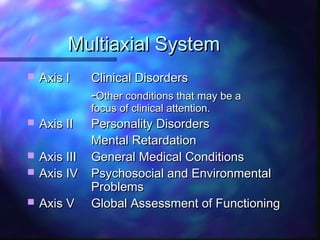
Multiaxial SystemMultiaxial System
 Axis IAxis I Clinical DisordersClinical Disorders
--Other conditions that may be aOther conditions that may be a
focus of clinical attention.focus of clinical attention.
 Axis IIAxis II Personality DisordersPersonality Disorders
Mental RetardationMental Retardation
 Axis IIIAxis III General Medical ConditionsGeneral Medical Conditions
 Axis IVAxis IV Psychosocial and EnvironmentalPsychosocial and Environmental
ProblemsProblems
 Axis VAxis V Global Assessment of FunctioningGlobal Assessment of Functioning
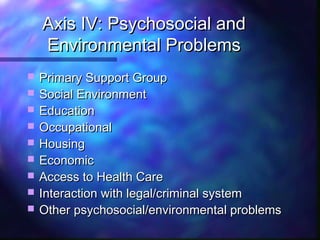
Axis IV: Psychosocial andAxis IV: Psychosocial and
Environmental ProblemsEnvironmental Problems
 Primary Support GroupPrimary Support Group
 Social EnvironmentSocial Environment
 EducationEducation
 OccupationalOccupational
 HousingHousing
 EconomicEconomic
 Access to Health CareAccess to Health Care
 Interaction with legal/criminal systemInteraction with legal/criminal system
 Other psychosocial/environmental problemsOther psychosocial/environmental problems
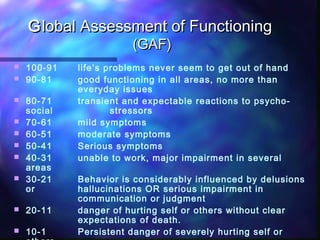
GGlobal Assessment of Functioninglobal Assessment of Functioning
(GAF)(GAF)
 100-91 life’s problems never seem to get out of hand
 90-81 good functioning in all areas, no more than
everyday issues
 80-71 transient and expectable reactions to psycho-
social stressors
 70-61 mild symptoms
 60-51 moderate symptoms
 50-41 Serious symptoms
 40-31 unable to work, major impairment in several
areas
 30-21 Behavior is considerably influenced by delusions
or hallucinations OR serious impairment in
communication or judgment
 20-11 danger of hurting self or others without clear
expectations of death.
 10-1 Persistent danger of severely hurting self or
EndEnd

Initial psychiatric assessment

  • 1.
    Initial PsychiatricInitial Psychiatric AssessmentsAssessments TeresaChahine MSN, PMHNPTeresa Chahine MSN, PMHNP Oakland University, School of NursingOakland University, School of Nursing
  • 2.
    Components ofComponents of MentalHealth HistoryMental Health History  Patient IdentificationPatient Identification  Chief ComplaintChief Complaint  Associated Symptoms Affecting FunctioningAssociated Symptoms Affecting Functioning  History of Presenting IllnessHistory of Presenting Illness  Past Psychiatric HistoryPast Psychiatric History  Substance Use HistorySubstance Use History  Medical-Surgical HistoryMedical-Surgical History  Social HistorySocial History  Mental Status ExaminationMental Status Examination  Safety AlertsSafety Alerts
  • 3.
    Patient IdentificationPatient Identification NameName  AgeAge  GenderGender  RaceRace  AddressAddress  Emergency ContactEmergency Contact  Guardianship StatusGuardianship Status  Legal HistoryLegal History  Evaluation StatusEvaluation Status  VoluntaryVoluntary  PetitionedPetitioned  Court OrderCourt Order  Modified Court OrderModified Court Order  Insurance CoverageInsurance Coverage  Living SituationLiving Situation  Source of IncomeSource of Income  AllergiesAllergies
  • 4.
    Chief ComplaintChief Complaint What does the client see as the presenting problem.What does the client see as the presenting problem.  Critical Characteristics:Critical Characteristics:  OnsetOnset  PrecipitantsPrecipitants  Aggravating factors/StressorsAggravating factors/Stressors  DurationDuration  SeveritySeverity  Associated symptomsAssociated symptoms  What relieves symptoms/coping strategiesWhat relieves symptoms/coping strategies  Patient’s understanding of problemPatient’s understanding of problem
  • 5.
    Associated SymptomsAssociated Symptoms Self Harm*Self Harm*  Aggression/AgitationAggression/Agitation  Violence towards othersViolence towards others  Impulsivity*Impulsivity*  Hopelessness*Hopelessness*  HelplessnessHelplessness  Activities of Daily LivingActivities of Daily Living  Social CircumstancesSocial Circumstances  Work PerformanceWork Performance  Anxiety*Anxiety*  Panic Attacks*Panic Attacks*  AnhedoniaAnhedonia  PsychosisPsychosis  Emotional StateEmotional State  Coping StrategiesCoping Strategies  AppetiteAppetite  Sleep DisturbanceSleep Disturbance  Global Insomnia*Global Insomnia* * These symptoms are directly correlated to suicide risk factors.
  • 6.
    Level of FunctioningLevelof Functioning Activities of Daily LivingActivities of Daily Living  Ability to bathe, etcAbility to bathe, etc  Adhere to treatmentAdhere to treatment  Attend to houseworkAttend to housework  Maintain EmploymentMaintain Employment  HobbiesHobbies  SocializationSocialization AppearanceAppearance  Physical CharacteristicsPhysical Characteristics  DressDress  GroomingGrooming  HygieneHygiene  Eye ContactEye Contact  Facial ExpressionFacial Expression
  • 7.
    History of PresentingIllnessHistory of Presenting Illness Past Psychiatric HxPast Psychiatric Hx  Current TreatmentCurrent Treatment  Current MedicationsCurrent Medications  Onset of illnessOnset of illness  HospitalizationsHospitalizations  History of AdherenceHistory of Adherence  History of Trauma:History of Trauma:  Child AbuseChild Abuse  RapeRape  Domestic ViolenceDomestic Violence  Family Psychiatric HistoryFamily Psychiatric History Past Addiction HxPast Addiction Hx  Current UseCurrent Use  Current TreatmentCurrent Treatment  History of WithdrawalsHistory of Withdrawals  DTsDTs  SeizuresSeizures  Onset of UseOnset of Use  Periods of SobrietyPeriods of Sobriety  History of TreatmentHistory of Treatment  Family Addiction HistoryFamily Addiction History
  • 8.
    Medical-Surgical HistoryMedical-Surgical History Serious or Chronic IllnessesSerious or Chronic Illnesses  Current MedicationsCurrent Medications  Recent HospitalizationsRecent Hospitalizations  SurgeriesSurgeries  InjuriesInjuries  AllergiesAllergies
  • 9.
    Social HistorySocial History Living SituationLiving Situation  RelationshipsRelationships  Marital StatusMarital Status  Current RelationshipCurrent Relationship  Longest RelationshipLongest Relationship  Family StructureFamily Structure  Support SystemSupport System  EducationalEducational  Occupation/Work HistoryOccupation/Work History  Financial SupportFinancial Support  Ethnic or Spiritual Issues (if apply)Ethnic or Spiritual Issues (if apply)
  • 10.
    Mental Status ExamMentalStatus Exam  LethalityLethality  Self HarmSelf Harm  Assaultive BehaviorAssaultive Behavior  Destruction to PropertyDestruction to Property  Mood & AffectMood & Affect  Speech PatternSpeech Pattern  Thought PatternThought Pattern  OrientationOrientation  Thought ContentThought Content  MemoryMemory  HallucinationsHallucinations  DelusionsDelusions  InsightInsight  JudgmentJudgment Please give specific examples and quote client’s statements.
  • 11.
    Safety AlertsSafety Alerts Medical conditions requiringMedical conditions requiring immediateimmediate treatment.treatment.  Active alcohol or benzodiazapine intoxicationActive alcohol or benzodiazapine intoxication or withdrawal.or withdrawal.  Actively psychotic with commandActively psychotic with command hallucinations.hallucinations.  Actively suicidal or homicidal with intent.Actively suicidal or homicidal with intent.  Dependent children suspected of beingDependent children suspected of being neglected or abused by client.neglected or abused by client.
  • 12.
    Special Considerations:Special Considerations: Pre-teenand TeensPre-teen and Teens Ages 8-17Ages 8-17  Suicidal AssessmentSuicidal Assessment  Substance Abuse/DependenceSubstance Abuse/Dependence  Attention-Deficit and DisruptiveAttention-Deficit and Disruptive Behavior DisordersBehavior Disorders  Tic DisordersTic Disorders  Communication DisordersCommunication Disorders  Learning/Developmental DisordersLearning/Developmental Disorders  Elimination DisordersElimination Disorders
  • 13.
    ImpressionImpression  Summary ofdata which supports theSummary of data which supports the documented diagnoses.documented diagnoses.  Axis I through VAxis I through V  Severity of illness and intensity of care.Severity of illness and intensity of care.  Plan of carePlan of care  Nursing interventions and outcomes.Nursing interventions and outcomes.  Disposition (referrals)Disposition (referrals)
  • 14.
    Multiaxial SystemMultiaxial System Axis IAxis I Clinical DisordersClinical Disorders --Other conditions that may be aOther conditions that may be a focus of clinical attention.focus of clinical attention.  Axis IIAxis II Personality DisordersPersonality Disorders Mental RetardationMental Retardation  Axis IIIAxis III General Medical ConditionsGeneral Medical Conditions  Axis IVAxis IV Psychosocial and EnvironmentalPsychosocial and Environmental ProblemsProblems  Axis VAxis V Global Assessment of FunctioningGlobal Assessment of Functioning
  • 15.
    Axis IV: PsychosocialandAxis IV: Psychosocial and Environmental ProblemsEnvironmental Problems  Primary Support GroupPrimary Support Group  Social EnvironmentSocial Environment  EducationEducation  OccupationalOccupational  HousingHousing  EconomicEconomic  Access to Health CareAccess to Health Care  Interaction with legal/criminal systemInteraction with legal/criminal system  Other psychosocial/environmental problemsOther psychosocial/environmental problems
  • 16.
    GGlobal Assessment ofFunctioninglobal Assessment of Functioning (GAF)(GAF)  100-91 life’s problems never seem to get out of hand  90-81 good functioning in all areas, no more than everyday issues  80-71 transient and expectable reactions to psycho- social stressors  70-61 mild symptoms  60-51 moderate symptoms  50-41 Serious symptoms  40-31 unable to work, major impairment in several areas  30-21 Behavior is considerably influenced by delusions or hallucinations OR serious impairment in communication or judgment  20-11 danger of hurting self or others without clear expectations of death.  10-1 Persistent danger of severely hurting self or
  • 17.

Editor's Notes

  • #17 Global Assessment Scale for 18 years and under: 100-91 Superior functioning in all areas (at home, at school and with peers); involved in a wide range of activities and has many interests (e.g., has hobbies or participates in extracurricular activities or belongs to an organised group such as Scouts, etc.); likeable, confident; ‘everyday’ worries never get out of hand; doing well in school; no symptoms. 90-81 Good functioning in all areas; secure in family, school, and with peers; there may be transient difficulties and ‘everyday’ worries that occasionally get out of hand (e.g., mild anxiety associated with an important exam, occasional ‘blowups’ with siblings, parents or peers). 80-71 No more than slight impairments in functioning at home, at school, or with peers; some disturbance of behaviour or emotional distress may be present in response to life stresses (e.g., parental separations, deaths, birth of a sibling), but these are brief and interference with functioning is transient; such children are only minimally disturbing to others and are not considered deviant by those who know them. 70-61 Some difficulty in a single area but generally functioning well (e.g., sporadic or isolated antisocial acts, such as occasionally playing hooky or petty theft; consistent minor difficulties with school work; mood changes of brief duration; fears and anxieties which do not lead to gross avoidance behaviour; self-doubts); has some meaningful interpersonal relationships; most people who do not know the child well would not consider him/her deviant but those who do know him/her well might express concern. 60-51 Variable functioning with sporadic difficulties or symptoms in several but not all social areas; disturbance would be apparent to those who encounter the child in a dysfunctional setting or time but not to those who see the child in other settings. 50-41 Moderate degree of interference in functioning in most social areas or severe impairment of functioning in one area, such as might result from, for example, suicidal preoccupations and ruminations, school refusal and other forms of anxiety, obsessive rituals, major conversion symptoms, frequent anxiety attacks, poor to inappropriate social skills, frequent episodes of aggressive or other antisocial behaviour with some preservation of meaningful social relationships. 40-31 Major impairment of functioning in several areas and unable to function in one of these areas i.e., disturbed at home, at school, with peers, or in society at large, e.g., persistent aggression without clear instigation; markedly withdrawn and isolated behaviour due to either mood or thought disturbance, suicidal attempts with clear lethal intent; such children are likely to require special schooling and/or hospitalisation or withdrawal from school (but this is not a sufficient criterion for inclusion in this category). 30-21 Unable to function in almost all areas e.g., stays at home, in ward, or in bed all day without taking part in social activities or severe impairment in reality testing or serious impairment in communication (e.g., sometimes incoherent or inappropriate). 20-11 Needs considerable supervision to prevent hurting others or self (e.g., frequently violent, repeated suicide attempts) or to maintain personal hygiene or gross impairment in all forms of communication, e.g., severe abnormalities in verbal and gestural communication, marked social aloofness, stupor, etc. 10-1 Needs constant supervision (24-hour care) due to severely aggressive or self-destructive behaviour or gross impairment in reality testing, communication, cognition, affect or personal hygiene.