INTELLECTUAL PROPERTY
Patent infringement and right-to-use
Michael E. Dukes
© 2009 K&L Gates LLP
2
Rights of Patent Ownership
 Patents confer the right to exclude others from making, using,
selling, and offering for sale within the United States, and
importing into the United States, any patented invention
during the term of the patent
 Patents do not affirmatively allow their owners to exploit the
invention in the marketplace
 A patent can only be enforced in the country in which it is
granted.
3
What is patent infringement?
 Direct infringement - making, using, selling, or offering for
sale a patented invention within the United States, or
importing into the United States, any patented invention
during the term of the patent
 Contributory infringement - supplying any material component
of a patented invention with knowledge that the component is
especially adapted for infringing use
 Induced infringement - supplying individual components of a
patented invention in such a manner to actively induce the
combination of such components for infringing use
4
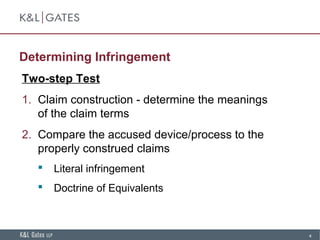
Determining Infringement
Two-step Test
1. Claim construction - determine the meanings
of the claim terms
2. Compare the accused device/process to the
properly construed claims
 Literal infringement
 Doctrine of Equivalents
5
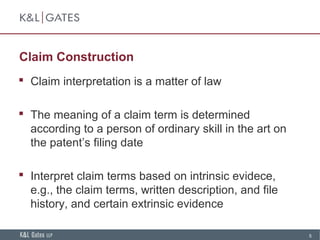
Claim Construction
 Claim interpretation is a matter of law
 The meaning of a claim term is determined
according to a person of ordinary skill in the art on
the patent’s filing date
 Interpret claim terms based on intrinsic evidece,
e.g., the claim terms, written description, and file
history, and certain extrinsic evidence
6
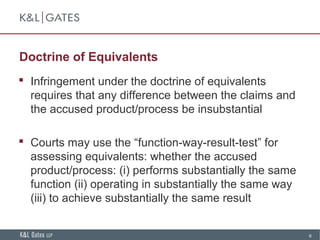
Doctrine of Equivalents
 Infringement under the doctrine of equivalents
requires that any difference between the claims and
the accused product/process be insubstantial
 Courts may use the “function-way-result-test” for
assessing equivalents: whether the accused
product/process: (i) performs substantially the same
function (ii) operating in substantially the same way
(iii) to achieve substantially the same result
7
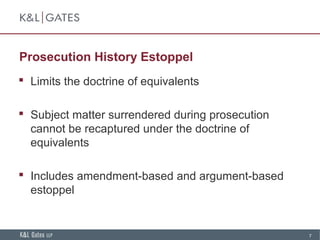
Prosecution History Estoppel
 Limits the doctrine of equivalents
 Subject matter surrendered during prosecution
cannot be recaptured under the doctrine of
equivalents
 Includes amendment-based and argument-based
estoppel
8
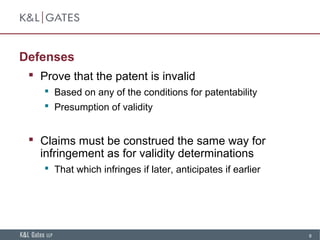
Defenses
 Prove that the patent is invalid
 Based on any of the conditions for patentability
 Presumption of validity
 Claims must be construed the same way for
infringement as for validity determinations
 That which infringes if later, anticipates if earlier
9
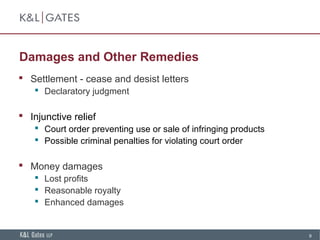
Damages and Other Remedies
 Settlement - cease and desist letters
 Declaratory judgment
 Injunctive relief
 Court order preventing use or sale of infringing products
 Possible criminal penalties for violating court order
 Money damages
 Lost profits
 Reasonable royalty
 Enhanced damages
10
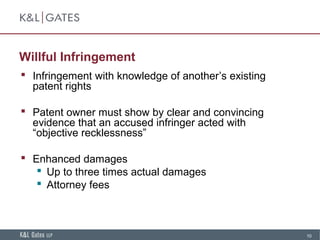
Willful Infringement
 Infringement with knowledge of another’s existing
patent rights
 Patent owner must show by clear and convincing
evidence that an accused infringer acted with
“objective recklessness”
 Enhanced damages
 Up to three times actual damages
 Attorney fees
11
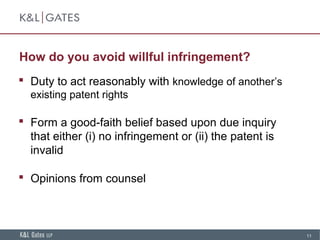
How do you avoid willful infringement?
 Duty to act reasonably with knowledge of another’s
existing patent rights
 Form a good-faith belief based upon due inquiry
that either (i) no infringement or (ii) the patent is
invalid
 Opinions from counsel
12
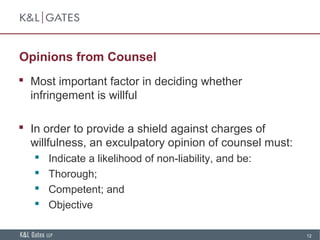
Opinions from Counsel
 Most important factor in deciding whether
infringement is willful
 In order to provide a shield against charges of
willfulness, an exculpatory opinion of counsel must:
 Indicate a likelihood of non-liability, and be:
 Thorough;
 Competent; and
 Objective
13
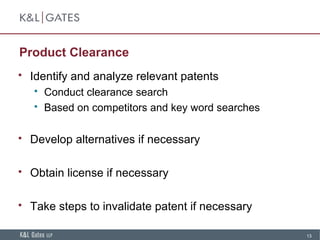
Product Clearance
 Identify and analyze relevant patents
 Conduct clearance search
 Based on competitors and key word searches
 Develop alternatives if necessary
 Obtain license if necessary
 Take steps to invalidate patent if necessary
14
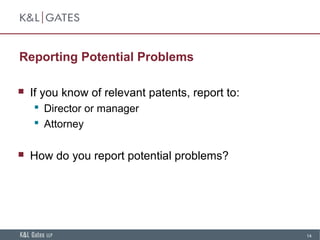
Reporting Potential Problems
 If you know of relevant patents, report to:
 Director or manager
 Attorney
 How do you report potential problems?

Infringement and right to-use presentation

  • 1.
    INTELLECTUAL PROPERTY Patent infringementand right-to-use Michael E. Dukes © 2009 K&L Gates LLP
  • 2.
    2 Rights of PatentOwnership  Patents confer the right to exclude others from making, using, selling, and offering for sale within the United States, and importing into the United States, any patented invention during the term of the patent  Patents do not affirmatively allow their owners to exploit the invention in the marketplace  A patent can only be enforced in the country in which it is granted.
  • 3.
    3 What is patentinfringement?  Direct infringement - making, using, selling, or offering for sale a patented invention within the United States, or importing into the United States, any patented invention during the term of the patent  Contributory infringement - supplying any material component of a patented invention with knowledge that the component is especially adapted for infringing use  Induced infringement - supplying individual components of a patented invention in such a manner to actively induce the combination of such components for infringing use
  • 4.
    4 Determining Infringement Two-step Test 1.Claim construction - determine the meanings of the claim terms 2. Compare the accused device/process to the properly construed claims  Literal infringement  Doctrine of Equivalents
  • 5.
    5 Claim Construction  Claiminterpretation is a matter of law  The meaning of a claim term is determined according to a person of ordinary skill in the art on the patent’s filing date  Interpret claim terms based on intrinsic evidece, e.g., the claim terms, written description, and file history, and certain extrinsic evidence
  • 6.
    6 Doctrine of Equivalents Infringement under the doctrine of equivalents requires that any difference between the claims and the accused product/process be insubstantial  Courts may use the “function-way-result-test” for assessing equivalents: whether the accused product/process: (i) performs substantially the same function (ii) operating in substantially the same way (iii) to achieve substantially the same result
  • 7.
    7 Prosecution History Estoppel Limits the doctrine of equivalents  Subject matter surrendered during prosecution cannot be recaptured under the doctrine of equivalents  Includes amendment-based and argument-based estoppel
  • 8.
    8 Defenses  Prove thatthe patent is invalid  Based on any of the conditions for patentability  Presumption of validity  Claims must be construed the same way for infringement as for validity determinations  That which infringes if later, anticipates if earlier
  • 9.
    9 Damages and OtherRemedies  Settlement - cease and desist letters  Declaratory judgment  Injunctive relief  Court order preventing use or sale of infringing products  Possible criminal penalties for violating court order  Money damages  Lost profits  Reasonable royalty  Enhanced damages
  • 10.
    10 Willful Infringement  Infringementwith knowledge of another’s existing patent rights  Patent owner must show by clear and convincing evidence that an accused infringer acted with “objective recklessness”  Enhanced damages  Up to three times actual damages  Attorney fees
  • 11.
    11 How do youavoid willful infringement?  Duty to act reasonably with knowledge of another’s existing patent rights  Form a good-faith belief based upon due inquiry that either (i) no infringement or (ii) the patent is invalid  Opinions from counsel
  • 12.
    12 Opinions from Counsel Most important factor in deciding whether infringement is willful  In order to provide a shield against charges of willfulness, an exculpatory opinion of counsel must:  Indicate a likelihood of non-liability, and be:  Thorough;  Competent; and  Objective
  • 13.
    13 Product Clearance  Identifyand analyze relevant patents  Conduct clearance search  Based on competitors and key word searches  Develop alternatives if necessary  Obtain license if necessary  Take steps to invalidate patent if necessary
  • 14.
    14 Reporting Potential Problems If you know of relevant patents, report to:  Director or manager  Attorney  How do you report potential problems?