Download to read offline



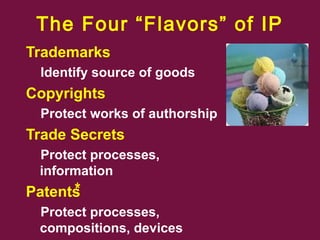




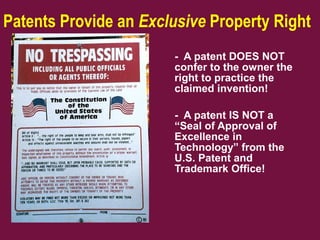
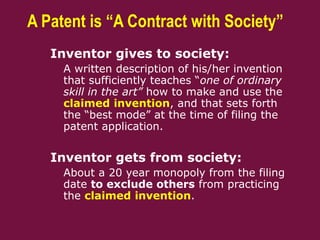
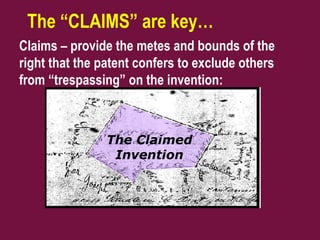
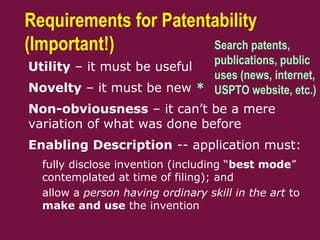
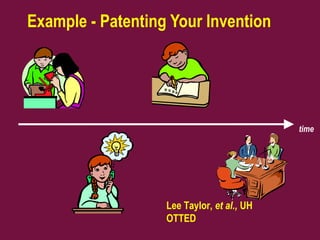

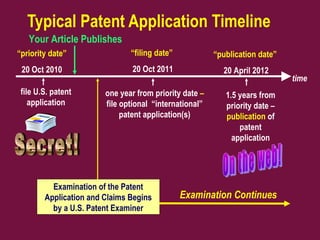
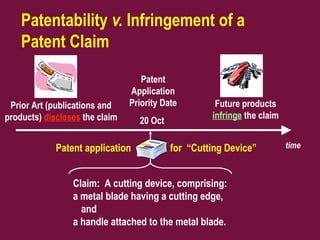
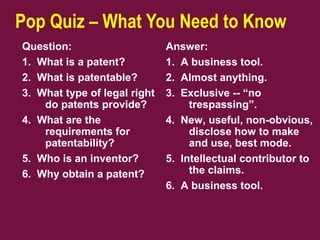


This document discusses patents and intellectual property. It explains that patents provide a legally protected competitive advantage and can be important for starting businesses during recessions. There are four main types of intellectual property: trademarks, copyrights, trade secrets, and patents. Patents protect inventions by providing the inventor with a 20-year monopoly to exclude others from practicing the claimed invention, in exchange for publicly disclosing how to make and use the invention. The claims define the scope of the patent rights. To be patentable, an invention must be useful, novel, non-obvious, and fully enabling. The process of patenting an invention involves documenting the invention, conducting prior art searches, drafting a patent application with an attorney, and undergoing examination


