Infectious diseases in pregnancy
Dr Khalid Sait
HIV in pregnancy
• USA 1-5% Canada 1/5000
• Risk to the baby 25 %
• Risk increase in HIV patient with low CD4
count and high viral load.
HIV in pregnancy
• Prenatal care:
Counseling
CD4 count in first and second trimester
Torch and STD screen in first and third
trimester
Pap smear twice eight week apart Watch
for IUGR Zidovudine ( ZDV)
during pregnancy and labor and to the infant
reduce the risk to 7.2 %
HIV in pregnancy
• Intrapartum management:
Avoid scalp PH , Internal scalp electrode
and ARM.
May be there is benefit from C.S.
HIV in pregnancy
• Post partum:
No breast feeding Encourage
contraception
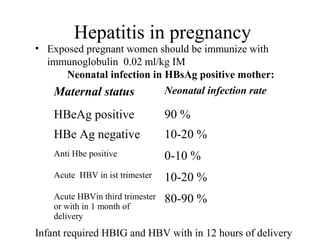
Hepatitis in pregnancy
• Exposed pregnant women should be immunize with
immunoglobulin 0.02 ml/kg IM
Neonatal infection in HBsAg positive mother:
Maternal status Neonatal infection rate
HBeAg positive 90 %
HBe Ag negative 10-20 %
Anti Hbe positive 0-10 %
Acute HBV in ist trimester 10-20 %
Acute HBVin third trimester
or with in 1 month of
delivery
80-90 %
Infant required HBIG and HBV with in 12 hours of delivery
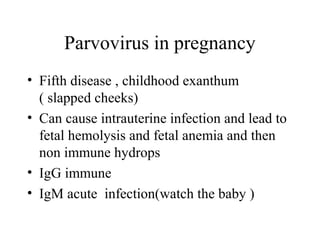
Parvovirus in pregnancy
• Fifth disease , childhood exanthum
( slapped cheeks)
• Can cause intrauterine infection and lead to
fetal hemolysis and fetal anemia and then
non immune hydrops
• IgG immune
• IgM acute infection(watch the baby )
Rubella in pregnancy
• Rubella specific IgM that present for four
weeks or rise fourfold in IgG
• Congenital rubella syndrome
1st
month 50 % risk
Second month 25 % risk
Third m 10 % risk
Second trimester 1 % risk
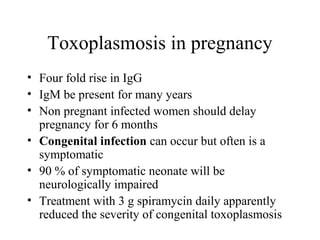
Toxoplasmosis in pregnancy
• Four fold rise in IgG
• IgM be present for many years
• Non pregnant infected women should delay
pregnancy for 6 months
• Congenital infection can occur but often is a
symptomatic
• 90 % of symptomatic neonate will be
neurologically impaired
• Treatment with 3 g spiramycin daily apparently
reduced the severity of congenital toxoplasmosis
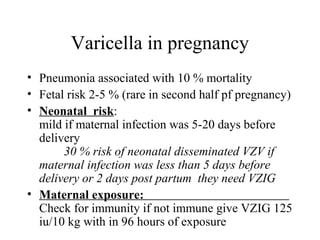
Varicella in pregnancy
• Pneumonia associated with 10 % mortality
• Fetal risk 2-5 % (rare in second half pf pregnancy)
• Neonatal risk:
mild if maternal infection was 5-20 days before
delivery
30 % risk of neonatal disseminated VZV if
maternal infection was less than 5 days before
delivery or 2 days post partum they need VZIG
• Maternal exposure:
Check for immunity if not immune give VZIG 125
iu/10 kg with in 96 hours of exposure
CMV and pregnancy
• Four fold rise in CMV titer considered
evidence of acute infection
• Fetal risk of congenital CMV:
40 % in first trimester
30 % in second trimester
25 % of children have squeal
Third trimester infection is
usually with out squeal
Listeria infection and pregnancy
• High risk of preterm labor and
Choriamnioties
• Treatment:
Iv ampicillin and gentamycin
Group B streptococcal infection
and pregnancy
• Most common cause of neonatal sepsis in USA
• Vaginal colonization in 5-40 % of pregnant women
• Only 1-2 % of neonate develop sepsis
• Early onset infection ( first 2 days of life) mortality up to
37 % majority in preterm infant
• Late onset infection
Onset 6-90 days after delivery
mortality up to 25 %
Frequently cause endomytrities
A symtomatic bacturia is cause of pyelonephritis and
preterm labor
Group B streptococcal infection
and pregnancy
• Prevention:
1- Intrapartum antibiotic prophylaxsis to
all women with positive culture
2- If no culture is available we should treat
risk factors:
1- preterm labor
2- ROM > 18 H
3- previous baby with GBS
disease 4- Maternal fever

Infectious+diseases+in+pregnancy

  • 1.
    Infectious diseases inpregnancy Dr Khalid Sait
  • 2.
    HIV in pregnancy •USA 1-5% Canada 1/5000 • Risk to the baby 25 % • Risk increase in HIV patient with low CD4 count and high viral load.
  • 3.
    HIV in pregnancy •Prenatal care: Counseling CD4 count in first and second trimester Torch and STD screen in first and third trimester Pap smear twice eight week apart Watch for IUGR Zidovudine ( ZDV) during pregnancy and labor and to the infant reduce the risk to 7.2 %
  • 4.
    HIV in pregnancy •Intrapartum management: Avoid scalp PH , Internal scalp electrode and ARM. May be there is benefit from C.S.
  • 5.
    HIV in pregnancy •Post partum: No breast feeding Encourage contraception
  • 6.
    Hepatitis in pregnancy •Exposed pregnant women should be immunize with immunoglobulin 0.02 ml/kg IM Neonatal infection in HBsAg positive mother: Maternal status Neonatal infection rate HBeAg positive 90 % HBe Ag negative 10-20 % Anti Hbe positive 0-10 % Acute HBV in ist trimester 10-20 % Acute HBVin third trimester or with in 1 month of delivery 80-90 % Infant required HBIG and HBV with in 12 hours of delivery
  • 7.
    Parvovirus in pregnancy •Fifth disease , childhood exanthum ( slapped cheeks) • Can cause intrauterine infection and lead to fetal hemolysis and fetal anemia and then non immune hydrops • IgG immune • IgM acute infection(watch the baby )
  • 8.
    Rubella in pregnancy •Rubella specific IgM that present for four weeks or rise fourfold in IgG • Congenital rubella syndrome 1st month 50 % risk Second month 25 % risk Third m 10 % risk Second trimester 1 % risk
  • 9.
    Toxoplasmosis in pregnancy •Four fold rise in IgG • IgM be present for many years • Non pregnant infected women should delay pregnancy for 6 months • Congenital infection can occur but often is a symptomatic • 90 % of symptomatic neonate will be neurologically impaired • Treatment with 3 g spiramycin daily apparently reduced the severity of congenital toxoplasmosis
  • 10.
    Varicella in pregnancy •Pneumonia associated with 10 % mortality • Fetal risk 2-5 % (rare in second half pf pregnancy) • Neonatal risk: mild if maternal infection was 5-20 days before delivery 30 % risk of neonatal disseminated VZV if maternal infection was less than 5 days before delivery or 2 days post partum they need VZIG • Maternal exposure: Check for immunity if not immune give VZIG 125 iu/10 kg with in 96 hours of exposure
  • 11.
    CMV and pregnancy •Four fold rise in CMV titer considered evidence of acute infection • Fetal risk of congenital CMV: 40 % in first trimester 30 % in second trimester 25 % of children have squeal Third trimester infection is usually with out squeal
  • 12.
    Listeria infection andpregnancy • High risk of preterm labor and Choriamnioties • Treatment: Iv ampicillin and gentamycin
  • 13.
    Group B streptococcalinfection and pregnancy • Most common cause of neonatal sepsis in USA • Vaginal colonization in 5-40 % of pregnant women • Only 1-2 % of neonate develop sepsis • Early onset infection ( first 2 days of life) mortality up to 37 % majority in preterm infant • Late onset infection Onset 6-90 days after delivery mortality up to 25 % Frequently cause endomytrities A symtomatic bacturia is cause of pyelonephritis and preterm labor
  • 14.
    Group B streptococcalinfection and pregnancy • Prevention: 1- Intrapartum antibiotic prophylaxsis to all women with positive culture 2- If no culture is available we should treat risk factors: 1- preterm labor 2- ROM > 18 H 3- previous baby with GBS disease 4- Maternal fever