Infection Prevention(IP) in FP Services
Mamata Sharma, PUSHS
Introduction :
• Infection-prevention procedures are simple, effective, and inexpensive.
• Germs (infectious organisms) of concern in the clinic include bacteria (such as
staphylococcus), viruses (particularly HIV and hepatitis B), fungi, and parasites. In
the clinic infectious organisms can be found in blood, body fluids with visible
blood, and tissue.
• (Feces, nasal secretions, saliva, sputum, sweat, tears, urine, and vomit are not
considered potentially infectious unless they contain blood.)
• The organisms can be passed through mucous membranes or broken skin, such
as cuts and scratches, and by needle sticks with used needles and other puncture
wounds.
• Infectious organisms can pass from clinics to communities when waste disposal is
not proper or staff members do not wash their hands properly before leaving the
clinic.
• Basic Rules of Infection Prevention
Cont...
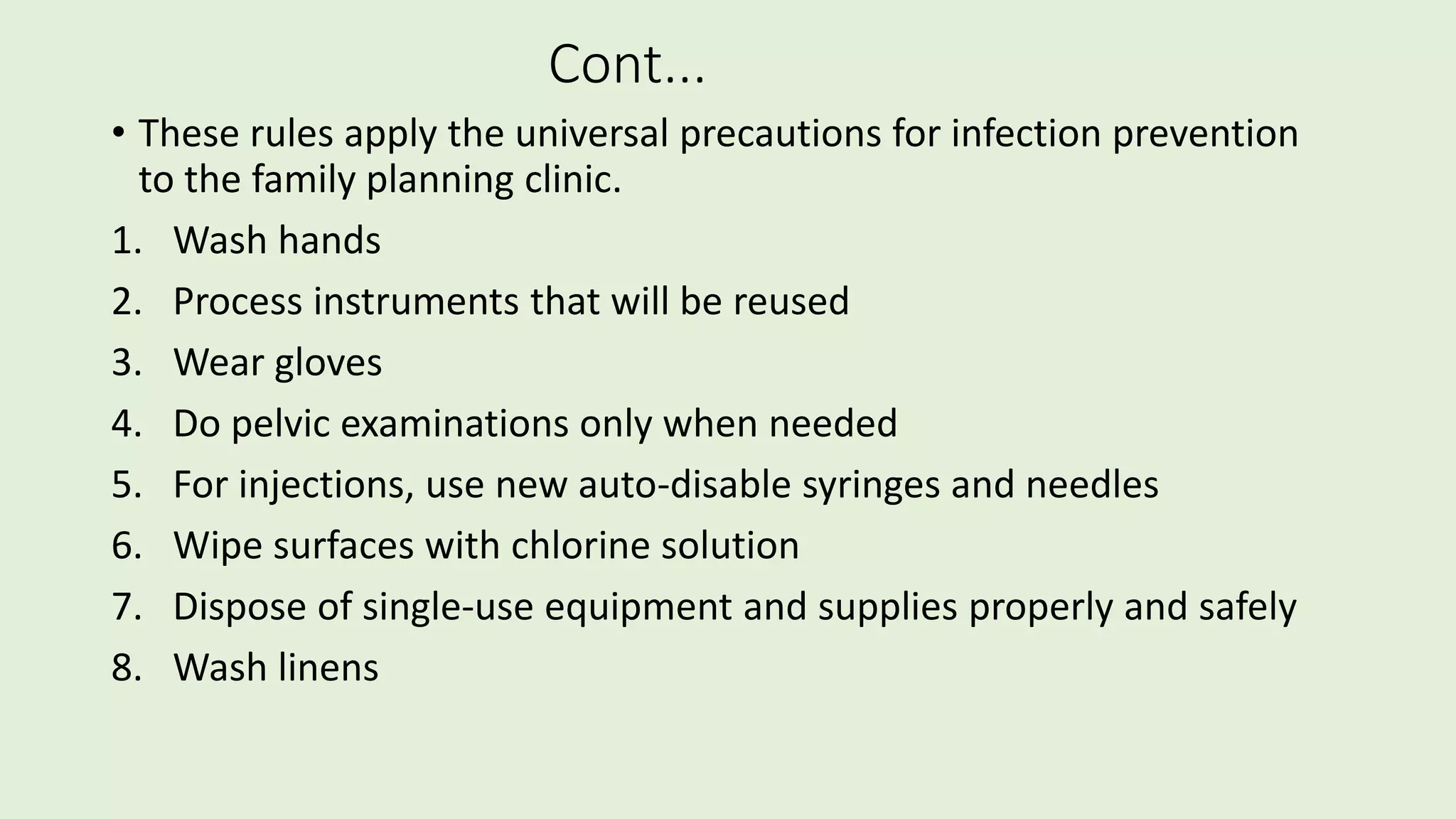
• These rules apply the universal precautions for infection prevention
to the family planning clinic.
1. Wash hands
2. Process instruments that will be reused
3. Wear gloves
4. Do pelvic examinations only when needed
5. For injections, use new auto-disable syringes and needles
6. Wipe surfaces with chlorine solution
7. Dispose of single-use equipment and supplies properly and safely
8. Wash linens
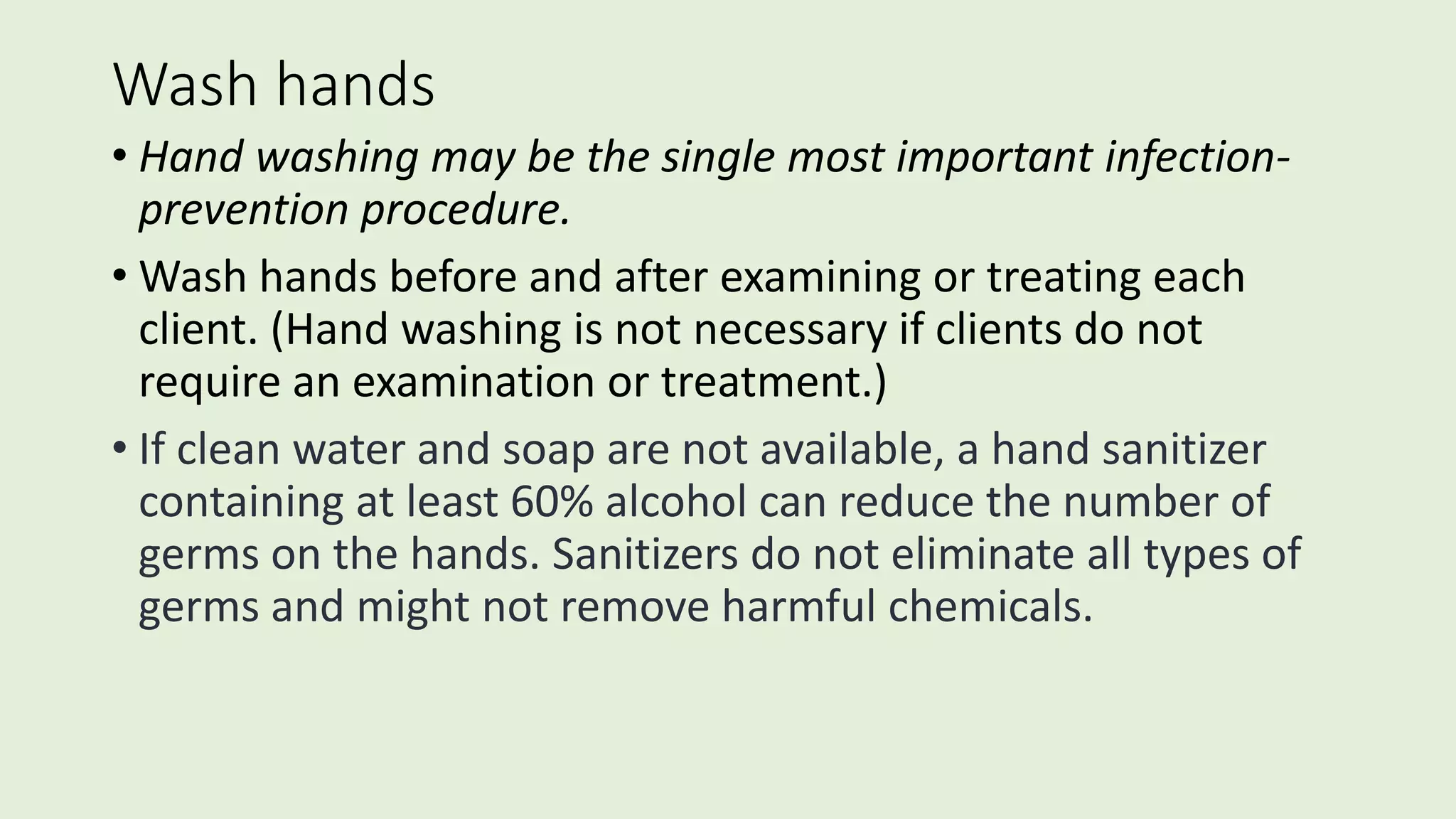
Wash hands
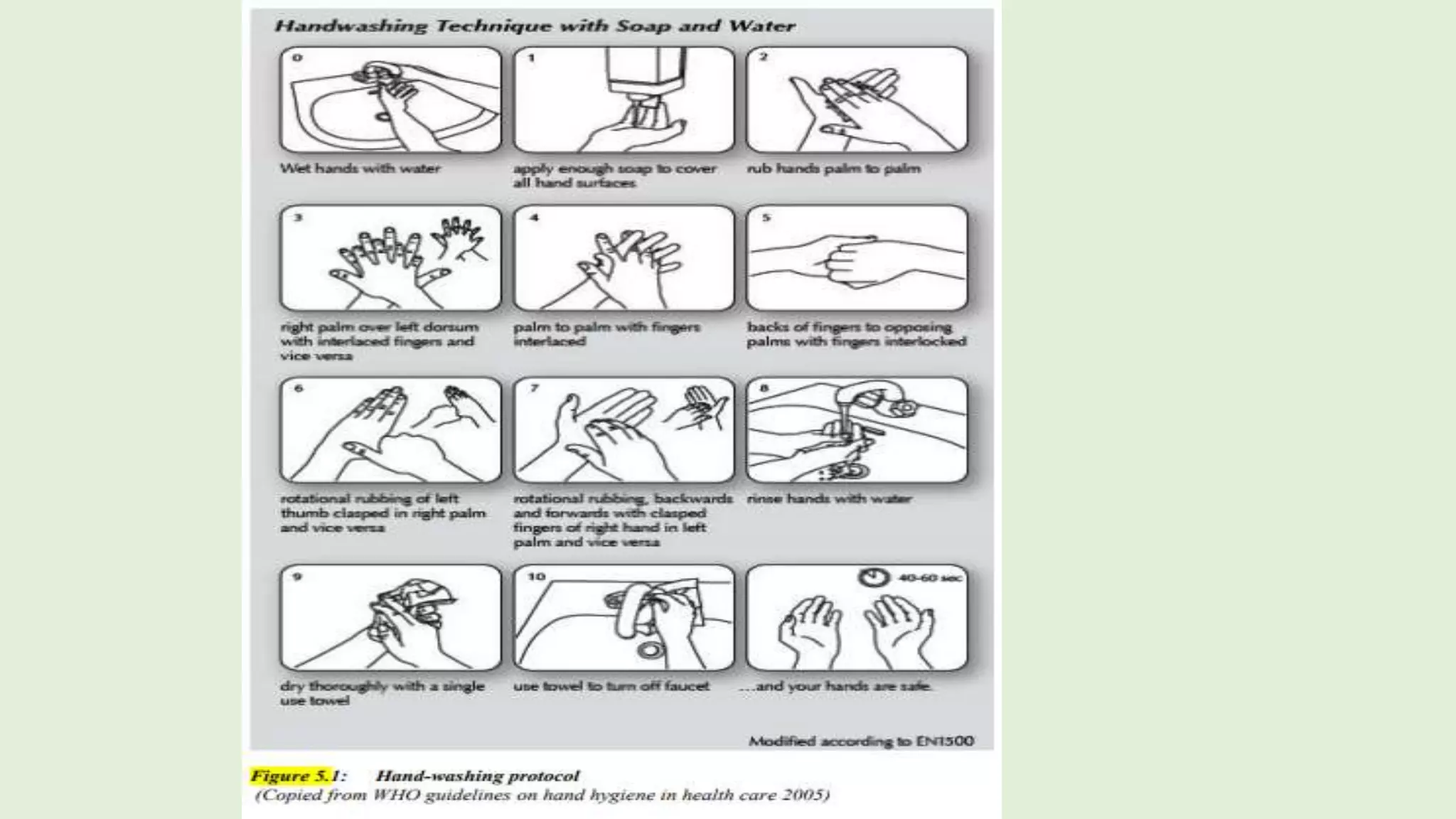
• Hand washing may be the single most important infection-
prevention procedure.
• Wash hands before and after examining or treating each
client. (Hand washing is not necessary if clients do not
require an examination or treatment.)
• If clean water and soap are not available, a hand sanitizer
containing at least 60% alcohol can reduce the number of
germs on the hands. Sanitizers do not eliminate all types of
germs and might not remove harmful chemicals.
Process instruments that will be reused
• High-level disinfect or sterilize instruments
that touch intact mucous membranes or
broken skin.
• Sterilize instruments that touch tissue
beneath
the skin.
• Four (4) Steps of Processing Equipment .
1) 1.Decontamination
2) 2.Clean
3) 3.High-level disinfect or sterilize
4) 4. Store
The 4 Steps of Processing Equipment
1. Decontaminate to kill infectious organisms such as HIV and
hepatitis B and to make instruments, gloves, and other objects safer
for people who clean them. Soak in 0.5% chlorine solution for 10
minutes. Rinse with clean cool water or clean immediately.
2. Clean to remove body fluids, tissue, and dirt. Wash or scrub with a
brush with liquid soap or detergent and water. Avoid bar soap or
powdered soap, which can stay on the equipment. Rinse and dry.
While cleaning, wear utility gloves and personal protective
equipment—goggles, mask, apron, and enclosed shoes.
3. High-level disinfect or sterilize.
• High-level disinfect to kill all infectious organisms except some bacterial
endospores (a dormant, resistant form of bacteria) by boiling, by steaming,
or with chemicals.
• High-level disinfect instruments or supplies that touch intact mucous
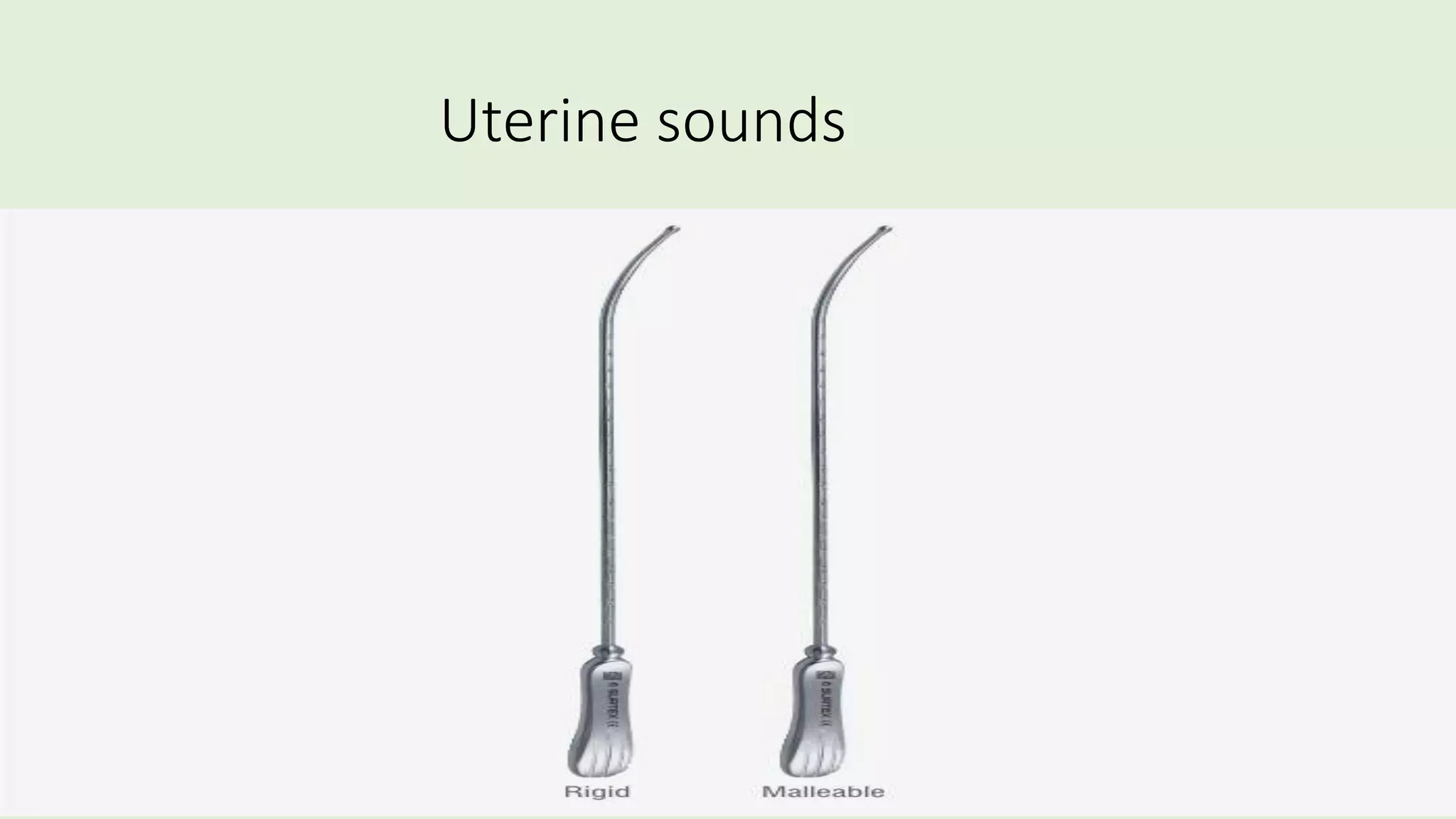
membranes or broken skin, such as vaginal specula, uterine sounds, and
gloves for pelvic examinations.
• Sterilize to kill all infectious organisms, including bacterial endospores, with
a high-pressure steam autoclave, a dry-heat oven, chemicals, or radiation.
• Sterilize instruments such as scalpels and needles that touch tissue
beneath the skin.
• If sterilization is not possible or practical (for example, for laparoscopes),
instruments must be high-level disinfected.
Uterine sounds
4. Store instruments and supplies to protect them from
contamination.
• They should be stored in a high-level disinfected or sterilized
container in a clean area.
• The equipment used to sterilize and high-level disinfect
instruments and supplies also must be guarded against
contamination.
Wear gloves
• Wear gloves for any procedure that risks touching
blood, other body fluids, mucous membranes, broken
skin, soiled items, dirty surfaces, or waste.
• Wear surgical gloves for surgical procedures such as
insertion of implants.
• Wear single-use examination gloves for procedures
that touch intact mucous membranes or generally to
avoid exposure to body fluids.
• Gloves are not necessary for giving injections.
• Change gloves between procedures on the same
client and between clients.
Cont…
• Do not touch clean equipment or surfaces with dirty gloves or bare
hands.
• Wash hands before putting on gloves. Do not wash gloved hands
instead of changing gloves. Gloves are not a substitute for hand
washing.
• Wear clean utility gloves when cleaning soiled instruments and
equipment, handling waste, and cleaning blood or body fluid spills.
Do pelvic examinations only when needed
• Pelvic examinations are not
needed for most family planning
methods—only for female
sterilization, the IUD, diaphragm,
and cervical cap.
• Pelvic examinations should be
done only when there is a
reason—such as suspicion of
sexually transmitted infections,
when the examination could help
with diagnosis or treatment.
For injections, use new auto-disable syringes
and needles
• Auto-disable syringes and needles are safer and more
reliable than standard single-use disposable syringes and
needles, and any disposable syringes and needles are
safer than sterilizing reusable syringes and needles.
• Needles and syringes meant for single use must not be
reused. Do not take apart the needle and syringe.
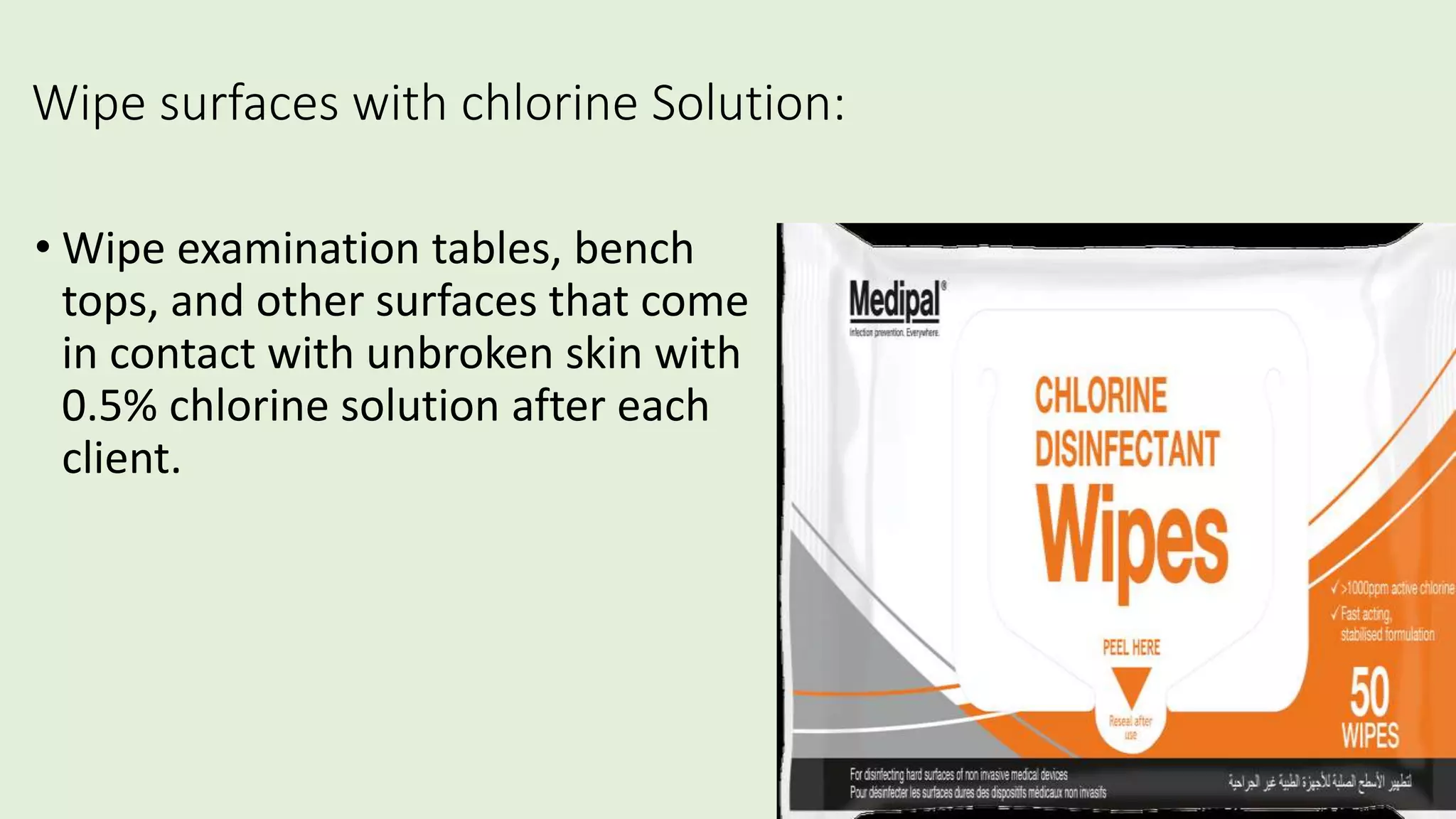
Wipe surfaces with chlorine Solution:
• Wipe examination tables, bench
tops, and other surfaces that come
in contact with unbroken skin with
0.5% chlorine solution after each
client.
Dispose of single-use equipment and supplies
properly and safely
• Use personal protective equipment—goggles, mask, apron,
and closed protective shoes— when handling wastes.
• Needles and syringes meant for single use must not be reused.
Do not take apart the needle and syringe.
• Used needles should not be broken, bent, or recapped.
• Put used needles and syringes immediately into a puncture-
proof container for disposal. (If needles and syringes will not
be incinerated, they should be decontaminated by flushing
with 0.5% chlorine solution before they are put into the
puncture-proof container.)
Cont…
• The puncture-proof sharps container should be sealed and either
burned, incinerated, or deeply buried when three-fourths full.
• Dressings and other soiled solid waste should be collected in plastic
bags and, within 2 days, burned and buried in a deep pit.
• Liquid wastes should be poured down a utility sink drain or a
flushable toilet, or poured into a deep pit and buried.
cont…..
• Clean waste containers with detergent and rinse with water.
• Remove utility gloves and clean them whenever they are dirty and at
least once every day.
• Wash hands before and after disposing of soiled equipment and
waste.
Wash linens
• Wash linens (for example, bedding,
caps, gowns, and surgical drapes) by
hand or machine and line-dry or
machine-dry. When handling soiled
linens, wear gloves, hold linens away
from your body, and do not shake
them.
Little Risk of HIV Infection in the Clinic
• Health care providers may be exposed to HIV through needle sticks,
mucous membranes, or broken skin, but the risk of infection is low:
• Needle sticks or cuts cause most infections in health care settings. The
average risk of HIV infection after a needle-stick exposure to HIV-infected
blood is 3 infections per 1,000 needle sticks.
• The risk after exposure of the eye, nose, or mouth to HIV-infected blood is
estimated to be about 1 infection per 1,000 exposures.
• Following universal precautions is the best way that providers can avoid
workplace exposure to HIV and other fluid-borne infections. Post-
exposure prophylaxis (PEP) with antiretroviral medicines will help to
prevent HIV infection if a needle stick might have exposed a provider to
HIV.
References :
• https://www.who.int/infection-prevention/publications/MinReq-
Manual_2019.pdf
• https://www.fphandbook.org/infection-prevention-clinic
• http://reprolineplus.org/system/files/resources/IPC_M6_Instruments
.pdf

Infection prevention(ip) in fp services

  • 1.
    Infection Prevention(IP) inFP Services Mamata Sharma, PUSHS
  • 2.
    Introduction : • Infection-preventionprocedures are simple, effective, and inexpensive. • Germs (infectious organisms) of concern in the clinic include bacteria (such as staphylococcus), viruses (particularly HIV and hepatitis B), fungi, and parasites. In the clinic infectious organisms can be found in blood, body fluids with visible blood, and tissue. • (Feces, nasal secretions, saliva, sputum, sweat, tears, urine, and vomit are not considered potentially infectious unless they contain blood.) • The organisms can be passed through mucous membranes or broken skin, such as cuts and scratches, and by needle sticks with used needles and other puncture wounds. • Infectious organisms can pass from clinics to communities when waste disposal is not proper or staff members do not wash their hands properly before leaving the clinic. • Basic Rules of Infection Prevention
  • 3.
    Cont... • These rulesapply the universal precautions for infection prevention to the family planning clinic. 1. Wash hands 2. Process instruments that will be reused 3. Wear gloves 4. Do pelvic examinations only when needed 5. For injections, use new auto-disable syringes and needles 6. Wipe surfaces with chlorine solution 7. Dispose of single-use equipment and supplies properly and safely 8. Wash linens
  • 4.
    Wash hands • Handwashing may be the single most important infection- prevention procedure. • Wash hands before and after examining or treating each client. (Hand washing is not necessary if clients do not require an examination or treatment.) • If clean water and soap are not available, a hand sanitizer containing at least 60% alcohol can reduce the number of germs on the hands. Sanitizers do not eliminate all types of germs and might not remove harmful chemicals.
  • 7.
    Process instruments thatwill be reused • High-level disinfect or sterilize instruments that touch intact mucous membranes or broken skin. • Sterilize instruments that touch tissue beneath the skin. • Four (4) Steps of Processing Equipment . 1) 1.Decontamination 2) 2.Clean 3) 3.High-level disinfect or sterilize 4) 4. Store
  • 8.
    The 4 Stepsof Processing Equipment 1. Decontaminate to kill infectious organisms such as HIV and hepatitis B and to make instruments, gloves, and other objects safer for people who clean them. Soak in 0.5% chlorine solution for 10 minutes. Rinse with clean cool water or clean immediately. 2. Clean to remove body fluids, tissue, and dirt. Wash or scrub with a brush with liquid soap or detergent and water. Avoid bar soap or powdered soap, which can stay on the equipment. Rinse and dry. While cleaning, wear utility gloves and personal protective equipment—goggles, mask, apron, and enclosed shoes.
  • 9.
    3. High-level disinfector sterilize. • High-level disinfect to kill all infectious organisms except some bacterial endospores (a dormant, resistant form of bacteria) by boiling, by steaming, or with chemicals. • High-level disinfect instruments or supplies that touch intact mucous membranes or broken skin, such as vaginal specula, uterine sounds, and gloves for pelvic examinations. • Sterilize to kill all infectious organisms, including bacterial endospores, with a high-pressure steam autoclave, a dry-heat oven, chemicals, or radiation. • Sterilize instruments such as scalpels and needles that touch tissue beneath the skin. • If sterilization is not possible or practical (for example, for laparoscopes), instruments must be high-level disinfected.
  • 10.
  • 11.
    4. Store instrumentsand supplies to protect them from contamination. • They should be stored in a high-level disinfected or sterilized container in a clean area. • The equipment used to sterilize and high-level disinfect instruments and supplies also must be guarded against contamination.
  • 12.
    Wear gloves • Weargloves for any procedure that risks touching blood, other body fluids, mucous membranes, broken skin, soiled items, dirty surfaces, or waste. • Wear surgical gloves for surgical procedures such as insertion of implants. • Wear single-use examination gloves for procedures that touch intact mucous membranes or generally to avoid exposure to body fluids. • Gloves are not necessary for giving injections. • Change gloves between procedures on the same client and between clients.
  • 13.
    Cont… • Do nottouch clean equipment or surfaces with dirty gloves or bare hands. • Wash hands before putting on gloves. Do not wash gloved hands instead of changing gloves. Gloves are not a substitute for hand washing. • Wear clean utility gloves when cleaning soiled instruments and equipment, handling waste, and cleaning blood or body fluid spills.
  • 14.
    Do pelvic examinationsonly when needed • Pelvic examinations are not needed for most family planning methods—only for female sterilization, the IUD, diaphragm, and cervical cap. • Pelvic examinations should be done only when there is a reason—such as suspicion of sexually transmitted infections, when the examination could help with diagnosis or treatment.
  • 15.
    For injections, usenew auto-disable syringes and needles • Auto-disable syringes and needles are safer and more reliable than standard single-use disposable syringes and needles, and any disposable syringes and needles are safer than sterilizing reusable syringes and needles. • Needles and syringes meant for single use must not be reused. Do not take apart the needle and syringe.
  • 16.
    Wipe surfaces withchlorine Solution: • Wipe examination tables, bench tops, and other surfaces that come in contact with unbroken skin with 0.5% chlorine solution after each client.
  • 17.
    Dispose of single-useequipment and supplies properly and safely • Use personal protective equipment—goggles, mask, apron, and closed protective shoes— when handling wastes. • Needles and syringes meant for single use must not be reused. Do not take apart the needle and syringe. • Used needles should not be broken, bent, or recapped. • Put used needles and syringes immediately into a puncture- proof container for disposal. (If needles and syringes will not be incinerated, they should be decontaminated by flushing with 0.5% chlorine solution before they are put into the puncture-proof container.)
  • 18.
    Cont… • The puncture-proofsharps container should be sealed and either burned, incinerated, or deeply buried when three-fourths full. • Dressings and other soiled solid waste should be collected in plastic bags and, within 2 days, burned and buried in a deep pit. • Liquid wastes should be poured down a utility sink drain or a flushable toilet, or poured into a deep pit and buried.
  • 19.
    cont….. • Clean wastecontainers with detergent and rinse with water. • Remove utility gloves and clean them whenever they are dirty and at least once every day. • Wash hands before and after disposing of soiled equipment and waste.
  • 20.
    Wash linens • Washlinens (for example, bedding, caps, gowns, and surgical drapes) by hand or machine and line-dry or machine-dry. When handling soiled linens, wear gloves, hold linens away from your body, and do not shake them.
  • 21.
    Little Risk ofHIV Infection in the Clinic • Health care providers may be exposed to HIV through needle sticks, mucous membranes, or broken skin, but the risk of infection is low: • Needle sticks or cuts cause most infections in health care settings. The average risk of HIV infection after a needle-stick exposure to HIV-infected blood is 3 infections per 1,000 needle sticks. • The risk after exposure of the eye, nose, or mouth to HIV-infected blood is estimated to be about 1 infection per 1,000 exposures. • Following universal precautions is the best way that providers can avoid workplace exposure to HIV and other fluid-borne infections. Post- exposure prophylaxis (PEP) with antiretroviral medicines will help to prevent HIV infection if a needle stick might have exposed a provider to HIV.
  • 22.
    References : • https://www.who.int/infection-prevention/publications/MinReq- Manual_2019.pdf •https://www.fphandbook.org/infection-prevention-clinic • http://reprolineplus.org/system/files/resources/IPC_M6_Instruments .pdf