Infection Prevention and Control
(IPC)
for Novel Coronavirus (COVID19)
• Describe source control, administrative
control
and environmental.
• Describe the WHO recommended IPC
measures for health care facilities ,including when
dealing with a suspect or confirmed 2019 n COV
cases;
• Describe additional IPC measures to
be take to assist in general preparedness
within a health care facility .
Learning objectives:
General WHO advice for COVID-19
 Avoid close contact with people suffering
from acute respiratory infection.
 Frequent hand hygiene ,especially after
direct contact with ill people or their
environment .
 People with symptoms of acute respiratory
etiquette, wear a medical mask and seek
medical care if in respiratory distress.
What IPC strategies are
recommended by WHO for
COVID-19 ?
WHO recommended IPC strategies for
preventing or limiting the spread of COVID-19
IPC strategies to prevent or limit transmission in health care
settings include the following:
1.Apply standard precautions for all patients;
2.Ensuring triage ,early recognition and source control .
3.Implementing empiric additional precaution for suspected
cases of COVID-19 infection;
4.Implementing administrative control.
Apply standard precaution for all
patient
Standard Precautions
The basic level of IPC precautions, to be used for ALL
patients at All times:
The minimum prevention measures the apply at
all times to all patient care regardless of
suspected or confirmed status of the patient .
Risk assessment is critical for all activities
,i.e. Assess each health care activity and
determine the personal protective equipment
(PPE) that is needed for adequate protection.
Element of standard
precaution:
1.Hand hygiene
2.Respiratory hygiene (etiquette)
3.PPE according to risk.
4.Safe injection practices ,sharp management
and injury prevention.
5.Safe handling ,cleaning and disinfection of
patient care equipment .
6.Enviromental cleaning.
7.Safe handling and cleaning of soiled area .
8.Waste management
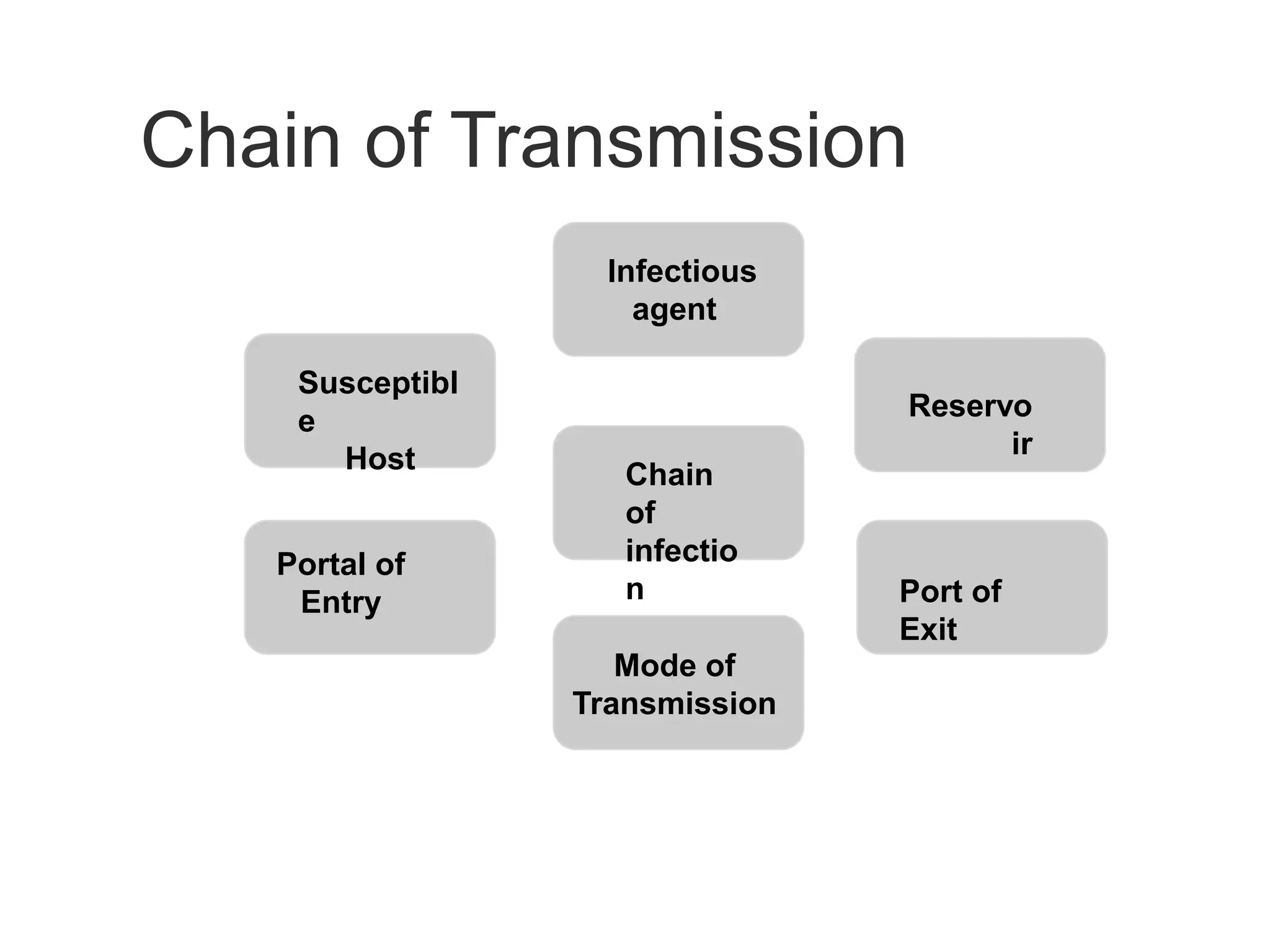
Chain of Transmission
Infectious
agent
Reservo
ir
Chain
of
infectio
n Port of
Exit
Mode of
Transmission
Susceptibl
e
Host
Portal of
Entry
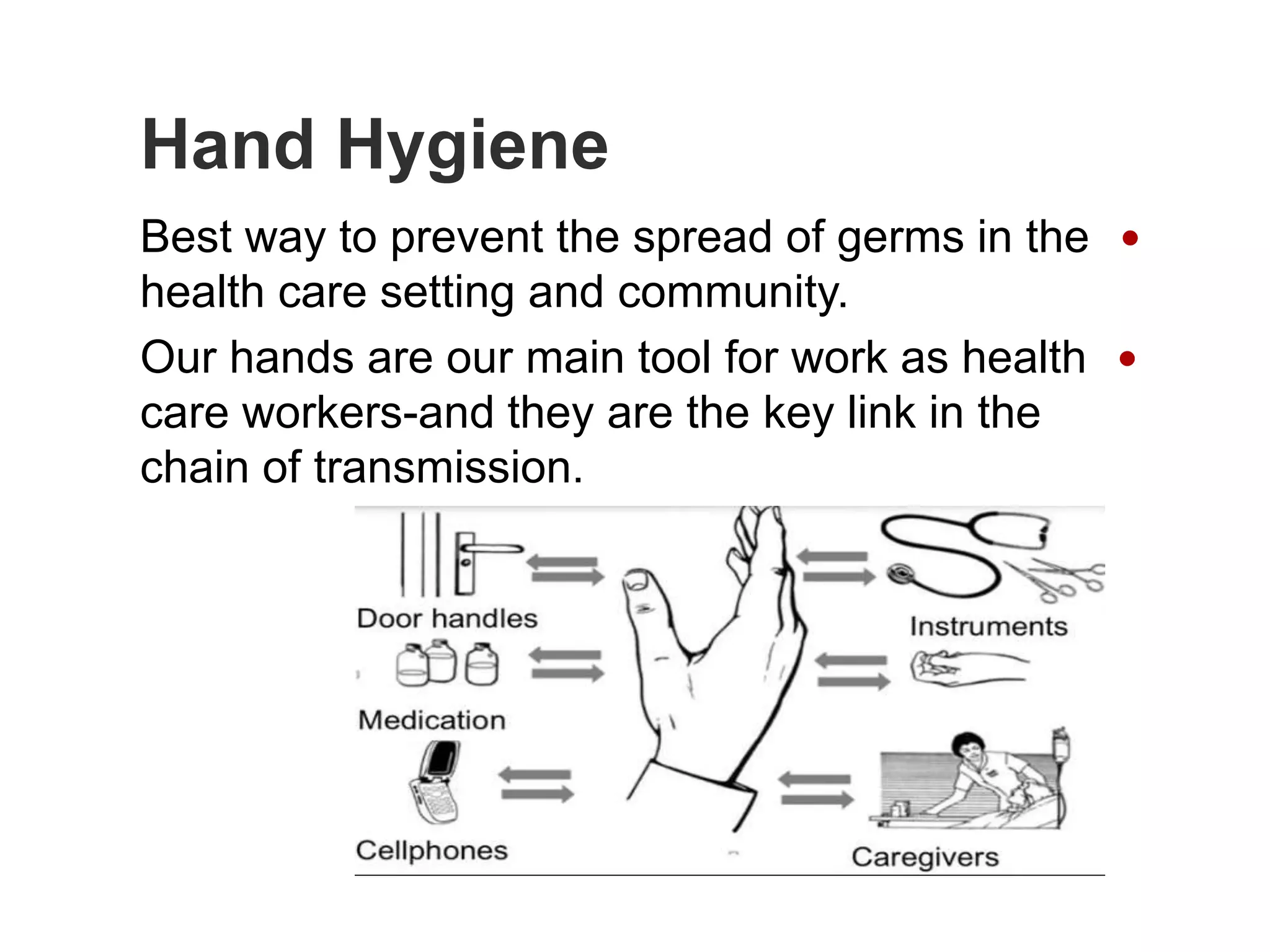
Hand Hygiene
Best way to prevent the spread of germs in the
health care setting and community.
Our hands are our main tool for work as health
care workers-and they are the key link in the
chain of transmission.
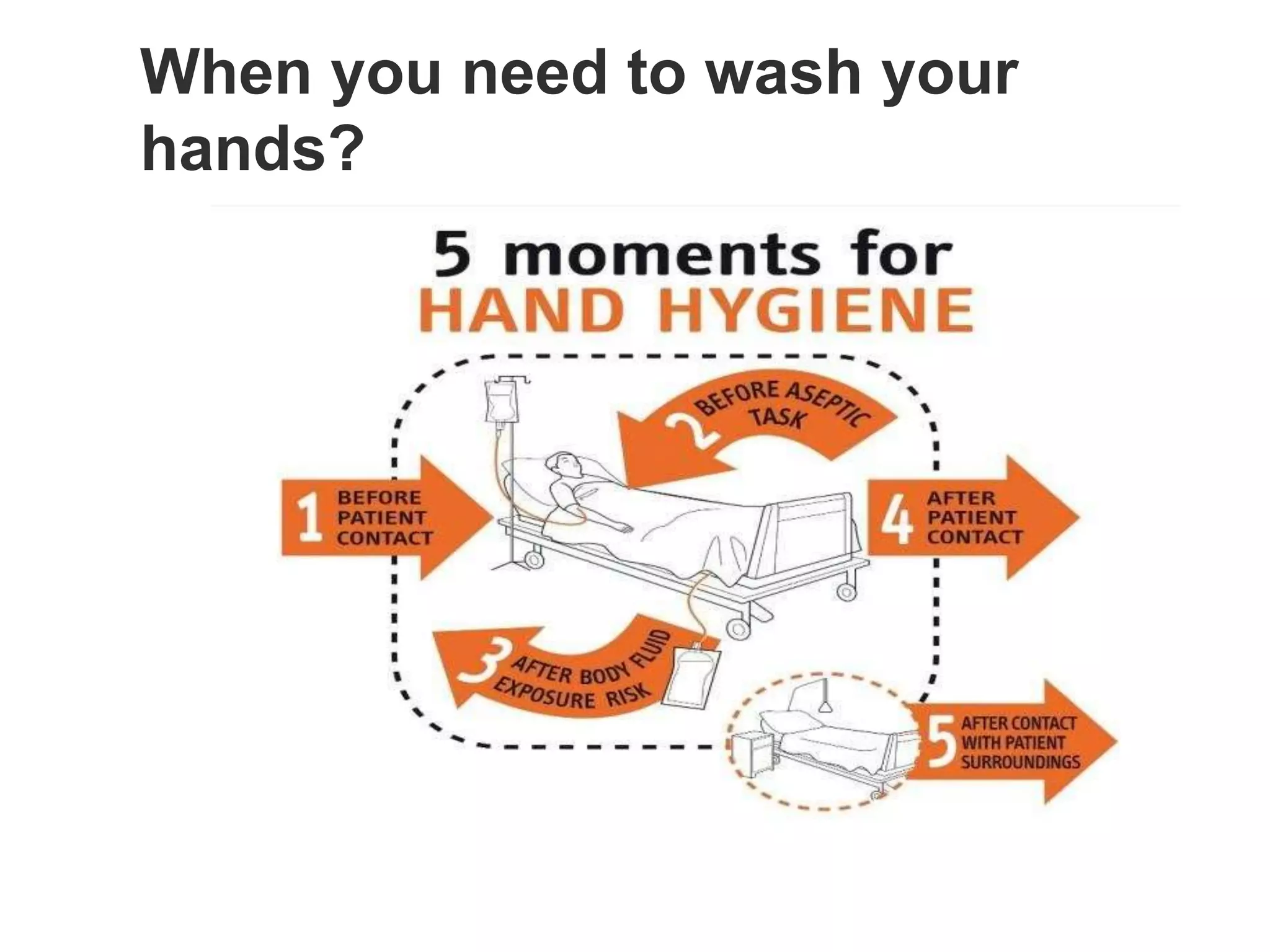
When you need to wash your
hands?
Hand hygiene :
HOW
Use appropriate product and technique
An alcohol –based hand rub product is preferable
,if hands are not visibly soiled .
Rub hand 20-30 seconds
Soap running water and single use towel ,when
visibility dirty or contaminated with proteinaceous
material.
Wash hands for 40-60seconds
Respiratory hygiene /etiquette procedure
.Turn head away from others when
coughing/sneezing
.Cover the nose and mouth with tissue
.If tissues are used, discard immediately
in to trash
.Cough /sneeze into your sleeve if no
tissue is available
.Clean your hand with soap and water or
alcohol-based products
Why is respiratory hygiene
important ?
Good respiratory hygiene
/cough etiquette can
reduce the spread of
microorganisms(germs)that
cause respiratory
infections(cold ,flu)?
Promoting respiratory hygiene
.Encourage hand washing for patients with
respiratory systems.
.Provide mask for patients with respiratory
symptoms
.Patients with fever and cough or sneezing should
be kept at least 1m away from other patient .
.Post visual aids reminding patient and visitors
with respiratory symptoms to cover their cough.
.Consider having masks and issues available for
patients in all areas .
Example of PPE for use in health care
setting COVID-19
Risk Assessment and standard
Precautions:
Risk assessments
mean that the risk of exposure and extent of
contact that you anticipate with blood, body fluids,
respiratory
droplets, or open skin.
 select which PPE items to wear based on this
assessment.
 perform hand hygiene according to the WHO five
moment
 should be done for each patient each time.Make this routine
 Always clean your hands before and after the
wearing
of the PPE.
 PPE should be available where and when it is
indicated.
 Select according to risk or per transmission –
based precautions.
 always be put on before contact with the patient
 always be immediately removed after completing
the task and leaving the patient care area.
 never be reused disposable PPE
 clean and disinfect reusable PPE between each
use
The principles for using PPE
Principle for using PPE
 Change PPE immediately if it becomes
contaminated or damaged.
 PPE should not be adjusted or touched during
patient care specifically,
 make sure to never touch your face while wearing
PPE
 If there is concern or breach of these practices,
leave the patient care area when safe to do so
and properly remove and change your PPE.
 Always keep in mind to remove carefully as to
avoid self-contamination.
.
What is decontamination:
This is the process that removes soil and
pathogenic organisms from objects so that
they are safe to handle, safe to process, safe
to use.
Cleaning Disinfecting Sterilization
(Standers Precautions ( safe
injections
 clean workspace
 hygiene perform
 Hand hygiene
 sterile safety-engineered syringe
 Sterile vial of medication diluent
 skin cleaning by antiseptic.
 An appropriate collection of sharps
 appropriate waste management.
7 steps
Steps of cleaning

Infection prevention and control (ipc)

  • 1.
    Infection Prevention andControl (IPC) for Novel Coronavirus (COVID19)
  • 2.
    • Describe sourcecontrol, administrative control and environmental. • Describe the WHO recommended IPC measures for health care facilities ,including when dealing with a suspect or confirmed 2019 n COV cases; • Describe additional IPC measures to be take to assist in general preparedness within a health care facility . Learning objectives:
  • 3.
    General WHO advicefor COVID-19  Avoid close contact with people suffering from acute respiratory infection.  Frequent hand hygiene ,especially after direct contact with ill people or their environment .  People with symptoms of acute respiratory etiquette, wear a medical mask and seek medical care if in respiratory distress.
  • 4.
    What IPC strategiesare recommended by WHO for COVID-19 ?
  • 5.
    WHO recommended IPCstrategies for preventing or limiting the spread of COVID-19 IPC strategies to prevent or limit transmission in health care settings include the following: 1.Apply standard precautions for all patients; 2.Ensuring triage ,early recognition and source control . 3.Implementing empiric additional precaution for suspected cases of COVID-19 infection; 4.Implementing administrative control.
  • 6.
  • 7.
    Standard Precautions The basiclevel of IPC precautions, to be used for ALL patients at All times: The minimum prevention measures the apply at all times to all patient care regardless of suspected or confirmed status of the patient . Risk assessment is critical for all activities ,i.e. Assess each health care activity and determine the personal protective equipment (PPE) that is needed for adequate protection.
  • 8.
    Element of standard precaution: 1.Handhygiene 2.Respiratory hygiene (etiquette) 3.PPE according to risk. 4.Safe injection practices ,sharp management and injury prevention. 5.Safe handling ,cleaning and disinfection of patient care equipment . 6.Enviromental cleaning. 7.Safe handling and cleaning of soiled area . 8.Waste management
  • 9.
    Chain of Transmission Infectious agent Reservo ir Chain of infectio nPort of Exit Mode of Transmission Susceptibl e Host Portal of Entry
  • 10.
    Hand Hygiene Best wayto prevent the spread of germs in the health care setting and community. Our hands are our main tool for work as health care workers-and they are the key link in the chain of transmission.
  • 11.
    When you needto wash your hands?
  • 12.
    Hand hygiene : HOW Useappropriate product and technique An alcohol –based hand rub product is preferable ,if hands are not visibly soiled . Rub hand 20-30 seconds Soap running water and single use towel ,when visibility dirty or contaminated with proteinaceous material. Wash hands for 40-60seconds
  • 14.
    Respiratory hygiene /etiquetteprocedure .Turn head away from others when coughing/sneezing .Cover the nose and mouth with tissue .If tissues are used, discard immediately in to trash .Cough /sneeze into your sleeve if no tissue is available .Clean your hand with soap and water or alcohol-based products
  • 15.
    Why is respiratoryhygiene important ? Good respiratory hygiene /cough etiquette can reduce the spread of microorganisms(germs)that cause respiratory infections(cold ,flu)?
  • 16.
    Promoting respiratory hygiene .Encouragehand washing for patients with respiratory systems. .Provide mask for patients with respiratory symptoms .Patients with fever and cough or sneezing should be kept at least 1m away from other patient . .Post visual aids reminding patient and visitors with respiratory symptoms to cover their cough. .Consider having masks and issues available for patients in all areas .
  • 17.
    Example of PPEfor use in health care setting COVID-19
  • 18.
    Risk Assessment andstandard Precautions: Risk assessments mean that the risk of exposure and extent of contact that you anticipate with blood, body fluids, respiratory droplets, or open skin.  select which PPE items to wear based on this assessment.  perform hand hygiene according to the WHO five moment  should be done for each patient each time.Make this routine
  • 19.
     Always cleanyour hands before and after the wearing of the PPE.  PPE should be available where and when it is indicated.  Select according to risk or per transmission – based precautions.  always be put on before contact with the patient  always be immediately removed after completing the task and leaving the patient care area.  never be reused disposable PPE  clean and disinfect reusable PPE between each use The principles for using PPE
  • 20.
    Principle for usingPPE  Change PPE immediately if it becomes contaminated or damaged.  PPE should not be adjusted or touched during patient care specifically,  make sure to never touch your face while wearing PPE  If there is concern or breach of these practices, leave the patient care area when safe to do so and properly remove and change your PPE.  Always keep in mind to remove carefully as to avoid self-contamination. .
  • 21.
    What is decontamination: Thisis the process that removes soil and pathogenic organisms from objects so that they are safe to handle, safe to process, safe to use. Cleaning Disinfecting Sterilization
  • 22.
    (Standers Precautions (safe injections  clean workspace  hygiene perform  Hand hygiene  sterile safety-engineered syringe  Sterile vial of medication diluent  skin cleaning by antiseptic.  An appropriate collection of sharps  appropriate waste management. 7 steps
  • 23.