IIoT
Semyon Teplitsky
What is Internet Of Things ?
Kevin Ashton first coined the term in 1999 referring to a
global network of RFID connected objects.Typically, IoT
is expected to offer advanced connectivity of devices,
systems, and services that goes beyond M2M
communications and covers a variety of protocols,
domains, and applications.
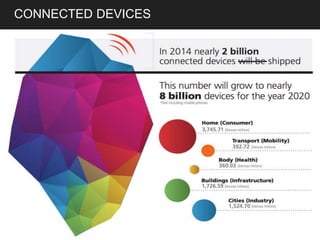
CONNECTED DEVICES
DIVERSE APPLICATION
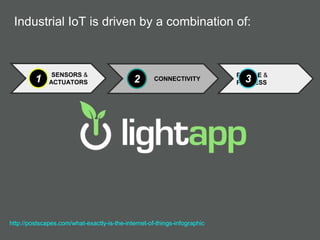
Industrial IoT is driven by a combination of:
CONNECTIVITY
PEOPLE &
PROCESS2 3
http://postscapes.com/what-exactly-is-the-internet-of-things-infographic
SENSORS &
ACTUATORS1
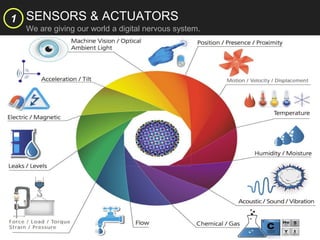
SENSORS & ACTUATORS
We are giving our world a digital nervous system.
1
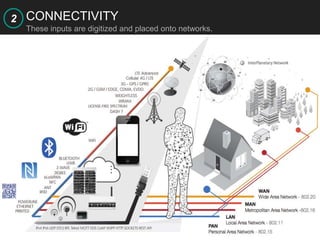
CONNECTIVITY
These inputs are digitized and placed onto networks.
2
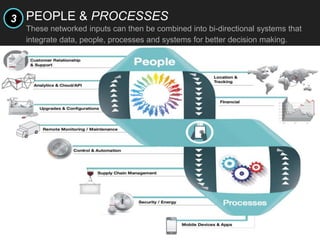
PEOPLE & PROCESSES
These networked inputs can then be combined into bi-directional systems that
integrate data, people, processes and systems for better decision making.
3
CONNECTING PEOPLE with VALUE
At first blush, the obvious implication of the IIoT is that
everyday process, machines, objects can and will
become better, more efficient versions of what they
already are .
http://www.dupress.com Deloitte University Press
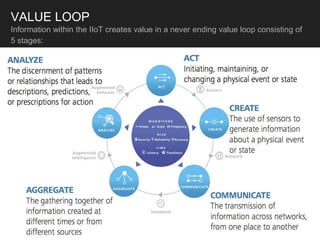
VALUE LOOP
Information within the IIoT creates value in a never ending value loop consisting of
5 stages:
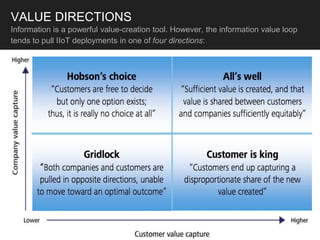
VALUE DIRECTIONS
Information is a powerful value-creation tool. However, the information value loop
tends to pull IIoT deployments in one of four directions:
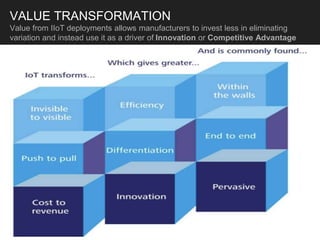
VALUE TRANSFORMATION
Value from IIoT deployments allows manufacturers to invest less in eliminating
variation and instead use it as a driver of Innovation or Competitive Advantage
OUTPUTS
Reduced Costs
Improved Performance
Real time Analytics
Find new paths
leverage administration expertise across an
organization by tying multiple platforms together
See the Bigger Picture
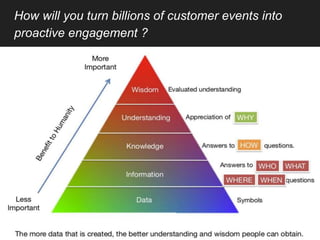
How will you turn billions of customer events into
proactive engagement ?
Integration Any source. Any scale. Real-time.
lightapp’s collection platform is built on a redundant
collection grid due to which lightapp is linearly scalable,
flexible and resilient. The components in the grid work
together but can function separately from each other and
take each other's roles if needed.
The grid architecture also allows for quick deployment,
as individual components are functional immediately
after installation.
IIoT SERVICE PROVIDER ECOSYSTEM
The complex and rapidly changing landscape within the
Industrial IoT demands a structured approach to identifying
risks and appropriate responses.
Product Development
System Integrators
Professional Services
Support Teams
Hardware
IoT DEVELOPER SURVEY April 2015
The Eclipse IoT Working Group solicited feedback for the IoT
Developer Survey. The intent of the survey is to better
understand the trends and attitudes toward developing IoT
solutions.
The survey was opened for input on February 9, 2015 and
closed March 26, 2015. A total of 394 individuals responded
to the survey but 38 were disqualified due to lack of
experience in IoT. The survey was promoted through a
variety of channels, including Eclipse Foundation social
media and web sites, Eclipse IoT WG member promotions to
their communities, various IoT Meetups, and other IoT
organizations (OMA, OASIS, IIC).
IoT DEVELOPER SURVEY Key Findings
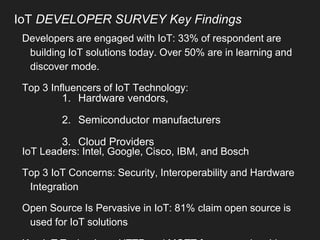
Developers are engaged with IoT: 33% of respondent are
building IoT solutions today. Over 50% are in learning and
discover mode.
Top 3 Influencers of IoT Technology:
IoT Leaders: Intel, Google, Cisco, IBM, and Bosch
Top 3 IoT Concerns: Security, Interoperability and Hardware
Integration
Open Source Is Pervasive in IoT: 81% claim open source is
used for IoT solutions
1. Hardware vendors,
2. Semiconductor manufacturers
3. Cloud Providers
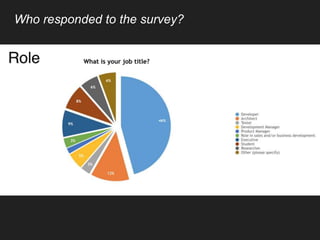
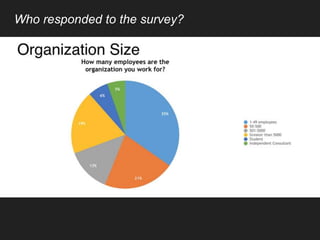
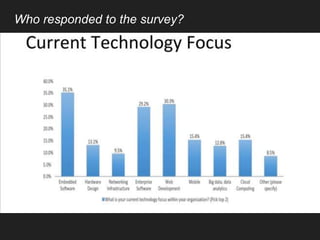
Who responded to the survey?
Solution Area
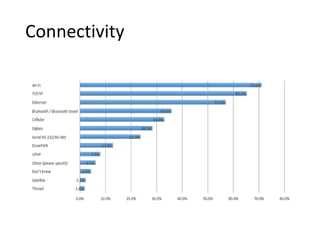
Connectivity
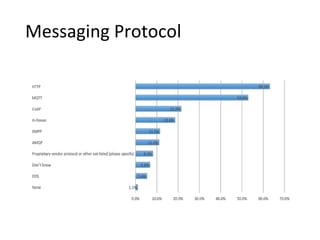
Messaging Protocol
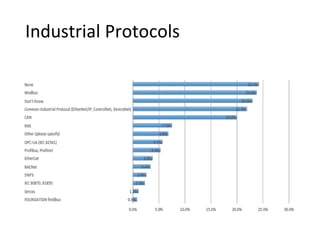
Industrial Protocols
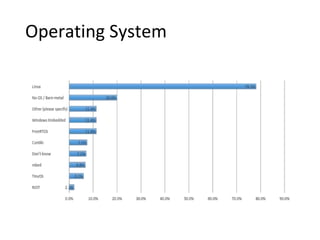
Operating System
Thank You
Questions?
Semyon Teplitsky

Data Value Creation in the Industrial IoT

  • 1.
  • 2.
    What is InternetOf Things ? Kevin Ashton first coined the term in 1999 referring to a global network of RFID connected objects.Typically, IoT is expected to offer advanced connectivity of devices, systems, and services that goes beyond M2M communications and covers a variety of protocols, domains, and applications.
  • 3.
  • 4.
  • 5.
    Industrial IoT isdriven by a combination of: CONNECTIVITY PEOPLE & PROCESS2 3 http://postscapes.com/what-exactly-is-the-internet-of-things-infographic SENSORS & ACTUATORS1
  • 6.
    SENSORS & ACTUATORS Weare giving our world a digital nervous system. 1
  • 7.
    CONNECTIVITY These inputs aredigitized and placed onto networks. 2
  • 8.
    PEOPLE & PROCESSES Thesenetworked inputs can then be combined into bi-directional systems that integrate data, people, processes and systems for better decision making. 3
  • 9.
    CONNECTING PEOPLE withVALUE At first blush, the obvious implication of the IIoT is that everyday process, machines, objects can and will become better, more efficient versions of what they already are . http://www.dupress.com Deloitte University Press
  • 10.
    VALUE LOOP Information withinthe IIoT creates value in a never ending value loop consisting of 5 stages:
  • 11.
    VALUE DIRECTIONS Information isa powerful value-creation tool. However, the information value loop tends to pull IIoT deployments in one of four directions:
  • 12.
    VALUE TRANSFORMATION Value fromIIoT deployments allows manufacturers to invest less in eliminating variation and instead use it as a driver of Innovation or Competitive Advantage
  • 13.
    OUTPUTS Reduced Costs Improved Performance Realtime Analytics Find new paths leverage administration expertise across an organization by tying multiple platforms together See the Bigger Picture
  • 14.
    How will youturn billions of customer events into proactive engagement ?
  • 15.
    Integration Any source.Any scale. Real-time. lightapp’s collection platform is built on a redundant collection grid due to which lightapp is linearly scalable, flexible and resilient. The components in the grid work together but can function separately from each other and take each other's roles if needed. The grid architecture also allows for quick deployment, as individual components are functional immediately after installation.
  • 16.
    IIoT SERVICE PROVIDERECOSYSTEM The complex and rapidly changing landscape within the Industrial IoT demands a structured approach to identifying risks and appropriate responses. Product Development System Integrators Professional Services Support Teams Hardware
  • 17.
    IoT DEVELOPER SURVEYApril 2015 The Eclipse IoT Working Group solicited feedback for the IoT Developer Survey. The intent of the survey is to better understand the trends and attitudes toward developing IoT solutions. The survey was opened for input on February 9, 2015 and closed March 26, 2015. A total of 394 individuals responded to the survey but 38 were disqualified due to lack of experience in IoT. The survey was promoted through a variety of channels, including Eclipse Foundation social media and web sites, Eclipse IoT WG member promotions to their communities, various IoT Meetups, and other IoT organizations (OMA, OASIS, IIC).
  • 18.
    IoT DEVELOPER SURVEYKey Findings Developers are engaged with IoT: 33% of respondent are building IoT solutions today. Over 50% are in learning and discover mode. Top 3 Influencers of IoT Technology: IoT Leaders: Intel, Google, Cisco, IBM, and Bosch Top 3 IoT Concerns: Security, Interoperability and Hardware Integration Open Source Is Pervasive in IoT: 81% claim open source is used for IoT solutions 1. Hardware vendors, 2. Semiconductor manufacturers 3. Cloud Providers
  • 19.
    Who responded tothe survey?
  • 20.
    Who responded tothe survey?
  • 21.
    Who responded tothe survey?
  • 22.
  • 23.
  • 24.
  • 25.
  • 26.
  • 27.