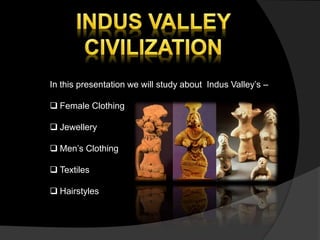
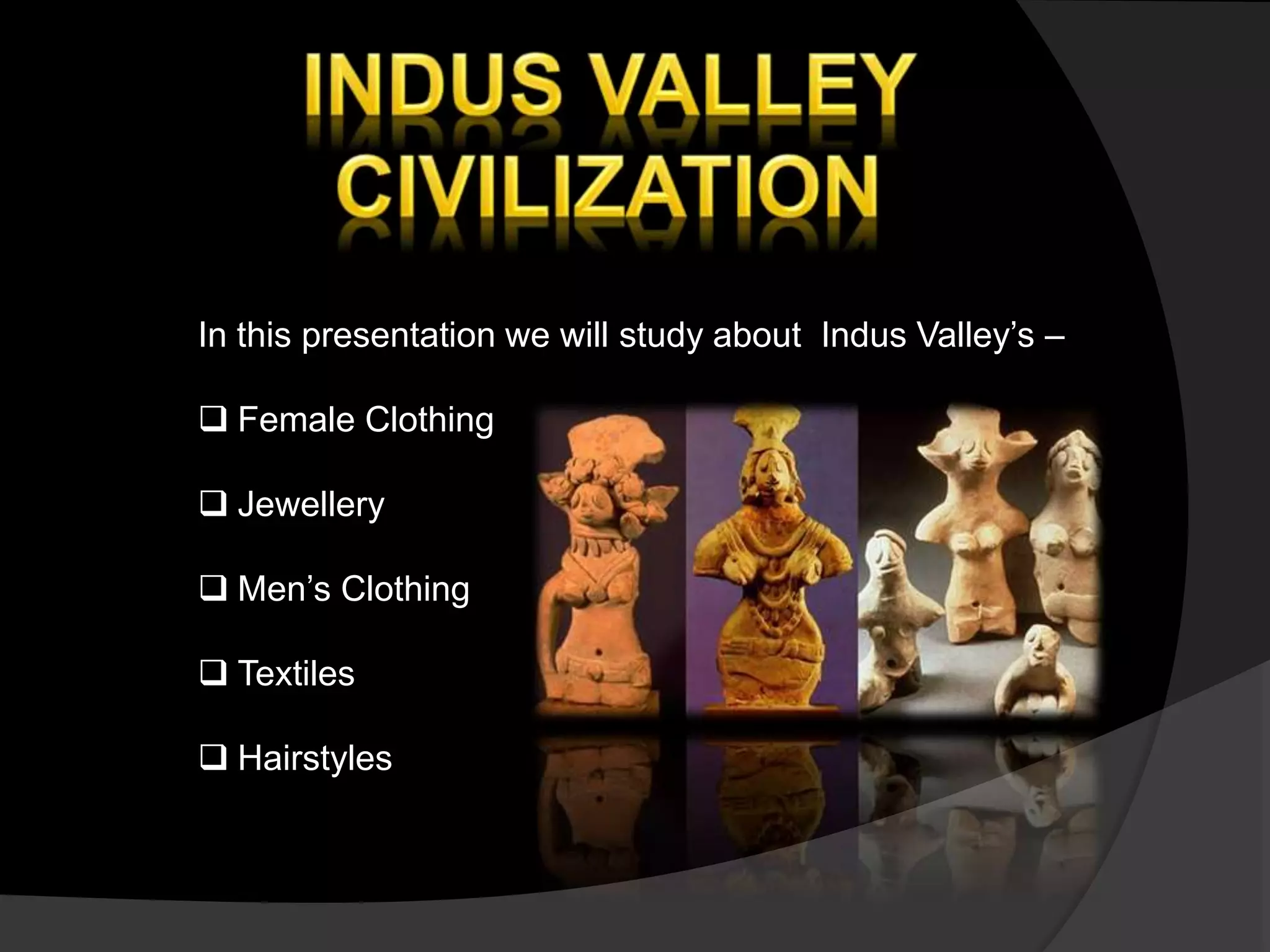
In this presentation we will study about Indus Valley’s –
 Female Clothing
 Jewellery
 Men’s Clothing
 Textiles
 Hairstyles
 Flax was grown and may have been used for fibres.
 Native Indian species of silkworm may have been utilised for silk.
 Women clothing seems to have been a knee-length skirt they also used
lipstick.
 Many bangles were born by women.
 Dress may have been based on lengths of cloth that were folded and
draped in different ways.
 Skins also may have been used for cold weather.
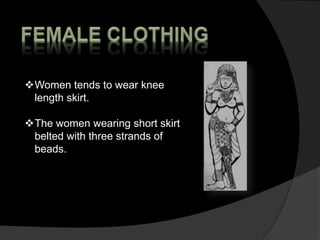
Women tends to wear knee
length skirt.
The women wearing short skirt
belted with three strands of
beads.
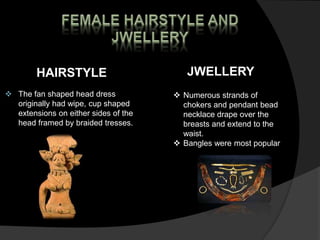
HAIRSTYLE
 The fan shaped head dress
originally had wipe, cup shaped
extensions on either sides of the
head framed by braided tresses.
JWELLERY
 Numerous strands of
chokers and pendant bead
necklace drape over the
breasts and extend to the
waist.
 Bangles were most popular
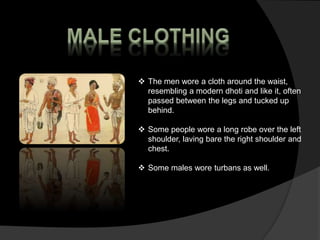
 The men wore a cloth around the waist,
resembling a modern dhoti and like it, often
passed between the legs and tucked up
behind.
 Some people wore a long robe over the left
shoulder, laving bare the right shoulder and
chest.
 Some males wore turbans as well.
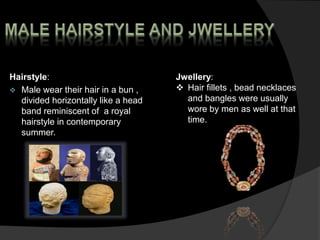
Hairstyle:
 Male wear their hair in a bun ,
divided horizontally like a head
band reminiscent of a royal
hairstyle in contemporary
summer.
Jwellery:
 Hair fillets , bead necklaces
and bangles were usually
wore by men as well at that
time.
Indus valley civilization

Indus valley civilization

  • 1.
    In this presentationwe will study about Indus Valley’s –  Female Clothing  Jewellery  Men’s Clothing  Textiles  Hairstyles
  • 2.
     Flax wasgrown and may have been used for fibres.  Native Indian species of silkworm may have been utilised for silk.  Women clothing seems to have been a knee-length skirt they also used lipstick.  Many bangles were born by women.  Dress may have been based on lengths of cloth that were folded and draped in different ways.  Skins also may have been used for cold weather.
  • 3.
    Women tends towear knee length skirt. The women wearing short skirt belted with three strands of beads.
  • 4.
    HAIRSTYLE  The fanshaped head dress originally had wipe, cup shaped extensions on either sides of the head framed by braided tresses. JWELLERY  Numerous strands of chokers and pendant bead necklace drape over the breasts and extend to the waist.  Bangles were most popular
  • 5.
     The menwore a cloth around the waist, resembling a modern dhoti and like it, often passed between the legs and tucked up behind.  Some people wore a long robe over the left shoulder, laving bare the right shoulder and chest.  Some males wore turbans as well.
  • 6.
    Hairstyle:  Male weartheir hair in a bun , divided horizontally like a head band reminiscent of a royal hairstyle in contemporary summer. Jwellery:  Hair fillets , bead necklaces and bangles were usually wore by men as well at that time.