INDO- ARYAN LANGUAGE SOCIETY
 HISTORY BACKGROUND
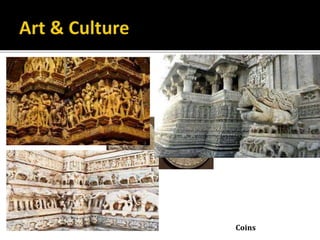
 ART, CULTURE & ECONOMY
 ROLE IN INDIAN SOCIETY
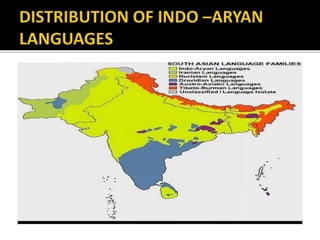
 INDO-ARYAN LANGUAGES
In the 18th century, the most ancient
known Indo-European languages were
those of the ancient Indo-Iranians. The
word Aryan was therefore adopted to
refer not only to the Indo-
Iranian peoples, but also to native Indo-
European speakers as a whole,
including the Romans, Greeks, and the
Germans
 They were primarily nomadic people.
 Consists of villages having herd animals and planted crops.
 They have individual states governed by Raja (military leader, law maker,
judge, governor, leader)
 They have mastered the art of house chariots for wars.
 The male’s communal life consisted of sabha, “denoting both the tribal
assembly and its mote hall”, which was for the males only, and featured
gambling, fights, chariot races and female dancers.
 Hence the community was mainly patriarchal which is also justified by
abundance of Aryan Gods.
 Played vital role in sculpting Hinduism by influencing the religion with
their epics, texts and religious ideologies.
Coins
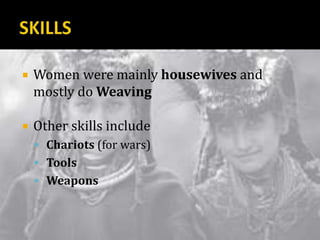
 Women were mainly housewives and
mostly do Weaving
 Other skills include
 Chariots (for wars)
 Tools
 Weapons
 Main source of wealth was cattle Exchange.
 Agriculture (Crops: Rice, sugarcane, leafy
vegetables, gourds, peas, beans and lentils)
 Trading
 Barter system
Sanskrit played a vital role in economy as it was the only language
for Communication
ROLE OF SANSKRIT
The earlier derivatives of Sanskrit used by the Aryans are called “Pali” or
“Magadhi” Sanskrit being the bearer of the Indo-Aryan Language which was
spoken by the Aryans.
Later on, during the Rigvedic period, Sanskrit was the predominant language.
The text and verbal communication were all practiced in Sanskrit . The Aryans’
language was very influential, however their religious and social beliefs
crafted the way we see India today.
 The vedic Age (1500-1000)
 Named after vedas (knowledge)
 collection of poems and sacred hyms.
Aryan preserve these stories, hyms and poems
without written language –they relied on oral
tradition.
Everything we know about Aryans comes from
these vedas.
 The Epic Period(1000-500) BC
This period known for its two marvelous epics:-
▪ The Ramayana
▪ The Mahabharata
▪ They mix history, mythology, adventure and religion.
▪ They also depuct stories about Aryan’s life, wars and
accomplishments.
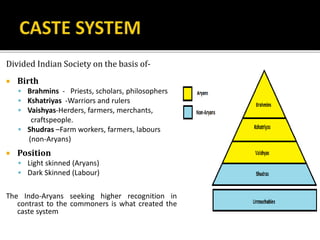
Divided Indian Society on the basis of-
 Birth
 Brahmins - Priests, scholars, philosophers
 Kshatriyas -Warriors and rulers
 Vaishyas-Herders, farmers, merchants,
craftspeople.
 Shudras –Farm workers, farmers, labours
(non-Aryans)
 Position
 Light skinned (Aryans)
 Dark Skinned (Labour)
The Indo-Aryans seeking higher recognition in
contrast to the commoners is what created the
caste system
THANKYOU

Indo-Aryan language society.

  • 1.
  • 2.
     HISTORY BACKGROUND ART, CULTURE & ECONOMY  ROLE IN INDIAN SOCIETY  INDO-ARYAN LANGUAGES
  • 4.
    In the 18thcentury, the most ancient known Indo-European languages were those of the ancient Indo-Iranians. The word Aryan was therefore adopted to refer not only to the Indo- Iranian peoples, but also to native Indo- European speakers as a whole, including the Romans, Greeks, and the Germans
  • 6.
     They wereprimarily nomadic people.  Consists of villages having herd animals and planted crops.  They have individual states governed by Raja (military leader, law maker, judge, governor, leader)  They have mastered the art of house chariots for wars.  The male’s communal life consisted of sabha, “denoting both the tribal assembly and its mote hall”, which was for the males only, and featured gambling, fights, chariot races and female dancers.  Hence the community was mainly patriarchal which is also justified by abundance of Aryan Gods.  Played vital role in sculpting Hinduism by influencing the religion with their epics, texts and religious ideologies.
  • 7.
  • 9.
     Women weremainly housewives and mostly do Weaving  Other skills include  Chariots (for wars)  Tools  Weapons
  • 10.
     Main sourceof wealth was cattle Exchange.  Agriculture (Crops: Rice, sugarcane, leafy vegetables, gourds, peas, beans and lentils)  Trading  Barter system Sanskrit played a vital role in economy as it was the only language for Communication
  • 11.
    ROLE OF SANSKRIT Theearlier derivatives of Sanskrit used by the Aryans are called “Pali” or “Magadhi” Sanskrit being the bearer of the Indo-Aryan Language which was spoken by the Aryans. Later on, during the Rigvedic period, Sanskrit was the predominant language. The text and verbal communication were all practiced in Sanskrit . The Aryans’ language was very influential, however their religious and social beliefs crafted the way we see India today.
  • 12.
     The vedicAge (1500-1000)  Named after vedas (knowledge)  collection of poems and sacred hyms. Aryan preserve these stories, hyms and poems without written language –they relied on oral tradition. Everything we know about Aryans comes from these vedas.
  • 13.
     The EpicPeriod(1000-500) BC This period known for its two marvelous epics:- ▪ The Ramayana ▪ The Mahabharata ▪ They mix history, mythology, adventure and religion. ▪ They also depuct stories about Aryan’s life, wars and accomplishments.
  • 14.
    Divided Indian Societyon the basis of-  Birth  Brahmins - Priests, scholars, philosophers  Kshatriyas -Warriors and rulers  Vaishyas-Herders, farmers, merchants, craftspeople.  Shudras –Farm workers, farmers, labours (non-Aryans)  Position  Light skinned (Aryans)  Dark Skinned (Labour) The Indo-Aryans seeking higher recognition in contrast to the commoners is what created the caste system
  • 15.