Submitted By:
Ms. Nandita Purohit
(M.Sc. Zoology)
(Python molurus)
Taxonomy
Kingdom: Animalia
Phylum: Chordata
Class: Reptilia
Order: Squamata
Suborder: Serpentes
Family: Pythonidae
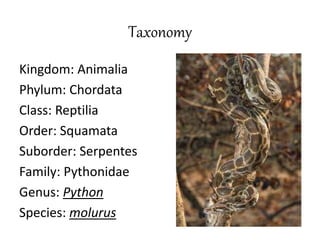
Genus: Python
Species: molurus
introduction
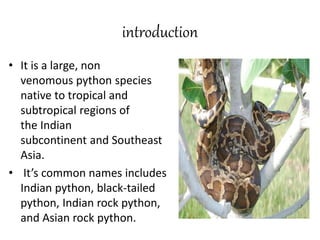
• It is a large, non
venomous python species
native to tropical and
subtropical regions of
the Indian
subcontinent and Southeast
Asia.
• It’s common names includes
Indian python, black-tailed
python, Indian rock python,
and Asian rock python.
Physiological Character
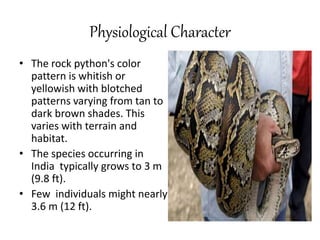
• The rock python's color
pattern is whitish or
yellowish with blotched
patterns varying from tan to
dark brown shades. This
varies with terrain and
habitat.
• The species occurring in
India typically grows to 3 m
(9.8 ft).
• Few individuals might nearly
3.6 m (12 ft).
Distribution and habitat
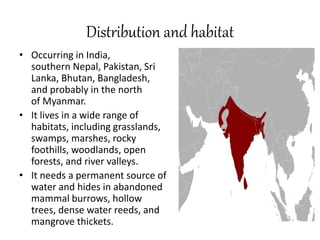
• Occurring in India,
southern Nepal, Pakistan, Sri
Lanka, Bhutan, Bangladesh,
and probably in the north
of Myanmar.
• It lives in a wide range of
habitats, including grasslands,
swamps, marshes, rocky
foothills, woodlands, open
forests, and river valleys.
• It needs a permanent source of
water and hides in abandoned
mammal burrows, hollow
trees, dense water reeds, and
mangrove thickets.
Behavior
• Lethargic and slow moving.
• Even in their native habitat,
they exhibit timidity and
rarely try to attack even
when attacked.
• Locomote usually with the
body moving in a straight
line, by "walking on its ribs".
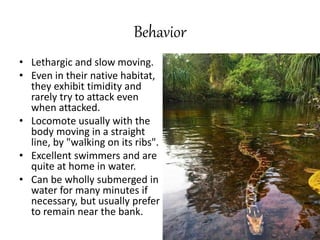
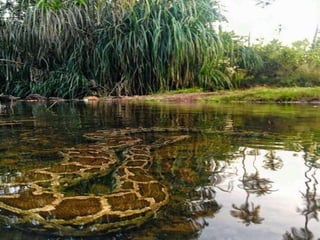
• Excellent swimmers and are
quite at home in water.
• Can be wholly submerged in
water for many minutes if
necessary, but usually prefer
to remain near the bank.
Feeding
• Like all snakes, Indian pythons are strict
carnivores and feed on mammals, birds, and
reptiles indiscriminately, but seem to prefer
mammals.
• Roused to activity on sighting prey, the snake
advances with a quivering tail and lunges with an
open mouth.
• Live prey is constricted and killed. One or two
coils are used to hold it in a tight grip.
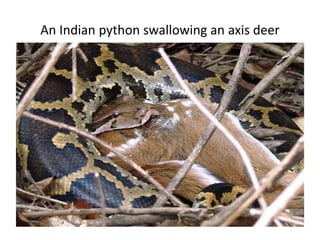
• The prey, unable to breathe, succumbs and is
subsequently swallowed head first.
An Indian python swallowing an axis deer
• After a heavy meal, they are
disinclined to move. If forced
to, hard parts of the meal
may tear through the body.
• Therefore, if disturbed, some
specimens disgorge their
meal to escape from potential
predators.
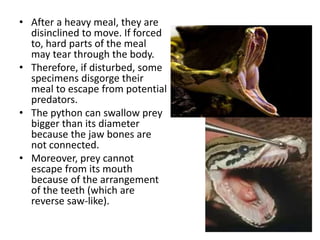
• The python can swallow prey
bigger than its diameter
because the jaw bones are
not connected.
• Moreover, prey cannot
escape from its mouth
because of the arrangement
of the teeth (which are
reverse saw-like).
Reproduction
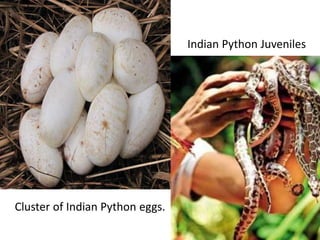
• These animals are oviparous, and females lay up
to 100, which she protects and incubates.
• For incubation, they are capable of raising their
body temperature above the ambient level
through muscular contractions.
• The hatchlings are 45–60 cm (18–24 in) in length
and grow quickly.
• An artificial incubation method using climate-
controlled environmental chambers was
developed in India for successfully raising
hatchlings from abandoned or unattended eggs.
Cluster of Indian Python eggs.
Indian Python Juveniles
IUCN status
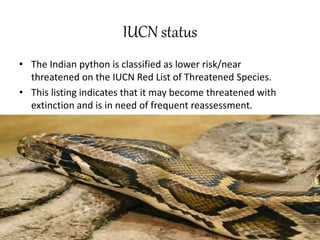
• The Indian python is classified as lower risk/near
threatened on the IUCN Red List of Threatened Species.
• This listing indicates that it may become threatened with
extinction and is in need of frequent reassessment.
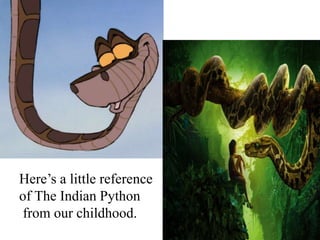
Here’s a little reference
of The Indian Python
from our childhood.
THANK- YOU!

Indian Python.pptx

  • 1.
    Submitted By: Ms. NanditaPurohit (M.Sc. Zoology) (Python molurus)
  • 2.
    Taxonomy Kingdom: Animalia Phylum: Chordata Class:Reptilia Order: Squamata Suborder: Serpentes Family: Pythonidae Genus: Python Species: molurus
  • 3.
    introduction • It isa large, non venomous python species native to tropical and subtropical regions of the Indian subcontinent and Southeast Asia. • It’s common names includes Indian python, black-tailed python, Indian rock python, and Asian rock python.
  • 4.
    Physiological Character • Therock python's color pattern is whitish or yellowish with blotched patterns varying from tan to dark brown shades. This varies with terrain and habitat. • The species occurring in India typically grows to 3 m (9.8 ft). • Few individuals might nearly 3.6 m (12 ft).
  • 5.
    Distribution and habitat •Occurring in India, southern Nepal, Pakistan, Sri Lanka, Bhutan, Bangladesh, and probably in the north of Myanmar. • It lives in a wide range of habitats, including grasslands, swamps, marshes, rocky foothills, woodlands, open forests, and river valleys. • It needs a permanent source of water and hides in abandoned mammal burrows, hollow trees, dense water reeds, and mangrove thickets.
  • 6.
    Behavior • Lethargic andslow moving. • Even in their native habitat, they exhibit timidity and rarely try to attack even when attacked. • Locomote usually with the body moving in a straight line, by "walking on its ribs". • Excellent swimmers and are quite at home in water. • Can be wholly submerged in water for many minutes if necessary, but usually prefer to remain near the bank.
  • 8.
    Feeding • Like allsnakes, Indian pythons are strict carnivores and feed on mammals, birds, and reptiles indiscriminately, but seem to prefer mammals. • Roused to activity on sighting prey, the snake advances with a quivering tail and lunges with an open mouth. • Live prey is constricted and killed. One or two coils are used to hold it in a tight grip. • The prey, unable to breathe, succumbs and is subsequently swallowed head first.
  • 9.
    An Indian pythonswallowing an axis deer
  • 10.
    • After aheavy meal, they are disinclined to move. If forced to, hard parts of the meal may tear through the body. • Therefore, if disturbed, some specimens disgorge their meal to escape from potential predators. • The python can swallow prey bigger than its diameter because the jaw bones are not connected. • Moreover, prey cannot escape from its mouth because of the arrangement of the teeth (which are reverse saw-like).
  • 11.
    Reproduction • These animalsare oviparous, and females lay up to 100, which she protects and incubates. • For incubation, they are capable of raising their body temperature above the ambient level through muscular contractions. • The hatchlings are 45–60 cm (18–24 in) in length and grow quickly. • An artificial incubation method using climate- controlled environmental chambers was developed in India for successfully raising hatchlings from abandoned or unattended eggs.
  • 12.
    Cluster of IndianPython eggs. Indian Python Juveniles
  • 13.
    IUCN status • TheIndian python is classified as lower risk/near threatened on the IUCN Red List of Threatened Species. • This listing indicates that it may become threatened with extinction and is in need of frequent reassessment.
  • 14.
    Here’s a littlereference of The Indian Python from our childhood.
  • 15.