WE SALUTE


OUR NATION
“I HAVE NOTHING NEW TO TEACH THE
WORLD.
TRUTH AND NON-VIOLENCE ARE AS OLD
AS THE HILLS.”
                  -M.K.GANDHI


SUCCESS OFTEN COMES TO THOSE WHO
DARE AND ACT;
IT SELDOM GOES TO THE TIMID WHO
ARE EVER AFRAID OF THE
CONSEQUECES.
         -JAWAHARLAL NEHRU
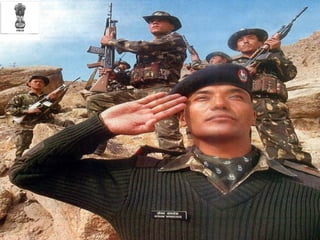
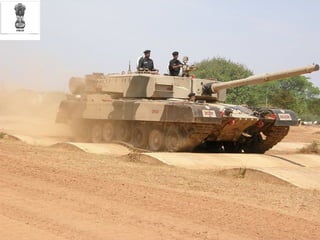
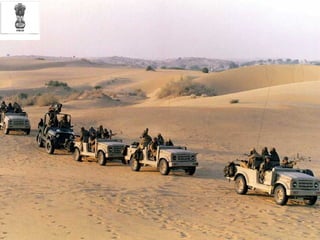
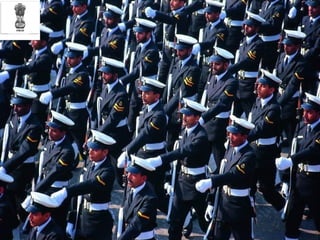
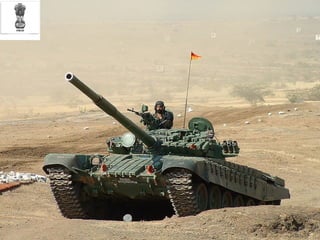
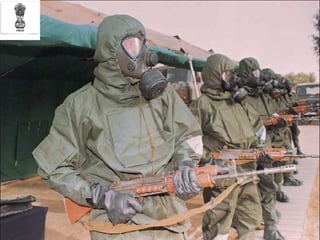
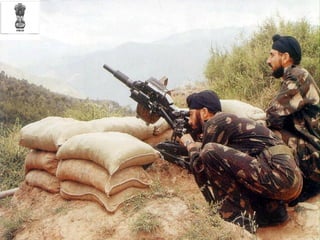
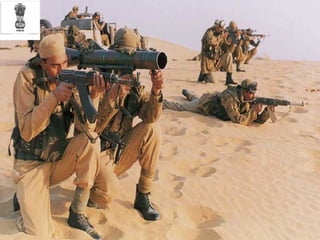
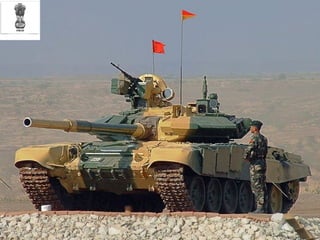
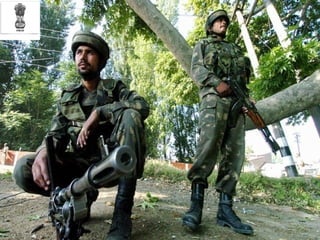
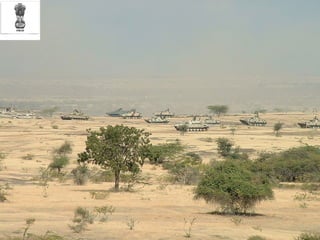
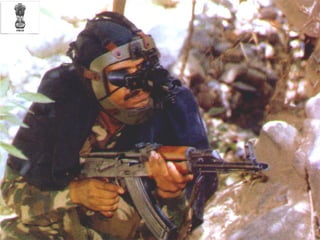
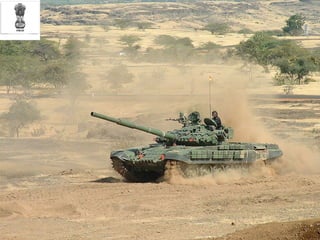
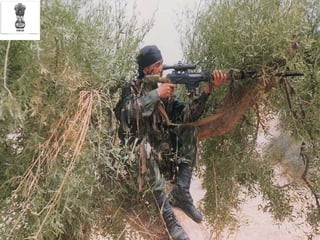
The Indian Army has a total troop strength
of around 2.5 million (1.3 million active and
1.2 million reserve) and is the second
largest standing army in the world. It is a
completely voluntary service, with a clause
that only entry is voluntary - the military
draft never having been imposed in India.
Indian Army is one of the major
contributors to various United Nation
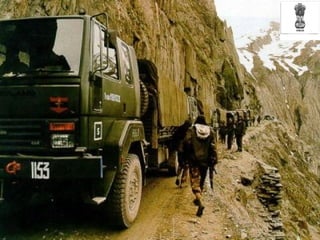
missions. The army has rich combat
experience in diverse terrains, considering
India's diversity on this front, and also has
a distinguished history of serving in United
Nations peacekeeping operations.
The force is headed by the Chief of Army Staff,
currently General Deepak Kapoor. The highest
rank in the Indian Army is Field Marshal, but it is
an honorary rank[1] and appointments are made
by the President of India - on the advice of the
Union Cabinet of Ministers - only in exceptional
circumstances. Late General S.H.F.J. Manekshaw
and the late General K.M. Cariappa are the only
two officers to have attained this rank. Though a
Field Marshal is an honorary rank, the officer is
held to 'never retire'. and are entitled to uniform
and flag as applicable to serving (active duty)
officers throughout life.
Upon India gaining independence in
1947, the British Indian Army was
divided into two parts to serve the newly
created nations of Union of India and
Islamic Republic of Pakistan. Most units
went to India, four Gurkha regiments
were transferred to the British Army,
and the rest of the Gurkha regiments
went to India.
Military Man Power
Total armed forces2,414,700 (Ranked
3rd)Active troops1,414,000 (Ranked
3rd)Total troops3,773,300 (Ranked
6th)Paramilitary forces1,089,700
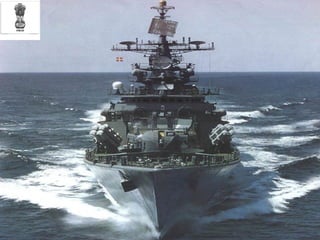
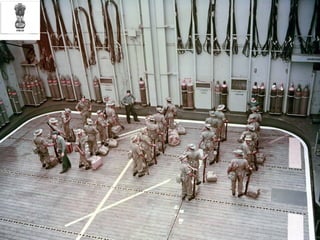
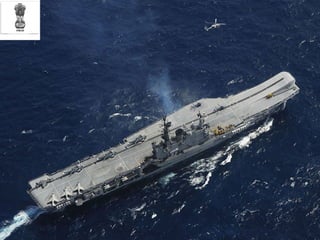
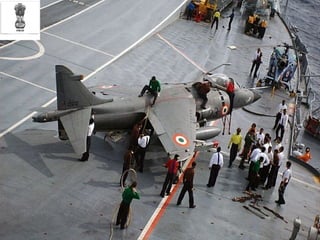
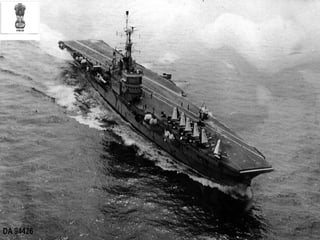
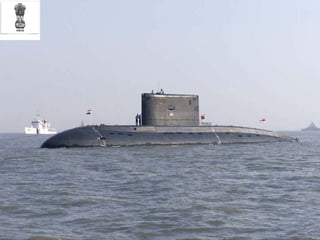
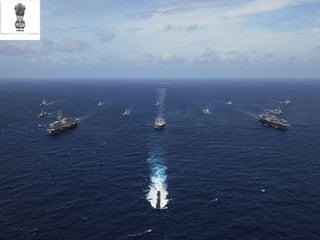
The Indian Navy is the naval branch of the armed
forces of India. With 55,000 men and women,
including 5,000 naval aviation personnel and 2,000
Marine Commandos (MARCOS), it is the world's
fourth largest navy.
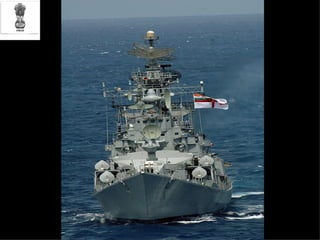
 The Indian Navy currently operates more than 155
vessels, including the aircraft carrier INS Viraat.
India uses its navy to enhance its international
relations through joint exercises, port visits, and
humanitarian missions, including disaster relief. The
Indian Navy is increasing its capabilities as a true
blue-water navy; the Indian Navy's doctrine states
that this is for the collective good of nations.
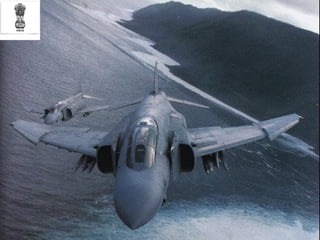
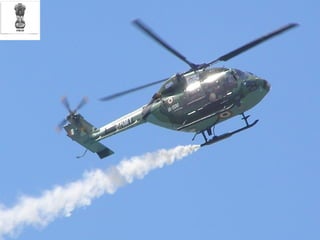
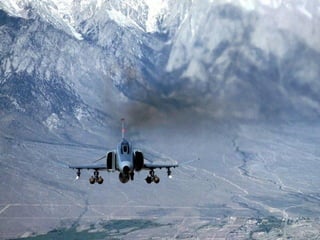
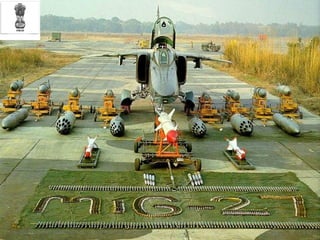
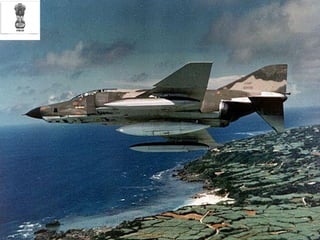
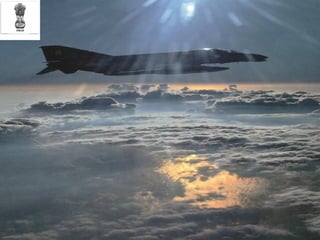
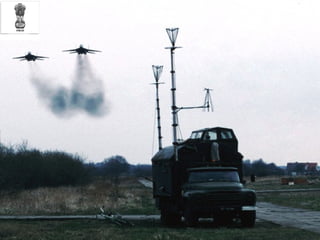
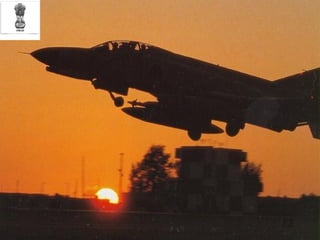
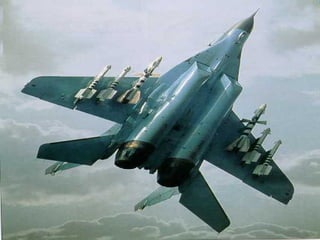
The Indian Air Force is the air arm of the Armed
Forces of India and has the prime responsibility of
conducting aerial warfare and   securing the
Indian airspace. It was established on
October 8, 1932 as the Indian Air Force. It was
granted the prefix "Royal" in 1945 in recognition of
its services during the Second World War. The
prefix Royal was dropped after India became a
Republic in 1950. With its headquarters in New
Delhi, the Indian Air Force has a strength of
approximately 170,000 personnel and 1,430
combat aircraft (2006 figure) making it the fourth
largest air force in the world.
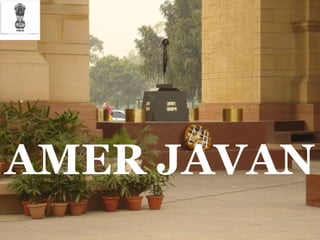
AMER JAVAN
Former President Abdul Kalam's IDay address
August 14, 2005 (only few lines added)
"My Dear Citizens of India,

On the eve of the 59th Independence Day, I
extend to you my best wishes for your happiness
and prosperity. My greetings to all our people at
home and abroad. Let us resolve, on this
occasion, to remember with gratitude, the
selfless and devoted services of our Armed
Forces who are guarding our frontiers on the
land, over the sea, and in the air. We are also
grateful to the Paramilitary and Police Forces for
preserving our internal security and maintaining
law and order.
I met 137 freedom fighters from 27 States and
Union Territories on 9th August 2005 at
Rashtrapati Bhavan. I saw their enthusiasm even
at their ripe age, to bring back the nationalism as
a living movement. Today our country is free,
because the freedom fighters gave their best to
the nation in their prime of youth. Honoring the
freedom fighters is honoring the independent
nation and its spirit of nationalism. We must
thank them with respect and make their lives
happy.
HAPPY
INDEPENDENCE DAY
    JAIHIND

      COMPOSED
      EDITED AND
      POSTED BY
    JAYAKRISHNAN

Indian military after independence

  • 1.
  • 2.
    “I HAVE NOTHINGNEW TO TEACH THE WORLD. TRUTH AND NON-VIOLENCE ARE AS OLD AS THE HILLS.” -M.K.GANDHI SUCCESS OFTEN COMES TO THOSE WHO DARE AND ACT; IT SELDOM GOES TO THE TIMID WHO ARE EVER AFRAID OF THE CONSEQUECES. -JAWAHARLAL NEHRU
  • 3.
    The Indian Armyhas a total troop strength of around 2.5 million (1.3 million active and 1.2 million reserve) and is the second largest standing army in the world. It is a completely voluntary service, with a clause that only entry is voluntary - the military draft never having been imposed in India. Indian Army is one of the major contributors to various United Nation missions. The army has rich combat experience in diverse terrains, considering India's diversity on this front, and also has a distinguished history of serving in United Nations peacekeeping operations.
  • 4.
    The force isheaded by the Chief of Army Staff, currently General Deepak Kapoor. The highest rank in the Indian Army is Field Marshal, but it is an honorary rank[1] and appointments are made by the President of India - on the advice of the Union Cabinet of Ministers - only in exceptional circumstances. Late General S.H.F.J. Manekshaw and the late General K.M. Cariappa are the only two officers to have attained this rank. Though a Field Marshal is an honorary rank, the officer is held to 'never retire'. and are entitled to uniform and flag as applicable to serving (active duty) officers throughout life.
  • 5.
    Upon India gainingindependence in 1947, the British Indian Army was divided into two parts to serve the newly created nations of Union of India and Islamic Republic of Pakistan. Most units went to India, four Gurkha regiments were transferred to the British Army, and the rest of the Gurkha regiments went to India. Military Man Power Total armed forces2,414,700 (Ranked 3rd)Active troops1,414,000 (Ranked 3rd)Total troops3,773,300 (Ranked 6th)Paramilitary forces1,089,700
  • 12.
    The Indian Navyis the naval branch of the armed forces of India. With 55,000 men and women, including 5,000 naval aviation personnel and 2,000 Marine Commandos (MARCOS), it is the world's fourth largest navy. The Indian Navy currently operates more than 155 vessels, including the aircraft carrier INS Viraat. India uses its navy to enhance its international relations through joint exercises, port visits, and humanitarian missions, including disaster relief. The Indian Navy is increasing its capabilities as a true blue-water navy; the Indian Navy's doctrine states that this is for the collective good of nations.
  • 22.
    The Indian AirForce is the air arm of the Armed Forces of India and has the prime responsibility of conducting aerial warfare and securing the Indian airspace. It was established on October 8, 1932 as the Indian Air Force. It was granted the prefix "Royal" in 1945 in recognition of its services during the Second World War. The prefix Royal was dropped after India became a Republic in 1950. With its headquarters in New Delhi, the Indian Air Force has a strength of approximately 170,000 personnel and 1,430 combat aircraft (2006 figure) making it the fourth largest air force in the world.
  • 45.
  • 46.
    Former President AbdulKalam's IDay address August 14, 2005 (only few lines added) "My Dear Citizens of India, On the eve of the 59th Independence Day, I extend to you my best wishes for your happiness and prosperity. My greetings to all our people at home and abroad. Let us resolve, on this occasion, to remember with gratitude, the selfless and devoted services of our Armed Forces who are guarding our frontiers on the land, over the sea, and in the air. We are also grateful to the Paramilitary and Police Forces for preserving our internal security and maintaining law and order.
  • 47.
    I met 137freedom fighters from 27 States and Union Territories on 9th August 2005 at Rashtrapati Bhavan. I saw their enthusiasm even at their ripe age, to bring back the nationalism as a living movement. Today our country is free, because the freedom fighters gave their best to the nation in their prime of youth. Honoring the freedom fighters is honoring the independent nation and its spirit of nationalism. We must thank them with respect and make their lives happy.
  • 48.
    HAPPY INDEPENDENCE DAY JAIHIND COMPOSED EDITED AND POSTED BY JAYAKRISHNAN