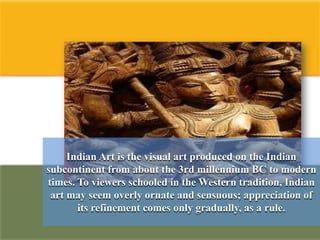
Indian Art is the visual art produced on the Indian
subcontinent from about the 3rd millennium BC to modern
times. To viewers schooled in the Western tradition, Indian
 art may seem overly ornate and sensuous; appreciation of
       its refinement comes only gradually, as a rule.
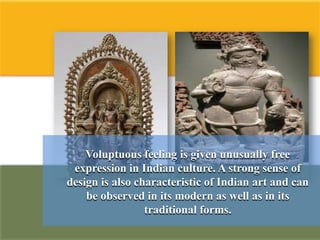
Voluptuous feeling is given unusually free
 expression in Indian culture. A strong sense of
design is also characteristic of Indian art and can
    be observed in its modern as well as in its
                 traditional forms.
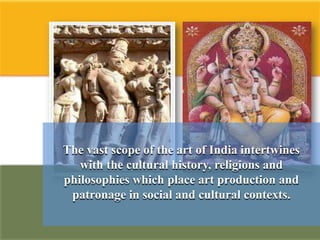
The vast scope of the art of India intertwines
   with the cultural history, religions and
philosophies which place art production and
 patronage in social and cultural contexts.
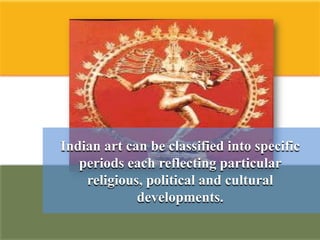
Indian art can be classified into specific
   periods each reflecting particular
    religious, political and cultural
             developments.
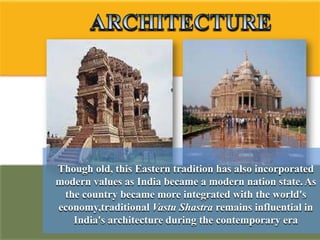
Though old, this Eastern tradition has also incorporated
modern values as India became a modern nation state. As
 the country became more integrated with the world's
economy,traditional Vastu Shastra remains influential in
   India's architecture during the contemporary era
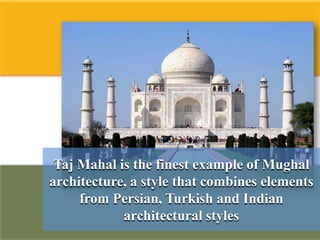
Taj Mahal is the finest example of Mughal
architecture, a style that combines elements
     from Persian, Turkish and Indian
            architectural styles
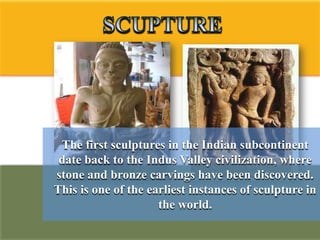
The first sculptures in the Indian subcontinent
 date back to the Indus Valley civilization, where
stone and bronze carvings have been discovered.
This is one of the earliest instances of sculpture in
                     the world.
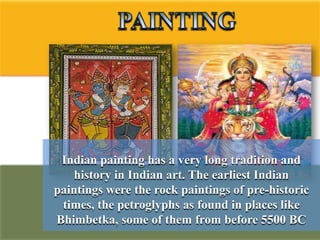
Indian painting has a very long tradition and
   history in Indian art. The earliest Indian
paintings were the rock paintings of pre-historic
 times, the petroglyphs as found in places like
Bhimbetka, some of them from before 5500 BC
REFERENCES

http://en.wikipedia.org/wiki/Indian_painting

Indian art

  • 2.
    Indian Art isthe visual art produced on the Indian subcontinent from about the 3rd millennium BC to modern times. To viewers schooled in the Western tradition, Indian art may seem overly ornate and sensuous; appreciation of its refinement comes only gradually, as a rule.
  • 3.
    Voluptuous feeling isgiven unusually free expression in Indian culture. A strong sense of design is also characteristic of Indian art and can be observed in its modern as well as in its traditional forms.
  • 4.
    The vast scopeof the art of India intertwines with the cultural history, religions and philosophies which place art production and patronage in social and cultural contexts.
  • 5.
    Indian art canbe classified into specific periods each reflecting particular religious, political and cultural developments.
  • 6.
    Though old, thisEastern tradition has also incorporated modern values as India became a modern nation state. As the country became more integrated with the world's economy,traditional Vastu Shastra remains influential in India's architecture during the contemporary era
  • 7.
    Taj Mahal isthe finest example of Mughal architecture, a style that combines elements from Persian, Turkish and Indian architectural styles
  • 8.
    The first sculpturesin the Indian subcontinent date back to the Indus Valley civilization, where stone and bronze carvings have been discovered. This is one of the earliest instances of sculpture in the world.
  • 9.
    Indian painting hasa very long tradition and history in Indian art. The earliest Indian paintings were the rock paintings of pre-historic times, the petroglyphs as found in places like Bhimbetka, some of them from before 5500 BC
  • 10.