!ncredible !ndia Anas Dalvi 238 Dipika Bengani 106 MBA Ad 2010 Brand Strategy
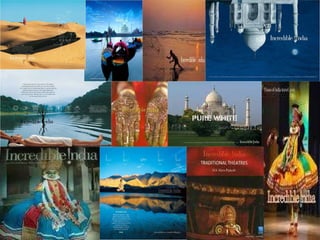
Incredible India Primary objective of this branding exercise was to create a distinctive identity for the country Capitalized on the factors “Holidaying away from home” and “the exotic experience” Campaign successfully established India as a high-end tourist destination Generated a 16% increase in tourist traffic in the first year and following years report an average growth of 18-20%
Key Objectives Bringing back tourists to India – Studies report a sharp fall In the avg. number of tourists visiting the Indian Subcontinent Using the rise in travel expenditure by consumers to attract tourists Consumer spends around 5-10% of total spending in a year Shifting base and ideology : From the ‘Exotic’ to the ‘adventurous’
The Tourism Industry India’s share of total market is pittance 0.51% However, average duration of stay is one of the highest 27 days for non-package tourist 14 days for package tourist Third largest export industry after gems and jeweller and garments Foreign exchange earnings are around US$3.2bn It is the highest foreign exchange earner if we consider the fact that the net value addition in Gems and Jewellery is 30% whereas in Tourism it is more than 90%
Segmentation The most important base for segmentation is the Lifestyle as travelling decisions can be greatly influenced by the same. Other factors such as Level of Income, Availability of leisure time, etc. are secondary.
Targeting Mass Market: Consists of Vacationists that travel in large groups They prefer all-inclusive tours Generally Conservative Popular Market: Smaller Groups going for inclusive or semi-inclusive tours Groups include pensioners, retired people Individual Market: Consists of Chairmen, Sr. Executives, people on business visits. As lifestyle changes, preferences might change
Strengths: Geographical Diversity – Desert, Mountains, Forests and Beaches Cultural Diversity Wealth of archaeological sites and historic monuments Manpower costs are low World class hotels present Weaknesses: Lack of adequate infrastructure Xenophobic attitude among certain sections No proper marketing tools used SWOT Analysis
Opportunities: Proactive role of govt. in framing proper policies Allowing entry of more multinational companies Growth of Domestic Tourism Threats: Economic Conditions of the other countries Political turbulence in Kashmir, Gujarat Aggressive strategies approached by other countries for tourism SWOT Analysis
Social:  -Tourism was looked upon as a destruction of the social fabric of a place. But some places like Kerala and Rajasthan have kept balance between their own culture and demand of international tourists and thus have profited handsomely Legal:  Tax Foreign Investment Eco-tourism policies and guidelines Economic: High spending power of International Tourists Increase in demand for better hotels Air Travel S.L.E.P.T. Analysis
Political: Tourism industry is based on Government support and cannot sustain without it. The main attraction: the vast heritage of India is entirely under Govt. Through ASI Policy change has a huge impact on the industry Political turmoil in the country also leads to the decrease in the tourists Technology: It plays a major part in the promotion of a place Better communication by far reaching areas Better transportation leads to people visiting many places
 
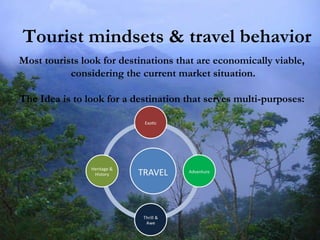
Tourist mindsets & travel behavior Most tourists look for destinations that are economically viable, considering the current market situation. The Idea is to look for a destination that serves multi-purposes:
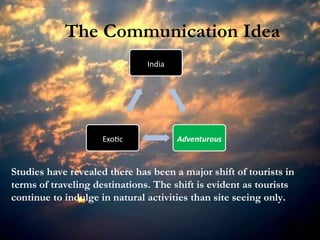
The Communication Idea Studies have revealed there has been a major shift of tourists in terms of traveling destinations. The shift is evident as tourists continue to indulge in natural activities than site seeing only.
Using current consumer mindset into the communication by making the trip a “complete” experience Adding elements of thrill, awe and adventure to the campaign Major shift from seeing and observing to doing and experiencing Concept and Ideation
Concept   and Ideation ASAP – The Adventure of Incredible India The campaigns would focus on developing the above communication – adding wildlife and nature observation, river rafting, bungee jumping and other adventure sports Involving prospective tourists in the communication via the ASAP show
The ASAP Show An MTV Roadies style game show that selects players from across the world to participate. The game show involves players embarking on an adventure trip to achieve a common objective. Contenders enroll for the contest and are taken through various places of historic importance and beauty while completing the task. Elements of “Treasure Hunt” and the popular “Survivor” series.
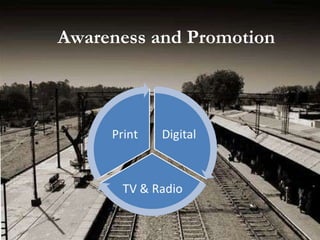
Awareness and Promotion
Digital Media www.asap.com A website that invites tourists to come in share their experiences, discuss about their trips and share information Allows prospective tourists to enroll in the ASAP contest by registering Provides information about India, places to visit, arrangements for air travel and Hotels
TV, Radio and Print Creation of awareness via TVCs, Radio and Print Media Campaign involves depicting tourists on a trip, enjoying themselves whilst wondering –  “ What could possibly go wrong?” The advertisements would end by showing obstructions of the natural kind – Tigers, gigantic waterfalls, dense forests, tribes, people etc. The main objective is to involve a sense of thrill and awe in the trip throughout the contest, at the same time taking them through the heritage, history and beauty of India

Incredible India

  • 1.
    !ncredible !ndia AnasDalvi 238 Dipika Bengani 106 MBA Ad 2010 Brand Strategy
  • 2.
    Incredible India Primaryobjective of this branding exercise was to create a distinctive identity for the country Capitalized on the factors “Holidaying away from home” and “the exotic experience” Campaign successfully established India as a high-end tourist destination Generated a 16% increase in tourist traffic in the first year and following years report an average growth of 18-20%
  • 3.
    Key Objectives Bringingback tourists to India – Studies report a sharp fall In the avg. number of tourists visiting the Indian Subcontinent Using the rise in travel expenditure by consumers to attract tourists Consumer spends around 5-10% of total spending in a year Shifting base and ideology : From the ‘Exotic’ to the ‘adventurous’
  • 4.
    The Tourism IndustryIndia’s share of total market is pittance 0.51% However, average duration of stay is one of the highest 27 days for non-package tourist 14 days for package tourist Third largest export industry after gems and jeweller and garments Foreign exchange earnings are around US$3.2bn It is the highest foreign exchange earner if we consider the fact that the net value addition in Gems and Jewellery is 30% whereas in Tourism it is more than 90%
  • 5.
    Segmentation The mostimportant base for segmentation is the Lifestyle as travelling decisions can be greatly influenced by the same. Other factors such as Level of Income, Availability of leisure time, etc. are secondary.
  • 6.
    Targeting Mass Market:Consists of Vacationists that travel in large groups They prefer all-inclusive tours Generally Conservative Popular Market: Smaller Groups going for inclusive or semi-inclusive tours Groups include pensioners, retired people Individual Market: Consists of Chairmen, Sr. Executives, people on business visits. As lifestyle changes, preferences might change
  • 7.
    Strengths: Geographical Diversity– Desert, Mountains, Forests and Beaches Cultural Diversity Wealth of archaeological sites and historic monuments Manpower costs are low World class hotels present Weaknesses: Lack of adequate infrastructure Xenophobic attitude among certain sections No proper marketing tools used SWOT Analysis
  • 8.
    Opportunities: Proactive roleof govt. in framing proper policies Allowing entry of more multinational companies Growth of Domestic Tourism Threats: Economic Conditions of the other countries Political turbulence in Kashmir, Gujarat Aggressive strategies approached by other countries for tourism SWOT Analysis
  • 9.
    Social: -Tourismwas looked upon as a destruction of the social fabric of a place. But some places like Kerala and Rajasthan have kept balance between their own culture and demand of international tourists and thus have profited handsomely Legal: Tax Foreign Investment Eco-tourism policies and guidelines Economic: High spending power of International Tourists Increase in demand for better hotels Air Travel S.L.E.P.T. Analysis
  • 10.
    Political: Tourism industryis based on Government support and cannot sustain without it. The main attraction: the vast heritage of India is entirely under Govt. Through ASI Policy change has a huge impact on the industry Political turmoil in the country also leads to the decrease in the tourists Technology: It plays a major part in the promotion of a place Better communication by far reaching areas Better transportation leads to people visiting many places
  • 11.
  • 12.
    Tourist mindsets &travel behavior Most tourists look for destinations that are economically viable, considering the current market situation. The Idea is to look for a destination that serves multi-purposes:
  • 13.
    The Communication IdeaStudies have revealed there has been a major shift of tourists in terms of traveling destinations. The shift is evident as tourists continue to indulge in natural activities than site seeing only.
  • 14.
    Using current consumermindset into the communication by making the trip a “complete” experience Adding elements of thrill, awe and adventure to the campaign Major shift from seeing and observing to doing and experiencing Concept and Ideation
  • 15.
    Concept and Ideation ASAP – The Adventure of Incredible India The campaigns would focus on developing the above communication – adding wildlife and nature observation, river rafting, bungee jumping and other adventure sports Involving prospective tourists in the communication via the ASAP show
  • 16.
    The ASAP ShowAn MTV Roadies style game show that selects players from across the world to participate. The game show involves players embarking on an adventure trip to achieve a common objective. Contenders enroll for the contest and are taken through various places of historic importance and beauty while completing the task. Elements of “Treasure Hunt” and the popular “Survivor” series.
  • 17.
  • 18.
    Digital Media www.asap.comA website that invites tourists to come in share their experiences, discuss about their trips and share information Allows prospective tourists to enroll in the ASAP contest by registering Provides information about India, places to visit, arrangements for air travel and Hotels
  • 19.
    TV, Radio andPrint Creation of awareness via TVCs, Radio and Print Media Campaign involves depicting tourists on a trip, enjoying themselves whilst wondering – “ What could possibly go wrong?” The advertisements would end by showing obstructions of the natural kind – Tigers, gigantic waterfalls, dense forests, tribes, people etc. The main objective is to involve a sense of thrill and awe in the trip throughout the contest, at the same time taking them through the heritage, history and beauty of India