Incentives to Voluntary Work
Anitta Pehkonen
VVH seminar 11.6.2015
Helsinki
Background Information
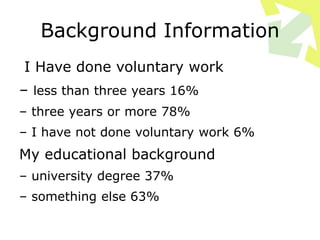
I Have done voluntary work
– less than three years 16%
– three years or more 78%
– I have not done voluntary work 6%
My educational background
– university degree 37%
– something else 63%
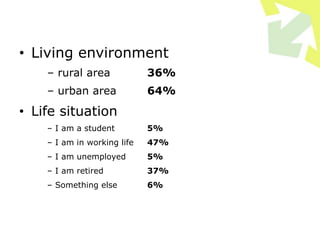
• Living environment
– rural area 36%
– urban area 64%
• Life situation
– I am a student 5%
– I am in working life 47%
– I am unemployed 5%
– I am retired 37%
– Something else 6%
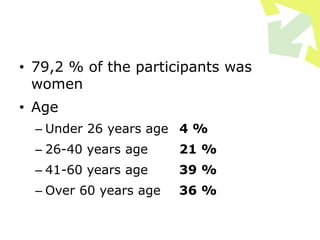
• 79,2 % of the participants was
women
• Age
– Under 26 years age 4 %
– 26-40 years age 21 %
– 41-60 years age 39 %
– Over 60 years age 36 %
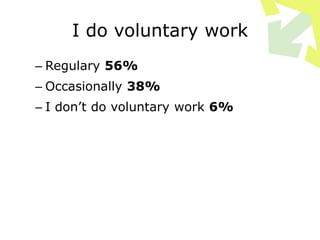
I do voluntary work
– Regulary 56%
– Occasionally 38%
– I don’t do voluntary work 6%
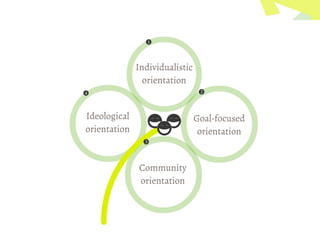
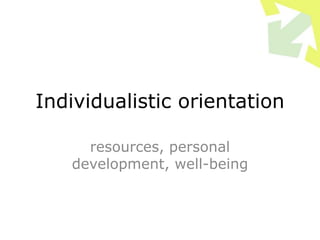
Individualistic orientation
resources, personal
development, well-being
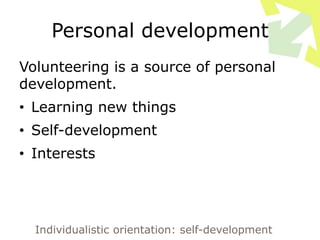
Personal development
Volunteering is a source of personal
development.
• Learning new things
• Self-development
• Interests
Individualistic orientation: self-development
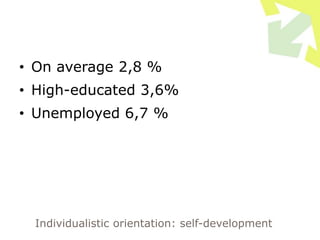
• On average 2,8 %
• High-educated 3,6%
• Unemployed 6,7 %
Individualistic orientation: self-development
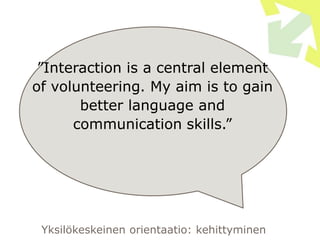
”Interaction is a central element
of volunteering. My aim is to gain
better language and
communication skills.”
Yksilökeskeinen orientaatio: kehittyminen
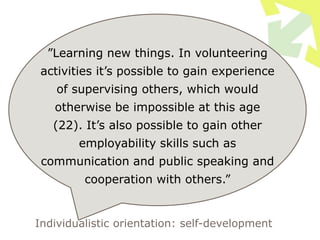
”Learning new things. In volunteering
activities it’s possible to gain experience
of supervising others, which would
otherwise be impossible at this age
(22). It’s also possible to gain other
employability skills such as
communication and public speaking and
cooperation with others.”
Individualistic orientation: self-development
Community orientation
Organisation,regard, training
and supervision,
community support, rewards
Training and supervision
The volunteers receive training
and supervision for their tasks,
and support within the community
(also professional support).
Community orientation: Training & supervision
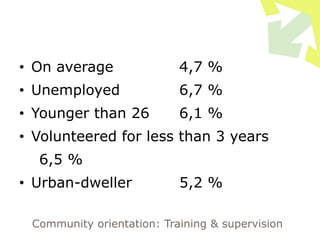
• On average 4,7 %
• Unemployed 6,7 %
• Younger than 26 6,1 %
• Volunteered for less than 3 years
6,5 %
• Urban-dweller 5,2 %
Community orientation: Training & supervision
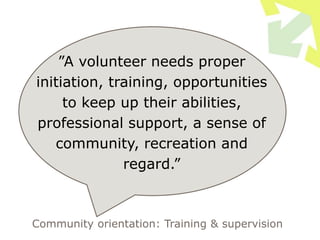
”A volunteer needs proper
initiation, training, opportunities
to keep up their abilities,
professional support, a sense of
community, recreation and
regard.”
Community orientation: Training & supervision
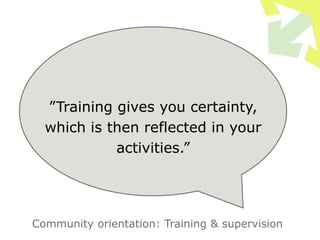
”Training gives you certainty,
which is then reflected in your
activities.”
Community orientation: Training & supervision
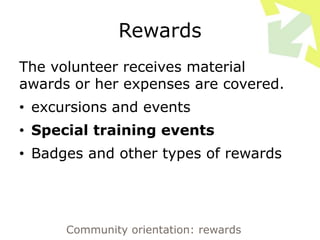
Rewards
The volunteer receives material
awards or her expenses are covered.
• excursions and events
• Special training events
• Badges and other types of rewards
Community orientation: rewards
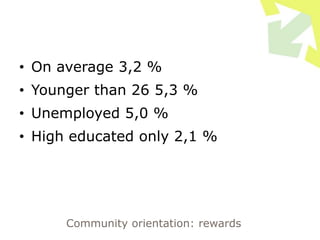
• On average 3,2 %
• Younger than 26 5,3 %
• Unemployed 5,0 %
• High educated only 2,1 %
Community orientation: rewards
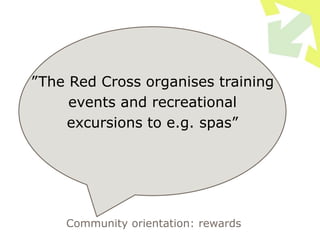
”The Red Cross organises training
events and recreational
excursions to e.g. spas”
Thank You 

Incentives to Voluntary Work

  • 1.
    Incentives to VoluntaryWork Anitta Pehkonen VVH seminar 11.6.2015 Helsinki
  • 3.
    Background Information I Havedone voluntary work – less than three years 16% – three years or more 78% – I have not done voluntary work 6% My educational background – university degree 37% – something else 63%
  • 4.
    • Living environment –rural area 36% – urban area 64% • Life situation – I am a student 5% – I am in working life 47% – I am unemployed 5% – I am retired 37% – Something else 6%
  • 5.
    • 79,2 %of the participants was women • Age – Under 26 years age 4 % – 26-40 years age 21 % – 41-60 years age 39 % – Over 60 years age 36 %
  • 6.
    I do voluntarywork – Regulary 56% – Occasionally 38% – I don’t do voluntary work 6%
  • 7.
  • 8.
    Personal development Volunteering isa source of personal development. • Learning new things • Self-development • Interests Individualistic orientation: self-development
  • 9.
    • On average2,8 % • High-educated 3,6% • Unemployed 6,7 % Individualistic orientation: self-development
  • 10.
    ”Interaction is acentral element of volunteering. My aim is to gain better language and communication skills.” Yksilökeskeinen orientaatio: kehittyminen
  • 11.
    ”Learning new things.In volunteering activities it’s possible to gain experience of supervising others, which would otherwise be impossible at this age (22). It’s also possible to gain other employability skills such as communication and public speaking and cooperation with others.” Individualistic orientation: self-development
  • 12.
    Community orientation Organisation,regard, training andsupervision, community support, rewards
  • 13.
    Training and supervision Thevolunteers receive training and supervision for their tasks, and support within the community (also professional support). Community orientation: Training & supervision
  • 14.
    • On average4,7 % • Unemployed 6,7 % • Younger than 26 6,1 % • Volunteered for less than 3 years 6,5 % • Urban-dweller 5,2 % Community orientation: Training & supervision
  • 15.
    ”A volunteer needsproper initiation, training, opportunities to keep up their abilities, professional support, a sense of community, recreation and regard.” Community orientation: Training & supervision
  • 16.
    ”Training gives youcertainty, which is then reflected in your activities.” Community orientation: Training & supervision
  • 17.
    Rewards The volunteer receivesmaterial awards or her expenses are covered. • excursions and events • Special training events • Badges and other types of rewards Community orientation: rewards
  • 18.
    • On average3,2 % • Younger than 26 5,3 % • Unemployed 5,0 % • High educated only 2,1 % Community orientation: rewards
  • 19.
    Community orientation: rewards ”TheRed Cross organises training events and recreational excursions to e.g. spas”
  • 21.