








Improving productivity
through Lean and Total
Productive Maintenance
Activities
Project summary
implemented in a retail
printing facility
Problem Solving 101
Studies have shown that fixing a problem requires 90%
of the time spent in finding the root cause……..
7 Steps of Corrective Action
•“7 Steps approach” is a problem-solving methodology
for product and process improvement.
•It is structured into seven disciplines, emphasizing team
synergy.
•The team as whole is better and smarter than any 1 of
us
•Each discipline is supported by a checklist of
assessment questions,
such as “what is wrong with what”, “what, when, where,
how much”.
Implementing the 7 Steps of Corrective
Action
1. Problem Statement
2. Interim Action
3. Root Cause of Occurrence
4. Root Cause of Non-Detection
5. Temporary Corrective Action
6. Permanent Corrective Action
7. Closure
FIND 2 KEY
ROOT CAUSES:
PROBLEM STATEMENT
FACTS AND DATA
ASK WHY
5 TIMES
TEMPORARY ACTION
PERMANENT ACTION
TRACK AND CONFIRM
- OF OCCURRENCE
- OF NOT DETECTING
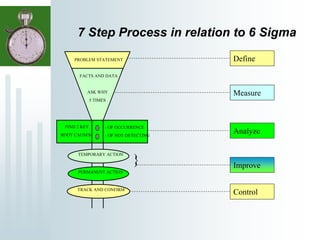
7 Step Process in relation to 6 Sigma
FIND 2 KEY
ROOT CAUSES:
PROBLEM STATEMENT
FACTS AND DATA
ASK WHY
5 TIMES
TEMPORARY ACTION
PERMANENT ACTION
TRACK AND CONFIRM
- OF OCCURRENCE
- OF NOT DETECTING
Define
Measure
Analyze
Improve
Control
}
The Action Statement - Defined
• The efforts to assist the pressroom in documentation of
press profiles, quality analysis and process variation
may be enhanced by a collective approach,
encompassing managers, operators, support
departments and suppliers.
Define
 The purpose of a press profile is determine the issues
that operators face effecting the performance and
efficiency of the press.
 Process variation will determine those areas of the
press that fail to remain in control during operation
 Quality measurement provides information on the
ability of the press to produce a customers
expectation of Quality
 Documentation of these processes assist to develop
action plans needed to improve the process and
determine cost associated to the improvements.
 Improvements effect
Customer Satisfaction – Plant Profitability –
Employee’s Work Environment.
Define - Measure - Tools
• Process Variation - “30 x 30” - Production Sampling
• Unplanned Downtime - Top 10 Causes - Pivot Table
Report
• Waste - Top 10 Causes - Pivot Table Reports
• Quality Attainment -Curve Measurement - Worksheet
• Press Profile - Operator’s Checklist
• Temperature Profile - Ink Audit Report
• Vibration Analysis - Report
• Paper Performance - Paper Audit
• Broken Windows - Pictures
• Sop Audits
Analysis
• Any of the tools previously mentioned are good by
themselves, but when combined together provide direction
and priority to what needs to be accomplished to improve.
• What comes first, the compass or the clock? Before one
can truly manage time (the clock), it is important to know
where you are going, what your priorities and goals are, in
which direction you are headed (the compass). Where you
are headed is more important than how fast you are going.
Rather than always focusing on what's urgent, learn to
focus on what is really important.
Improve
• Use the Action Item Register to set time lines and
responsibility
• Insure the TPM program is updated when needed
• Spin off projects
• Training Opportunities
• Feed back to suppliers – ink and paper
• Develop capital plan as required
Control
• Saving projects
• Sop Audits
• 5s
• Training Matrix
• Weekly Maintenance Meetings
• Customer Reviews
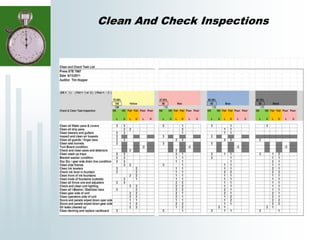
Clean And Check Inspections
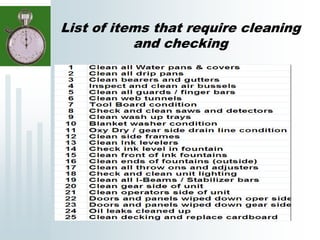
List of items that require cleaning
and checking
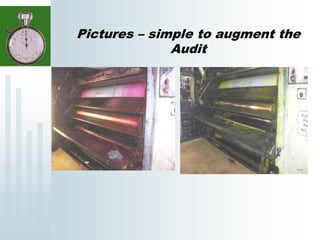
Pictures – simple to augment the
Audit
Used good and bad examples
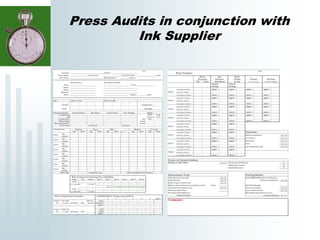
Press Audits in conjunction with
Ink Supplier
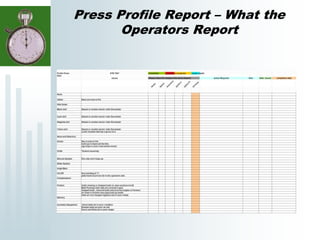
Press Profile Report – What the
Operators Report
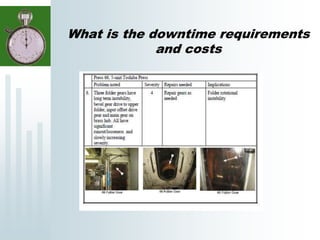
Using Vibration Analysis
What is the downtime requirements
and costs
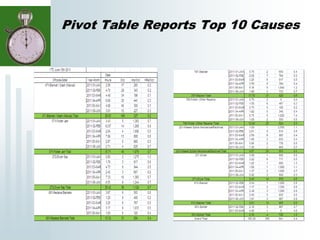
Pivot Table Reports Top 10 Causes
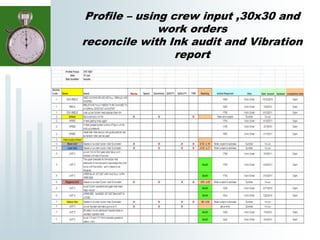
Profile – using crew input ,30x30 and
work orders
reconcile with Ink audit and Vibration
report
Profile - question TPM –
housekeeping effectiveness
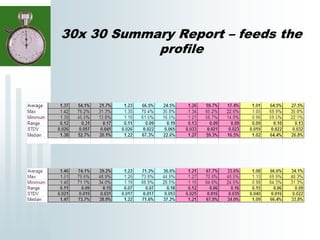
30x 30 Summary Report – feeds the
profile
Utilize Paper Suppliers to Assist in
Paper Audits
Bridge Notch Core –note the amount
of paper
Full Notch Core –note the increased
amount of paper
Core Racks allow for a very quick
observation of many cores
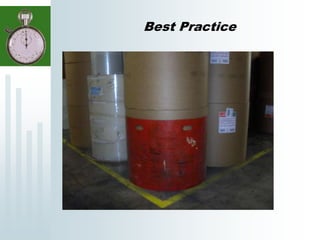
Best Practice
It only takes a minute to inspect
the clamp for burrs and damage
and insure all lights are working
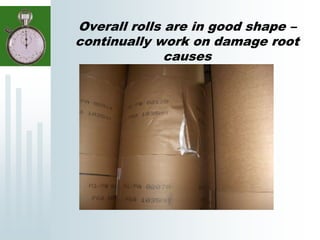
Overall rolls are in good shape –
continually work on damage root
causes
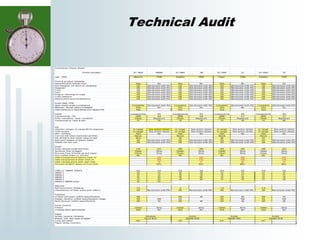
Technical Audit
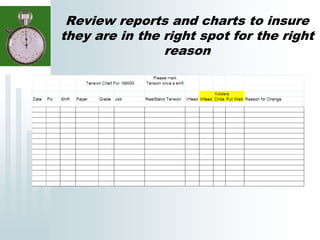
Review reports and charts to insure
they are in the right spot for the right
reason
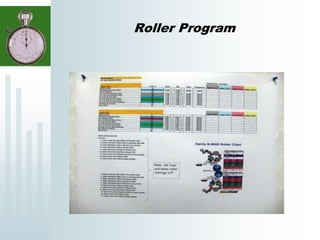
Roller Program
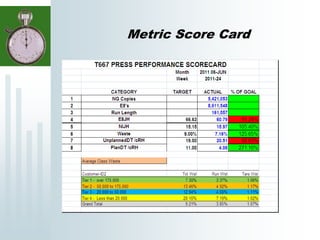
Metric Score Card
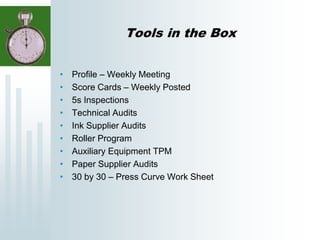
Tools in the Box
• Profile – Weekly Meeting
• Score Cards – Weekly Posted
• 5s Inspections
• Technical Audits
• Ink Supplier Audits
• Roller Program
• Auxiliary Equipment TPM
• Paper Supplier Audits
• 30 by 30 – Press Curve Work Sheet
This is an abbreviated
review of an improvement
project developed and
implemented for a wide
web retail Print Facility.
For more information
Contact Information
Tim Hopper (204) 996-9057 or timhopper12@gmail.com

Improving productivity through Lean and Total Productive Maintenance

  • 1.
    Improving productivity through Leanand Total Productive Maintenance Activities Project summary implemented in a retail printing facility
  • 2.
    Problem Solving 101 Studieshave shown that fixing a problem requires 90% of the time spent in finding the root cause……..
  • 3.
    7 Steps ofCorrective Action •“7 Steps approach” is a problem-solving methodology for product and process improvement. •It is structured into seven disciplines, emphasizing team synergy. •The team as whole is better and smarter than any 1 of us •Each discipline is supported by a checklist of assessment questions, such as “what is wrong with what”, “what, when, where, how much”.
  • 4.
    Implementing the 7Steps of Corrective Action 1. Problem Statement 2. Interim Action 3. Root Cause of Occurrence 4. Root Cause of Non-Detection 5. Temporary Corrective Action 6. Permanent Corrective Action 7. Closure FIND 2 KEY ROOT CAUSES: PROBLEM STATEMENT FACTS AND DATA ASK WHY 5 TIMES TEMPORARY ACTION PERMANENT ACTION TRACK AND CONFIRM - OF OCCURRENCE - OF NOT DETECTING
  • 5.
    7 Step Processin relation to 6 Sigma FIND 2 KEY ROOT CAUSES: PROBLEM STATEMENT FACTS AND DATA ASK WHY 5 TIMES TEMPORARY ACTION PERMANENT ACTION TRACK AND CONFIRM - OF OCCURRENCE - OF NOT DETECTING Define Measure Analyze Improve Control }
  • 7.
    The Action Statement- Defined • The efforts to assist the pressroom in documentation of press profiles, quality analysis and process variation may be enhanced by a collective approach, encompassing managers, operators, support departments and suppliers.
  • 8.
    Define  The purposeof a press profile is determine the issues that operators face effecting the performance and efficiency of the press.  Process variation will determine those areas of the press that fail to remain in control during operation  Quality measurement provides information on the ability of the press to produce a customers expectation of Quality  Documentation of these processes assist to develop action plans needed to improve the process and determine cost associated to the improvements.  Improvements effect Customer Satisfaction – Plant Profitability – Employee’s Work Environment.
  • 9.
    Define - Measure- Tools • Process Variation - “30 x 30” - Production Sampling • Unplanned Downtime - Top 10 Causes - Pivot Table Report • Waste - Top 10 Causes - Pivot Table Reports • Quality Attainment -Curve Measurement - Worksheet • Press Profile - Operator’s Checklist • Temperature Profile - Ink Audit Report • Vibration Analysis - Report • Paper Performance - Paper Audit • Broken Windows - Pictures • Sop Audits
  • 10.
    Analysis • Any ofthe tools previously mentioned are good by themselves, but when combined together provide direction and priority to what needs to be accomplished to improve. • What comes first, the compass or the clock? Before one can truly manage time (the clock), it is important to know where you are going, what your priorities and goals are, in which direction you are headed (the compass). Where you are headed is more important than how fast you are going. Rather than always focusing on what's urgent, learn to focus on what is really important.
  • 11.
    Improve • Use theAction Item Register to set time lines and responsibility • Insure the TPM program is updated when needed • Spin off projects • Training Opportunities • Feed back to suppliers – ink and paper • Develop capital plan as required
  • 12.
    Control • Saving projects •Sop Audits • 5s • Training Matrix • Weekly Maintenance Meetings • Customer Reviews
  • 13.
    Clean And CheckInspections
  • 14.
    List of itemsthat require cleaning and checking
  • 15.
    Pictures – simpleto augment the Audit
  • 16.
    Used good andbad examples
  • 17.
    Press Audits inconjunction with Ink Supplier
  • 18.
    Press Profile Report– What the Operators Report
  • 19.
  • 20.
    What is thedowntime requirements and costs
  • 21.
    Pivot Table ReportsTop 10 Causes
  • 22.
    Profile – usingcrew input ,30x30 and work orders reconcile with Ink audit and Vibration report
  • 23.
    Profile - questionTPM – housekeeping effectiveness
  • 24.
    30x 30 SummaryReport – feeds the profile
  • 25.
    Utilize Paper Suppliersto Assist in Paper Audits Bridge Notch Core –note the amount of paper
  • 26.
    Full Notch Core–note the increased amount of paper
  • 27.
    Core Racks allowfor a very quick observation of many cores
  • 28.
  • 29.
    It only takesa minute to inspect the clamp for burrs and damage and insure all lights are working
  • 30.
    Overall rolls arein good shape – continually work on damage root causes
  • 31.
  • 32.
    Review reports andcharts to insure they are in the right spot for the right reason
  • 33.
  • 34.
  • 35.
    Tools in theBox • Profile – Weekly Meeting • Score Cards – Weekly Posted • 5s Inspections • Technical Audits • Ink Supplier Audits • Roller Program • Auxiliary Equipment TPM • Paper Supplier Audits • 30 by 30 – Press Curve Work Sheet
  • 36.
    This is anabbreviated review of an improvement project developed and implemented for a wide web retail Print Facility. For more information Contact Information Tim Hopper (204) 996-9057 or timhopper12@gmail.com