NSCLC: Key Genomic Alterations and Current
or Emerging Matched Targeted Therapies1
a
Approved by the FDA. b
FDA-designated Priority Review status for New Drug Application. c
FDA-designated Breakthrough Therapy status. d
FDA-designated Fast Track status.
ALK: anaplastic lymphoma kinase; DDR2: discoidin domain receptor tyrosine kinase 2; EGFR: epidermal growth factor receptor; FGFR: fibroblast growth factor receptor; HER2: human epidermal growth factor receptor 2; MAP2K1: mitogen-activated protein kinase kinase 1;
NSCLC: non–small cell lung cancer; NTRK1: neurotrophic receptor tyrosine kinase 1; PIK3CA: phosphatidylinositol-4,5-bisphosphate 3-kinase catalytic subunit alpha.
1. Adapted from http://mlabs.umich.edu/molecular-diagnostics/moldx/lungcancer.
Access the activity, “Improving Outcomes in Patients With Molecularly Altered NSCLC Through Broad Implementation
of Precision Testing and Treatment: Latest Evidence and Practical Guidance in the Context of a Changing Targeted
Therapy Landscape,” at PeerView.com/NPG40
PRACTICE AID
NTRK1 Fusions
Larotrectiniba
Entrectiniba
Selitrectinib
Repotrectinib
ALK Rearrangements
Crizotinib,a
Ceritinib,a
Alectinib,a
Brigatinib,a
Lorlatiniba
ROS1 Rearrangements
Crizotiniba
Entrectiniba
Ceritinib
Lorlatinib
Repotrectinibd
BRAF V600E Mutations
Dabrafenib + Trametiniba
Vemurafenib
Dabrafenib
KRAS G12C Mutations
AMG 510d
MRTX849
RET Fusions
Selpercatinibb
Pralsetinibc
EGFR Exon 20 Mutations
TAK-788
Poziotinib
JNJ-6372c
EGFR Mutations
Osimertinib,a
Afatinib,a
Dacomitinib,a
Erlotinib,a
Gefitiniba
Erlotinib + Ramucirumabb
Gefitinib + Chemotherapy
Osimertinib + Chemotherapy
MET Exon 14 Skipping Mutations
Capmatinib
Tepotinibc
HER2 Mutations
T-DM1
[Fam-] Trastuzumab Deruxtecan
Poziotinib
Pyrotinib
MAP2K1
AKT1
PIK3CA
FGFR3
FGFR2
FGFR1
DDR2
NRAS
Clinically
Important Genomic
Alterations
in NSCLC
Access the activity, “Improving Outcomes in Patients With Molecularly Altered NSCLC Through Broad
Implementation of Precision Testing and Treatment: Latest Evidence and Practical Guidance in the
Context of a Changing Targeted Therapy Landscape,” at PeerView.com/NPG40
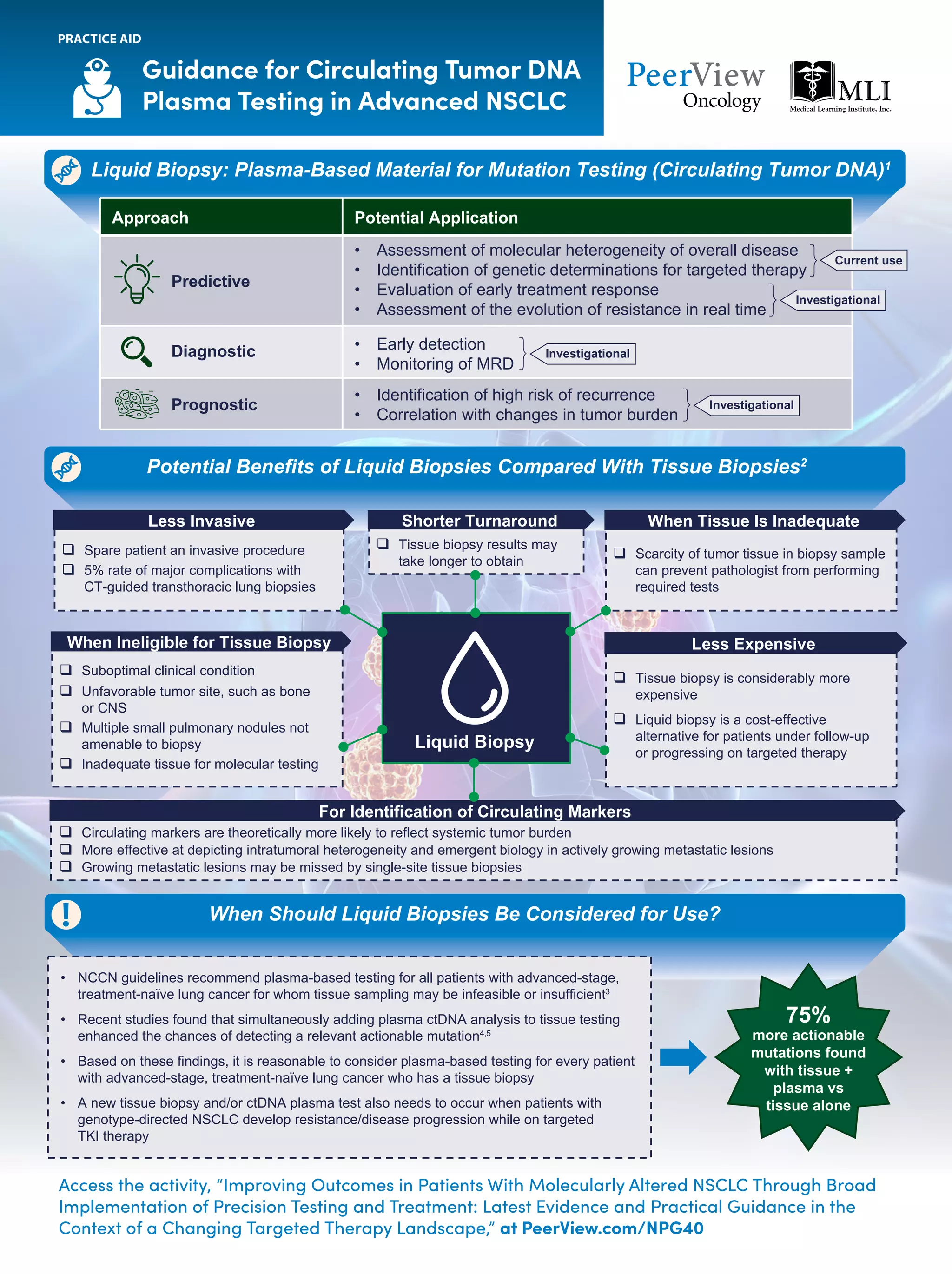
Guidance for Circulating Tumor DNA
Plasma Testing in Advanced NSCLC
PRACTICE AID
Liquid Biopsy: Plasma-Based Material for Mutation Testing (Circulating Tumor DNA)1
Potential Benefits of Liquid Biopsies Compared With Tissue Biopsies2
Liquid Biopsy
Suboptimal clinical condition
Unfavorable tumor site, such as bone
or CNS
Multiple small pulmonary nodules not
amenable to biopsy
Inadequate tissue for molecular testing
When Ineligible for Tissue Biopsy
Tissue biopsy is considerably more
expensive
Liquid biopsy is a cost-effective
alternative for patients under follow-up
or progressing on targeted therapy
Less Expensive
Circulating markers are theoretically more likely to reflect systemic tumor burden
More effective at depicting intratumoral heterogeneity and emergent biology in actively growing metastatic lesions
Growing metastatic lesions may be missed by single-site tissue biopsies
For Identification of Circulating Markers
When Should Liquid Biopsies Be Considered for Use?
Approach Potential Application
Diagnostic • Early detection
• Monitoring of MRD
Predictive
• Assessment of molecular heterogeneity of overall disease
• Identification of genetic determinations for targeted therapy
• Evaluation of early treatment response
• Assessment of the evolution of resistance in real time
Prognostic
• Identification of high risk of recurrence
• Correlation with changes in tumor burden
Spare patient an invasive procedure
5% rate of major complications with
CT-guided transthoracic lung biopsies
Less Invasive
Scarcity of tumor tissue in biopsy sample
can prevent pathologist from performing
required tests
When Tissue Is Inadequate
Tissue biopsy results may
take longer to obtain
Shorter Turnaround
• NCCN guidelines recommend plasma-based testing for all patients with advanced-stage,
treatment-naïve lung cancer for whom tissue sampling may be infeasible or insufficient3
• Recent studies found that simultaneously adding plasma ctDNA analysis to tissue testing
enhanced the chances of detecting a relevant actionable mutation4,5
• Based on these findings, it is reasonable to consider plasma-based testing for every patient
with advanced-stage, treatment-naïve lung cancer who has a tissue biopsy
• A new tissue biopsy and/or ctDNA plasma test also needs to occur when patients with
genotype-directed NSCLC develop resistance/disease progression while on targeted
TKI therapy
75%
more actionable
mutations found
with tissue +
plasma vs
tissue alone
}
}
Current use
Investigational
} Investigational
} Investigational
Access the activity, “Improving Outcomes in Patients With Molecularly Altered NSCLC Through Broad
Implementation of Precision Testing and Treatment: Latest Evidence and Practical Guidance in the
Context of a Changing Targeted Therapy Landscape,” at PeerView.com/NPG40
Guidance for Circulating Tumor DNA
Plasma Testing in Advanced NSCLC
PRACTICE AID
CNS: central nervous system; CT: computed tomography; ctDNA: circulating tumor; ddPCR: droplet digital polymerase chain reaction; EGFR: epidermal growth factor receptor; MRD: minimal residual disease;
NGS: next-generation sequencing; NSCLC: non–small cell lung cancer; PCR: polymerase chain reaction; SNV: single-nucleotide polymorphism; TKI: tyrosine kinase inhibitor.
1. Yoneda K et al. Surg Today. 2019;49:1-14. 2. Rolfo C et al. J Thorac Oncol. 2018;13:1248-1268. 3. NCCN Clinical Practice Guidelines in Oncology. Non–Small Cell Lung Cancer. Version 3.2020. https://www.nccn.org/
professionals/physician_gls/pdf/nscl.pdf. 4. Aggarwal C et al. JAMA Oncol. 2019;5:173-180. 5. Leighl NB et al. Clin Cancer Res. 2019;25:4691-4700. 6. http://www.guardant360.com/publications.
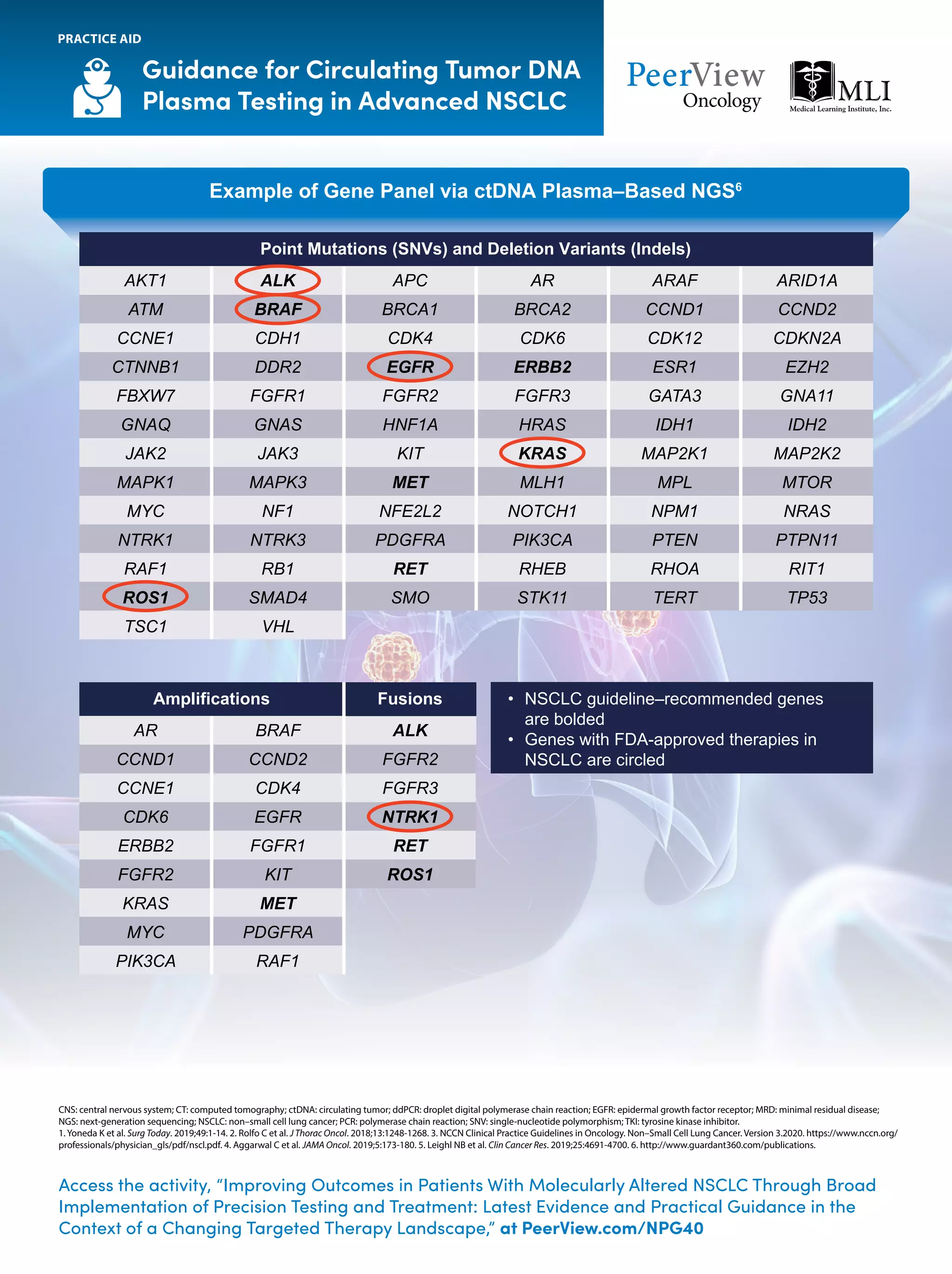
Example of Gene Panel via ctDNA Plasma–Based NGS6
Point Mutations (SNVs) and Deletion Variants (Indels)
AKT1
ATM
CCNE1
CTNNB1
FBXW7
GNAQ
JAK2
MAPK1
MYC
NTRK1
RAF1
ROS1
TSC1
ALK
BRAF
CDH1
DDR2
FGFR1
GNAS
JAK3
MAPK3
NF1
NTRK3
RB1
SMAD4
VHL
APC
BRCA1
CDK4
EGFR
FGFR2
HNF1A
KIT
MET
NFE2L2
PDGFRA
RET
SMO
AR
BRCA2
CDK6
ERBB2
FGFR3
HRAS
KRAS
MLH1
NOTCH1
PIK3CA
RHEB
STK11
ARAF
CCND1
CDK12
ESR1
GATA3
IDH1
MAP2K1
MPL
NPM1
PTEN
RHOA
TERT
ARID1A
CCND2
CDKN2A
EZH2
GNA11
IDH2
MAP2K2
MTOR
NRAS
PTPN11
RIT1
TP53
Amplifications • NSCLC guideline–recommended genes
are bolded
• Genes with FDA-approved therapies in
NSCLC are circled
Fusions
AR
CCND1
CCNE1
CDK6
ERBB2
FGFR2
KRAS
MYC
PIK3CA
BRAF
CCND2
CDK4
EGFR
FGFR1
KIT
MET
PDGFRA
RAF1
ALK
FGFR2
FGFR3
NTRK1
RET
ROS1
Access the activity, “Improving Outcomes in Patients With Molecularly Altered NSCLC Through Broad
Implementation of Precision Testing and Treatment: Latest Evidence and Practical Guidance in the
Context of a Changing Targeted Therapy Landscape,” at PeerView.com/NPG40
Guidance for Molecular Testing
in Advanced NSCLC
PRACTICE AID
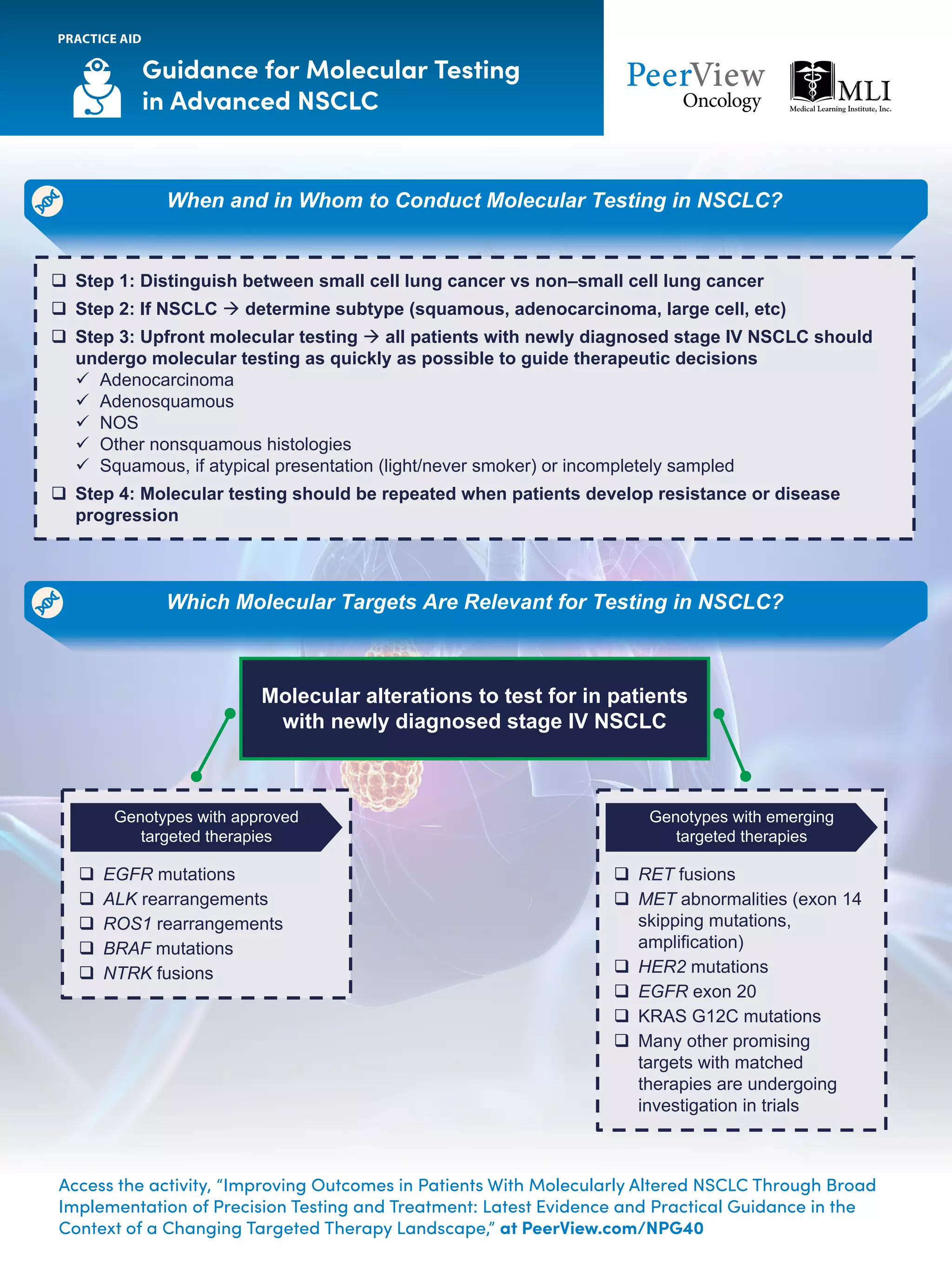
When and in Whom to Conduct Molecular Testing in NSCLC?
Which Molecular Targets Are Relevant for Testing in NSCLC?
Genotypes with emerging
targeted therapies
q Step 1: Distinguish between small cell lung cancer vs non–small cell lung cancer
q Step 2: If NSCLC à determine subtype (squamous, adenocarcinoma, large cell, etc)
q Step 3: Upfront molecular testing à all patients with newly diagnosed stage IV NSCLC should
undergo molecular testing as quickly as possible to guide therapeutic decisions
ü Adenocarcinoma
ü Adenosquamous
ü NOS
ü Other nonsquamous histologies
ü Squamous, if atypical presentation (light/never smoker) or incompletely sampled
q Step 4: Molecular testing should be repeated when patients develop resistance or disease
progression
q RET fusions
q MET abnormalities (exon 14
skipping mutations,
amplification)
q HER2 mutations
q EGFR exon 20
q KRAS G12C mutations
q Many other promising
targets with matched
therapies are undergoing
investigation in trials
Genotypes with approved
targeted therapies
q EGFR mutations
q ALK rearrangements
q ROS1 rearrangements
q BRAF mutations
q NTRK fusions
Molecular alterations to test for in patients
with newly diagnosed stage IV NSCLC
Access the activity, “Improving Outcomes in Patients With Molecularly Altered NSCLC Through Broad
Implementation of Precision Testing and Treatment: Latest Evidence and Practical Guidance in the
Context of a Changing Targeted Therapy Landscape,” at PeerView.com/NPG40
Guidance for Molecular Testing
in Advanced NSCLC
PRACTICE AID
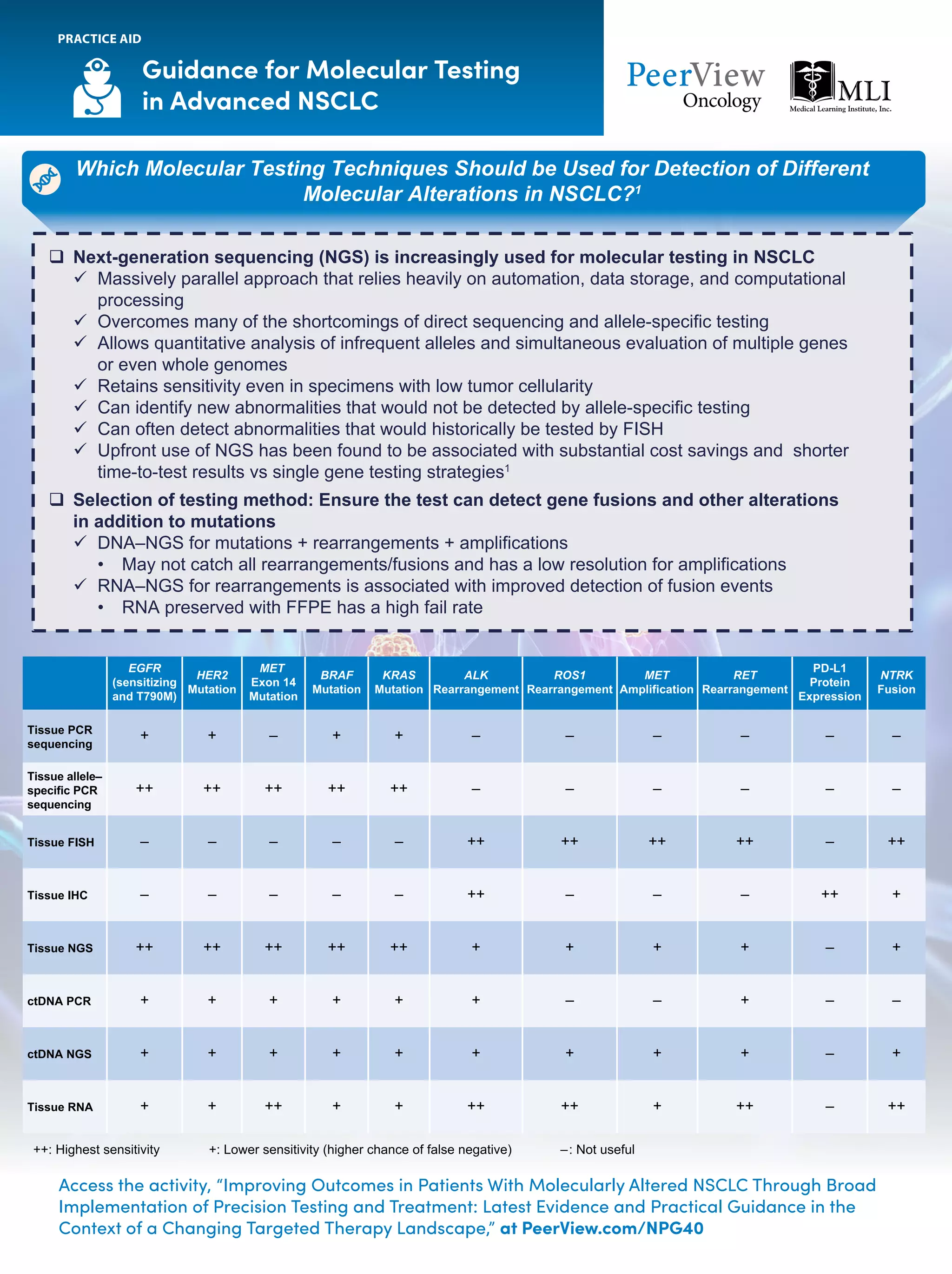
Which Molecular Testing Techniques Should be Used for Detection of Different
Molecular Alterations in NSCLC?1
q Next-generation sequencing (NGS) is increasingly used for molecular testing in NSCLC
ü Massively parallel approach that relies heavily on automation, data storage, and computational
processing
ü Overcomes many of the shortcomings of direct sequencing and allele-specific testing
ü Allows quantitative analysis of infrequent alleles and simultaneous evaluation of multiple genes
or even whole genomes
ü Retains sensitivity even in specimens with low tumor cellularity
ü Can identify new abnormalities that would not be detected by allele-specific testing
ü Can often detect abnormalities that would historically be tested by FISH
ü Upfront use of NGS has been found to be associated with substantial cost savings and shorter
time-to-test results vs single gene testing strategies1
q Selection of testing method: Ensure the test can detect gene fusions and other alterations
in addition to mutations
ü DNA–NGS for mutations + rearrangements + amplifications
• May not catch all rearrangements/fusions and has a low resolution for amplifications
ü RNA–NGS for rearrangements is associated with improved detection of fusion events
• RNA preserved with FFPE has a high fail rate
++: Highest sensitivity +: Lower sensitivity (higher chance of false negative) –: Not useful
EGFR
(sensitizing
and T790M)
HER2
Mutation
MET
Exon 14
Mutation
BRAF
Mutation
KRAS
Mutation
ALK
Rearrangement
ROS1
Rearrangement
MET
Amplification
RET
Rearrangement
PD-L1
Protein
Expression
NTRK
Fusion
Tissue PCR
sequencing
+ + – + + – – – – – –
Tissue allele–
specific PCR
sequencing
++ ++ ++ ++ ++ – – – – – –
Tissue FISH – – – – – ++ ++ ++ ++ – ++
Tissue IHC – – – – – ++ – – – ++ +
Tissue NGS ++ ++ ++ ++ ++ + + + + – +
ctDNA PCR + + + + + + – – + – –
ctDNA NGS + + + + + + + + + – +
Tissue RNA + + ++ + + ++ ++ + ++ – ++
Access the activity, “Improving Outcomes in Patients With Molecularly Altered NSCLC Through Broad
Implementation of Precision Testing and Treatment: Latest Evidence and Practical Guidance in the
Context of a Changing Targeted Therapy Landscape,” at PeerView.com/NPG40
Guidance for Molecular Testing
in Advanced NSCLC
PRACTICE AID
ALK: anaplastic lymphoma kinase; ctDNA: circulating tumor DNA; EGFR: epidermal growth factor receptor; FFPE: formalin fixed, paraffin embedded; FISH: fluorescence in situ hybridization; HER2: human
epidermal growth factor receptor 2; IHC: immunohistochemistry; NGS: next-generation sequencing; NOS: not otherwise specified; NSCLC: non–small cell lung cancer; NTRK: neurotrophic receptor tyrosine kinase;
PCR: polymerase chain reaction; PD-L1: programmed cell death ligand 1.
1. https://www.uptodate.com/contents/personalized-genotype-directed-therapy-for-advanced-non-small-cell-lung-cancer. 2. Lindeman NI et al. J Mol Diagn. 2018;20:129-159.
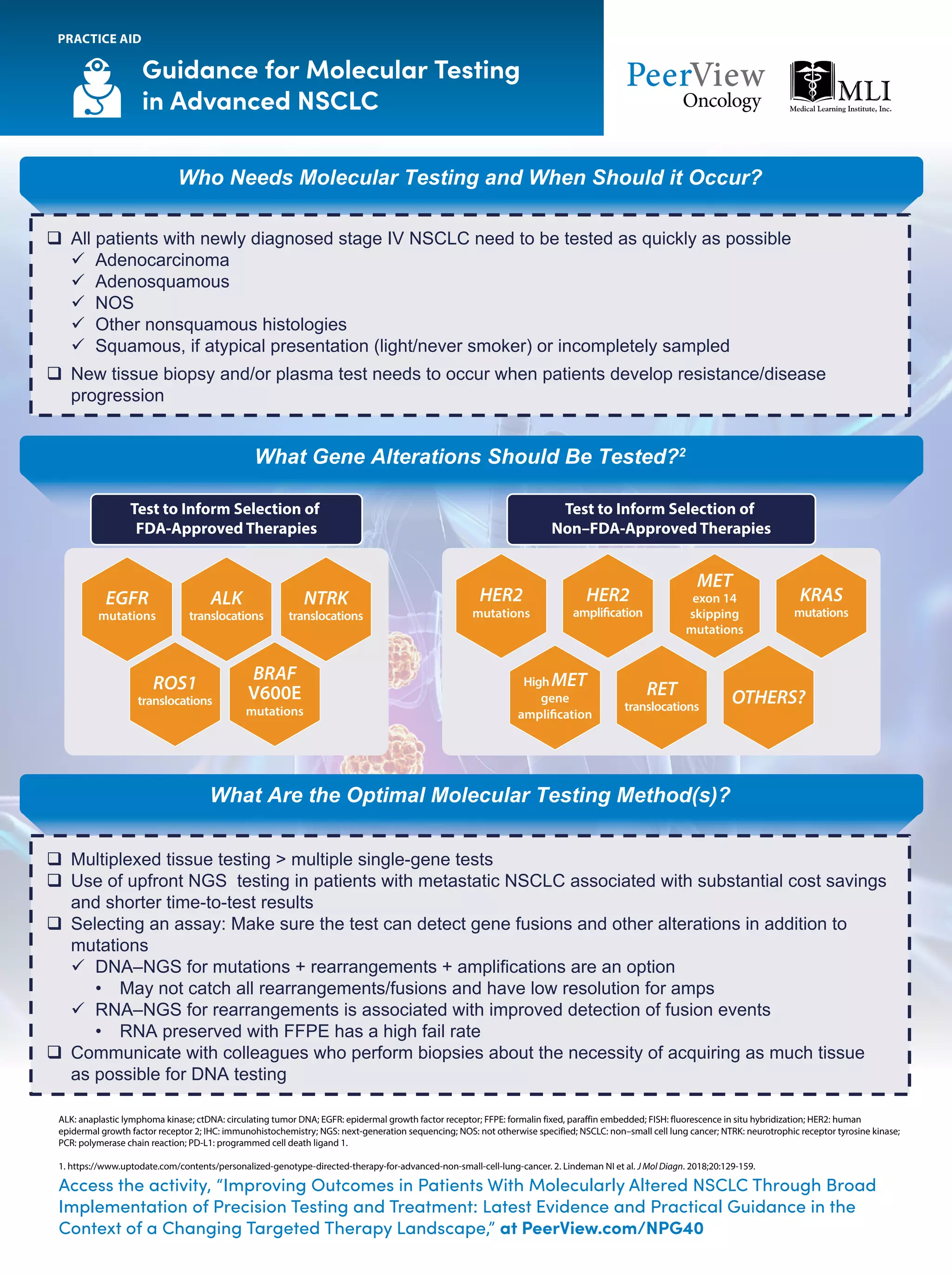
Who Needs Molecular Testing and When Should it Occur?
What Gene Alterations Should Be Tested?2
q All patients with newly diagnosed stage IV NSCLC need to be tested as quickly as possible
ü Adenocarcinoma
ü Adenosquamous
ü NOS
ü Other nonsquamous histologies
ü Squamous, if atypical presentation (light/never smoker) or incompletely sampled
q New tissue biopsy and/or plasma test needs to occur when patients develop resistance/disease
progression
What Are the Optimal Molecular Testing Method(s)?
q Multiplexed tissue testing > multiple single-gene tests
q Use of upfront NGS testing in patients with metastatic NSCLC associated with substantial cost savings
and shorter time-to-test results
q Selecting an assay: Make sure the test can detect gene fusions and other alterations in addition to
mutations
ü DNA–NGS for mutations + rearrangements + amplifications are an option
• May not catch all rearrangements/fusions and have low resolution for amps
ü RNA–NGS for rearrangements is associated with improved detection of fusion events
• RNA preserved with FFPE has a high fail rate
q Communicate with colleagues who perform biopsies about the necessity of acquiring as much tissue
as possible for DNA testing
Test to Inform Selection of
FDA-Approved Therapies
Test to Inform Selection of
Non–FDA-Approved Therapies
EGFR
mutations
ALK
translocations
ROS1
translocations
BRAF
V600E
mutations
NTRK
translocations
HER2
mutations
HighMET
gene
amplification
RET
translocations
MET
exon 14
skipping
mutations
OTHERS?
HER2
amplification
KRAS
mutations

Improving Outcomes in Patients With Molecularly Altered NSCLC Through Broad Implementation of Precision Testing and Treatment: Latest Evidence and Practical Guidance in the Context of a Changing Targeted Therapy Landscape

  • 1.
    NSCLC: Key GenomicAlterations and Current or Emerging Matched Targeted Therapies1 a Approved by the FDA. b FDA-designated Priority Review status for New Drug Application. c FDA-designated Breakthrough Therapy status. d FDA-designated Fast Track status. ALK: anaplastic lymphoma kinase; DDR2: discoidin domain receptor tyrosine kinase 2; EGFR: epidermal growth factor receptor; FGFR: fibroblast growth factor receptor; HER2: human epidermal growth factor receptor 2; MAP2K1: mitogen-activated protein kinase kinase 1; NSCLC: non–small cell lung cancer; NTRK1: neurotrophic receptor tyrosine kinase 1; PIK3CA: phosphatidylinositol-4,5-bisphosphate 3-kinase catalytic subunit alpha. 1. Adapted from http://mlabs.umich.edu/molecular-diagnostics/moldx/lungcancer. Access the activity, “Improving Outcomes in Patients With Molecularly Altered NSCLC Through Broad Implementation of Precision Testing and Treatment: Latest Evidence and Practical Guidance in the Context of a Changing Targeted Therapy Landscape,” at PeerView.com/NPG40 PRACTICE AID NTRK1 Fusions Larotrectiniba Entrectiniba Selitrectinib Repotrectinib ALK Rearrangements Crizotinib,a Ceritinib,a Alectinib,a Brigatinib,a Lorlatiniba ROS1 Rearrangements Crizotiniba Entrectiniba Ceritinib Lorlatinib Repotrectinibd BRAF V600E Mutations Dabrafenib + Trametiniba Vemurafenib Dabrafenib KRAS G12C Mutations AMG 510d MRTX849 RET Fusions Selpercatinibb Pralsetinibc EGFR Exon 20 Mutations TAK-788 Poziotinib JNJ-6372c EGFR Mutations Osimertinib,a Afatinib,a Dacomitinib,a Erlotinib,a Gefitiniba Erlotinib + Ramucirumabb Gefitinib + Chemotherapy Osimertinib + Chemotherapy MET Exon 14 Skipping Mutations Capmatinib Tepotinibc HER2 Mutations T-DM1 [Fam-] Trastuzumab Deruxtecan Poziotinib Pyrotinib MAP2K1 AKT1 PIK3CA FGFR3 FGFR2 FGFR1 DDR2 NRAS Clinically Important Genomic Alterations in NSCLC
  • 2.
    Access the activity,“Improving Outcomes in Patients With Molecularly Altered NSCLC Through Broad Implementation of Precision Testing and Treatment: Latest Evidence and Practical Guidance in the Context of a Changing Targeted Therapy Landscape,” at PeerView.com/NPG40 Guidance for Circulating Tumor DNA Plasma Testing in Advanced NSCLC PRACTICE AID Liquid Biopsy: Plasma-Based Material for Mutation Testing (Circulating Tumor DNA)1 Potential Benefits of Liquid Biopsies Compared With Tissue Biopsies2 Liquid Biopsy Suboptimal clinical condition Unfavorable tumor site, such as bone or CNS Multiple small pulmonary nodules not amenable to biopsy Inadequate tissue for molecular testing When Ineligible for Tissue Biopsy Tissue biopsy is considerably more expensive Liquid biopsy is a cost-effective alternative for patients under follow-up or progressing on targeted therapy Less Expensive Circulating markers are theoretically more likely to reflect systemic tumor burden More effective at depicting intratumoral heterogeneity and emergent biology in actively growing metastatic lesions Growing metastatic lesions may be missed by single-site tissue biopsies For Identification of Circulating Markers When Should Liquid Biopsies Be Considered for Use? Approach Potential Application Diagnostic • Early detection • Monitoring of MRD Predictive • Assessment of molecular heterogeneity of overall disease • Identification of genetic determinations for targeted therapy • Evaluation of early treatment response • Assessment of the evolution of resistance in real time Prognostic • Identification of high risk of recurrence • Correlation with changes in tumor burden Spare patient an invasive procedure 5% rate of major complications with CT-guided transthoracic lung biopsies Less Invasive Scarcity of tumor tissue in biopsy sample can prevent pathologist from performing required tests When Tissue Is Inadequate Tissue biopsy results may take longer to obtain Shorter Turnaround • NCCN guidelines recommend plasma-based testing for all patients with advanced-stage, treatment-naïve lung cancer for whom tissue sampling may be infeasible or insufficient3 • Recent studies found that simultaneously adding plasma ctDNA analysis to tissue testing enhanced the chances of detecting a relevant actionable mutation4,5 • Based on these findings, it is reasonable to consider plasma-based testing for every patient with advanced-stage, treatment-naïve lung cancer who has a tissue biopsy • A new tissue biopsy and/or ctDNA plasma test also needs to occur when patients with genotype-directed NSCLC develop resistance/disease progression while on targeted TKI therapy 75% more actionable mutations found with tissue + plasma vs tissue alone } } Current use Investigational } Investigational } Investigational
  • 3.
    Access the activity,“Improving Outcomes in Patients With Molecularly Altered NSCLC Through Broad Implementation of Precision Testing and Treatment: Latest Evidence and Practical Guidance in the Context of a Changing Targeted Therapy Landscape,” at PeerView.com/NPG40 Guidance for Circulating Tumor DNA Plasma Testing in Advanced NSCLC PRACTICE AID CNS: central nervous system; CT: computed tomography; ctDNA: circulating tumor; ddPCR: droplet digital polymerase chain reaction; EGFR: epidermal growth factor receptor; MRD: minimal residual disease; NGS: next-generation sequencing; NSCLC: non–small cell lung cancer; PCR: polymerase chain reaction; SNV: single-nucleotide polymorphism; TKI: tyrosine kinase inhibitor. 1. Yoneda K et al. Surg Today. 2019;49:1-14. 2. Rolfo C et al. J Thorac Oncol. 2018;13:1248-1268. 3. NCCN Clinical Practice Guidelines in Oncology. Non–Small Cell Lung Cancer. Version 3.2020. https://www.nccn.org/ professionals/physician_gls/pdf/nscl.pdf. 4. Aggarwal C et al. JAMA Oncol. 2019;5:173-180. 5. Leighl NB et al. Clin Cancer Res. 2019;25:4691-4700. 6. http://www.guardant360.com/publications. Example of Gene Panel via ctDNA Plasma–Based NGS6 Point Mutations (SNVs) and Deletion Variants (Indels) AKT1 ATM CCNE1 CTNNB1 FBXW7 GNAQ JAK2 MAPK1 MYC NTRK1 RAF1 ROS1 TSC1 ALK BRAF CDH1 DDR2 FGFR1 GNAS JAK3 MAPK3 NF1 NTRK3 RB1 SMAD4 VHL APC BRCA1 CDK4 EGFR FGFR2 HNF1A KIT MET NFE2L2 PDGFRA RET SMO AR BRCA2 CDK6 ERBB2 FGFR3 HRAS KRAS MLH1 NOTCH1 PIK3CA RHEB STK11 ARAF CCND1 CDK12 ESR1 GATA3 IDH1 MAP2K1 MPL NPM1 PTEN RHOA TERT ARID1A CCND2 CDKN2A EZH2 GNA11 IDH2 MAP2K2 MTOR NRAS PTPN11 RIT1 TP53 Amplifications • NSCLC guideline–recommended genes are bolded • Genes with FDA-approved therapies in NSCLC are circled Fusions AR CCND1 CCNE1 CDK6 ERBB2 FGFR2 KRAS MYC PIK3CA BRAF CCND2 CDK4 EGFR FGFR1 KIT MET PDGFRA RAF1 ALK FGFR2 FGFR3 NTRK1 RET ROS1
  • 4.
    Access the activity,“Improving Outcomes in Patients With Molecularly Altered NSCLC Through Broad Implementation of Precision Testing and Treatment: Latest Evidence and Practical Guidance in the Context of a Changing Targeted Therapy Landscape,” at PeerView.com/NPG40 Guidance for Molecular Testing in Advanced NSCLC PRACTICE AID When and in Whom to Conduct Molecular Testing in NSCLC? Which Molecular Targets Are Relevant for Testing in NSCLC? Genotypes with emerging targeted therapies q Step 1: Distinguish between small cell lung cancer vs non–small cell lung cancer q Step 2: If NSCLC à determine subtype (squamous, adenocarcinoma, large cell, etc) q Step 3: Upfront molecular testing à all patients with newly diagnosed stage IV NSCLC should undergo molecular testing as quickly as possible to guide therapeutic decisions ü Adenocarcinoma ü Adenosquamous ü NOS ü Other nonsquamous histologies ü Squamous, if atypical presentation (light/never smoker) or incompletely sampled q Step 4: Molecular testing should be repeated when patients develop resistance or disease progression q RET fusions q MET abnormalities (exon 14 skipping mutations, amplification) q HER2 mutations q EGFR exon 20 q KRAS G12C mutations q Many other promising targets with matched therapies are undergoing investigation in trials Genotypes with approved targeted therapies q EGFR mutations q ALK rearrangements q ROS1 rearrangements q BRAF mutations q NTRK fusions Molecular alterations to test for in patients with newly diagnosed stage IV NSCLC
  • 5.
    Access the activity,“Improving Outcomes in Patients With Molecularly Altered NSCLC Through Broad Implementation of Precision Testing and Treatment: Latest Evidence and Practical Guidance in the Context of a Changing Targeted Therapy Landscape,” at PeerView.com/NPG40 Guidance for Molecular Testing in Advanced NSCLC PRACTICE AID Which Molecular Testing Techniques Should be Used for Detection of Different Molecular Alterations in NSCLC?1 q Next-generation sequencing (NGS) is increasingly used for molecular testing in NSCLC ü Massively parallel approach that relies heavily on automation, data storage, and computational processing ü Overcomes many of the shortcomings of direct sequencing and allele-specific testing ü Allows quantitative analysis of infrequent alleles and simultaneous evaluation of multiple genes or even whole genomes ü Retains sensitivity even in specimens with low tumor cellularity ü Can identify new abnormalities that would not be detected by allele-specific testing ü Can often detect abnormalities that would historically be tested by FISH ü Upfront use of NGS has been found to be associated with substantial cost savings and shorter time-to-test results vs single gene testing strategies1 q Selection of testing method: Ensure the test can detect gene fusions and other alterations in addition to mutations ü DNA–NGS for mutations + rearrangements + amplifications • May not catch all rearrangements/fusions and has a low resolution for amplifications ü RNA–NGS for rearrangements is associated with improved detection of fusion events • RNA preserved with FFPE has a high fail rate ++: Highest sensitivity +: Lower sensitivity (higher chance of false negative) –: Not useful EGFR (sensitizing and T790M) HER2 Mutation MET Exon 14 Mutation BRAF Mutation KRAS Mutation ALK Rearrangement ROS1 Rearrangement MET Amplification RET Rearrangement PD-L1 Protein Expression NTRK Fusion Tissue PCR sequencing + + – + + – – – – – – Tissue allele– specific PCR sequencing ++ ++ ++ ++ ++ – – – – – – Tissue FISH – – – – – ++ ++ ++ ++ – ++ Tissue IHC – – – – – ++ – – – ++ + Tissue NGS ++ ++ ++ ++ ++ + + + + – + ctDNA PCR + + + + + + – – + – – ctDNA NGS + + + + + + + + + – + Tissue RNA + + ++ + + ++ ++ + ++ – ++
  • 6.
    Access the activity,“Improving Outcomes in Patients With Molecularly Altered NSCLC Through Broad Implementation of Precision Testing and Treatment: Latest Evidence and Practical Guidance in the Context of a Changing Targeted Therapy Landscape,” at PeerView.com/NPG40 Guidance for Molecular Testing in Advanced NSCLC PRACTICE AID ALK: anaplastic lymphoma kinase; ctDNA: circulating tumor DNA; EGFR: epidermal growth factor receptor; FFPE: formalin fixed, paraffin embedded; FISH: fluorescence in situ hybridization; HER2: human epidermal growth factor receptor 2; IHC: immunohistochemistry; NGS: next-generation sequencing; NOS: not otherwise specified; NSCLC: non–small cell lung cancer; NTRK: neurotrophic receptor tyrosine kinase; PCR: polymerase chain reaction; PD-L1: programmed cell death ligand 1. 1. https://www.uptodate.com/contents/personalized-genotype-directed-therapy-for-advanced-non-small-cell-lung-cancer. 2. Lindeman NI et al. J Mol Diagn. 2018;20:129-159. Who Needs Molecular Testing and When Should it Occur? What Gene Alterations Should Be Tested?2 q All patients with newly diagnosed stage IV NSCLC need to be tested as quickly as possible ü Adenocarcinoma ü Adenosquamous ü NOS ü Other nonsquamous histologies ü Squamous, if atypical presentation (light/never smoker) or incompletely sampled q New tissue biopsy and/or plasma test needs to occur when patients develop resistance/disease progression What Are the Optimal Molecular Testing Method(s)? q Multiplexed tissue testing > multiple single-gene tests q Use of upfront NGS testing in patients with metastatic NSCLC associated with substantial cost savings and shorter time-to-test results q Selecting an assay: Make sure the test can detect gene fusions and other alterations in addition to mutations ü DNA–NGS for mutations + rearrangements + amplifications are an option • May not catch all rearrangements/fusions and have low resolution for amps ü RNA–NGS for rearrangements is associated with improved detection of fusion events • RNA preserved with FFPE has a high fail rate q Communicate with colleagues who perform biopsies about the necessity of acquiring as much tissue as possible for DNA testing Test to Inform Selection of FDA-Approved Therapies Test to Inform Selection of Non–FDA-Approved Therapies EGFR mutations ALK translocations ROS1 translocations BRAF V600E mutations NTRK translocations HER2 mutations HighMET gene amplification RET translocations MET exon 14 skipping mutations OTHERS? HER2 amplification KRAS mutations