
1 
PRESENTED BY : KODS SHILI
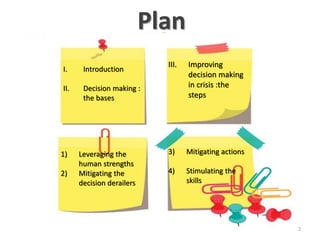
Plan 
III.Improving decision making in crisis :the steps 
2 
I.Introduction 
II.Decision making : the bases 
1)Leveraging the human strengths 
2)Mitigating the decision derailers 
3)Mitigating actions 
4)Stimulating the skills
Introduction 
THE BELIEF 
Logical + Rational decision 
Intended results achieved 
A.SMITH ( 1776): Economic choices are made in a rational manner 
 Most decisions are not logical or well analyzed  Individual’s decision making is based on consistent and predictable behaviours 
3
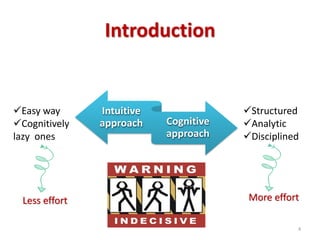
Intuitive approach Cognitive approach 
Introduction 
Structured 
Analytic 
Disciplined More effort 
Easy way 
Cognitively lazy ones Less effort 
4
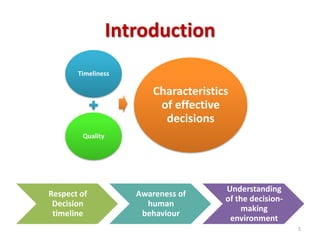
Timeliness 
Quality 
Characteristics of effective decisions 
Introduction 
Respect of Decision timeline 
Awareness of human behaviour 
Understanding of the decision- making environment 
5
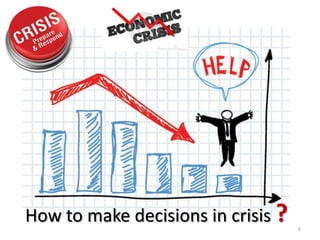
How to make decisions in crisis ? 
6
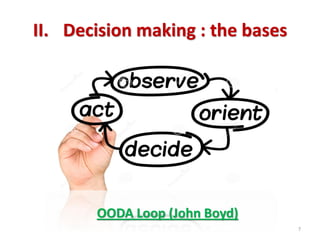
II.Decision making : the bases 
OODA Loop (John Boyd) 
7
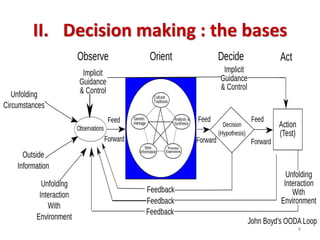
II.Decision making : the bases 
8
II.Decision making : the bases 
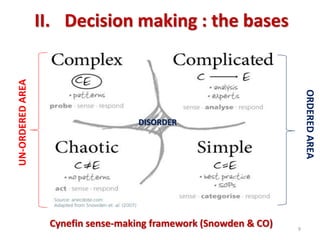
Cynefin sense-making framework (Snowden & CO) 
9 
UN-ORDERED AREA 
ORDERED AREA 
DISORDER
III.Improving decision making in crisis: the steps 
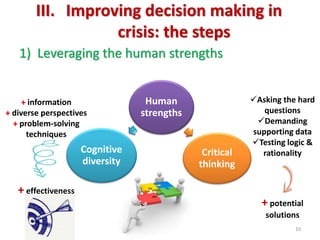
1)Leveraging the human strengths 
10 
Human strengths 
Cognitive diversity 
Critical thinking 
+ information 
+ diverse perspectives 
+ problem-solving techniques 
+ effectiveness 
Asking the hard questions 
Demanding supporting data 
Testing logic & rationality + potential solutions
How to palliate decision derailers ? 
11
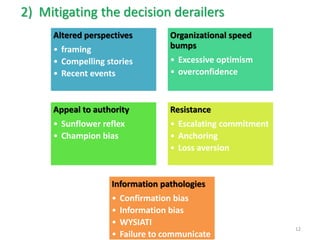
2)Mitigating the decision derailers 
Altered perspectives 
•framing 
•Compelling stories 
•Recent events 
Organizational speed bumps 
•Excessive optimism 
•overconfidence 
Appeal to authority 
•Sunflower reflex 
•Champion bias 
Resistance 
•Escalating commitment 
•Anchoring 
•Loss aversion 
Information pathologies 
•Confirmation bias 
•Information bias 
•WYSIATI 
•Failure to communicate 
12
13 
How to reduce the impact of decision derailers during crisis ?
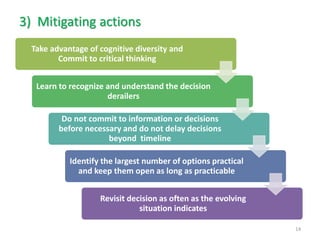
Take advantage of cognitive diversity and Commit to critical thinking 
Learn to recognize and understand the decision derailers 
Do not commit to information or decisions before necessary and do not delay decisions beyond timeline 
Identify the largest number of options practical and keep them open as long as practicable 
Revisit decision as often as the evolving situation indicates 
14 
3)Mitigating actions
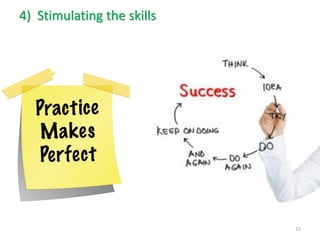
4)Stimulating the skills 
15
16

Improving decision making in crisis

  • 1.
    1 PRESENTED BY: KODS SHILI
  • 2.
    Plan III.Improving decisionmaking in crisis :the steps 2 I.Introduction II.Decision making : the bases 1)Leveraging the human strengths 2)Mitigating the decision derailers 3)Mitigating actions 4)Stimulating the skills
  • 3.
    Introduction THE BELIEF Logical + Rational decision Intended results achieved A.SMITH ( 1776): Economic choices are made in a rational manner  Most decisions are not logical or well analyzed  Individual’s decision making is based on consistent and predictable behaviours 3
  • 4.
    Intuitive approach Cognitiveapproach Introduction Structured Analytic Disciplined More effort Easy way Cognitively lazy ones Less effort 4
  • 5.
    Timeliness Quality Characteristicsof effective decisions Introduction Respect of Decision timeline Awareness of human behaviour Understanding of the decision- making environment 5
  • 6.
    How to makedecisions in crisis ? 6
  • 7.
    II.Decision making :the bases OODA Loop (John Boyd) 7
  • 8.
  • 9.
    II.Decision making :the bases Cynefin sense-making framework (Snowden & CO) 9 UN-ORDERED AREA ORDERED AREA DISORDER
  • 10.
    III.Improving decision makingin crisis: the steps 1)Leveraging the human strengths 10 Human strengths Cognitive diversity Critical thinking + information + diverse perspectives + problem-solving techniques + effectiveness Asking the hard questions Demanding supporting data Testing logic & rationality + potential solutions
  • 11.
    How to palliatedecision derailers ? 11
  • 12.
    2)Mitigating the decisionderailers Altered perspectives •framing •Compelling stories •Recent events Organizational speed bumps •Excessive optimism •overconfidence Appeal to authority •Sunflower reflex •Champion bias Resistance •Escalating commitment •Anchoring •Loss aversion Information pathologies •Confirmation bias •Information bias •WYSIATI •Failure to communicate 12
  • 13.
    13 How toreduce the impact of decision derailers during crisis ?
  • 14.
    Take advantage ofcognitive diversity and Commit to critical thinking Learn to recognize and understand the decision derailers Do not commit to information or decisions before necessary and do not delay decisions beyond timeline Identify the largest number of options practical and keep them open as long as practicable Revisit decision as often as the evolving situation indicates 14 3)Mitigating actions
  • 15.
  • 16.