ORIGINAL ARTICLE
Improvement of vehicle ride comfort using genetic
algorithm optimization and PI controller
A.E. Geweda a,*, M.A. El-Gohary b
, A.M. El-Nabawy a
, T. Awad b
a
Mechanical Power and Energy Department, Faculty of Engineering, Minia University, Minia, Egypt
b
Mechanical Engineering Department, Faculty of Engineering, Alexandria University, Alexandria, Egypt
Received 11 March 2017; revised 4 May 2017; accepted 7 May 2017
Available online 27 May 2017
KEYWORDS
Vehicle dynamics;
Full vehicle model;
Seven DOF model;
Genetic algorithm;
PI controller
Abstract In this paper a MATLAB SIMULINK model of seven Degrees Of Freedom (DOF) full
vehicle model is developed. Mathematical equations are obtained using Newton’
s second law and
free body diagram concept. Validation of the SIMULINK model is obtained to ensure that the
model is suitable for studying the ride comfort. A Genetic algorithm optimization technique is used
to find the optimum values of spring stiffness and damping coefficient for front and rear passive
suspension system of the seven DOF vehicle model at variable velocities which improve the perfor-
mance of the suspension system of the vehicle. Also Proportional Integral (PI) controller is imple-
mented to the model to study its effect on ride comfort. Comparison of the results for body
acceleration and sprung mass displacement of the optimized data of suspension parameters and
model with PI controller are illustrated. The results show that the optimized parameters and PI con-
troller give significant improvements of the vehicle ride performance over the passive suspension
system.
Ó 2017 Faculty of Engineering, Alexandria University. Production and hosting by Elsevier B.V. This is an
open access article under the CC BY-NC-ND license (http://creativecommons.org/licenses/by-nc-nd/4.0/).
1. Introduction
The major target of the vehicle suspension system is to enhance
the ride comfort and to provide good ride handling capability.
A vehicle suspension may be classified as passive suspension,
semi active suspension and active suspension system [1]. A
quality suspension must achieve a good behavior of the vehicle
and a degree of comfort depending on the interaction with the
uneven road surface [2]. Modeling of suspension systems is
very important as it can be used for studying the performance
of the ride comfort and road handling of the vehicle. There are
different methods of representation the model. State space
modeling, transfer function and MATLAB Simulink are used
to solve these models. There are different models used in this
field, quarter car model [2–4], half car model [5–7] and full
car model [8–11]. The performance of active suspension system
using Linear Quadratic Regulator (LQR) and Proportional
Integral Derivative (PID) techniques was compared with the
passive suspension system. Simulation is based on the mathe-
matical model by using MATLAB/SIMULINK software in
[3]. Mathematical half-car model was created in Matlab/Simu-
link. Results from simulations of model with original and opti-
mized suspension parameters were compared in [5]. Simulation
of active half car suspension model was done using MATLAB,
* Corresponding author.
E-mail address: eng_ahmed_geweda@yahoo.com (A.E. Geweda).
Peer review under responsibility of Faculty of Engineering, Alexandria
University.
Alexandria Engineering Journal (2017) 56, 405–414
HOSTED BY
Alexandria University
Alexandria Engineering Journal
www.elsevier.com/locate/aej
www.sciencedirect.com
http://dx.doi.org/10.1016/j.aej.2017.05.014
1110-0168 Ó 2017 Faculty of Engineering, Alexandria University. Production and hosting by Elsevier B.V.
This is an open access article under the CC BY-NC-ND license (http://creativecommons.org/licenses/by-nc-nd/4.0/).
Simulink and a comparison between controllers such as
classical PID controller; self-tunable fuzzy inference system
(STFIS) controller and the passive system controller were
founded in [6]. The full car suspensions for passive and active
one with PID or Fuzzy controls were simulated using
MATLAB/SIMULINK at [12]. The results indicated that the
active with PID and fuzzy controls suspension systems were
better than the passive system. An active suspension for the
Quarter/Half/Full car model of car was developed by [13] to
improve its performance by using a PID controller. Optimiza-
tion was also applied to one of the these types as in [14] who
made an investigation to determine the spring and damper set-
tings that will ensure optimal ride comfort of vehicle for differ-
ent speeds using Design of Experiment Method (DOE) for
seven degrees of freedom full car model.
This paper is organized as follows; Full car model is
obtained in Section 2. Mathematical equations are presented
in Section 3. In Section 4 the MATLAB, Simulink model is
built. The road profiles used in this paper are given on
Section 5. Section 6 shows the optimization and controller.
Results and discussion of validation are obtained in Section 7.
Section 8 presents the conclusions of the paper. An Appendix
A is given at the end of the paper.
2. Full car model
Fig. 1 shows a full car model with seven degrees of
freedom system considered for analysis [11]. It is consisting
of sprung mass, Ms referring to the part of the car that is
supported on springs and un-sprung mass which refers to the
mass of the wheel assembly. The suspensions between the
sprung mass and un-sprung masses are modeled as linear
viscous dampers and spring components. The tire has been
replaced with its equivalent stiffness and tire damping
is neglected as it’s influence on tire behavior is negligible
[9,11 and 12].
3. Mathematical modeling
3.1. Mathematical equations
Using the Newton’s second law of motion and free body dia-
gram concept; the following seven equations of motion are
derived.
For vehicle body bounce motion (Sprung Mass):
MsZ
ÁÁ
Cg ¼ ðÀKsr1 À Ksl1 À Ksr2 À Ksl2ÞZcg
þ ðÀCsr1 À Csl1 À Csr2 À Csl2ÞZ
Á
cg
þ ðKsr1a þ Ksl1a À ksr2b À ksl2bÞh
þ ðCsr1a þ Csl1a À Csr2b À Csl2bÞ h
Á
þ ðKsr1c À Ksl1d þ Ksr2c À Ksl2dÞu
þ ðCsr1c À Csl1d þ Csr2c À Csl2dÞ u
Á
þ Ksr1Zwr1 þ Ksl1Zwl1 þ Ksr2Zwr2 þ Ksl2Zwl2
þ Csr1Z
Á
wr1 þ Csl1Z
Á
wl1 þ Csr2Z
Á
wr2 þ Csl2Z
Á
wl2 ð1Þ
For vehicle body pitching motion (Sprung Mass):
Iyy h
ÁÁ
¼ ðKsr1a þ Ksl1a À ksr2b À Ksl2bÞZcg
þ ðCsr1a þ Csl1a À Csr2b À Csl2bÞZ
Á
cg
þ ðÀKsr1a2
À Ksl1a2
À Ksr2b2
À Ksl2b2
Þh
þ ðCsr1a2
À Csl1a2
À Csr2b2
À Csl2b2
Þ h
Á
þ ðÀKsr1ac þ Ksl1ad þ Ksr2bc À Ksl2bdÞu
þ ðÀCsr1ac þ Csl1ad þ Csr2bc À Csl2bdÞ u
Á
ÀKsr1aZwr1
À Ksl1aZwl1 þ Ksr2bZwr2 þ Ksl2bZwl2 À Csr1aZ
Á
wr1
À Csl1aZ
Á
wl1 þ Csr2bZ
Á
wr2 þ Csl2bZ
Á
wl2 ð2Þ
Nomenclature
a distance from CG to front wheel, m
b distance from CG to rear wheel, m
Csl1 damping coefficient of front left damper, N-s/m
Csl2 damping coefficient of rear left damper, N-s/m
Csr1 damping coefficient of front right damper, N-s/m
Csr2 damping coefficient of rear right damper, N-s/m
c distance from CG to right wheel, m
d distance from CG to left wheel, m
Ixx moment of Inertia about X-X axis, kg-m2
Iyy moment of Inertia about Y-Y axis, kg-m2
Ksl1 spring stiffness of front left suspension, N/m
Ksl2 spring stiffness of rear left suspension, N/m
Ksr1 spring stiffness of front right suspension, N/m
Ksr2 spring stiffness of rear right suspension, N/m
Kwl1 spring stiffness of front left tire, N/m
Kwl2 spring stiffness of rear left tire, N/m
Kwr1 spring stiffness of front right tire, N/m
Kwr2 spring stiffness of rear right tire, N/m
MS mass of vehicle, kg
Mwl1 mass of front left wheel, kg
Mwl2 mass of rear left wheel, kg
Mwr1 mass of front right wheel, kg
Mwr2 mass of rear right wheel, kg
Zcg displacement of CG of vehicle body, m
Zrl1 road input to front left wheel, m
Zrl2 road input to rear left wheel, m
Zrr1 road input to front right wheel, m
Zrr2 road input to rear right wheel, m
Zwl1 displacement of front left wheel, m
Zwl2 displacement of rear left wheel, m
Zwr1 displacement of front right wheel, m
Zwr2 displacement of rear right wheel, m
h pitch angle of the body at CG, degree
U roll angle of the body at CG, degree
406 A.E. Geweda et al.
For vehicle body rolling motion (Sprung Mass)
Ixx u
ÁÁ
¼ ðKsr1c À Ksl1d þ Ksr2c À Ksl2dÞZcg
þ ðCsr1c À Csl1d þ Csr2c À Csl2dÞ Z
Á
cg
þ ðÀksr1ac þ Ksl1ad þ Ksr2bc À Ksl2bdÞh
þ ðCsr1ac þ Csl1ad þ Csr2bc À Csl2bdÞ h
Á
þ ðÀKsr1c2
À Ksl1d2
À Ksr2c2
À Ksl2d2
Þu
þ ðÀCsr2c2
À Csl2d2
À Csr2c2
À Csl2d2
Þ u
Á
ÀKsr1cZwr1
þ Ksl1dZwl1 À Ksr2cZwr2 þ Ksl2dZwl2 À Csr1cZ
Á
wr1
þ Csl1dZ
Á
wl1 À Csr2cZ
Á
wr2 þ Csl2dZ
Á
wl2 ð3Þ
For front right wheel (Un-sprung Mass):
Mwr1Z
ÁÁ
wr1 ¼ Ksr1ðZcg À Zwr1 À ah À cuÞ
þ Csr1ðZ
Á
cg À Z
Á
wr1 À a h
Á
Àc u
Á
Þ þ Kwr1ðZrr1 À Zwr1Þ
ð4Þ
For front left wheel (Un-sprung Mass):
Mwl1Z
ÁÁ
wl1 ¼ Ksl1ðZcg À Zwl1 À ah þ duÞ
þ Csl1ðZ
Á
cg À Z
Á
wl1 À a h
Á
þd u
Á
Þ þ Kwl1ðZrl1 À Zwl1Þ
ð5Þ
For rear right wheel (Un-sprung Mass):
Mwr2Z
ÁÁ
wr2 ¼ Ksr2ðZcg À Zwr2 þ bh À cuÞ
þ Csr2ðZ
Á
cg À Z
Á
wr2 þ b h
Á
Àc u
Á
Þ þ Kwr2ðZrr2 À Zwr2Þ
ð6Þ
For rear left wheel (Un-sprung Mass):
Mwl2Z
ÁÁ
wl2 ¼ Ksl2ðZcg À Zwl2 þ bh þ duÞ
þ Csl2ðZ
Á
cg À Z
Á
wl2 þ b h
Á
þd u
Á
Þ þ Kwl2ðZrl2 À Zwl2Þ
ð7Þ
Fig. 1 Full car model.
Table 1 Fixed parameters of full car model [11].
Ms = 1200 (kg) a = b = 1.5 (m) C = d = 1 (m)
Mwr2 = Mwl2 = 60(kg) Kwr1 = Kwl1 = 30000 (N/m) Kwr2 = Kwl2 = 30,000 (N/m)
Mwr1 = Mwl1 = 60 (kg) Ixx = 4000 (kg-m2
) Iyy = 950 (kg-m2
)
Fig. 2 Flow chart of full vehicle model.
Improvement of vehicle ride comfort 407
3.2. Fixed parameters of full car model
The full car model with seven DOF used in this study has the
following fixed parameters. Suspension spring stiffness are
55,000 N/m for front suspension system and 25,000 N/m for
rear suspension as in [11]. Damping coefficient is 4000 N-s/m
for front suspension system and 1000 N-s/m for rear suspen-
sion system as in [11]. The fixed parameters of the full car
model are shown in Table 1.
4. Matlab Simulink model
Mathematical full-car model is created using Matlab/Simulink.
Fig. 2 shows a flow chart from the input (road profile) to the
wheels (front right and left) to the car body and finally the
outputs (vertical, pitch and roll motions). The full vehicle
subsystem model using Matlab Simulink is shown in
Appendix A.
5. Road profiles used in the study
There are two kinds of road profiles that used as input to
the Simulink model in this study. The first one is a unit
step input with 5 s delay as shown in Fig. 3 as in [12]. This
road profile is used to validate the developed model. The
second road input is a bump road surface of half sine wave
shape as shown in Fig. 4 and the model in this study is
considered to move with variable velocities from 20 to
120 km/h.
5.1. Validation of Simulink model using step input with delay
Fig. 5 shows the effects of changing the value of spring stiff-
ness on the body acceleration of the model as obtained by a
response of SIMULINK model when the input to the model
is unit step input with 5 (s) step time as compared to that of
[12] using the same data of [12].
From Fig. 5, it can be noted that the curve of the body
acceleration of the Simulink model is in excellent agreement
with the model as given in Ref. [12]. In both acceleration
curves, the settling time is 6.5 (s) and the peak value is 1.5
(m/s2
). So the developed model can be used in the study for
further investigations.
Fig. 3 Unit step input with delay.
Fig. 4 Road hump.
Fig. 5 Body acceleration vs. Time.
408 A.E. Geweda et al.
Table 2 Range of values of all parameters.
Parameter Ksr1, Ksl1 Ksr2, Ksl2 Csr1, Csl1 Csr2, Csl2
Range 22,000:88,000 10,000:40,000 1600:6400 400:1600
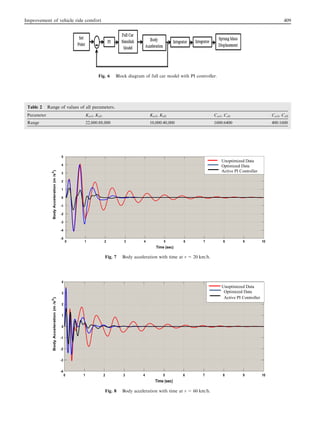
Fig. 6 Block diagram of full car model with PI controller.
Unoptimized Data
Optimized Data
Active PI Controller
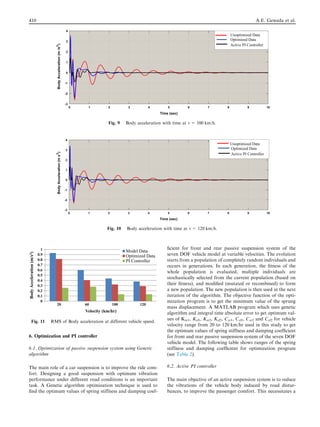
Fig. 7 Body acceleration with time at v = 20 km/h.
Unoptimized Data
Optimized Data
Active PI Controller
Fig. 8 Body acceleration with time at v = 60 km/h.
Improvement of vehicle ride comfort 409
6. Optimization and PI controller
6.1. Optimization of passive suspension system using Genetic
algorithm
The main role of a car suspension is to improve the ride com-
fort. Designing a good suspension with optimum vibration
performance under different road conditions is an important
task. A Genetic algorithm optimization technique is used to
find the optimum values of spring stiffness and damping coef-
ficient for front and rear passive suspension system of the
seven DOF vehicle model at variable velocities. The evolution
starts from a population of completely random individuals and
occurs in generations. In each generation, the fitness of the
whole population is evaluated, multiple individuals are
stochastically selected from the current population (based on
their fitness), and modified (mutated or recombined) to form
a new population. The new population is then used in the next
iteration of the algorithm. The objective function of the opti-
mization program is to get the minimum value of the sprung
mass displacement. A MATLAB program which uses genetic
algorithm and integral time absolute error to get optimum val-
ues of Ksr1, Ksl1, Ksr2, Ksl2, Csr1, Csl1, Csr2 and Csl2 for vehicle
velocity range from 20 to 120 km/hr used in this study to get
the optimum values of spring stiffness and damping coefficient
for front and rear passive suspension system of the seven DOF
vehicle model. The following table shows ranges of the spring
stiffness and damping coefficient for optimization program
(see Table 2).
6.2. Active PI controller
The main objective of an active suspension system is to reduce
the vibrations of the vehicle body induced by road distur-
bances, to improve the passenger comfort. This necessitates a
Unoptimized Data
Optimized Data
Active PI Controller
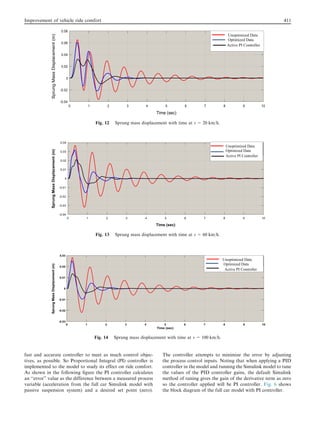
Fig. 9 Body acceleration with time at v = 100 km/h.
Unoptimized Data
Optimized Data
Active PI Controller
Fig. 10 Body acceleration with time at v = 120 km/h.
0
0.1
0.2
0.3
0.4
0.5
0.6
0.7
0.8
0.9
1
20 60 100 120
BodyAcceleration(m/s2)
Velocity (km/hr)
Model Data
Optimized Data
PI Controller
Fig. 11 RMS of Body acceleration at different vehicle speed.
410 A.E. Geweda et al.
fast and accurate controller to meet as much control objec-
tives, as possible. So Proportional Integral (PI) controller is
implemented to the model to study its effect on ride comfort.
As shown in the following figure the PI controller calculates
an ‘‘error” value as the difference between a measured process
variable (acceleration from the full car Simulink model with
passive suspension system) and a desired set point (zero).
The controller attempts to minimize the error by adjusting
the process control inputs. Noting that when applying a PID
controller in the model and running the Simulink model to tune
the values of the PID controller gains, the default Simulink
method of tuning gives the gain of the derivative term as zero
so the controller applied will be PI controller. Fig. 6 shows
the block diagram of the full car model with PI controller.
Unoptimized Data
Optimized Data
Active PI Controller
Fig. 12 Sprung mass displacement with time at v = 20 km/h.
Unoptimized Data
Optimized Data
Active PI Controller
Fig. 13 Sprung mass displacement with time at v = 60 km/h.
Unoptimized Data
Optimized Data
Active PI Controller
Fig. 14 Sprung mass displacement with time at v = 100 km/h.
Improvement of vehicle ride comfort 411
7. Results and discussion
7.1. Body acceleration results
Figs. 7–11 show the response of the body acceleration of the
model at 20, 60, 100 and 120 km/h for unoptimized data of
the model reported in [11], passive optimized data and model
with active PI controller. It is observed that the body acceler-
ation using optimized data and model with controller is less
than the body acceleration using unoptimized data of the
model in all velocities.
As shown in the above figures the performance of the body
acceleration has been improved as following.
At v = 20 km/h the improvement in Root Mean Square
(RMS) value of body acceleration when using optimized data
is 12.4% and it’s 72.1% in case of using active PI controller. At
v = 60 km/h the optimized data improved the RMS value of
body acceleration by 32.5% and active PI controller improved
it by 54%. The improvement of the RMS value of body accel-
eration is 26.2% in case of optimized data and 69.5% in case
of active PI controller at v = 100 km/h. Finally at
v = 120 km/h the improvement in the RMS value of body
acceleration when optimized data used is 23.7% and 64.5%
when active PI controller used.
7.2. Sprung mass displacement results
The following figures show the response of sprung mass dis-
placement of the model at 20, 60, 100 and 120 km/h using
unoptimized data of the model reported in [11], optimized data
and model with controller. It is founded that the sprung mass
displacement using optimized data and model with controller
is less than the sprung mass displacement using unoptimized
data of the model in all velocities (see Figs. 12–16).
As shown in the above figures the performance of the sprung
mass displacement has also been improved as following.
At v = 20 km/h the improvement in RMS value of sprung
mass displacement when using optimized data is 22.4% and
it’s 45.2% in case of using active PI controller. At
v = 60 km/h the optimized data improved the RMS value of
sprung mass displacement by 42.8% and active PI controller
improved it by 58.8%. The improvement of the RMS value
of sprung mass displacement is 43.1% in case of optimized
data and 62.8% in case of active PI controller at
v = 100 km/h. Finally at v = 120 km/h the improvement in
RMS value of sprung mass displacement when optimized data
used is 42.8% and 63% when active PI controller used.
8. Conclusion
In this work the mathematical equations of the full vehicle
model with seven DOF are put forward using newton’s second
law then a MATLAB SIMULINK model developed. Also it
was attempted to study the effect of the optimum values of
spring stiffness and damping coefficient and PI controller on
body acceleration and sprung mass displacement of seven
DOF vehicle model at different velocities. Genetic algorithm
optimization technique is used to find the optimum values of
spring stiffness and damping coefficient for front and rear sus-
pension system. PI controller is also implemented to the
model. The results show that the optimized parameters and
PI controller give significant improvements on body accelera-
tion and sprung mass displacement over the passive suspension
system. For body acceleration the improvement was 12.4%,
32.5%, 26.2% and 23.7% at velocities 20, 60, 100 and
120 km/h respectively when using optimized data and it was
72.1%, 45%, 69.5% and 64.5% at velocities 20, 60, 100 and
120 km/h respectively when using PI controller. For sprung
mass displacement the improvement was 22.4%, 42.8%,
34.1% and 42.8% at velocities 20, 60, 100 and 120 km/h
respectively when using optimized data and it was 45.2%,
58.8%, 62.8% and 63% at velocities 20, 60, 100 and 120 km/
h respectively when using PI controller.
Unoptimized Data
Optimized Data
Active PI Controller
Fig. 15 Sprung mass displacement with time at v = 120 km/h.
0
0.002
0.004
0.006
0.008
0.01
0.012
0.014
0.016
20 60 100 120
SprungMassDislacement(m)
Velocity (km/hr)
Model Data
Optimized Data
PI Controller
Fig. 16 RMS of Sprung mass displacement at different vehicle
speed.
412 A.E. Geweda et al.
Appendix A
References
[1] S. Qamar, L. Khan and Z. Qamar, Online adaptive full car
active suspension control using B-spline fuzzy-neural network,
in: IEEE 11th International Conference on Frontiers of
Information Technology, Serena Hotel Ramna5, Khayaban-e-
SuhrawardyKhayaban-e-Suhrwardy, Islamabad, Pakistan,
2013, pp. 205–210.
[2] A. Florin, M.R.I. Cozmin, P. Liliana, Pasive suspension
modeling using matlab, quarter car model, input signal step
type, TEHNOMUS - New Technologies and Products in
Machine Manufacturing Technologies, Suceava, Romania,
2013, pp. 258–263.
[3] R. Darus, N.I. Enzai, Modeling and control active suspension
system for a quarter car model, in: IEEE International
Conference on Science and Social Research, Kuala Lumpur,
Malaysia, December 5–7, 2010, pp. 1203–1206.
[4] E.A. Sa´ nchez, A quarter-car suspension system: car body mass
estimator and sliding mode control, in: Iberoamerican
Conference on Electronics Engineering and Computer Science,
vol. 7, Iberoamerican, 2013, pp. 208–214.
Improvement of vehicle ride comfort 413
[5] V. Gogaa, M. Klu´ cik, Optimization of vehicle suspension
parameters with use of evolutionary computation, Proc. Eng.
48 (2012) 174–179.
[6] W. Abbas, A. Emam, S. Badran, M. Shebl, O. Abouelatta,
Optimal seat and suspension design for a half-car with driver
model using genetic algorithm, Intell. Contr. Autom. 4 (2013)
199–205.
[7] H. Souilem, S. Mehjoub, N. Derbel, Intelligent control for a
half-car active suspension by self-tunable fuzzy inference system,
Int. J. Fuzzy Syst. Adv. Appl. 2 (2015) 9–15.
[8] L. Khan, S. Qamar, M.U. Khan, Neuro-fuzzy wavelets based
network for full car active suspension system, in: IEEE
International Conference on Emerging Technologies (ICET),
Islamabad, Pakistan, 08 Oct – 09 Oct 2012.
[9] J. Wang, C. Song, Computer simulation on fuzzy control of
semi-active suspension system based on the whole vehicle, Int. J.
Multimedia Ubiquitous Eng. 8 (6) (2013) 217–228.
[10] S. Qamar, L. Khan, S. Ali, Adaptive B-spline based neuro-fuzzy
control for full car active suspension system, Middle-East J. Sci.
Res. 16 (10) (2013) 1348–1360.
[11] A. Mitra, N. Benerjee, H.A. Khalane, M.A. Sonawane, D.R.
Joshi, G.R. Bagul, Simulation and Analysis of Full Car Model
for various Road profile on a analytically validated MATLAB/
SIMULINK model, IOSR Journal of Mechanical and Civil
Engineering (IOSR-JMCE), 2013, pp. 22–33.
[12] M.M.M. Salem, Full car model active suspension system with
PID and fuzzy controls to improve ride comfort, J. Am.Sci. 9
(12) (2013) 633–645.
[13] T. Nath, S. Kumar and Meerut, Quarter/half/full car models for
active suspension (with PID controller), in: IEEE International
Conference on Recent Trends in Engineering & Technology
(ICRTET), Madras Institute of Technology, Anna University
Chennai, Tamil Nadu, India, 2012, pp. 286–290.
[14] S. Mostaani, D. Singh, K. Firouzbakhsh, M. T. Ahmadian,
Optimization of a passive vehicle suspension system for ride
comfort enhancement with different speeds based on DOE
method, in: Proc. of Int. Colloquiums on Computer Electronics
Electrical Mechanical and Civil, Kerala, India, 20–21 September
2011, pp. 149–154.
414 A.E. Geweda et al.

Improvement of vehicle ride comfort using geneticalgorithm optimization and pi controller

  • 1.
    ORIGINAL ARTICLE Improvement ofvehicle ride comfort using genetic algorithm optimization and PI controller A.E. Geweda a,*, M.A. El-Gohary b , A.M. El-Nabawy a , T. Awad b a Mechanical Power and Energy Department, Faculty of Engineering, Minia University, Minia, Egypt b Mechanical Engineering Department, Faculty of Engineering, Alexandria University, Alexandria, Egypt Received 11 March 2017; revised 4 May 2017; accepted 7 May 2017 Available online 27 May 2017 KEYWORDS Vehicle dynamics; Full vehicle model; Seven DOF model; Genetic algorithm; PI controller Abstract In this paper a MATLAB SIMULINK model of seven Degrees Of Freedom (DOF) full vehicle model is developed. Mathematical equations are obtained using Newton’ s second law and free body diagram concept. Validation of the SIMULINK model is obtained to ensure that the model is suitable for studying the ride comfort. A Genetic algorithm optimization technique is used to find the optimum values of spring stiffness and damping coefficient for front and rear passive suspension system of the seven DOF vehicle model at variable velocities which improve the perfor- mance of the suspension system of the vehicle. Also Proportional Integral (PI) controller is imple- mented to the model to study its effect on ride comfort. Comparison of the results for body acceleration and sprung mass displacement of the optimized data of suspension parameters and model with PI controller are illustrated. The results show that the optimized parameters and PI con- troller give significant improvements of the vehicle ride performance over the passive suspension system. Ó 2017 Faculty of Engineering, Alexandria University. Production and hosting by Elsevier B.V. This is an open access article under the CC BY-NC-ND license (http://creativecommons.org/licenses/by-nc-nd/4.0/). 1. Introduction The major target of the vehicle suspension system is to enhance the ride comfort and to provide good ride handling capability. A vehicle suspension may be classified as passive suspension, semi active suspension and active suspension system [1]. A quality suspension must achieve a good behavior of the vehicle and a degree of comfort depending on the interaction with the uneven road surface [2]. Modeling of suspension systems is very important as it can be used for studying the performance of the ride comfort and road handling of the vehicle. There are different methods of representation the model. State space modeling, transfer function and MATLAB Simulink are used to solve these models. There are different models used in this field, quarter car model [2–4], half car model [5–7] and full car model [8–11]. The performance of active suspension system using Linear Quadratic Regulator (LQR) and Proportional Integral Derivative (PID) techniques was compared with the passive suspension system. Simulation is based on the mathe- matical model by using MATLAB/SIMULINK software in [3]. Mathematical half-car model was created in Matlab/Simu- link. Results from simulations of model with original and opti- mized suspension parameters were compared in [5]. Simulation of active half car suspension model was done using MATLAB, * Corresponding author. E-mail address: eng_ahmed_geweda@yahoo.com (A.E. Geweda). Peer review under responsibility of Faculty of Engineering, Alexandria University. Alexandria Engineering Journal (2017) 56, 405–414 HOSTED BY Alexandria University Alexandria Engineering Journal www.elsevier.com/locate/aej www.sciencedirect.com http://dx.doi.org/10.1016/j.aej.2017.05.014 1110-0168 Ó 2017 Faculty of Engineering, Alexandria University. Production and hosting by Elsevier B.V. This is an open access article under the CC BY-NC-ND license (http://creativecommons.org/licenses/by-nc-nd/4.0/).
  • 2.
    Simulink and acomparison between controllers such as classical PID controller; self-tunable fuzzy inference system (STFIS) controller and the passive system controller were founded in [6]. The full car suspensions for passive and active one with PID or Fuzzy controls were simulated using MATLAB/SIMULINK at [12]. The results indicated that the active with PID and fuzzy controls suspension systems were better than the passive system. An active suspension for the Quarter/Half/Full car model of car was developed by [13] to improve its performance by using a PID controller. Optimiza- tion was also applied to one of the these types as in [14] who made an investigation to determine the spring and damper set- tings that will ensure optimal ride comfort of vehicle for differ- ent speeds using Design of Experiment Method (DOE) for seven degrees of freedom full car model. This paper is organized as follows; Full car model is obtained in Section 2. Mathematical equations are presented in Section 3. In Section 4 the MATLAB, Simulink model is built. The road profiles used in this paper are given on Section 5. Section 6 shows the optimization and controller. Results and discussion of validation are obtained in Section 7. Section 8 presents the conclusions of the paper. An Appendix A is given at the end of the paper. 2. Full car model Fig. 1 shows a full car model with seven degrees of freedom system considered for analysis [11]. It is consisting of sprung mass, Ms referring to the part of the car that is supported on springs and un-sprung mass which refers to the mass of the wheel assembly. The suspensions between the sprung mass and un-sprung masses are modeled as linear viscous dampers and spring components. The tire has been replaced with its equivalent stiffness and tire damping is neglected as it’s influence on tire behavior is negligible [9,11 and 12]. 3. Mathematical modeling 3.1. Mathematical equations Using the Newton’s second law of motion and free body dia- gram concept; the following seven equations of motion are derived. For vehicle body bounce motion (Sprung Mass): MsZ ÁÁ Cg ¼ ðÀKsr1 À Ksl1 À Ksr2 À Ksl2ÞZcg þ ðÀCsr1 À Csl1 À Csr2 À Csl2ÞZ Á cg þ ðKsr1a þ Ksl1a À ksr2b À ksl2bÞh þ ðCsr1a þ Csl1a À Csr2b À Csl2bÞ h Á þ ðKsr1c À Ksl1d þ Ksr2c À Ksl2dÞu þ ðCsr1c À Csl1d þ Csr2c À Csl2dÞ u Á þ Ksr1Zwr1 þ Ksl1Zwl1 þ Ksr2Zwr2 þ Ksl2Zwl2 þ Csr1Z Á wr1 þ Csl1Z Á wl1 þ Csr2Z Á wr2 þ Csl2Z Á wl2 ð1Þ For vehicle body pitching motion (Sprung Mass): Iyy h ÁÁ ¼ ðKsr1a þ Ksl1a À ksr2b À Ksl2bÞZcg þ ðCsr1a þ Csl1a À Csr2b À Csl2bÞZ Á cg þ ðÀKsr1a2 À Ksl1a2 À Ksr2b2 À Ksl2b2 Þh þ ðCsr1a2 À Csl1a2 À Csr2b2 À Csl2b2 Þ h Á þ ðÀKsr1ac þ Ksl1ad þ Ksr2bc À Ksl2bdÞu þ ðÀCsr1ac þ Csl1ad þ Csr2bc À Csl2bdÞ u Á ÀKsr1aZwr1 À Ksl1aZwl1 þ Ksr2bZwr2 þ Ksl2bZwl2 À Csr1aZ Á wr1 À Csl1aZ Á wl1 þ Csr2bZ Á wr2 þ Csl2bZ Á wl2 ð2Þ Nomenclature a distance from CG to front wheel, m b distance from CG to rear wheel, m Csl1 damping coefficient of front left damper, N-s/m Csl2 damping coefficient of rear left damper, N-s/m Csr1 damping coefficient of front right damper, N-s/m Csr2 damping coefficient of rear right damper, N-s/m c distance from CG to right wheel, m d distance from CG to left wheel, m Ixx moment of Inertia about X-X axis, kg-m2 Iyy moment of Inertia about Y-Y axis, kg-m2 Ksl1 spring stiffness of front left suspension, N/m Ksl2 spring stiffness of rear left suspension, N/m Ksr1 spring stiffness of front right suspension, N/m Ksr2 spring stiffness of rear right suspension, N/m Kwl1 spring stiffness of front left tire, N/m Kwl2 spring stiffness of rear left tire, N/m Kwr1 spring stiffness of front right tire, N/m Kwr2 spring stiffness of rear right tire, N/m MS mass of vehicle, kg Mwl1 mass of front left wheel, kg Mwl2 mass of rear left wheel, kg Mwr1 mass of front right wheel, kg Mwr2 mass of rear right wheel, kg Zcg displacement of CG of vehicle body, m Zrl1 road input to front left wheel, m Zrl2 road input to rear left wheel, m Zrr1 road input to front right wheel, m Zrr2 road input to rear right wheel, m Zwl1 displacement of front left wheel, m Zwl2 displacement of rear left wheel, m Zwr1 displacement of front right wheel, m Zwr2 displacement of rear right wheel, m h pitch angle of the body at CG, degree U roll angle of the body at CG, degree 406 A.E. Geweda et al.
  • 3.
    For vehicle bodyrolling motion (Sprung Mass) Ixx u ÁÁ ¼ ðKsr1c À Ksl1d þ Ksr2c À Ksl2dÞZcg þ ðCsr1c À Csl1d þ Csr2c À Csl2dÞ Z Á cg þ ðÀksr1ac þ Ksl1ad þ Ksr2bc À Ksl2bdÞh þ ðCsr1ac þ Csl1ad þ Csr2bc À Csl2bdÞ h Á þ ðÀKsr1c2 À Ksl1d2 À Ksr2c2 À Ksl2d2 Þu þ ðÀCsr2c2 À Csl2d2 À Csr2c2 À Csl2d2 Þ u Á ÀKsr1cZwr1 þ Ksl1dZwl1 À Ksr2cZwr2 þ Ksl2dZwl2 À Csr1cZ Á wr1 þ Csl1dZ Á wl1 À Csr2cZ Á wr2 þ Csl2dZ Á wl2 ð3Þ For front right wheel (Un-sprung Mass): Mwr1Z ÁÁ wr1 ¼ Ksr1ðZcg À Zwr1 À ah À cuÞ þ Csr1ðZ Á cg À Z Á wr1 À a h Á Àc u Á Þ þ Kwr1ðZrr1 À Zwr1Þ ð4Þ For front left wheel (Un-sprung Mass): Mwl1Z ÁÁ wl1 ¼ Ksl1ðZcg À Zwl1 À ah þ duÞ þ Csl1ðZ Á cg À Z Á wl1 À a h Á þd u Á Þ þ Kwl1ðZrl1 À Zwl1Þ ð5Þ For rear right wheel (Un-sprung Mass): Mwr2Z ÁÁ wr2 ¼ Ksr2ðZcg À Zwr2 þ bh À cuÞ þ Csr2ðZ Á cg À Z Á wr2 þ b h Á Àc u Á Þ þ Kwr2ðZrr2 À Zwr2Þ ð6Þ For rear left wheel (Un-sprung Mass): Mwl2Z ÁÁ wl2 ¼ Ksl2ðZcg À Zwl2 þ bh þ duÞ þ Csl2ðZ Á cg À Z Á wl2 þ b h Á þd u Á Þ þ Kwl2ðZrl2 À Zwl2Þ ð7Þ Fig. 1 Full car model. Table 1 Fixed parameters of full car model [11]. Ms = 1200 (kg) a = b = 1.5 (m) C = d = 1 (m) Mwr2 = Mwl2 = 60(kg) Kwr1 = Kwl1 = 30000 (N/m) Kwr2 = Kwl2 = 30,000 (N/m) Mwr1 = Mwl1 = 60 (kg) Ixx = 4000 (kg-m2 ) Iyy = 950 (kg-m2 ) Fig. 2 Flow chart of full vehicle model. Improvement of vehicle ride comfort 407
  • 4.
    3.2. Fixed parametersof full car model The full car model with seven DOF used in this study has the following fixed parameters. Suspension spring stiffness are 55,000 N/m for front suspension system and 25,000 N/m for rear suspension as in [11]. Damping coefficient is 4000 N-s/m for front suspension system and 1000 N-s/m for rear suspen- sion system as in [11]. The fixed parameters of the full car model are shown in Table 1. 4. Matlab Simulink model Mathematical full-car model is created using Matlab/Simulink. Fig. 2 shows a flow chart from the input (road profile) to the wheels (front right and left) to the car body and finally the outputs (vertical, pitch and roll motions). The full vehicle subsystem model using Matlab Simulink is shown in Appendix A. 5. Road profiles used in the study There are two kinds of road profiles that used as input to the Simulink model in this study. The first one is a unit step input with 5 s delay as shown in Fig. 3 as in [12]. This road profile is used to validate the developed model. The second road input is a bump road surface of half sine wave shape as shown in Fig. 4 and the model in this study is considered to move with variable velocities from 20 to 120 km/h. 5.1. Validation of Simulink model using step input with delay Fig. 5 shows the effects of changing the value of spring stiff- ness on the body acceleration of the model as obtained by a response of SIMULINK model when the input to the model is unit step input with 5 (s) step time as compared to that of [12] using the same data of [12]. From Fig. 5, it can be noted that the curve of the body acceleration of the Simulink model is in excellent agreement with the model as given in Ref. [12]. In both acceleration curves, the settling time is 6.5 (s) and the peak value is 1.5 (m/s2 ). So the developed model can be used in the study for further investigations. Fig. 3 Unit step input with delay. Fig. 4 Road hump. Fig. 5 Body acceleration vs. Time. 408 A.E. Geweda et al.
  • 5.
    Table 2 Rangeof values of all parameters. Parameter Ksr1, Ksl1 Ksr2, Ksl2 Csr1, Csl1 Csr2, Csl2 Range 22,000:88,000 10,000:40,000 1600:6400 400:1600 Fig. 6 Block diagram of full car model with PI controller. Unoptimized Data Optimized Data Active PI Controller Fig. 7 Body acceleration with time at v = 20 km/h. Unoptimized Data Optimized Data Active PI Controller Fig. 8 Body acceleration with time at v = 60 km/h. Improvement of vehicle ride comfort 409
  • 6.
    6. Optimization andPI controller 6.1. Optimization of passive suspension system using Genetic algorithm The main role of a car suspension is to improve the ride com- fort. Designing a good suspension with optimum vibration performance under different road conditions is an important task. A Genetic algorithm optimization technique is used to find the optimum values of spring stiffness and damping coef- ficient for front and rear passive suspension system of the seven DOF vehicle model at variable velocities. The evolution starts from a population of completely random individuals and occurs in generations. In each generation, the fitness of the whole population is evaluated, multiple individuals are stochastically selected from the current population (based on their fitness), and modified (mutated or recombined) to form a new population. The new population is then used in the next iteration of the algorithm. The objective function of the opti- mization program is to get the minimum value of the sprung mass displacement. A MATLAB program which uses genetic algorithm and integral time absolute error to get optimum val- ues of Ksr1, Ksl1, Ksr2, Ksl2, Csr1, Csl1, Csr2 and Csl2 for vehicle velocity range from 20 to 120 km/hr used in this study to get the optimum values of spring stiffness and damping coefficient for front and rear passive suspension system of the seven DOF vehicle model. The following table shows ranges of the spring stiffness and damping coefficient for optimization program (see Table 2). 6.2. Active PI controller The main objective of an active suspension system is to reduce the vibrations of the vehicle body induced by road distur- bances, to improve the passenger comfort. This necessitates a Unoptimized Data Optimized Data Active PI Controller Fig. 9 Body acceleration with time at v = 100 km/h. Unoptimized Data Optimized Data Active PI Controller Fig. 10 Body acceleration with time at v = 120 km/h. 0 0.1 0.2 0.3 0.4 0.5 0.6 0.7 0.8 0.9 1 20 60 100 120 BodyAcceleration(m/s2) Velocity (km/hr) Model Data Optimized Data PI Controller Fig. 11 RMS of Body acceleration at different vehicle speed. 410 A.E. Geweda et al.
  • 7.
    fast and accuratecontroller to meet as much control objec- tives, as possible. So Proportional Integral (PI) controller is implemented to the model to study its effect on ride comfort. As shown in the following figure the PI controller calculates an ‘‘error” value as the difference between a measured process variable (acceleration from the full car Simulink model with passive suspension system) and a desired set point (zero). The controller attempts to minimize the error by adjusting the process control inputs. Noting that when applying a PID controller in the model and running the Simulink model to tune the values of the PID controller gains, the default Simulink method of tuning gives the gain of the derivative term as zero so the controller applied will be PI controller. Fig. 6 shows the block diagram of the full car model with PI controller. Unoptimized Data Optimized Data Active PI Controller Fig. 12 Sprung mass displacement with time at v = 20 km/h. Unoptimized Data Optimized Data Active PI Controller Fig. 13 Sprung mass displacement with time at v = 60 km/h. Unoptimized Data Optimized Data Active PI Controller Fig. 14 Sprung mass displacement with time at v = 100 km/h. Improvement of vehicle ride comfort 411
  • 8.
    7. Results anddiscussion 7.1. Body acceleration results Figs. 7–11 show the response of the body acceleration of the model at 20, 60, 100 and 120 km/h for unoptimized data of the model reported in [11], passive optimized data and model with active PI controller. It is observed that the body acceler- ation using optimized data and model with controller is less than the body acceleration using unoptimized data of the model in all velocities. As shown in the above figures the performance of the body acceleration has been improved as following. At v = 20 km/h the improvement in Root Mean Square (RMS) value of body acceleration when using optimized data is 12.4% and it’s 72.1% in case of using active PI controller. At v = 60 km/h the optimized data improved the RMS value of body acceleration by 32.5% and active PI controller improved it by 54%. The improvement of the RMS value of body accel- eration is 26.2% in case of optimized data and 69.5% in case of active PI controller at v = 100 km/h. Finally at v = 120 km/h the improvement in the RMS value of body acceleration when optimized data used is 23.7% and 64.5% when active PI controller used. 7.2. Sprung mass displacement results The following figures show the response of sprung mass dis- placement of the model at 20, 60, 100 and 120 km/h using unoptimized data of the model reported in [11], optimized data and model with controller. It is founded that the sprung mass displacement using optimized data and model with controller is less than the sprung mass displacement using unoptimized data of the model in all velocities (see Figs. 12–16). As shown in the above figures the performance of the sprung mass displacement has also been improved as following. At v = 20 km/h the improvement in RMS value of sprung mass displacement when using optimized data is 22.4% and it’s 45.2% in case of using active PI controller. At v = 60 km/h the optimized data improved the RMS value of sprung mass displacement by 42.8% and active PI controller improved it by 58.8%. The improvement of the RMS value of sprung mass displacement is 43.1% in case of optimized data and 62.8% in case of active PI controller at v = 100 km/h. Finally at v = 120 km/h the improvement in RMS value of sprung mass displacement when optimized data used is 42.8% and 63% when active PI controller used. 8. Conclusion In this work the mathematical equations of the full vehicle model with seven DOF are put forward using newton’s second law then a MATLAB SIMULINK model developed. Also it was attempted to study the effect of the optimum values of spring stiffness and damping coefficient and PI controller on body acceleration and sprung mass displacement of seven DOF vehicle model at different velocities. Genetic algorithm optimization technique is used to find the optimum values of spring stiffness and damping coefficient for front and rear sus- pension system. PI controller is also implemented to the model. The results show that the optimized parameters and PI controller give significant improvements on body accelera- tion and sprung mass displacement over the passive suspension system. For body acceleration the improvement was 12.4%, 32.5%, 26.2% and 23.7% at velocities 20, 60, 100 and 120 km/h respectively when using optimized data and it was 72.1%, 45%, 69.5% and 64.5% at velocities 20, 60, 100 and 120 km/h respectively when using PI controller. For sprung mass displacement the improvement was 22.4%, 42.8%, 34.1% and 42.8% at velocities 20, 60, 100 and 120 km/h respectively when using optimized data and it was 45.2%, 58.8%, 62.8% and 63% at velocities 20, 60, 100 and 120 km/ h respectively when using PI controller. Unoptimized Data Optimized Data Active PI Controller Fig. 15 Sprung mass displacement with time at v = 120 km/h. 0 0.002 0.004 0.006 0.008 0.01 0.012 0.014 0.016 20 60 100 120 SprungMassDislacement(m) Velocity (km/hr) Model Data Optimized Data PI Controller Fig. 16 RMS of Sprung mass displacement at different vehicle speed. 412 A.E. Geweda et al.
  • 9.
    Appendix A References [1] S.Qamar, L. Khan and Z. Qamar, Online adaptive full car active suspension control using B-spline fuzzy-neural network, in: IEEE 11th International Conference on Frontiers of Information Technology, Serena Hotel Ramna5, Khayaban-e- SuhrawardyKhayaban-e-Suhrwardy, Islamabad, Pakistan, 2013, pp. 205–210. [2] A. Florin, M.R.I. Cozmin, P. Liliana, Pasive suspension modeling using matlab, quarter car model, input signal step type, TEHNOMUS - New Technologies and Products in Machine Manufacturing Technologies, Suceava, Romania, 2013, pp. 258–263. [3] R. Darus, N.I. Enzai, Modeling and control active suspension system for a quarter car model, in: IEEE International Conference on Science and Social Research, Kuala Lumpur, Malaysia, December 5–7, 2010, pp. 1203–1206. [4] E.A. Sa´ nchez, A quarter-car suspension system: car body mass estimator and sliding mode control, in: Iberoamerican Conference on Electronics Engineering and Computer Science, vol. 7, Iberoamerican, 2013, pp. 208–214. Improvement of vehicle ride comfort 413
  • 10.
    [5] V. Gogaa,M. Klu´ cik, Optimization of vehicle suspension parameters with use of evolutionary computation, Proc. Eng. 48 (2012) 174–179. [6] W. Abbas, A. Emam, S. Badran, M. Shebl, O. Abouelatta, Optimal seat and suspension design for a half-car with driver model using genetic algorithm, Intell. Contr. Autom. 4 (2013) 199–205. [7] H. Souilem, S. Mehjoub, N. Derbel, Intelligent control for a half-car active suspension by self-tunable fuzzy inference system, Int. J. Fuzzy Syst. Adv. Appl. 2 (2015) 9–15. [8] L. Khan, S. Qamar, M.U. Khan, Neuro-fuzzy wavelets based network for full car active suspension system, in: IEEE International Conference on Emerging Technologies (ICET), Islamabad, Pakistan, 08 Oct – 09 Oct 2012. [9] J. Wang, C. Song, Computer simulation on fuzzy control of semi-active suspension system based on the whole vehicle, Int. J. Multimedia Ubiquitous Eng. 8 (6) (2013) 217–228. [10] S. Qamar, L. Khan, S. Ali, Adaptive B-spline based neuro-fuzzy control for full car active suspension system, Middle-East J. Sci. Res. 16 (10) (2013) 1348–1360. [11] A. Mitra, N. Benerjee, H.A. Khalane, M.A. Sonawane, D.R. Joshi, G.R. Bagul, Simulation and Analysis of Full Car Model for various Road profile on a analytically validated MATLAB/ SIMULINK model, IOSR Journal of Mechanical and Civil Engineering (IOSR-JMCE), 2013, pp. 22–33. [12] M.M.M. Salem, Full car model active suspension system with PID and fuzzy controls to improve ride comfort, J. Am.Sci. 9 (12) (2013) 633–645. [13] T. Nath, S. Kumar and Meerut, Quarter/half/full car models for active suspension (with PID controller), in: IEEE International Conference on Recent Trends in Engineering & Technology (ICRTET), Madras Institute of Technology, Anna University Chennai, Tamil Nadu, India, 2012, pp. 286–290. [14] S. Mostaani, D. Singh, K. Firouzbakhsh, M. T. Ahmadian, Optimization of a passive vehicle suspension system for ride comfort enhancement with different speeds based on DOE method, in: Proc. of Int. Colloquiums on Computer Electronics Electrical Mechanical and Civil, Kerala, India, 20–21 September 2011, pp. 149–154. 414 A.E. Geweda et al.