Interesting Interviewing!
      Sarah Rach-Sovich
Preparation…
•   It is not as easy as…
•   Every interview is different
•   Each interviewer has their own style
•   You can never be certain…
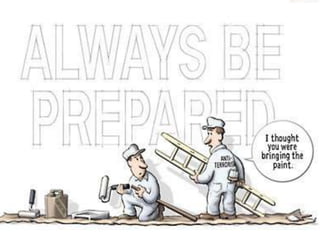
The more prepared you are…
•   …the better off you are!
•   It may be a sloooow process…
•   It may take more than one
•   Assessments
•   Outgoing phone messages
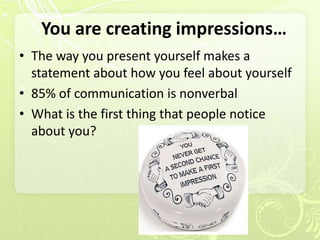
You are creating impressions…
• The way you present yourself makes a
  statement about how you feel about yourself
• 85% of communication is nonverbal
• What is the first thing that people notice
  about you?
What to wear?
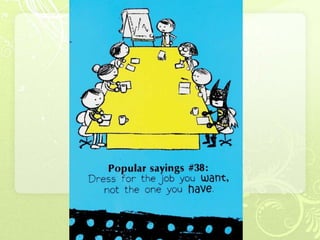
• Expected over unexpected
• Usual over the unusual
• Dress at least one level above the norm at the
  office
• Don’t worry about being overdressed
• Most traditional
• This is important even after you get the job!
Other influences
•   Handshake          •   Accessories
•   Hair color/style   •   Shoes
•   Tattoos            •   Socks
•   Body piercings     •   Clothing Fit
•   Facial hair        •   Cleanliness
•   Make-up            •   Grooming
•   Fragrance          •   Hands/Fingernails
Do your homework!
Know the company
• Start with the company website
  –   Company literature
  –   Online searches
  –   Public library
  –   Articles
       • Magazines, newspapers, trade journals
  –   Talk with employees
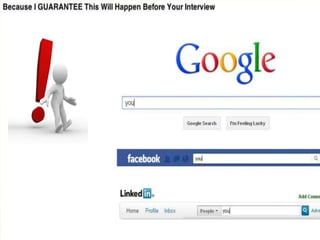
  –   Google
  –   Chamber of commerce
  –   Linked in
  –   Schedule an observation – meet the receptionist
Key info you should know
•   Company goals and mission
•   Products and/or services offered
•   Recent changes
•   Company history
•   Mission statement
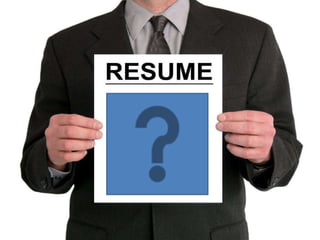
What to bring…
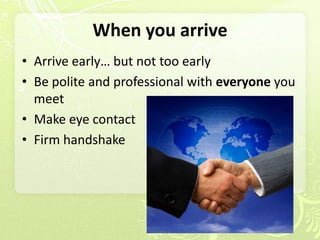
When you arrive
• Arrive early… but not too early
• Be polite and professional with everyone you
  meet
• Make eye contact
• Firm handshake
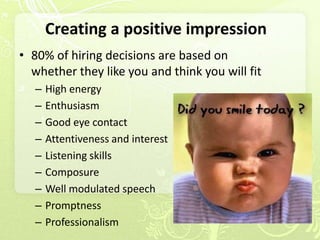
Creating a positive impression
• 80% of hiring decisions are based on
  whether they like you and think you will fit
   –   High energy
   –   Enthusiasm
   –   Good eye contact
   –   Attentiveness and interest
   –   Listening skills
   –   Composure
   –   Well modulated speech
   –   Promptness
   –   Professionalism
Positive Body Language
            +
     Positive Words
            =
  Positive Impression
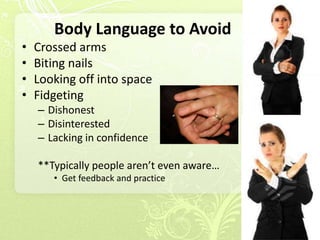
Body Language to Avoid
•   Crossed arms
•   Biting nails
•   Looking off into space
•   Fidgeting
    – Dishonest
    – Disinterested
    – Lacking in confidence

    **Typically people aren’t even aware…
       • Get feedback and practice
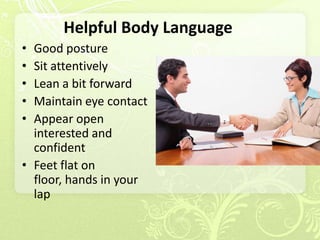
Helpful Body Language
• Good posture
• Sit attentively
• Lean a bit forward
• Maintain eye contact
• Appear open
  interested and
  confident
• Feet flat on
  floor, hands in your
  lap
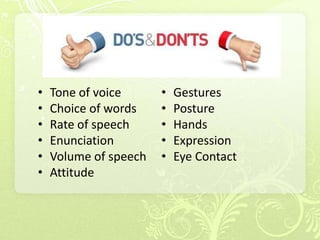
•   Tone of voice      •   Gestures
•   Choice of words    •   Posture
•   Rate of speech     •   Hands
•   Enunciation        •   Expression
•   Volume of speech   •   Eye Contact
•   Attitude
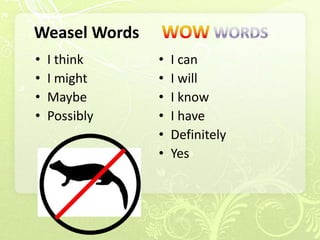
Weasel Words
•   I think    •   I can
•   I might    •   I will
•   Maybe      •   I know
•   Possibly   •   I have
               •   Definitely
               •   Yes
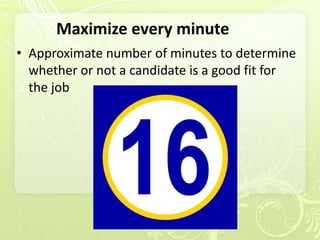
Maximize every minute
• Approximate number of minutes to determine
  whether or not a candidate is a good fit for
  the job
• Have an idea how you will answer
  questions
• Respond as naturally and conversationally
  as possible
• Emphasize what you CAN do & what you
  CAN offer
• Focus on what you have learned and how
  you overcome challenges
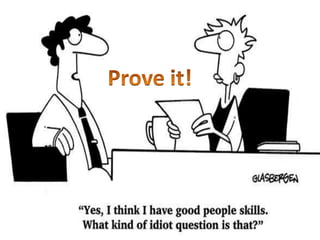
• Prove it!
• Speak the truth
• Expect the unexpected
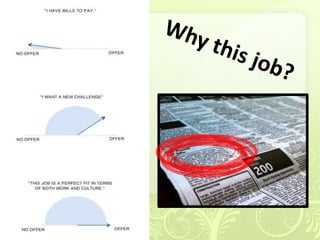
Which would you rather…?
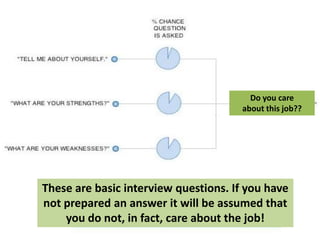
What they are really trying to figure out!


                                           Do you care
                                         about this job??


  These are basic interview questions. If you have
  not prepared an answer it will be assumed that
      you do not, in fact, care about the job!
Tell me about yourself…
• Provide a brief introduction
• Provide a career summary
• Tie your response to the needs of the
  organization
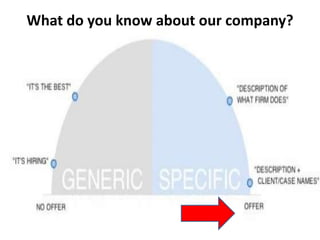
What do you know about our company?
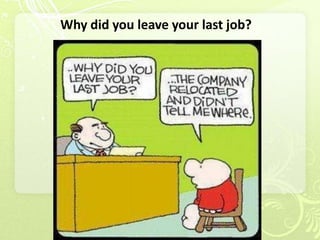
Why did you leave your last job?
• Focus on the positives
• “I finished my mission there successfully and
  felt I need to move further in my career.”
• “It was a good job and I had nice colleagues
  there, but I know that I could not fully use my
  potential in that company. That’s why I came
  to this interview with your company, because I
  really believe this is the right place to utilize
  my skills and abilities.”
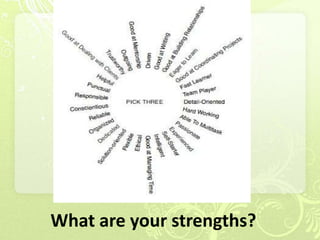
What are your strengths?
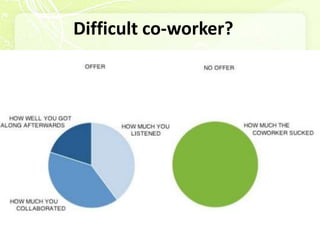
Difficult co-worker?
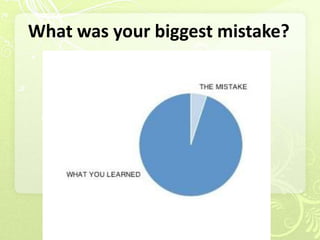
What was your biggest mistake?
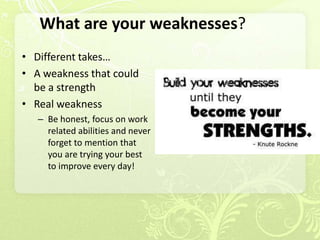
What are your weaknesses?
• Different takes…
• A weakness that could
  be a strength
• Real weakness
   – Be honest, focus on work
     related abilities and never
     forget to mention that
     you are trying your best
     to improve every day!
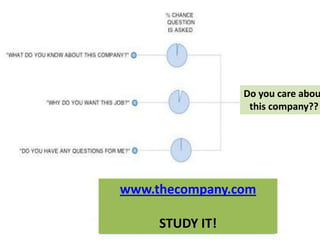
Do you care abou
                  this company??


www.thecompany.com

     STUDY IT!
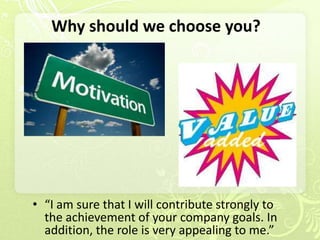
Why should we choose you?


• “I am sure that I will contribute strongly to
  the achievement of your company goals. In
  addition, the role is very appealing to me.”
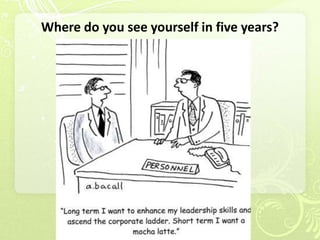
Where do you see yourself in five years?
• To really impress: Connect your answer
  with the role you are applying for
• “I hope to be working in your company
  as a senior manager, achieve great
  results in my department in five years
  time.”
• Don’t say…
Questions that you can ask
• Should come from your natural curiosity
• Don’t ask questions the website can answer
• Use this opportunity to share more!
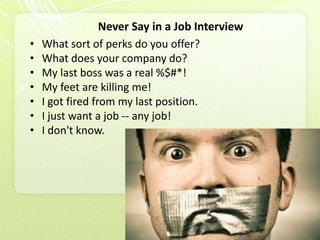
Never Say in a Job Interview
•   What sort of perks do you offer?
•   What does your company do?
•   My last boss was a real %$#*!
•   My feet are killing me!
•   I got fired from my last position.
•   I just want a job -- any job!
•   I don't know.
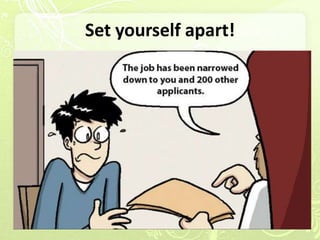
Set yourself apart!
Final Tips
• Be yourself!!
    – Humor, warmth and personality
•   Show interest and enthusiasm
•   Be flexible/adaptable
•   Lifelong learning
•   Ask for the job
Remember
to THANK
 them!!!

Impressive Interviewing

  • 1.
    Interesting Interviewing! Sarah Rach-Sovich
  • 3.
    Preparation… • It is not as easy as… • Every interview is different • Each interviewer has their own style • You can never be certain…
  • 5.
    The more preparedyou are… • …the better off you are! • It may be a sloooow process… • It may take more than one • Assessments • Outgoing phone messages
  • 7.
    You are creatingimpressions… • The way you present yourself makes a statement about how you feel about yourself • 85% of communication is nonverbal • What is the first thing that people notice about you?
  • 8.
    What to wear? •Expected over unexpected • Usual over the unusual • Dress at least one level above the norm at the office • Don’t worry about being overdressed • Most traditional • This is important even after you get the job!
  • 11.
    Other influences • Handshake • Accessories • Hair color/style • Shoes • Tattoos • Socks • Body piercings • Clothing Fit • Facial hair • Cleanliness • Make-up • Grooming • Fragrance • Hands/Fingernails
  • 14.
  • 15.
    Know the company •Start with the company website – Company literature – Online searches – Public library – Articles • Magazines, newspapers, trade journals – Talk with employees – Google – Chamber of commerce – Linked in – Schedule an observation – meet the receptionist
  • 16.
    Key info youshould know • Company goals and mission • Products and/or services offered • Recent changes • Company history • Mission statement
  • 20.
  • 21.
    When you arrive •Arrive early… but not too early • Be polite and professional with everyone you meet • Make eye contact • Firm handshake
  • 22.
    Creating a positiveimpression • 80% of hiring decisions are based on whether they like you and think you will fit – High energy – Enthusiasm – Good eye contact – Attentiveness and interest – Listening skills – Composure – Well modulated speech – Promptness – Professionalism
  • 24.
    Positive Body Language + Positive Words = Positive Impression
  • 25.
    Body Language toAvoid • Crossed arms • Biting nails • Looking off into space • Fidgeting – Dishonest – Disinterested – Lacking in confidence **Typically people aren’t even aware… • Get feedback and practice
  • 26.
    Helpful Body Language •Good posture • Sit attentively • Lean a bit forward • Maintain eye contact • Appear open interested and confident • Feet flat on floor, hands in your lap
  • 27.
    Tone of voice • Gestures • Choice of words • Posture • Rate of speech • Hands • Enunciation • Expression • Volume of speech • Eye Contact • Attitude
  • 28.
    Weasel Words • I think • I can • I might • I will • Maybe • I know • Possibly • I have • Definitely • Yes
  • 29.
    Maximize every minute •Approximate number of minutes to determine whether or not a candidate is a good fit for the job
  • 30.
    • Have anidea how you will answer questions • Respond as naturally and conversationally as possible • Emphasize what you CAN do & what you CAN offer • Focus on what you have learned and how you overcome challenges • Prove it! • Speak the truth • Expect the unexpected
  • 32.
    Which would yourather…?
  • 33.
    What they arereally trying to figure out! Do you care about this job?? These are basic interview questions. If you have not prepared an answer it will be assumed that you do not, in fact, care about the job!
  • 34.
    Tell me aboutyourself… • Provide a brief introduction • Provide a career summary • Tie your response to the needs of the organization
  • 35.
    What do youknow about our company?
  • 37.
    Why did youleave your last job?
  • 38.
    Why did youleave your last job? • Focus on the positives • “I finished my mission there successfully and felt I need to move further in my career.” • “It was a good job and I had nice colleagues there, but I know that I could not fully use my potential in that company. That’s why I came to this interview with your company, because I really believe this is the right place to utilize my skills and abilities.”
  • 39.
    What are yourstrengths?
  • 40.
  • 41.
    What was yourbiggest mistake?
  • 42.
    What are yourweaknesses? • Different takes… • A weakness that could be a strength • Real weakness – Be honest, focus on work related abilities and never forget to mention that you are trying your best to improve every day!
  • 43.
    Do you careabou this company?? www.thecompany.com STUDY IT!
  • 44.
    Why should wechoose you? • “I am sure that I will contribute strongly to the achievement of your company goals. In addition, the role is very appealing to me.”
  • 47.
    Where do yousee yourself in five years?
  • 48.
    Where do yousee yourself in five years? • To really impress: Connect your answer with the role you are applying for • “I hope to be working in your company as a senior manager, achieve great results in my department in five years time.” • Don’t say…
  • 49.
    Questions that youcan ask • Should come from your natural curiosity • Don’t ask questions the website can answer • Use this opportunity to share more!
  • 51.
    Never Say ina Job Interview • What sort of perks do you offer? • What does your company do? • My last boss was a real %$#*! • My feet are killing me! • I got fired from my last position. • I just want a job -- any job! • I don't know.
  • 52.
  • 53.
    Final Tips • Beyourself!! – Humor, warmth and personality • Show interest and enthusiasm • Be flexible/adaptable • Lifelong learning • Ask for the job
  • 54.

Editor's Notes

  • #4 It is not as easy asvalidating your credentials and impressing the interviewerEvery interview is differentEach interviewer has their own styleSome are complex, others are simpleSome brief, some will last longerSome in person, some on the phonePerhaps even videoconferencing or skypingYou can never be certain about what type of interview you will have or what questions will be askedIt isn’t always the case that the boss is the oldest person in the room…
  • #6 The more prepared you are the better off you areIt may take more than one interview – I have even heard up to 12~! Yikes! Not typical, but I can tell you that my husband has a position as a gas station manager in Alexandria and he was interviewed 4 times - and sometimes with different people, different locations, different types Assessments may also be required: behavior and career assessmentsMBTI, Strong, Kolbe (uncover natural motivators), DiSC (behavioral-based – helps put skills in the right context), etc.
  • #8 The way you present yourself makes a statement about how you feel about yourself85% of communication is nonverbal – so what you wear is an important part of presentation as well as how you carry yourself, how well groomed you are, if you smile, how you hand shakeFirst thing that people notice about you - clothingEven if you interview very well, your outfit choice could rule you out of their considerationI care about my appearance OR I don’t care about my appearance?I dress for the occasion OR I wear what I want?I spend a lot of money on my clothes OR I don’t spend a lot of money on my clothes?I took my time getting dressed ORI got dressed in a hurry ?I pay attention to details OR I don’t pay attention to details?I care what other people think of me OR I don’t care what other people think of meHow quickly do you think someone would be able to determine these things about you? Seconds!
  • #9 Go for the expected over unexpectedUsual over the unusualDon’t worry about being overdressedDress for the job you wantIf you want to work in a professional environment, dress professionallyMost traditional are suitsThis is important even after you get the job!Dress for the position you want, not the one you have – appear ready (in dress and actions)Once you are hired, ask about dress code
  • #12 HandshakeHair color/styleTattoosBody piercingsFacial hair – neat and cleanMake-upFragrance – hold back, use sparilyAccessories – jewelry – remove extra – women: 1-2 rings, 1 necklace, simple earrings mean: keep jewelry very simpleShoes - polishSocksClothing Fit – avoid clothing that is too short, tight, revealing, flashy or distracting, choose solid colors (you want focus on you, not clothes)CleanlinessGroomingHands/Fingernails – neat and cleanCarry only one bag (like a briefcase or portfolio)To narrow down candidatesFind the right person or in other words…They are looking for a reason to eliminate you as a prospectWhy take a chance on anything that might diminish your chances of having a successful interview?
  • #16 Know the companyDo your research – start with the company website Company literatureOnline searchesPublic libraryArticles from magazines, newspapers, trade journalsTalk with employeesSchedule an observation – meet the receptionist
  • #17 Company goals and missionProducts and/or services offeredRecent changes: changessuch as new technology, products, expansions or mergersWill increase your confidence and keep you from walking blind into an interviewResearch can truly set you apart from the competition
  • #28 Tone of voiceSpeak enthusiasticallyThe tone should match your wordsVary your tone and inflectionChoice of wordsDon’t use slang or jargonAvoid um, ah, erNo swearingRate of speechEven pace – not too fast, not too slowMirror interviewersEnunciationSpeak clearly without mumblingVolume of speechMatch the volume of interviewerDon’t be too boisterousAttitudeEven if you don’t feel confident or enthusiastic, act as if you doGesturesBe expressiveGestures add interest to what you are sayingPostureStand tall and walk with a brisk confident strideHandsFind a “home base”Do use hands as you are talking or to emphasize a pointExpressionA smile is worth a thousand wordsVary your expression to avoid being misunderstoodEye ContactMake a connection with your eyes and stay connectedLook away, but look back as well
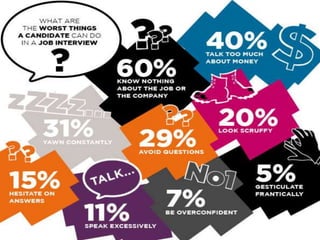
  • #30 Survey of executives of nation’s 1000 largest companies
  • #31 Have an idea how you will answer questionsRespond as naturally and conversationally as possibleEmphasize what you CAN do & what you CAN offerFocus on what you have learned and how you overcome challengesProve it! Give examples - Where when how and with what outcomeSpeak the truth – do not lie or over exaggerateExpect the unexpected
  • #32 And the questions start…
  • #35 Provide a brief introductionUse attributes that are key to the positionProvide a career summaryMust support your job objectiveMust be compellingCurrent experienceTie your response to the needs of the organizationDon’t assume they will connect all the dotsMake them understand how your experiences are transferrable to the position
  • #45 Focus on…Your motivationYour interest The value you can bring to the company
  • #49 Don’t say: “I would like to have my own business in 3 years time.”Hmm…. So you have a plan to leave already?
  • #50 Should come from your natural curiosity and desire to find the best position for youDon’t ask questions the website can answerIf you can easily find the answers to by visiting their website then it isn’t a good question – and besides, it is one you should probably know the answer to anyway!Day-to-day functions of the job?What skills are needed to succeed in the job?How will your performance be evaluated?What is the work environment like?What do they like about the company?
  • #52 Save talk about benefits and perks for the negotiation stage -- that is, after you've gotten a job offer -- or until the interviewer raises the issue.Believe it or not, recruiters and hiring managers say they get asked this question all the time. Before you go into your job interview, research what the company does, and come up with some specific ways you can help it do whatever it does better. Complaining about your last job only reflects badly on you. Even if you're telling the truth, it makes you look like a complainer and poor sport (exactly the type of person no one wants to work with). It's great to talk about challenges you faced, but the focus should be on the positive results you achieved. Complaining about physical discomfort will be perceived as negativity-- or as you making excuses for not performing well in the interview. (An HR manager in Silicon Valley tells of a candidate who complained of a headache caused by "partying too hard last night." Needless to say, this candidate didn't get the job.) You never want to lie in a job interview -- but there are more graceful ways to explain that you were fired. "My boss and I had very different ideas about what our department should be focusing on, and it soon became clear that I'd be happier in a new role -- like this one." Keep the focus on what you learned from the past, and bring the focus back to why the job you're interviewing for is the right one for you.This may very well be true, but desperation is not appealing. The interviewer needs to know that you want the particular job you're interviewing for -- and that you're a great fit for it. If you really don't know the answer to an interview question about you or your background, try "I'll find out and get back to you by the end of the day." But if the question is about what you'd do in a hypothetical workplace situation -- or is an off-the-wall or brainteaser question such as "How many golf balls would it take to fill this room?" -- your response should show your thought process. Go ahead and think aloud: "First, I'd have to determine the volume of the room. Then I'd have to subtract the volume of the furniture.…" And so on.