Implications of Ageing for
Return to Work

            Michael Sainsbury
Introduction
   Return-to-work of our increasingly older workforce is a
    significant challenge

   Do older workers generally require longer to recover
    from injury?

   What factors may influence the older worker’s recovery
    from injury?

   How can we create an optimal healing environment for
    the older worker?
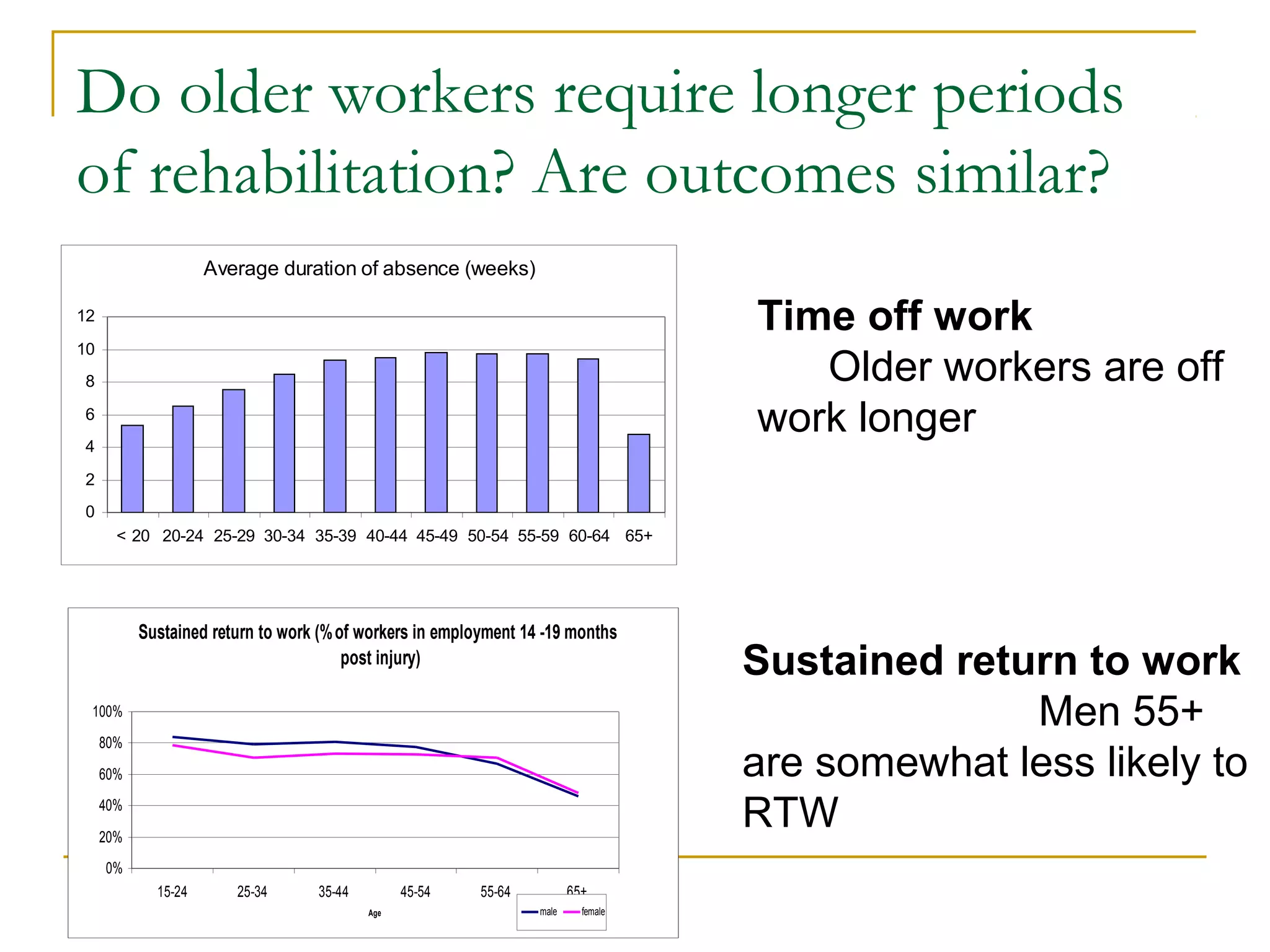
Do older workers require longer periods
of rehabilitation? Are outcomes similar?
                     Average duration of absence (weeks)

12
                                                                                    Time off work
10
8                                                                                      Older workers are off
6
4
                                                                                    work longer
2
0
       < 20 20-24 25-29 30-34 35-39 40-44 45-49 50-54 55-59 60-64 65+


           Sustained return to work (% of workers in employment 14 -19 months
                                        post injury)
                                                                                    Sustained return to work
 100%
                                                                                                  Men 55+
     80%

     60%                                                                            are somewhat less likely to
     40%

     20%
                                                                                    RTW
     0%
             15-24      25-34      35-44         45-54    55-64          65+
                                           Age                    male     female
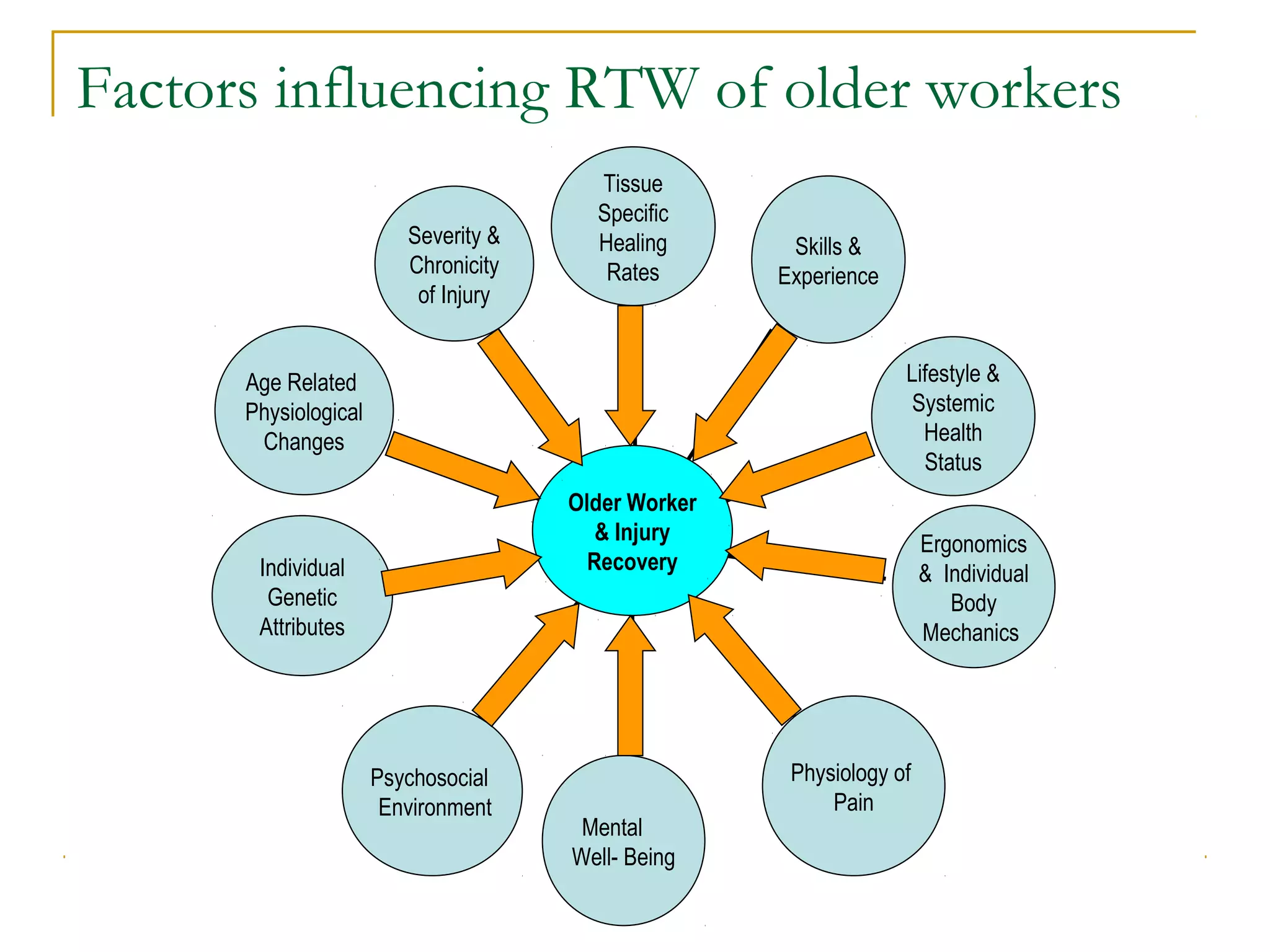
Factors influencing RTW of older workers
                                        Tissue
                                        Specific
                         Severity &     Healing       Skills &
                         Chronicity      Rates       Experience
                          of Injury


      Age Related                                                 Lifestyle &
      Physiological                                                Systemic
       Changes                                                      Health
                                                                    Status
                                      Older Worker
                                         & Injury                     Ergonomics
       Individual                       Recovery                      & Individual
        Genetic                                                          Body
       Attributes                                                     Mechanics


                      Psychosocial                    Physiology of
                       Environment                        Pain
                                       Mental
                                      Well- Being
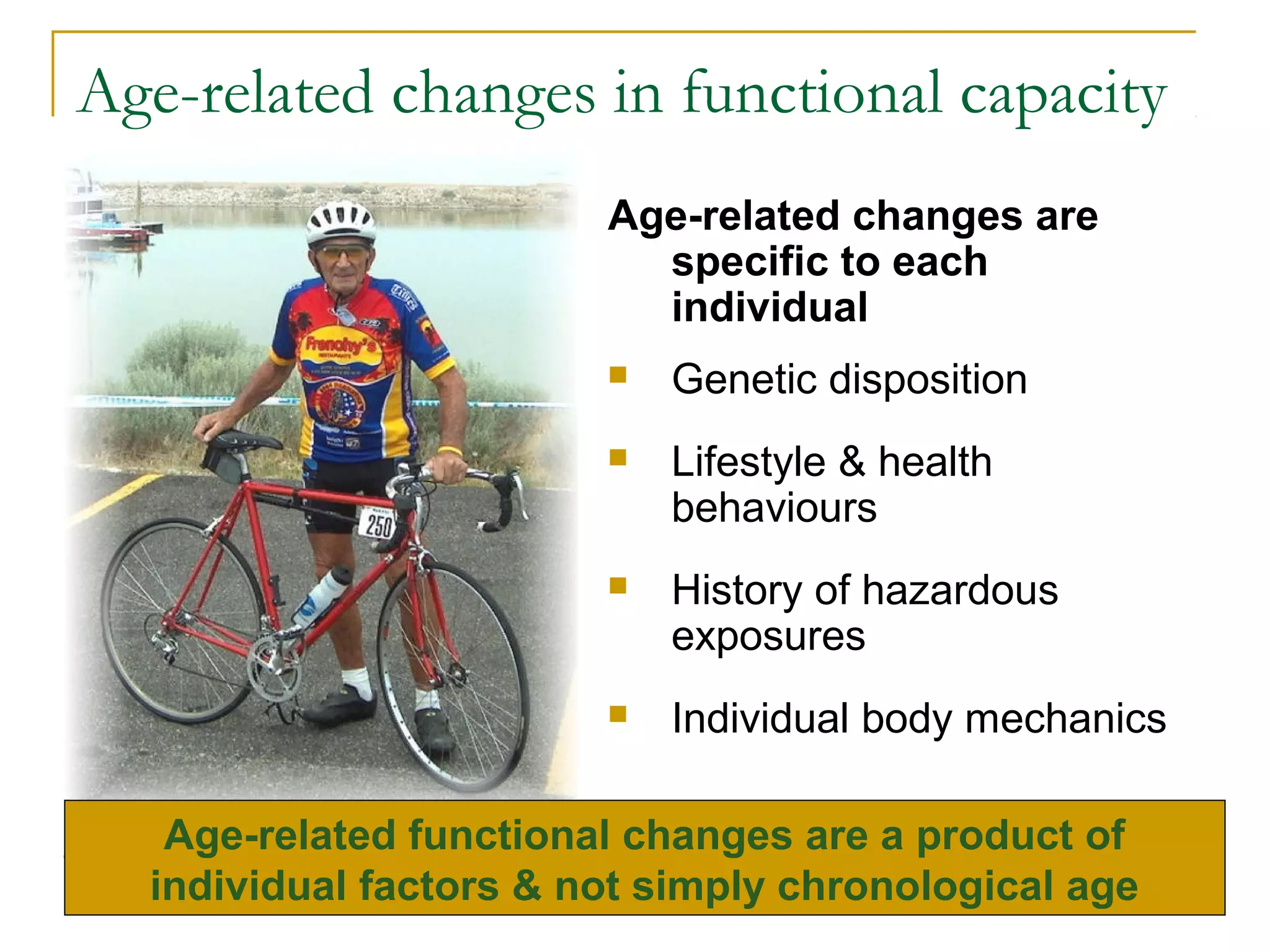
Age-related changes in functional capacity
                        Age-related changes are
                          specific to each
                          individual
                           Genetic disposition
                           Lifestyle & health
                            behaviours
                           History of hazardous
                            exposures
                           Individual body mechanics

   Age-related functional changes are a product of
  individual factors & not simply chronological age
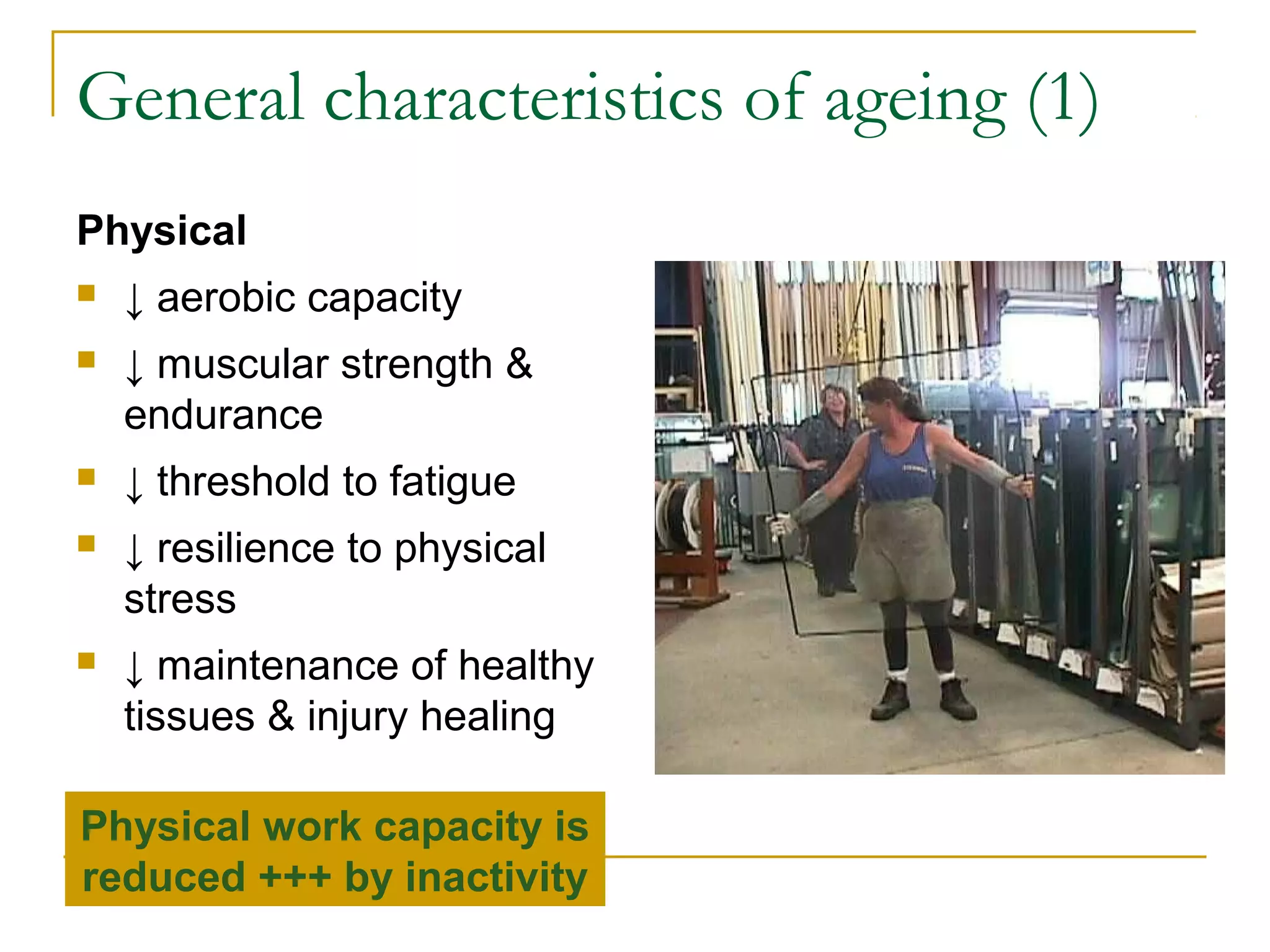
General characteristics of ageing (1)
Physical
   ↓ aerobic capacity
   ↓ muscular strength &
    endurance
   ↓ threshold to fatigue
   ↓ resilience to physical
    stress
   ↓ maintenance of healthy
    tissues & injury healing

Physical work capacity is
reduced +++ by inactivity
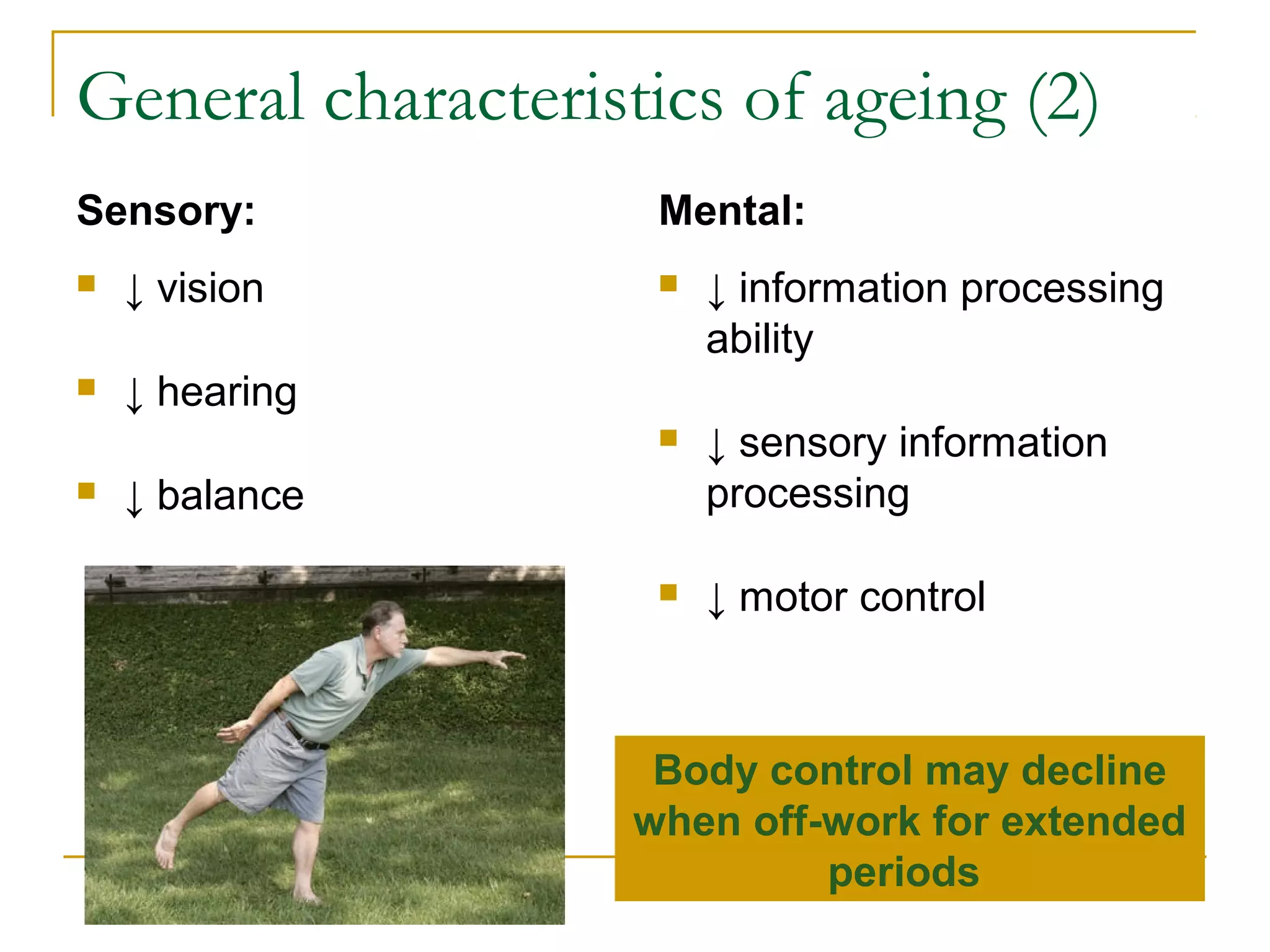
General characteristics of ageing (2)
Sensory:             Mental:
   ↓ vision            ↓ information processing
                         ability
   ↓ hearing
                        ↓ sensory information
   ↓ balance            processing

                        ↓ motor control


                     Body control may decline
                    when off-work for extended
                             periods
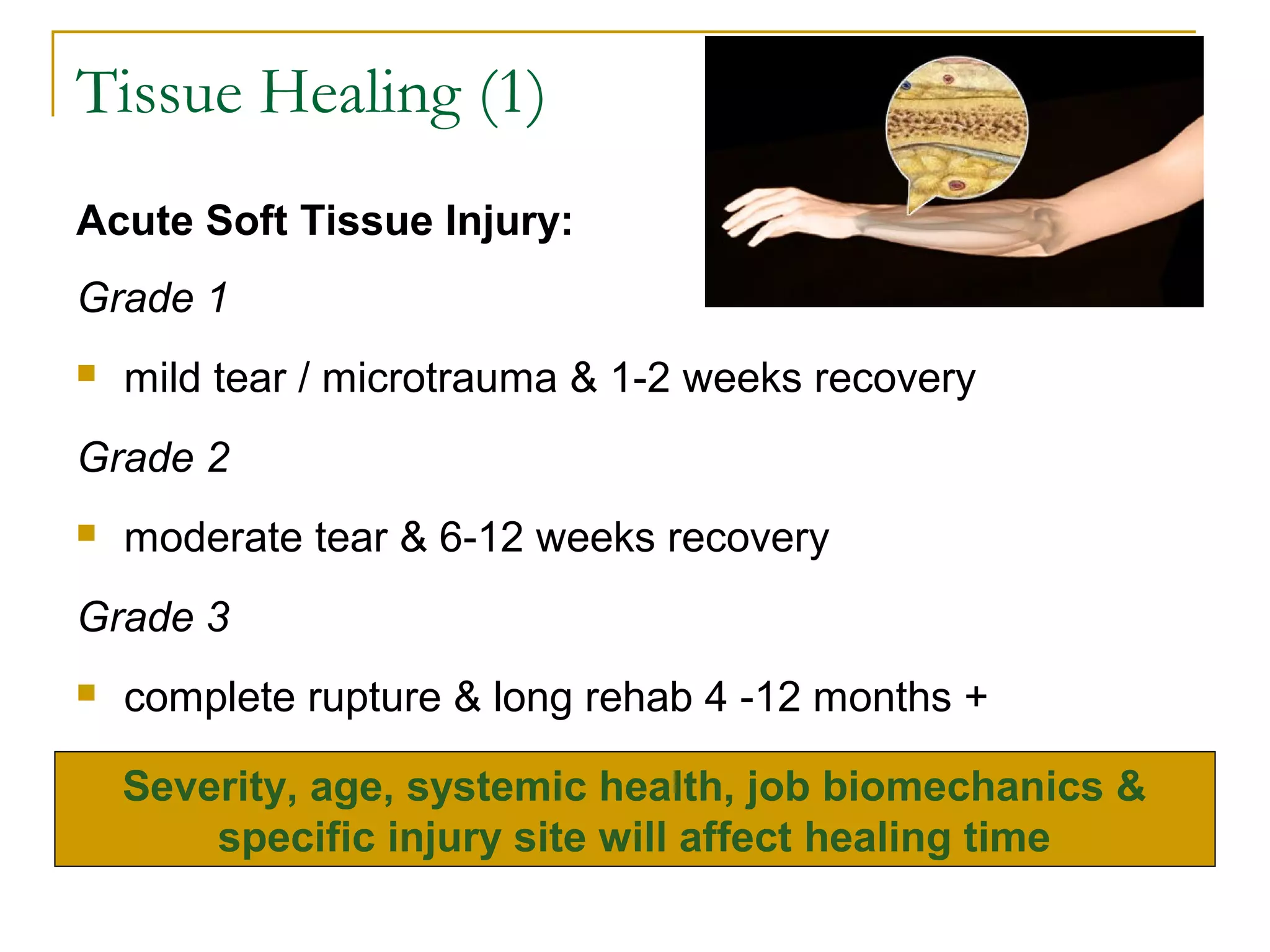
Tissue Healing (1)
Acute Soft Tissue Injury:
Grade 1
   mild tear / microtrauma & 1-2 weeks recovery
Grade 2
   moderate tear & 6-12 weeks recovery
Grade 3
   complete rupture & long rehab 4 -12 months +

    Severity, age, systemic health, job biomechanics &
        specific injury site will affect healing time
Tissue Healing (2)
Chronic MSDs &
  Occupational Overuse
  Syndromes
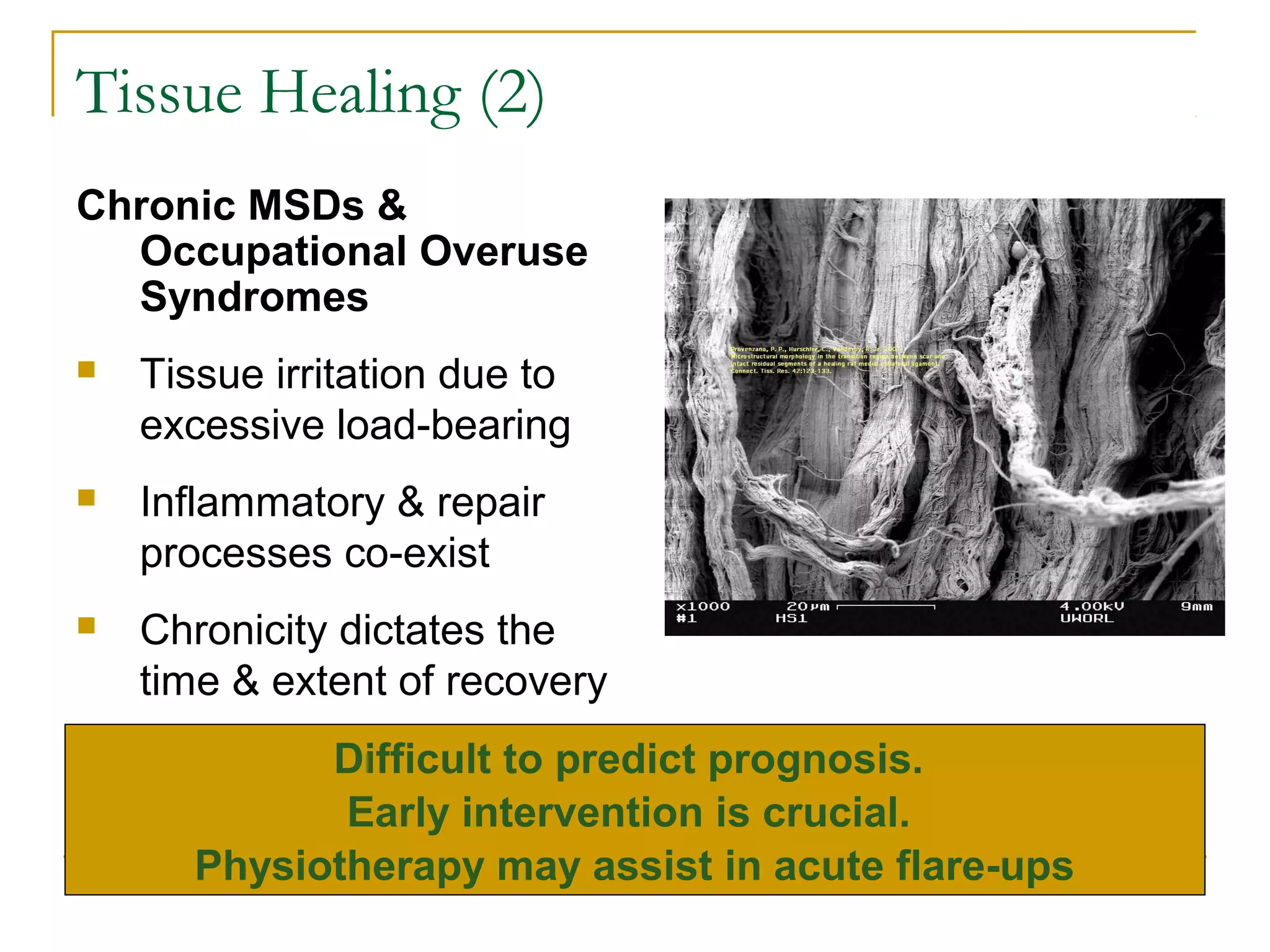
   Tissue irritation due to
    excessive load-bearing
   Inflammatory & repair
    processes co-exist
   Chronicity dictates the
    time & extent of recovery
             Difficult to predict prognosis.
              Early intervention is crucial.
       Physiotherapy may assist in acute flare-ups
Tissue Healing (3)
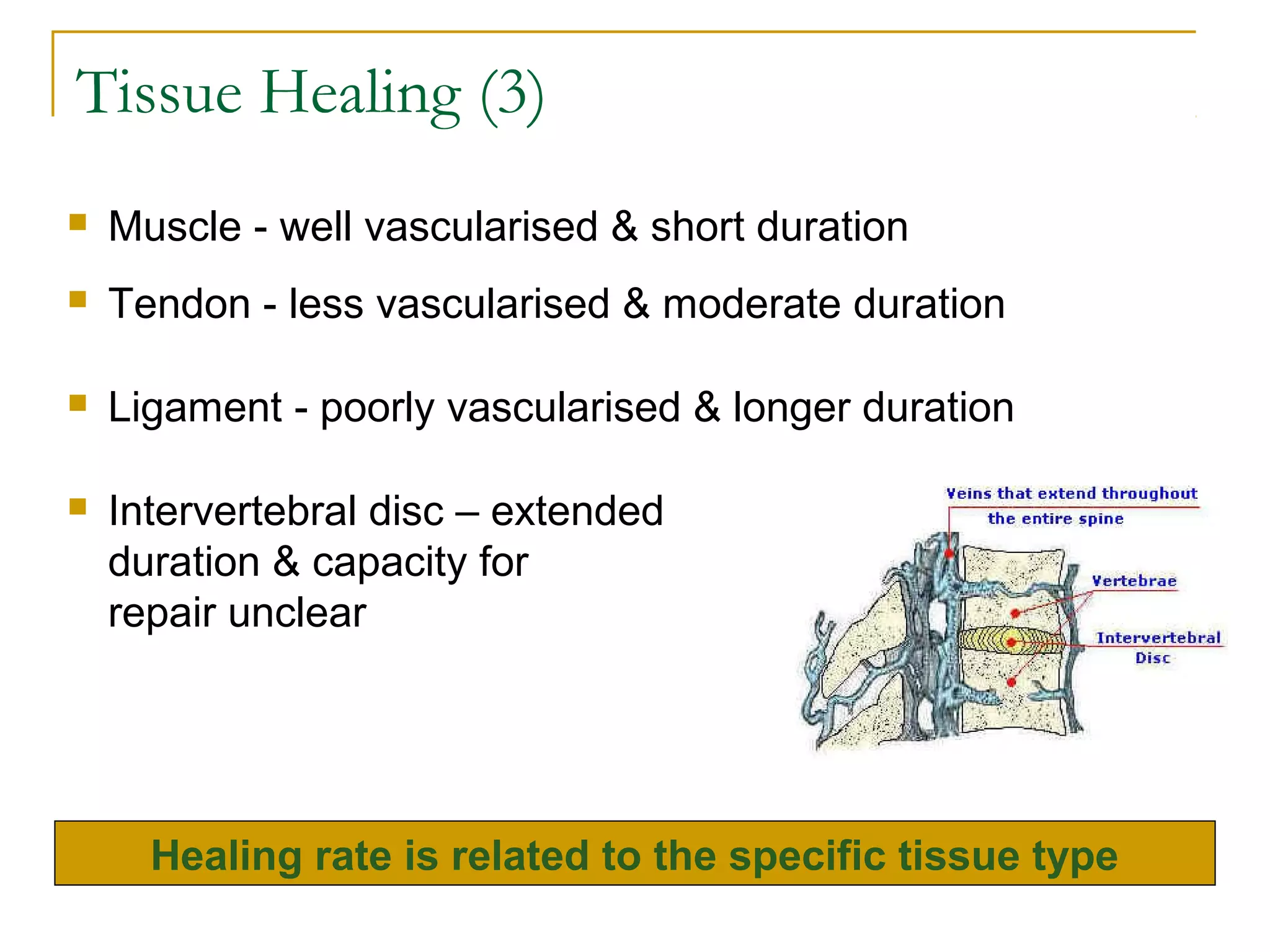
   Muscle - well vascularised & short duration
   Tendon - less vascularised & moderate duration

   Ligament - poorly vascularised & longer duration

   Intervertebral disc – extended
    duration & capacity for
    repair unclear


      Healing rate is related to the specific tissue type
Health Status – a snapshot

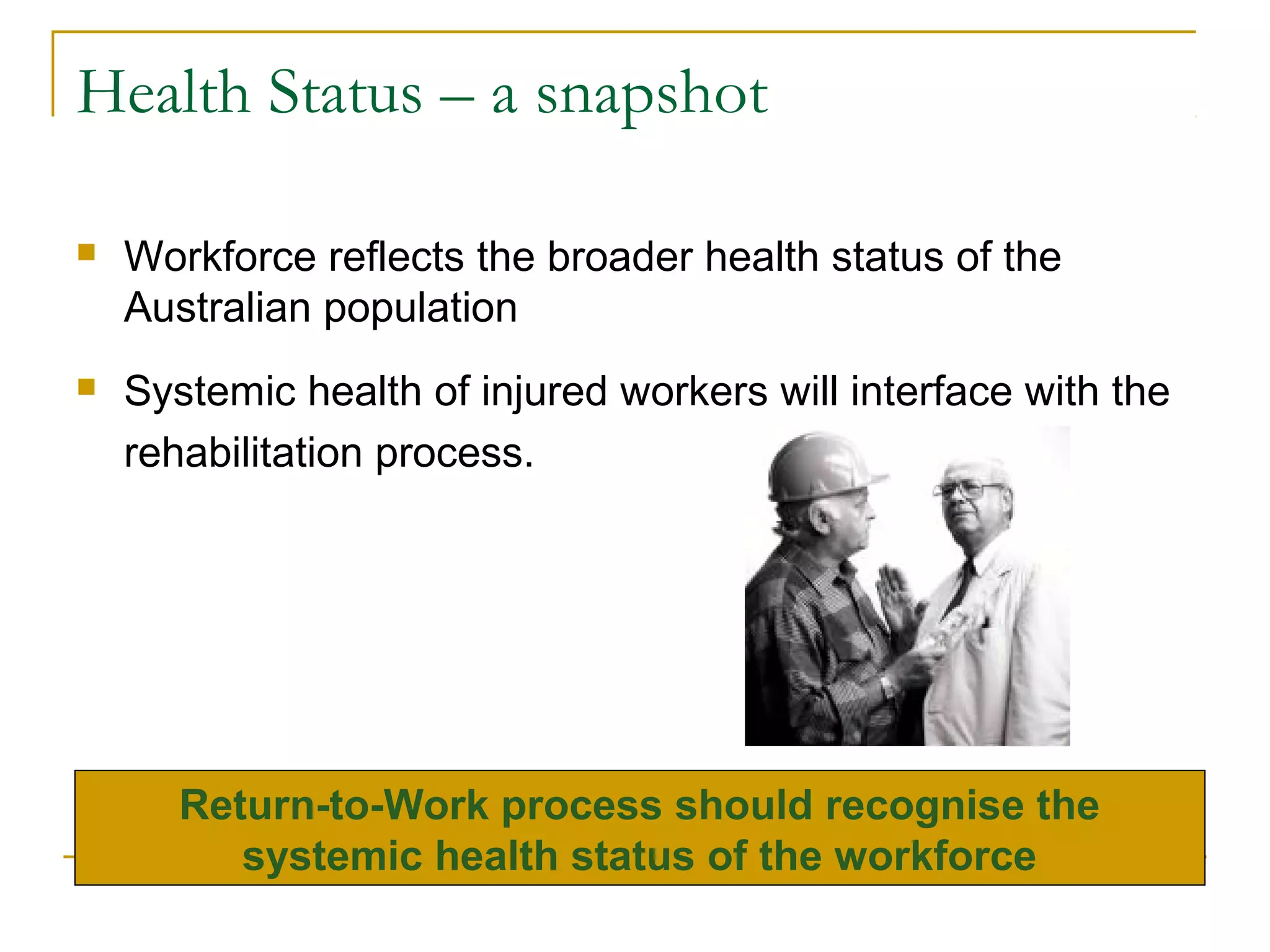
   Workforce reflects the broader health status of the
    Australian population
   Systemic health of injured workers will interface with the
    rehabilitation process.


       Return-to-Work process should recognise the
          systemic health status of the workforce
Health Status (2)

Body Weight:
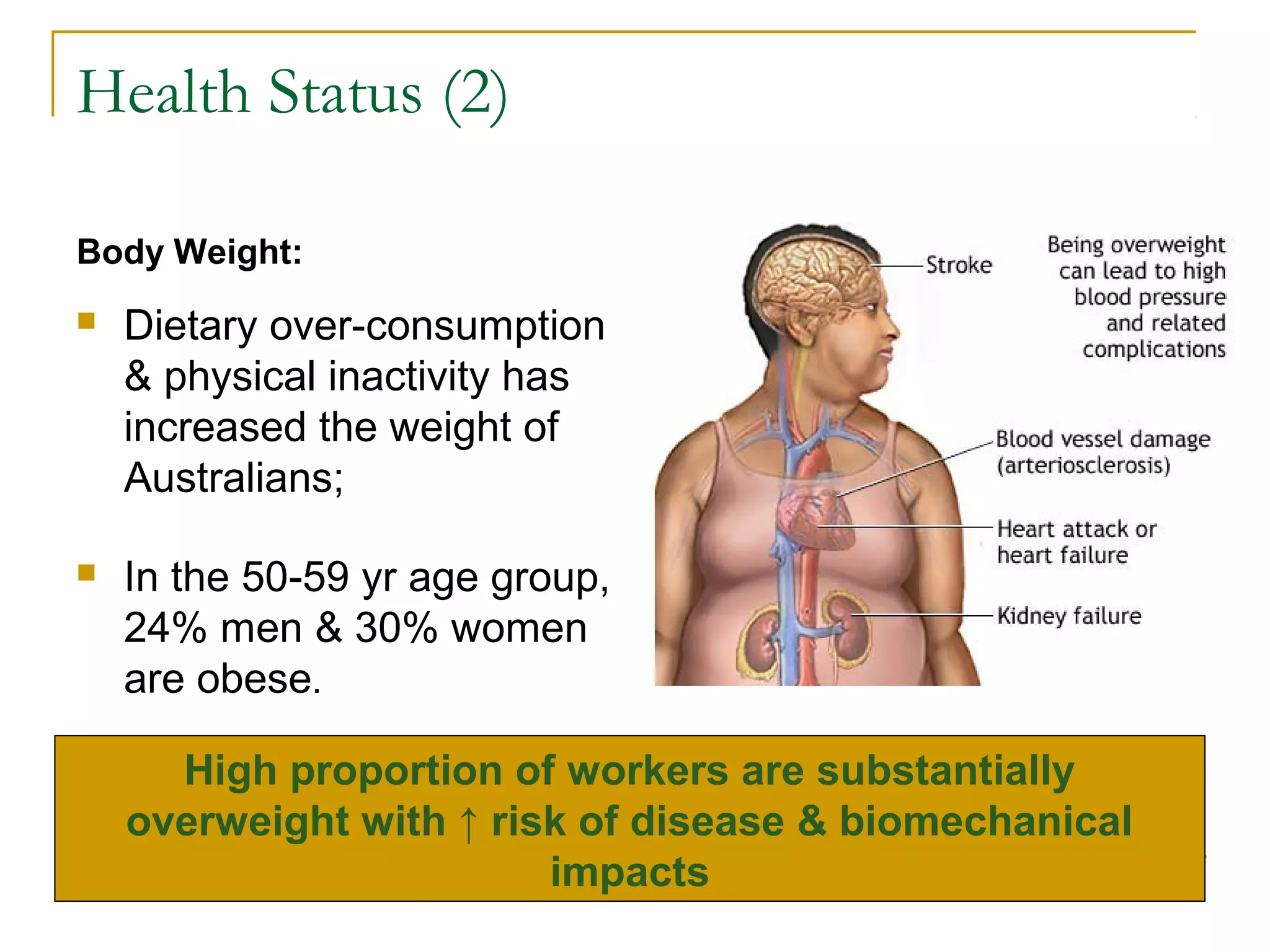
   Dietary over-consumption
    & physical inactivity has
    increased the weight of
    Australians;

   In the 50-59 yr age group,
    24% men & 30% women
    are obese.

      High proportion of workers are substantially
    overweight with ↑ risk of disease & biomechanical
                         impacts
Health Status (3)

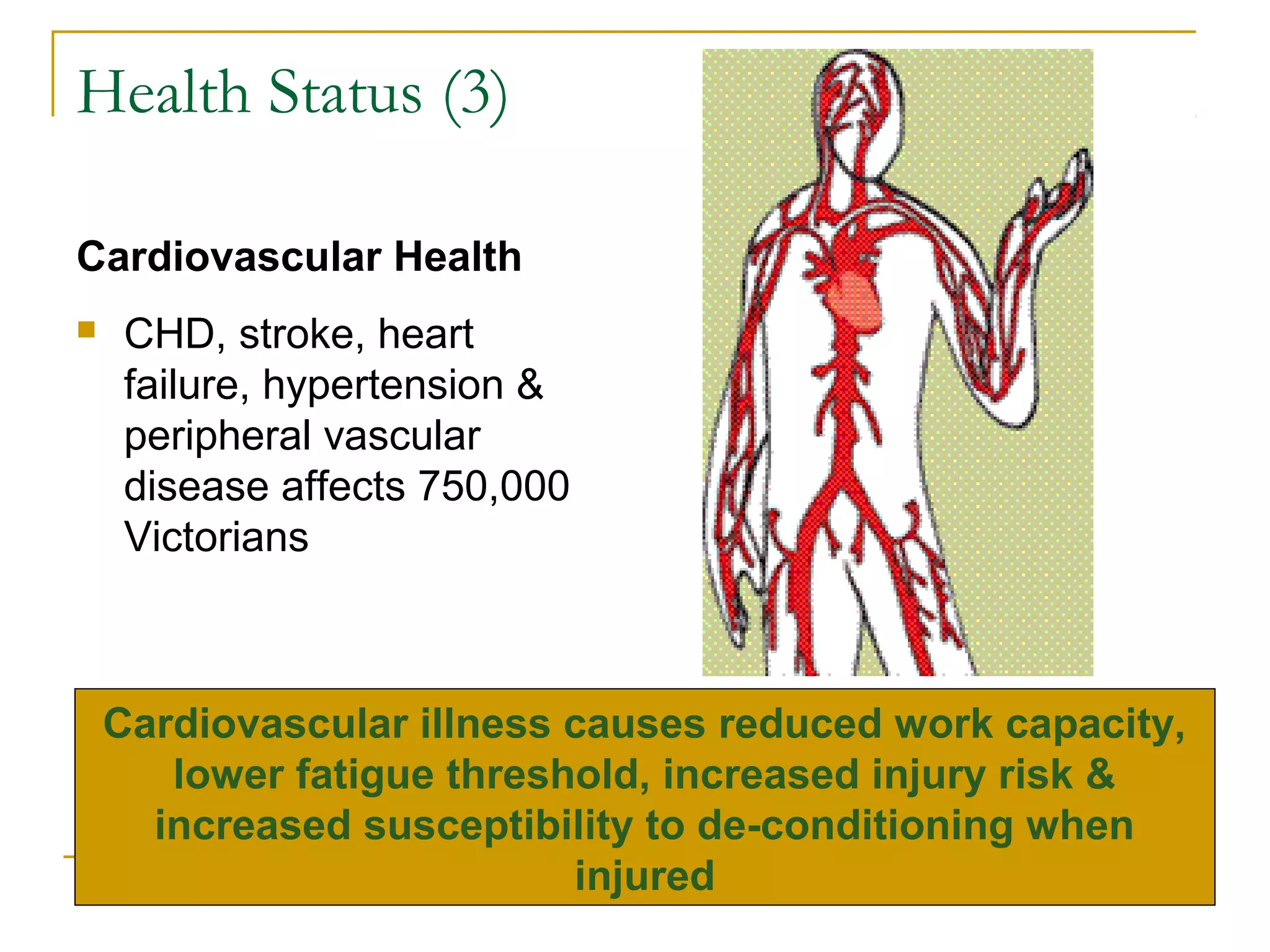
Cardiovascular Health
    CHD, stroke, heart
     failure, hypertension &
     peripheral vascular
     disease affects 750,000
     Victorians


    Cardiovascular illness causes reduced work capacity,
       lower fatigue threshold, increased injury risk &
      increased susceptibility to de-conditioning when
                           injured
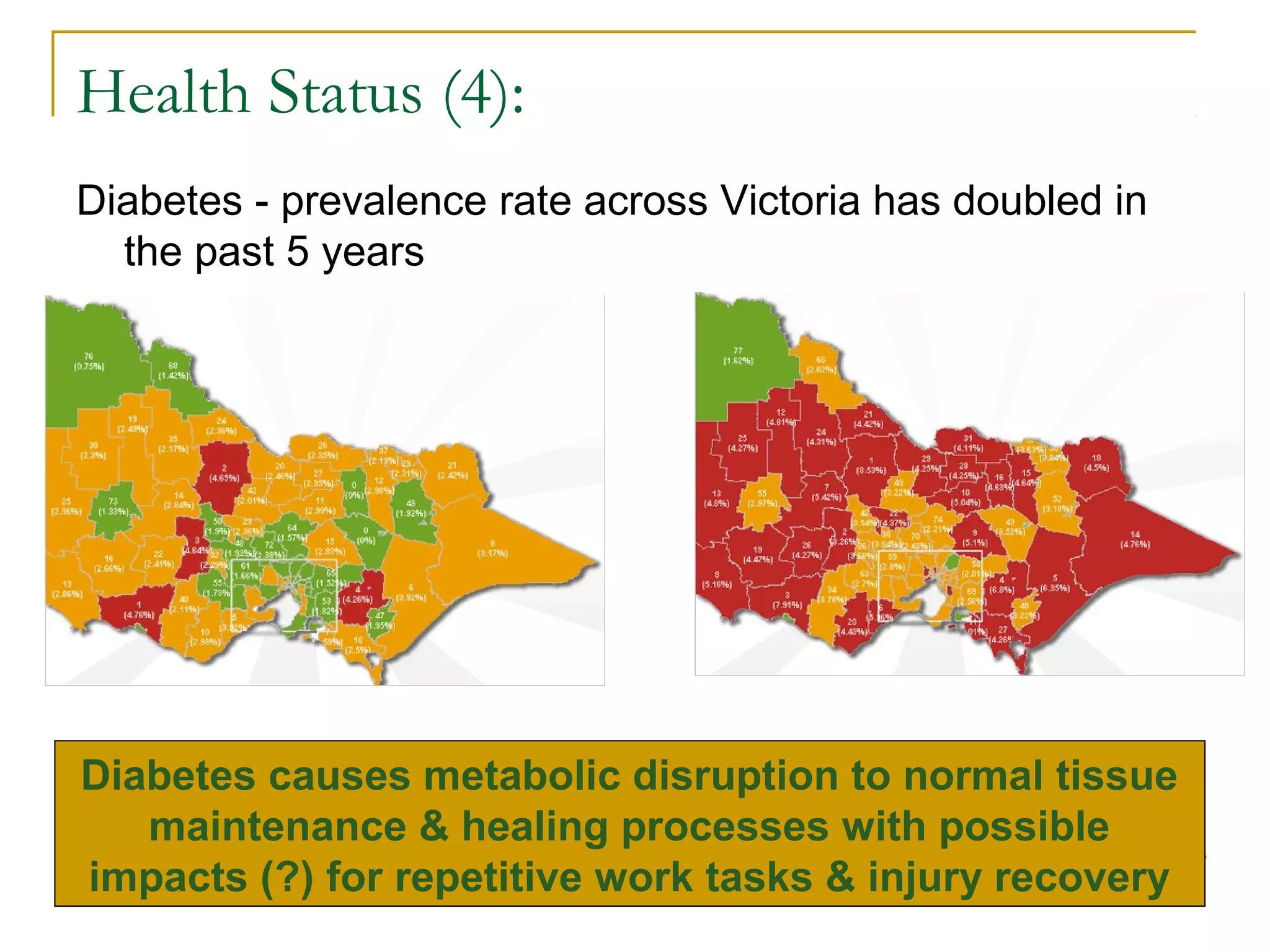
Health Status (4):
Diabetes - prevalence rate across Victoria has doubled in
  the past 5 years


Diabetes causes metabolic disruption to normal tissue
   maintenance & healing processes with possible
impacts (?) for repetitive work tasks & injury recovery
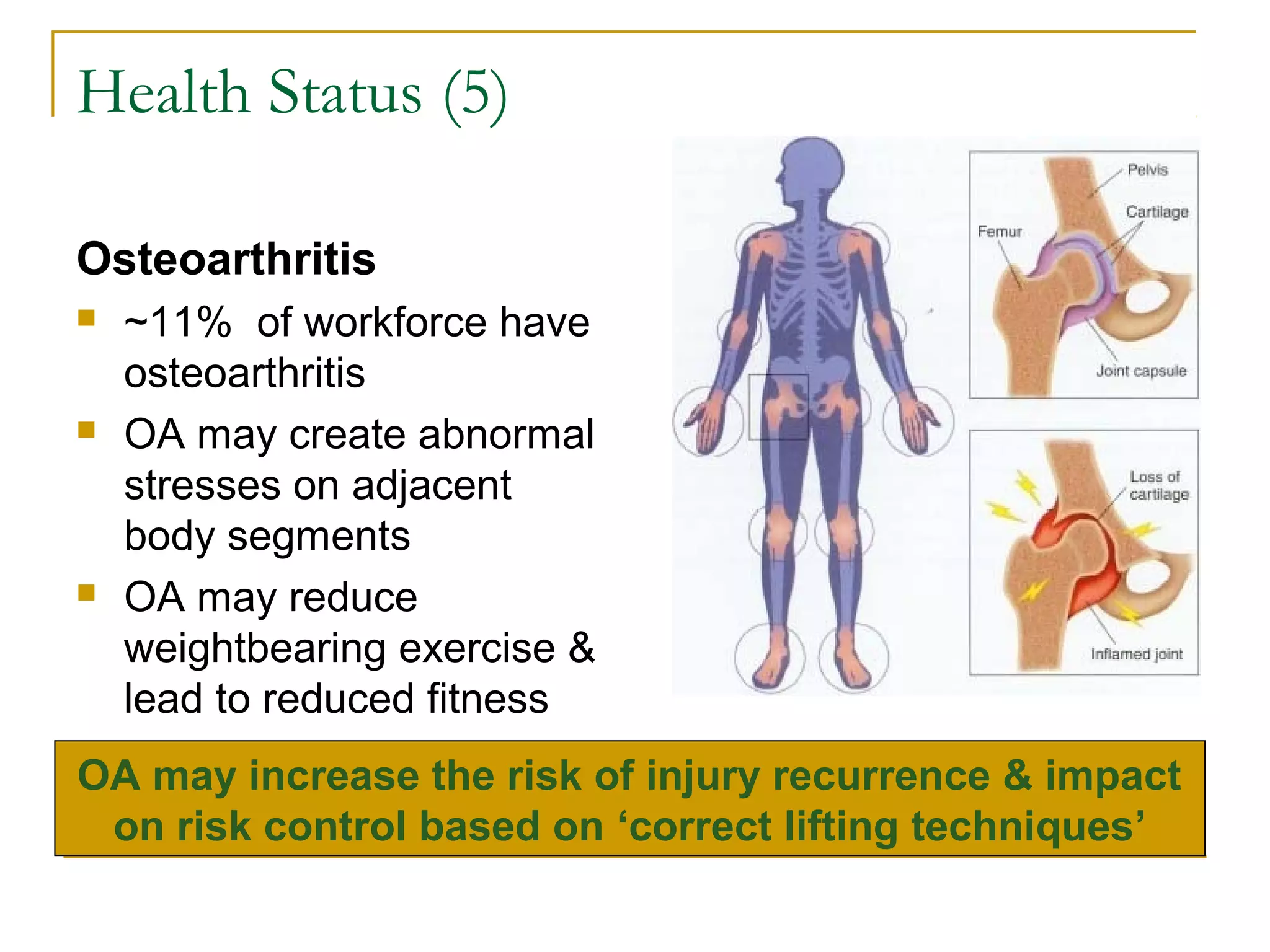
Health Status (5)

Osteoarthritis
   ~11% of workforce have
    osteoarthritis
   OA may create abnormal
    stresses on adjacent
    body segments
   OA may reduce
    weightbearing exercise &
    lead to reduced fitness
OA may increase the risk of injury recurrence & impact
 on risk control based on ‘correct lifting techniques’
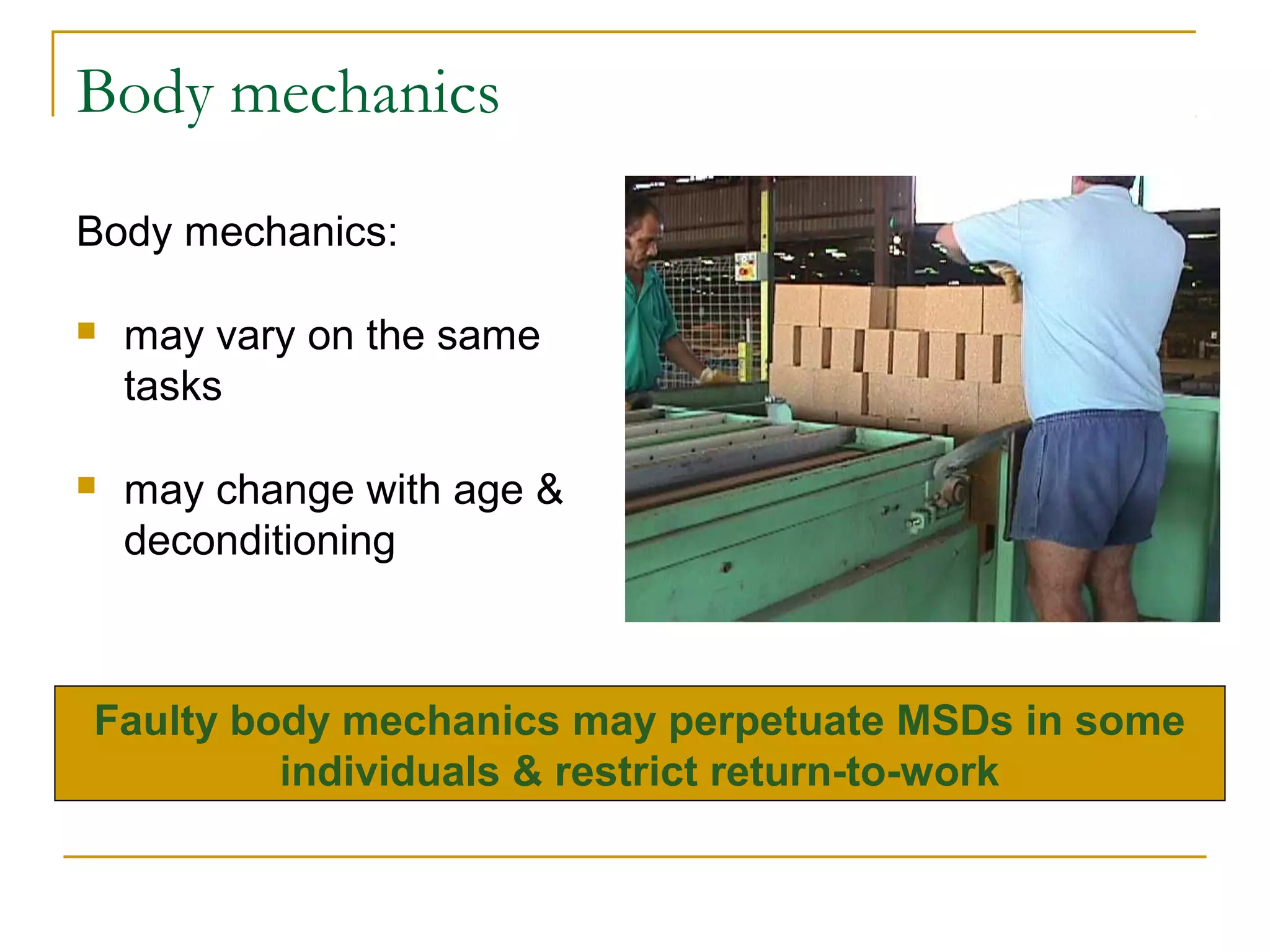
Body mechanics
Body mechanics:

   may vary on the same
    tasks

   may change with age &
    deconditioning


Faulty body mechanics may perpetuate MSDs in some
         individuals & restrict return-to-work
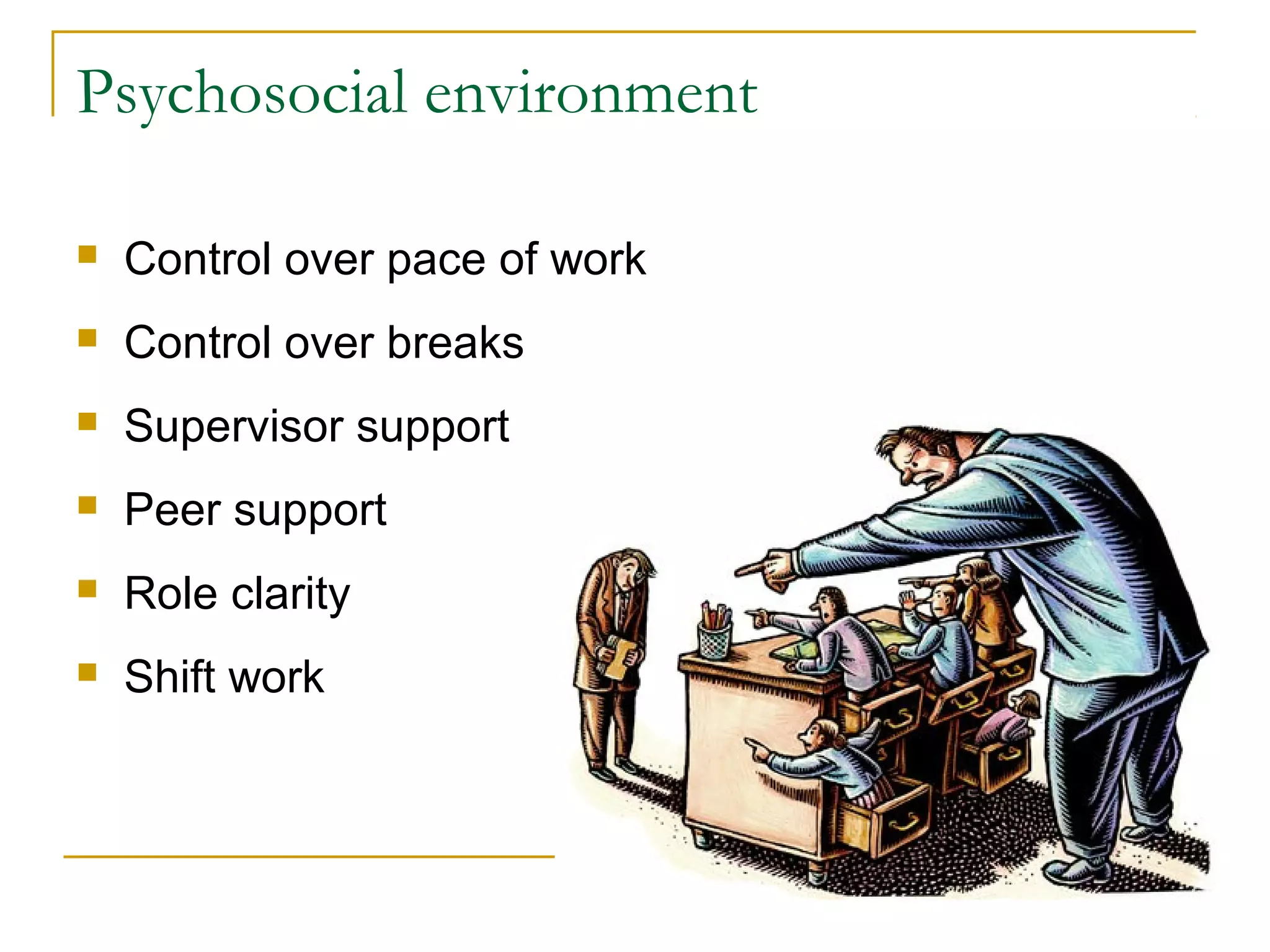
Psychosocial environment

   Control over pace of work
   Control over breaks
   Supervisor support
   Peer support
   Role clarity
   Shift work
Managing the environment to facilitate
Return-to-Work


What factors can we influence to create an optimal
    healing environment for the older worker?
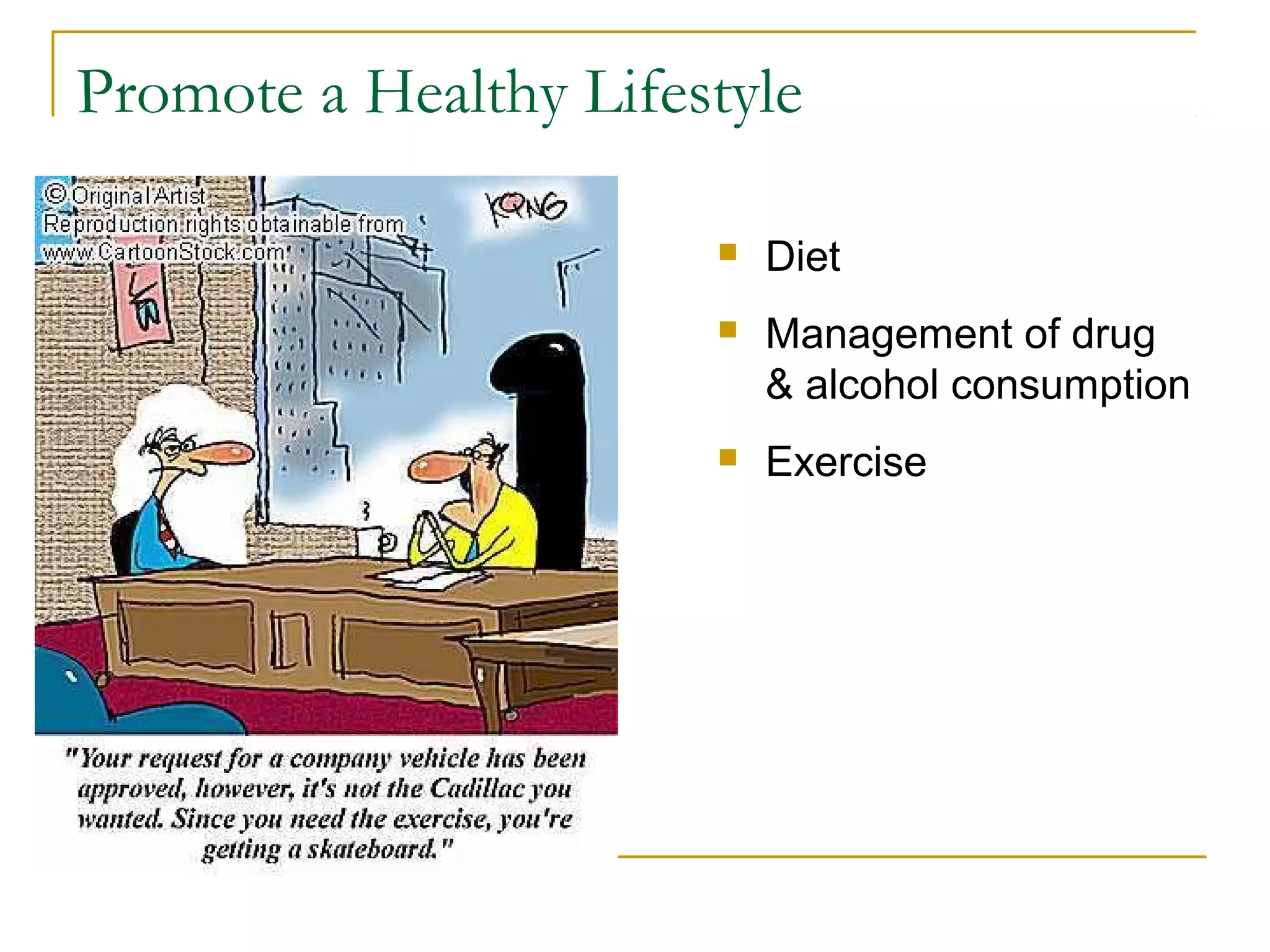
Promote a Healthy Lifestyle

                          Diet
                          Management of drug
                           & alcohol consumption
                          Exercise
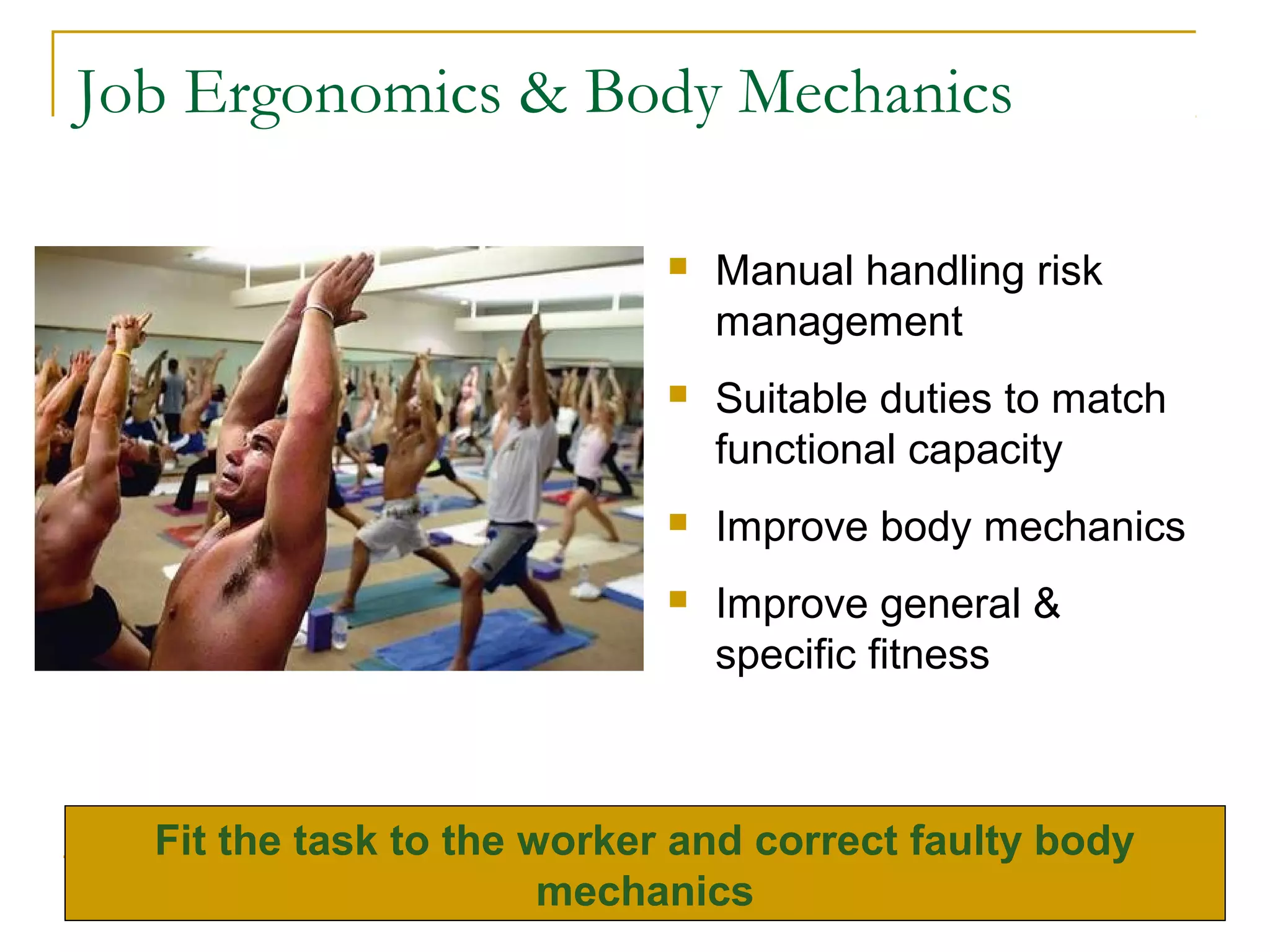
Job Ergonomics & Body Mechanics

                               Manual handling risk
                                management
                               Suitable duties to match
                                functional capacity
                               Improve body mechanics
                               Improve general &
                                specific fitness


  Fit the task to the worker and correct faulty body
                       mechanics
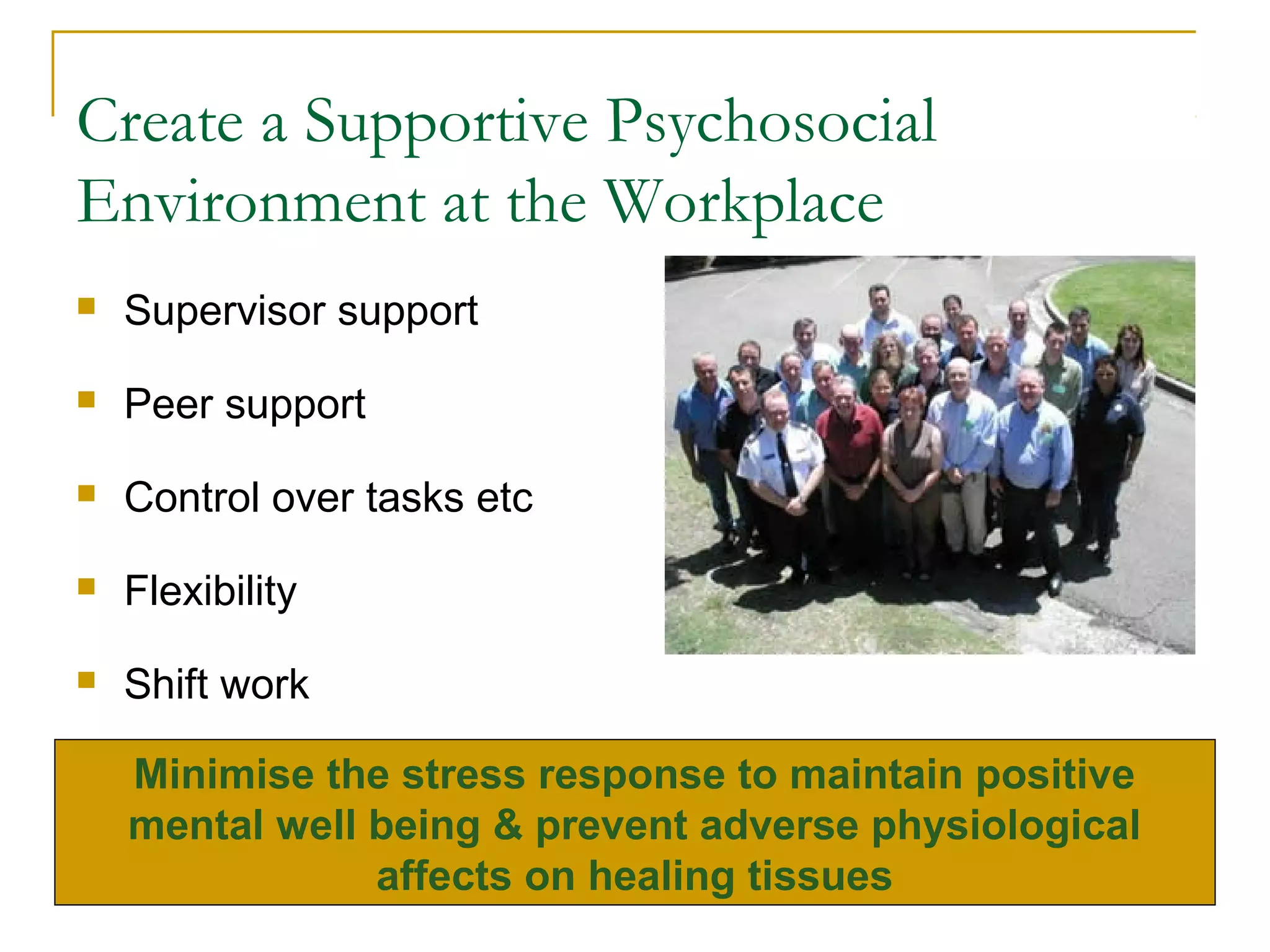
Create a Supportive Psychosocial
Environment at the Workplace
   Supervisor support

   Peer support

   Control over tasks etc

   Flexibility

   Shift work

    Minimise the stress response to maintain positive
    mental well being & prevent adverse physiological
                affects on healing tissues
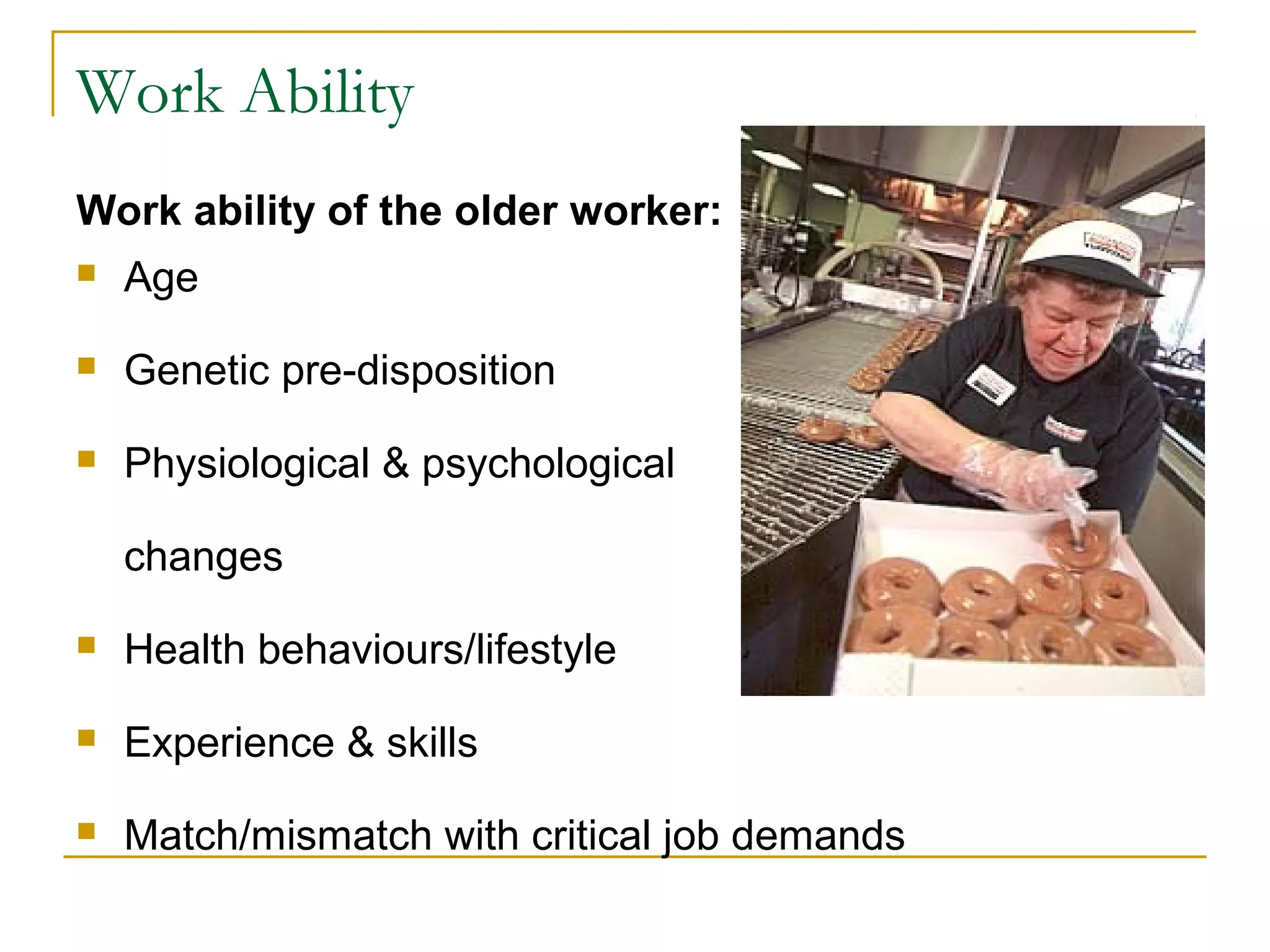
Work Ability
Work ability of the older worker:
   Age
   Genetic pre-disposition
   Physiological & psychological

    changes
   Health behaviours/lifestyle
   Experience & skills
   Match/mismatch with critical job demands
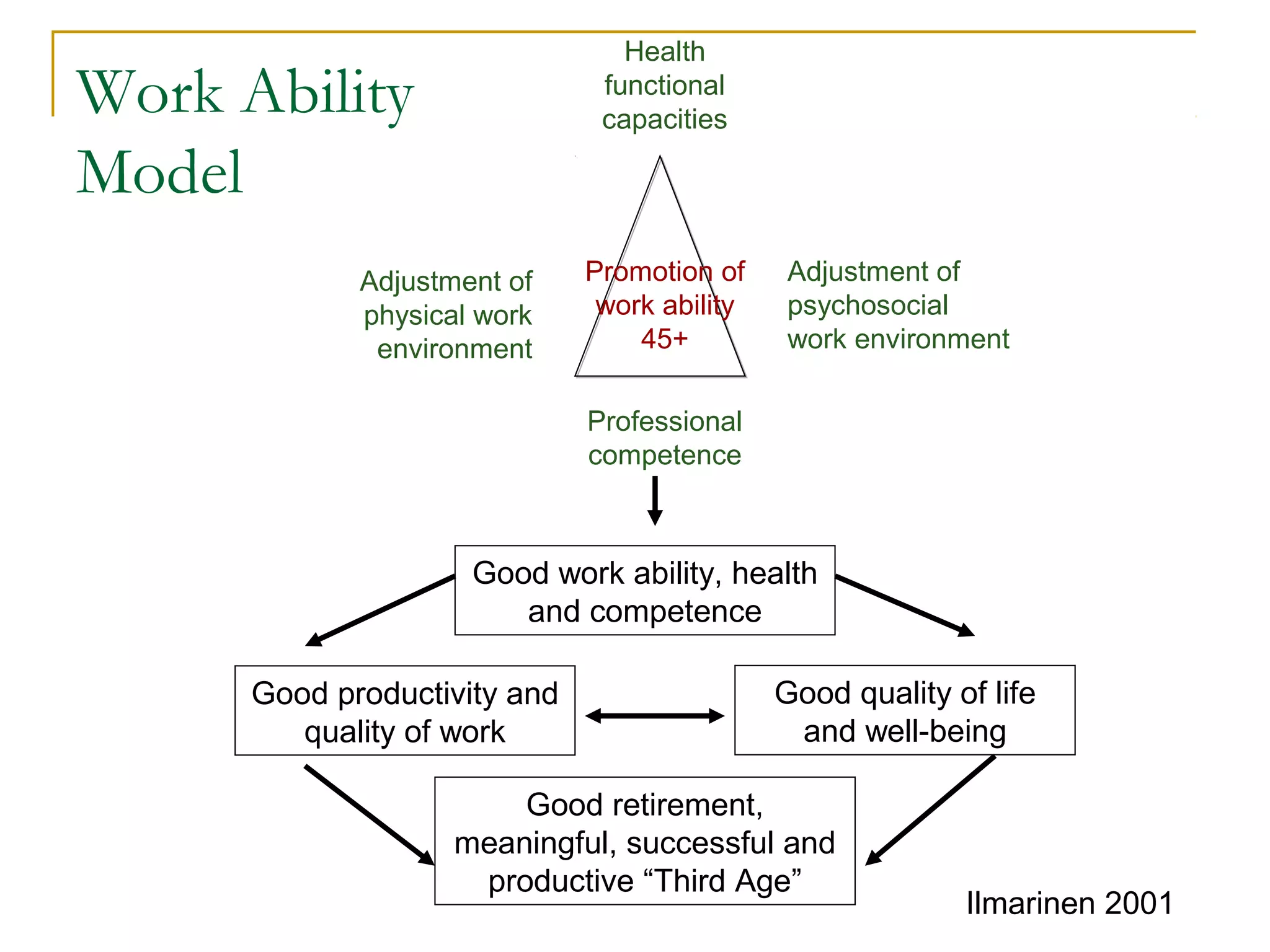
Health
Work Ability                   functional
                               capacities

Model
             Adjustment of    Promotion of     Adjustment of
             physical work     work ability    psychosocial
              environment         45+          work environment

                              Professional
                              competence


                     Good work ability, health
                        and competence

      Good productivity and                   Good quality of life
         quality of work                       and well-being

                        Good retirement,
                    meaningful, successful and
                     productive “Third Age”
                                                            Ilmarinen 2001
Conclusion

   Return-to-Work of our older workers remains a challenge

   Older worker health reflects exposure to occupational
    hazards & individual health behaviors

   Young worker OHS is a high priority to prevent
    deteriorating health with advancing age

   OHS management should promote health & wellness in
    a broad context

Implications of ageing for return to work following injury

  • 1.
    Implications of Ageingfor Return to Work Michael Sainsbury
  • 2.
    Introduction  Return-to-work of our increasingly older workforce is a significant challenge  Do older workers generally require longer to recover from injury?  What factors may influence the older worker’s recovery from injury?  How can we create an optimal healing environment for the older worker?
  • 3.
    Do older workersrequire longer periods of rehabilitation? Are outcomes similar? Average duration of absence (weeks) 12 Time off work 10 8 Older workers are off 6 4 work longer 2 0 < 20 20-24 25-29 30-34 35-39 40-44 45-49 50-54 55-59 60-64 65+ Sustained return to work (% of workers in employment 14 -19 months post injury) Sustained return to work 100% Men 55+ 80% 60% are somewhat less likely to 40% 20% RTW 0% 15-24 25-34 35-44 45-54 55-64 65+ Age male female
  • 4.
    Factors influencing RTWof older workers Tissue Specific Severity & Healing Skills & Chronicity Rates Experience of Injury Age Related Lifestyle & Physiological Systemic Changes Health Status Older Worker & Injury Ergonomics Individual Recovery & Individual Genetic Body Attributes Mechanics Psychosocial Physiology of Environment Pain Mental Well- Being
  • 5.
    Age-related changes infunctional capacity Age-related changes are specific to each individual  Genetic disposition  Lifestyle & health behaviours  History of hazardous exposures  Individual body mechanics Age-related functional changes are a product of individual factors & not simply chronological age
  • 6.
    General characteristics ofageing (1) Physical  ↓ aerobic capacity  ↓ muscular strength & endurance  ↓ threshold to fatigue  ↓ resilience to physical stress  ↓ maintenance of healthy tissues & injury healing Physical work capacity is reduced +++ by inactivity
  • 7.
    General characteristics ofageing (2) Sensory: Mental:  ↓ vision  ↓ information processing ability  ↓ hearing  ↓ sensory information  ↓ balance processing  ↓ motor control Body control may decline when off-work for extended periods
  • 8.
    Tissue Healing (1) AcuteSoft Tissue Injury: Grade 1  mild tear / microtrauma & 1-2 weeks recovery Grade 2  moderate tear & 6-12 weeks recovery Grade 3  complete rupture & long rehab 4 -12 months + Severity, age, systemic health, job biomechanics & specific injury site will affect healing time
  • 9.
    Tissue Healing (2) ChronicMSDs & Occupational Overuse Syndromes  Tissue irritation due to excessive load-bearing  Inflammatory & repair processes co-exist  Chronicity dictates the time & extent of recovery Difficult to predict prognosis. Early intervention is crucial. Physiotherapy may assist in acute flare-ups
  • 10.
    Tissue Healing (3)  Muscle - well vascularised & short duration  Tendon - less vascularised & moderate duration  Ligament - poorly vascularised & longer duration  Intervertebral disc – extended duration & capacity for repair unclear Healing rate is related to the specific tissue type
  • 11.
    Health Status –a snapshot  Workforce reflects the broader health status of the Australian population  Systemic health of injured workers will interface with the rehabilitation process. Return-to-Work process should recognise the systemic health status of the workforce
  • 12.
    Health Status (2) BodyWeight:  Dietary over-consumption & physical inactivity has increased the weight of Australians;  In the 50-59 yr age group, 24% men & 30% women are obese. High proportion of workers are substantially overweight with ↑ risk of disease & biomechanical impacts
  • 13.
    Health Status (3) CardiovascularHealth  CHD, stroke, heart failure, hypertension & peripheral vascular disease affects 750,000 Victorians Cardiovascular illness causes reduced work capacity, lower fatigue threshold, increased injury risk & increased susceptibility to de-conditioning when injured
  • 14.
    Health Status (4): Diabetes- prevalence rate across Victoria has doubled in the past 5 years Diabetes causes metabolic disruption to normal tissue maintenance & healing processes with possible impacts (?) for repetitive work tasks & injury recovery
  • 15.
    Health Status (5) Osteoarthritis  ~11% of workforce have osteoarthritis  OA may create abnormal stresses on adjacent body segments  OA may reduce weightbearing exercise & lead to reduced fitness OA may increase the risk of injury recurrence & impact on risk control based on ‘correct lifting techniques’
  • 16.
    Body mechanics Body mechanics:  may vary on the same tasks  may change with age & deconditioning Faulty body mechanics may perpetuate MSDs in some individuals & restrict return-to-work
  • 17.
    Psychosocial environment  Control over pace of work  Control over breaks  Supervisor support  Peer support  Role clarity  Shift work
  • 18.
    Managing the environmentto facilitate Return-to-Work What factors can we influence to create an optimal healing environment for the older worker?
  • 19.
    Promote a HealthyLifestyle  Diet  Management of drug & alcohol consumption  Exercise
  • 20.
    Job Ergonomics &Body Mechanics  Manual handling risk management  Suitable duties to match functional capacity  Improve body mechanics  Improve general & specific fitness Fit the task to the worker and correct faulty body mechanics
  • 21.
    Create a SupportivePsychosocial Environment at the Workplace  Supervisor support  Peer support  Control over tasks etc  Flexibility  Shift work Minimise the stress response to maintain positive mental well being & prevent adverse physiological affects on healing tissues
  • 22.
    Work Ability Work abilityof the older worker:  Age  Genetic pre-disposition  Physiological & psychological changes  Health behaviours/lifestyle  Experience & skills  Match/mismatch with critical job demands
  • 23.
    Health Work Ability functional capacities Model Adjustment of Promotion of Adjustment of physical work work ability psychosocial environment 45+ work environment Professional competence Good work ability, health and competence Good productivity and Good quality of life quality of work and well-being Good retirement, meaningful, successful and productive “Third Age” Ilmarinen 2001
  • 24.
    Conclusion  Return-to-Work of our older workers remains a challenge  Older worker health reflects exposure to occupational hazards & individual health behaviors  Young worker OHS is a high priority to prevent deteriorating health with advancing age  OHS management should promote health & wellness in a broad context