CUSTOMER SUCCESS
Jason Noble
July 2015
ATEXT BOOK DEFINITION
Customer Success – “a proactive, holistic and organisation level
approach that leverages technology and real-enough-time
visibility into customer health (not just usage data, but any
contextual inputs) to ensure our customers – including those
who directly use (users, administrators, etc) and those who
benefit from the use of our product – continually and increasingly
receive value from our product over the course of their lifetime
as a customer”.
PUT SIMPLY
Customer Success – ensuring our customers are getting
increasing value from our products and services and that they are
sticking around.
WHY
Customers gaining the maximum value from our products
Feeding into our product roadmap and vision
Creating long term partnerships with customers
Part of our culture, not just a team
Multi-disciplinary function
BUSINESS CRITICAL FUNCTION
At the heart of any technology services business
Most customer value (recurring) comes after the initial sale
Replacing churn with new customers gets harder with scale
Keeping our customers happy
KEY ELEMENTS
Customer development and acquisition - including sales process
Billing and payments
Customer on-boarding
Technical and functional support
Customer experience management and feedback
Customer engagement and expansion
Customer renewal and retention
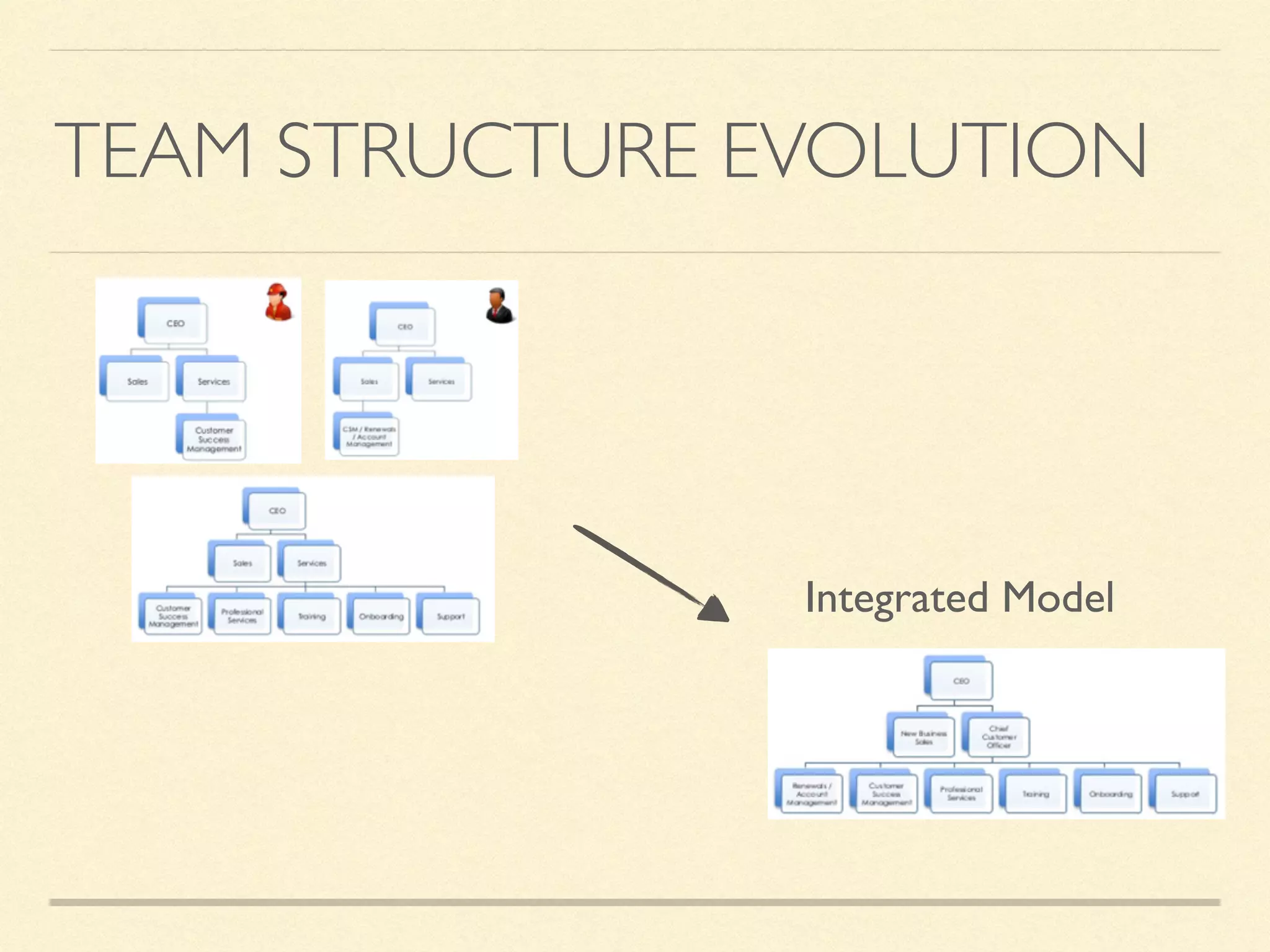
4TYPES OF ORG STRUCTURE
In order of product complexity and maturity:
1. Firefighter - very early stage as starting point
2. Sales oriented - better suited for lower touch deployments
3. Services oriented - for higher touch businesses, peer role
4. Integrated - CCO model, owns existing customer revenue
TEAM STRUCTURE EVOLUTION
Integrated Model
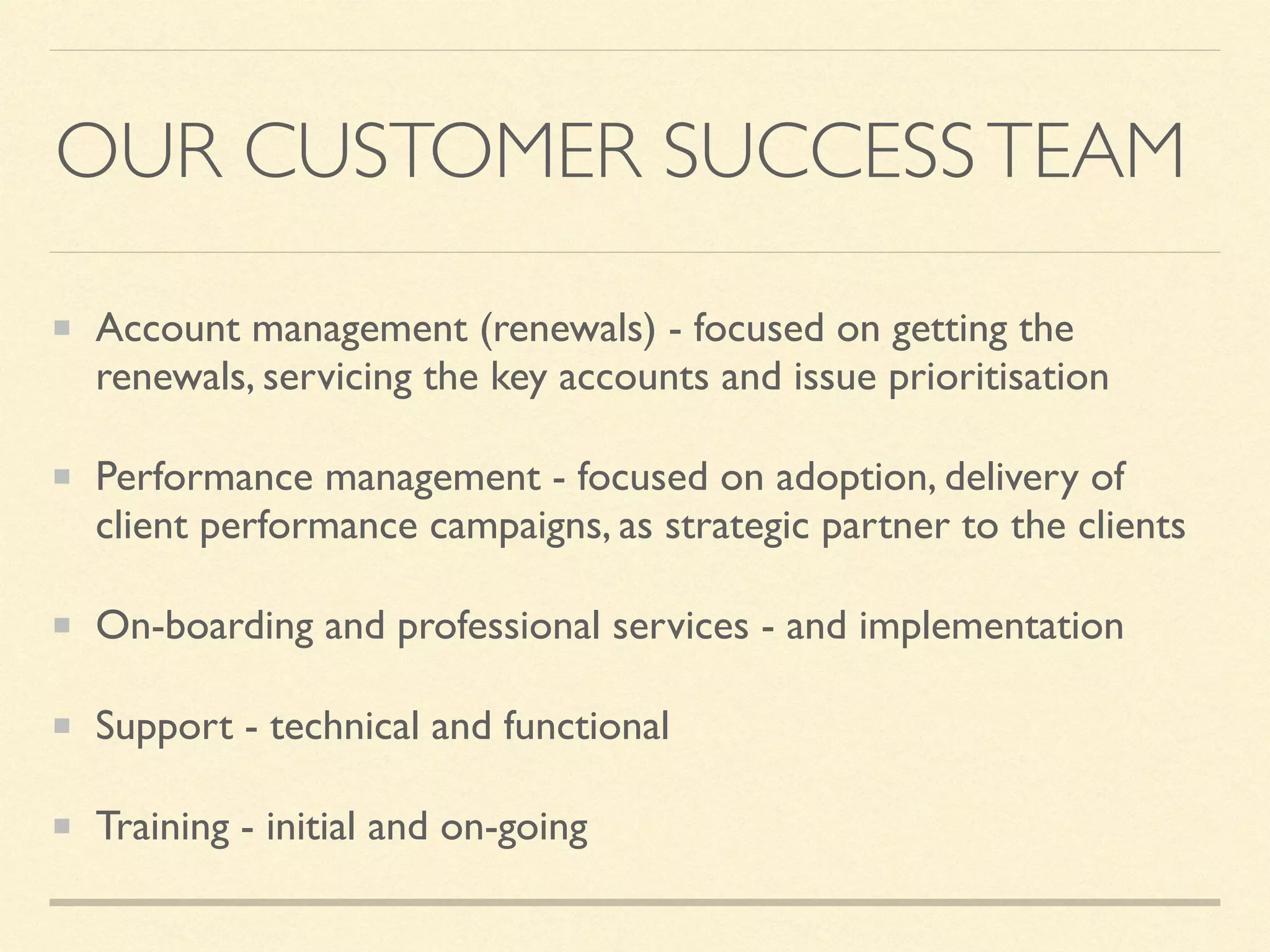
OUR CUSTOMER SUCCESSTEAM
Account management (renewals) - focused on getting the
renewals, servicing the key accounts and issue prioritisation
Performance management - focused on adoption, delivery of
client performance campaigns, as strategic partner to the clients
On-boarding and professional services - and implementation
Support - technical and functional
Training - initial and on-going
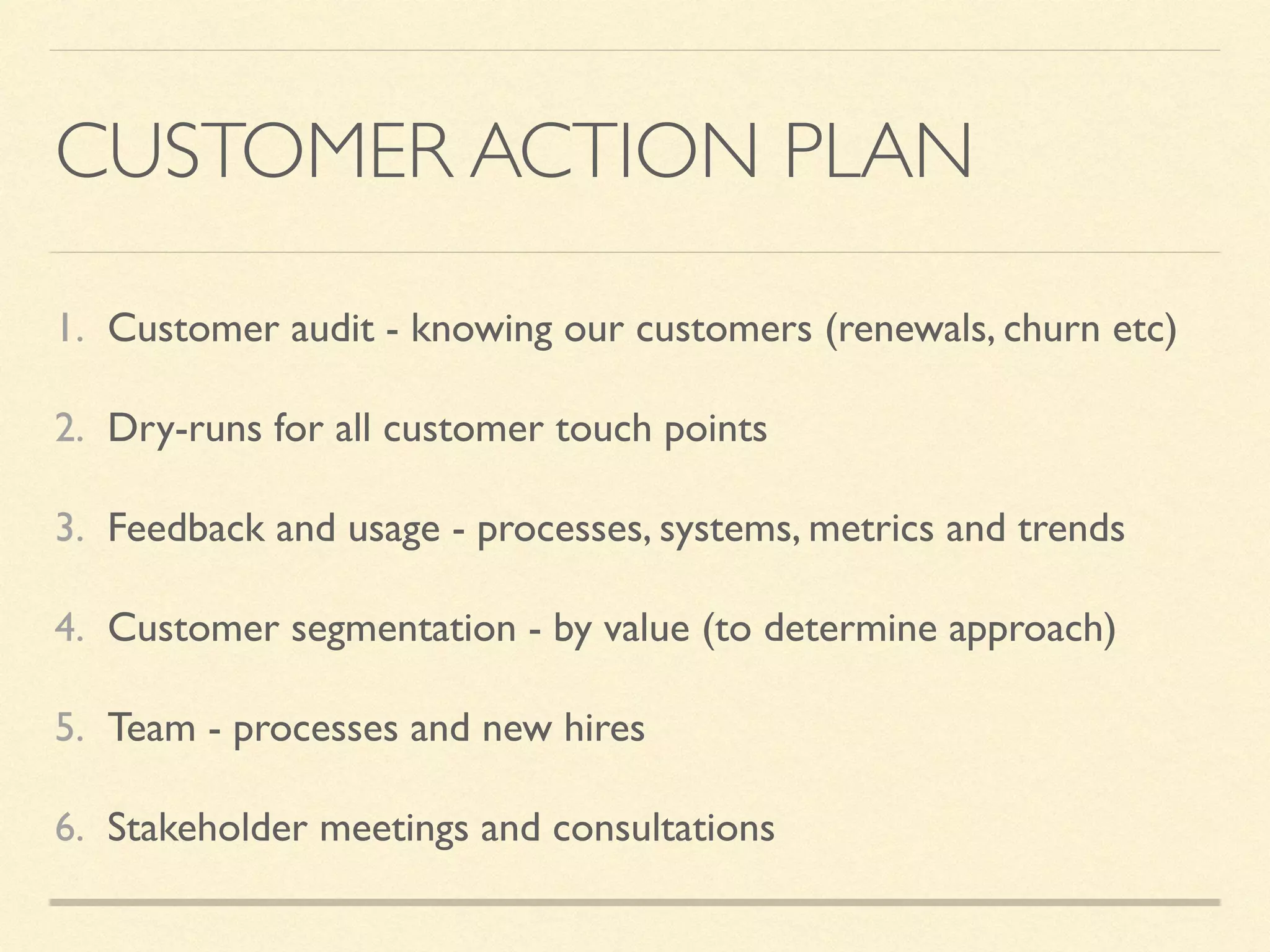
CUSTOMER ACTION PLAN
1. Customer audit - knowing our customers (renewals, churn etc)
2. Dry-runs for all customer touch points
3. Feedback and usage - processes, systems, metrics and trends
4. Customer segmentation - by value (to determine approach)
5. Team - processes and new hires
6. Stakeholder meetings and consultations
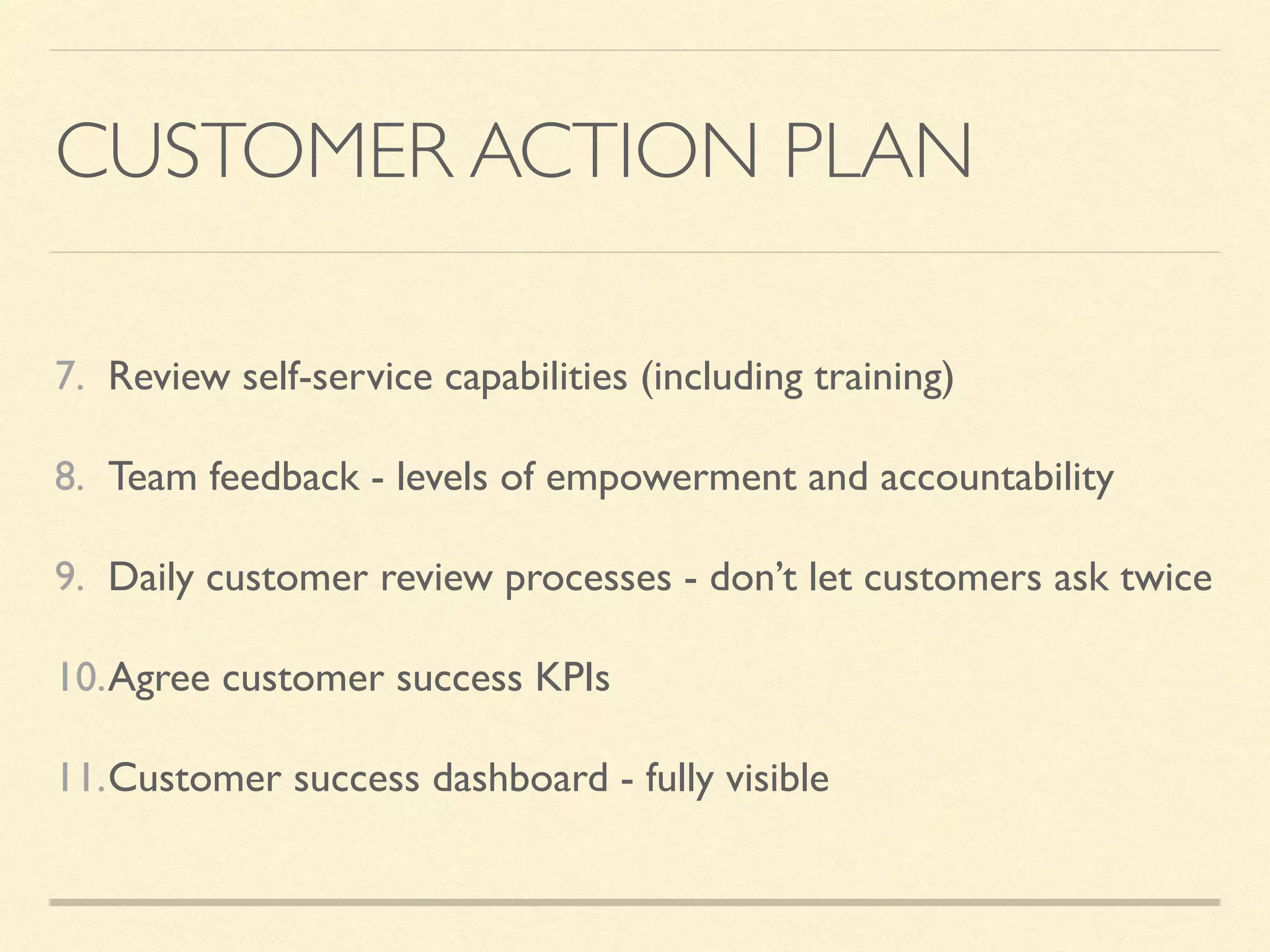
CUSTOMER ACTION PLAN
7. Review self-service capabilities (including training)
8. Team feedback - levels of empowerment and accountability
9. Daily customer review processes - don’t let customers ask twice
10.Agree customer success KPIs
11.Customer success dashboard - fully visible
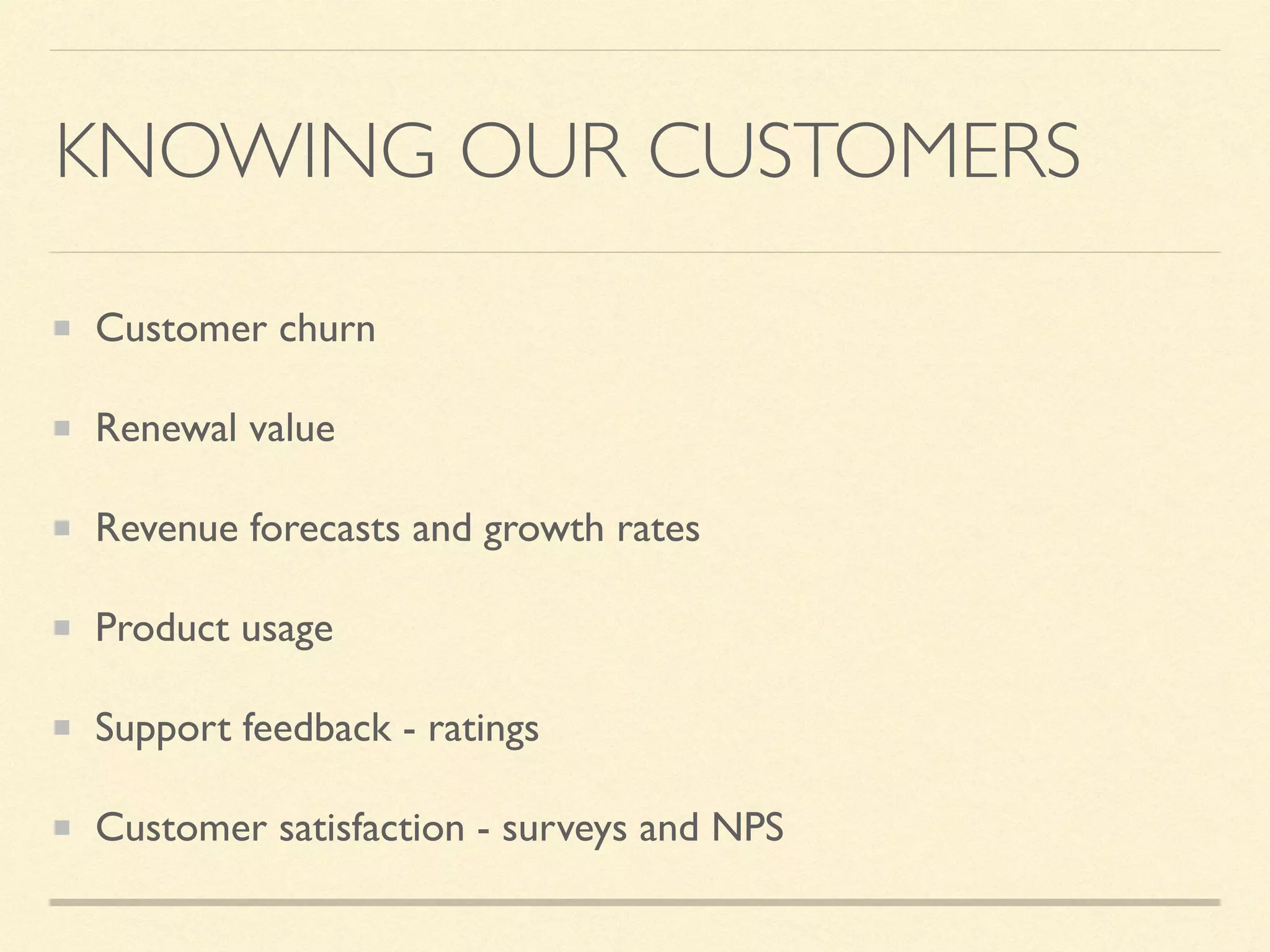
KNOWING OUR CUSTOMERS
Customer churn
Renewal value
Revenue forecasts and growth rates
Product usage
Support feedback - ratings
Customer satisfaction - surveys and NPS

Implementing a customer success programme

  • 1.
  • 2.
    ATEXT BOOK DEFINITION CustomerSuccess – “a proactive, holistic and organisation level approach that leverages technology and real-enough-time visibility into customer health (not just usage data, but any contextual inputs) to ensure our customers – including those who directly use (users, administrators, etc) and those who benefit from the use of our product – continually and increasingly receive value from our product over the course of their lifetime as a customer”.
  • 3.
    PUT SIMPLY Customer Success– ensuring our customers are getting increasing value from our products and services and that they are sticking around.
  • 4.
    WHY Customers gaining themaximum value from our products Feeding into our product roadmap and vision Creating long term partnerships with customers Part of our culture, not just a team Multi-disciplinary function
  • 5.
    BUSINESS CRITICAL FUNCTION Atthe heart of any technology services business Most customer value (recurring) comes after the initial sale Replacing churn with new customers gets harder with scale Keeping our customers happy
  • 6.
    KEY ELEMENTS Customer developmentand acquisition - including sales process Billing and payments Customer on-boarding Technical and functional support Customer experience management and feedback Customer engagement and expansion Customer renewal and retention
  • 7.
    4TYPES OF ORGSTRUCTURE In order of product complexity and maturity: 1. Firefighter - very early stage as starting point 2. Sales oriented - better suited for lower touch deployments 3. Services oriented - for higher touch businesses, peer role 4. Integrated - CCO model, owns existing customer revenue
  • 8.
  • 9.
    OUR CUSTOMER SUCCESSTEAM Accountmanagement (renewals) - focused on getting the renewals, servicing the key accounts and issue prioritisation Performance management - focused on adoption, delivery of client performance campaigns, as strategic partner to the clients On-boarding and professional services - and implementation Support - technical and functional Training - initial and on-going
  • 10.
    CUSTOMER ACTION PLAN 1.Customer audit - knowing our customers (renewals, churn etc) 2. Dry-runs for all customer touch points 3. Feedback and usage - processes, systems, metrics and trends 4. Customer segmentation - by value (to determine approach) 5. Team - processes and new hires 6. Stakeholder meetings and consultations
  • 11.
    CUSTOMER ACTION PLAN 7.Review self-service capabilities (including training) 8. Team feedback - levels of empowerment and accountability 9. Daily customer review processes - don’t let customers ask twice 10.Agree customer success KPIs 11.Customer success dashboard - fully visible
  • 12.
    KNOWING OUR CUSTOMERS Customerchurn Renewal value Revenue forecasts and growth rates Product usage Support feedback - ratings Customer satisfaction - surveys and NPS