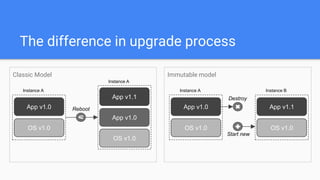
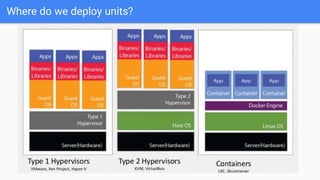
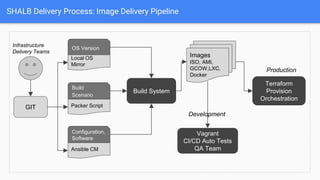
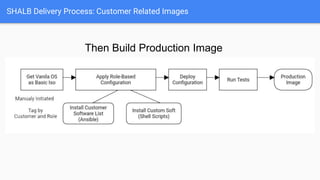
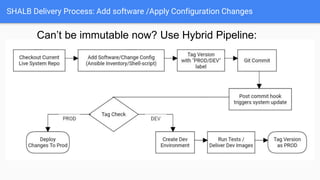
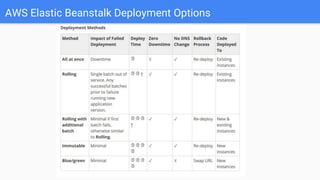
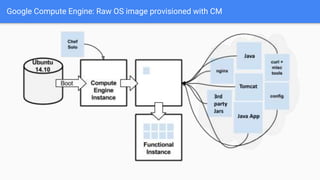
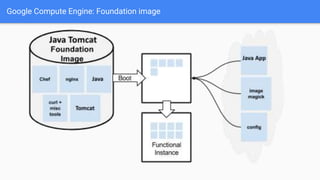
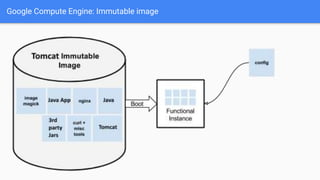
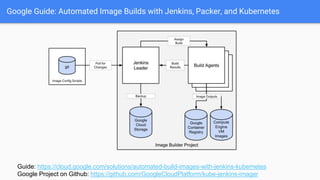
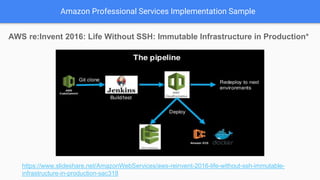
The document discusses immutable infrastructure as a crucial architectural pattern within microservices architecture, highlighting its advantages over traditional models, such as avoiding configuration drift and enhancing reproducibility. It presents various tools and processes for implementing immutable infrastructure, including examples from AWS and Google Cloud, and emphasizes the significance of automation in deploying applications. Additionally, it addresses challenges in configuration management and suggests leveraging available resources and orchestration tools to build scalable and efficient systems.