IMAGERY
What is IMAGERY?
• It relates to your FIVE SENSES
• It is the author’s way of making
the story seem more REAL
• When appropriate, imagery makes
it appear as though you are in the
story, experiencing what the
characters are experiencing
Imagery
Definition:
O Imagery refers to the “mental pictures” that readers
experience when reading literature.
O Imagery appeals directly to one or more of the five
senses.
O An author achieves imagery through the use of words.
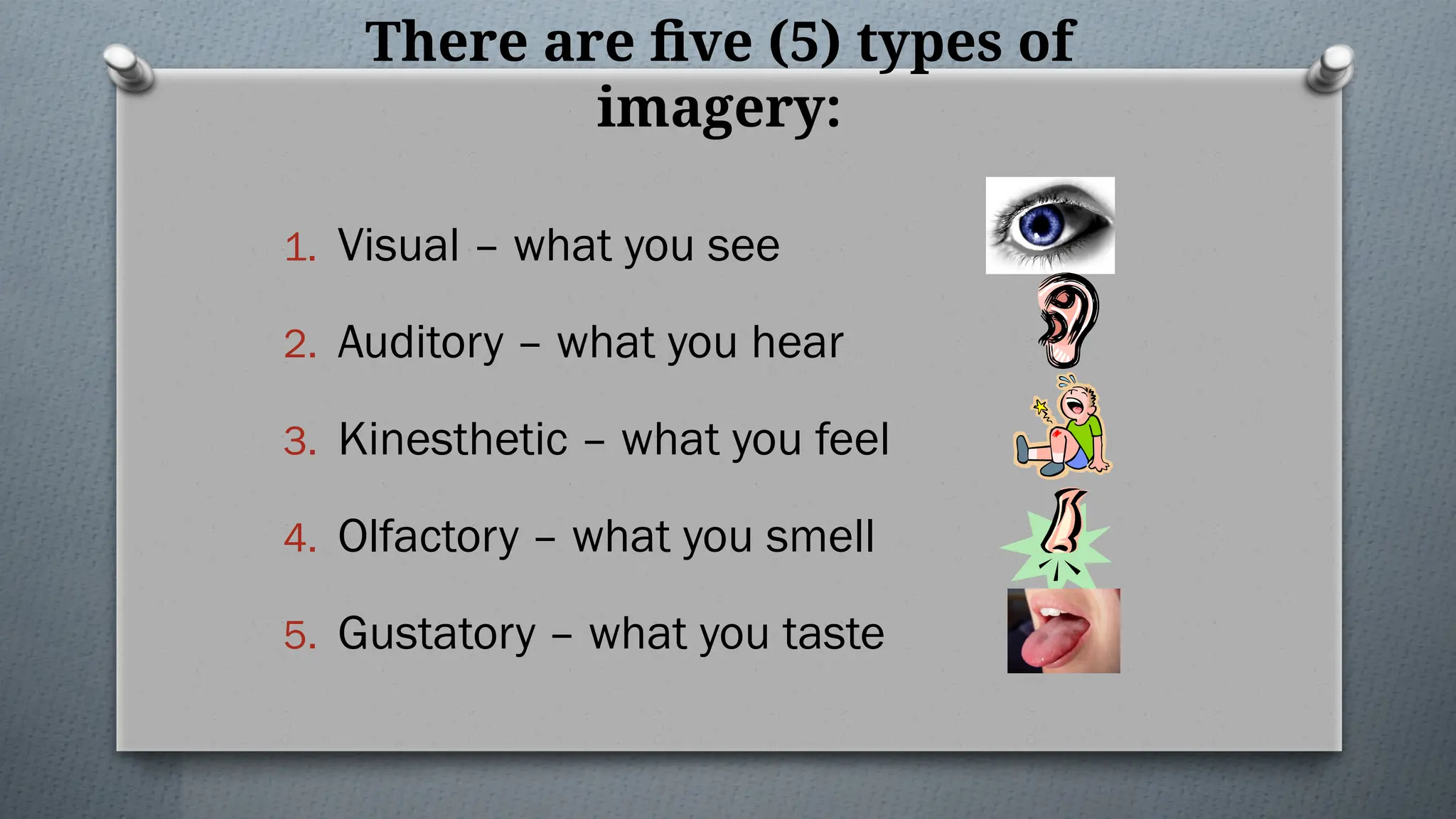
There are five (5) types of
imagery:
1. Visual – what you see
2. Auditory – what you hear
3. Kinesthetic – what you feel
4. Olfactory – what you smell
5. Gustatory – what you taste
Relating SENSES to IMAGERY
• Sense of Sight: Visual Imagery
• Sense of Hearing: Auditory Imagery
• Sense of Taste: Gustatory Imagery
• Sense of Smell: Olfactory Imagery
• Sense of Touch: Tactile Imagery
EXAMPLES
• Sense of Smell:
It smells good.
• Sense of Sight:
She looks good.
• Olfactory Imagery:
It smells of oranges
and fresh bread.
• Visual Imagery: She
looks as though she
could be on the
cover of a fashion
magazine, with her
soft features and
striking beauty.
• Sense of Touch:
It is rough.
• Sense of Hearing:
It is loud.
• Sense of Taste: It
tastes bad.
• Tactile Imagery: It
is rough like
coarse sandpaper.
• Auditory Imagery:
It sounds like a
rock concert.
• Gustatory
Imagery: It tastes
bitter and strong.
What image do you see in your mind when
you read the following sentence?
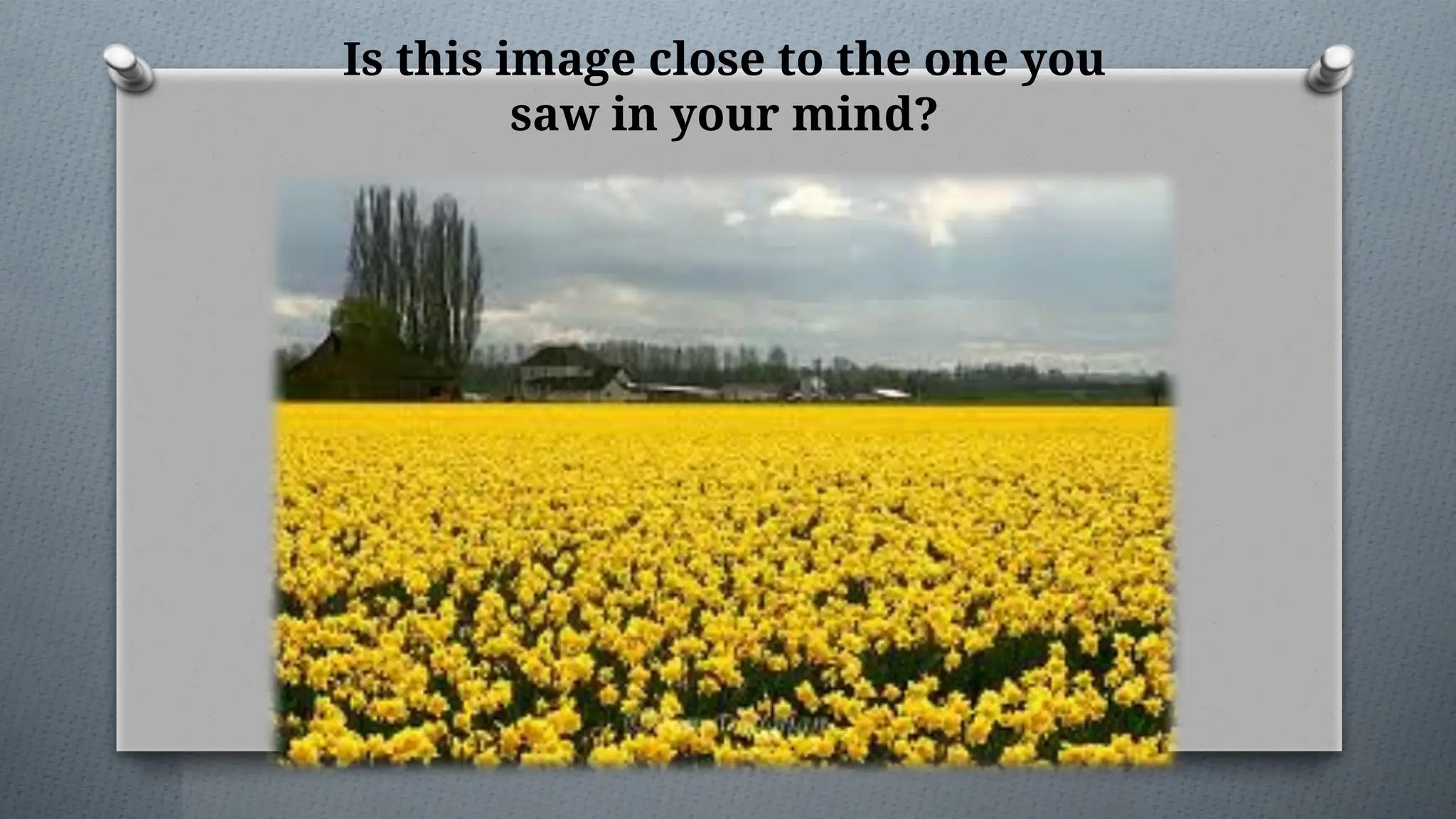
O A field of bright yellow flowers lay beautifully
in front of me.
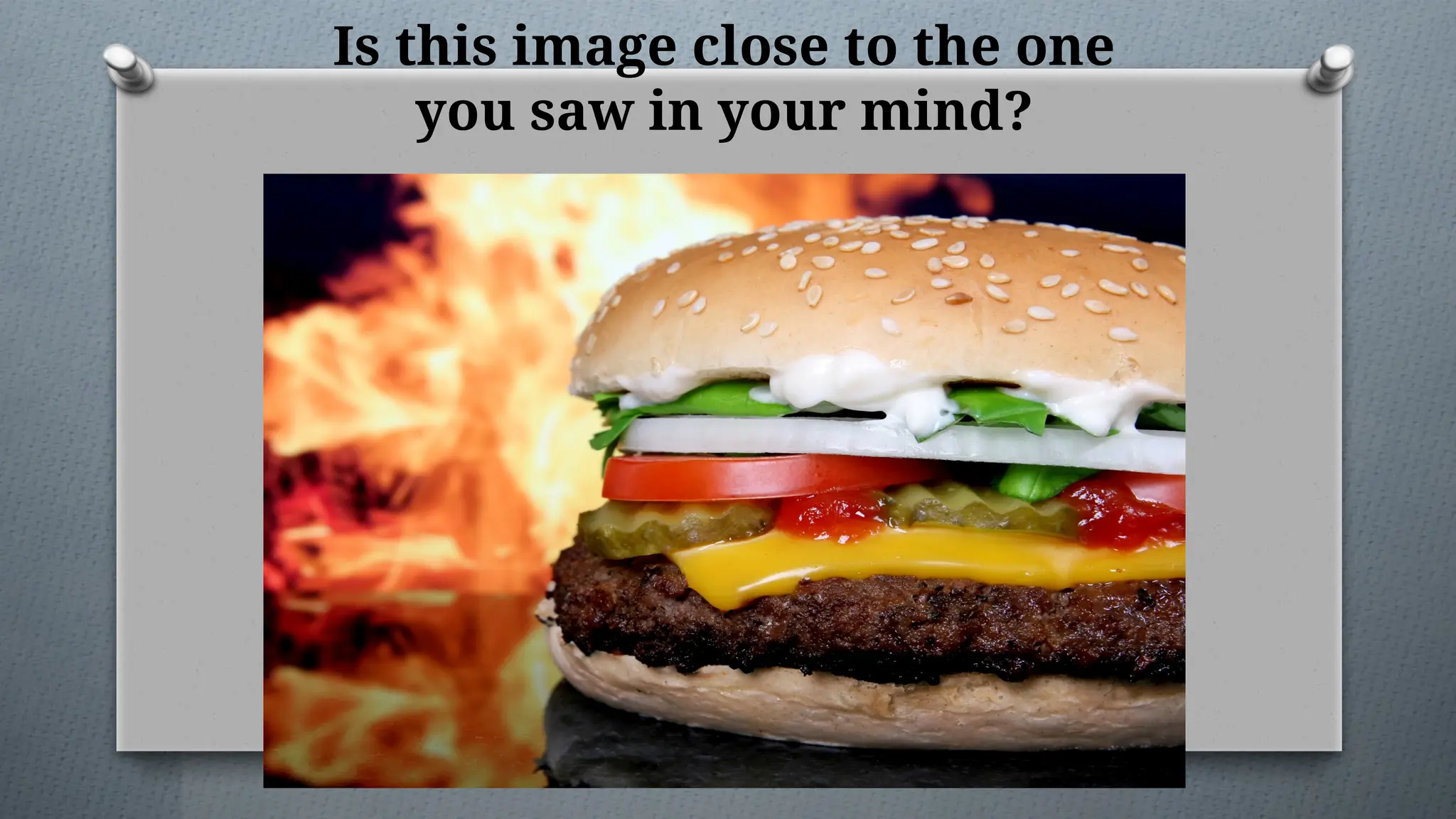
Is this image close to the one you
saw in your mind?
What image do you see in your mind
when you read the following
sentence?
O The big, juicy burger with its melted cheese
and red tomatoes made my mouth water and
my stomach grumble.
Is this image close to the one
you saw in your mind?
Imagery
Definition:
O Imagery refers to the “mental pictures” that readers
experience when reading literature.
O Imagery appeals directly to one or more of the five
senses.
O An author achieves imagery through the use of words.
Examples
1. Visual – The golden rays of the setting sun reflected
upon the clear waters of the lake.
2. Auditory – The trees rustled as the wind whistled gently
through the leaves.
3. Kinesthetic – My toes went numb and a shiver ran
through my body as I stepped into the cold river.
4. Olfactory – The stench of rotting garbage overpowered
my nostrils when I opened the bin.
5. Gustatory – Her mouth watered and her tongue burned
as she bit into the sour, peppery mango chow.

Write a paragraph inspired
by the following image. It
must appeal to each sense;
therefore, it must contain
at least one use of imagery
for each sense
IMAGERY definition, types and examples.pptx

IMAGERY definition, types and examples.pptx

  • 1.
  • 2.
    What is IMAGERY? •It relates to your FIVE SENSES • It is the author’s way of making the story seem more REAL • When appropriate, imagery makes it appear as though you are in the story, experiencing what the characters are experiencing
  • 3.
    Imagery Definition: O Imagery refersto the “mental pictures” that readers experience when reading literature. O Imagery appeals directly to one or more of the five senses. O An author achieves imagery through the use of words.
  • 4.
    There are five(5) types of imagery: 1. Visual – what you see 2. Auditory – what you hear 3. Kinesthetic – what you feel 4. Olfactory – what you smell 5. Gustatory – what you taste
  • 5.
    Relating SENSES toIMAGERY • Sense of Sight: Visual Imagery • Sense of Hearing: Auditory Imagery • Sense of Taste: Gustatory Imagery • Sense of Smell: Olfactory Imagery • Sense of Touch: Tactile Imagery
  • 6.
    EXAMPLES • Sense ofSmell: It smells good. • Sense of Sight: She looks good. • Olfactory Imagery: It smells of oranges and fresh bread. • Visual Imagery: She looks as though she could be on the cover of a fashion magazine, with her soft features and striking beauty.
  • 7.
    • Sense ofTouch: It is rough. • Sense of Hearing: It is loud. • Sense of Taste: It tastes bad. • Tactile Imagery: It is rough like coarse sandpaper. • Auditory Imagery: It sounds like a rock concert. • Gustatory Imagery: It tastes bitter and strong.
  • 8.
    What image doyou see in your mind when you read the following sentence? O A field of bright yellow flowers lay beautifully in front of me.
  • 9.
    Is this imageclose to the one you saw in your mind?
  • 10.
    What image doyou see in your mind when you read the following sentence? O The big, juicy burger with its melted cheese and red tomatoes made my mouth water and my stomach grumble.
  • 11.
    Is this imageclose to the one you saw in your mind?
  • 12.
    Imagery Definition: O Imagery refersto the “mental pictures” that readers experience when reading literature. O Imagery appeals directly to one or more of the five senses. O An author achieves imagery through the use of words.
  • 13.
    Examples 1. Visual –The golden rays of the setting sun reflected upon the clear waters of the lake. 2. Auditory – The trees rustled as the wind whistled gently through the leaves. 3. Kinesthetic – My toes went numb and a shiver ran through my body as I stepped into the cold river. 4. Olfactory – The stench of rotting garbage overpowered my nostrils when I opened the bin. 5. Gustatory – Her mouth watered and her tongue burned as she bit into the sour, peppery mango chow.
  • 14.
    Write a paragraphinspired by the following image. It must appeal to each sense; therefore, it must contain at least one use of imagery for each sense