Implementing the new Fair Labor
Standards Act Regulations
ILLINOIS ESOP CONFERENCE – CHAMPAIGN -MARCH 10, 2016
2
Today’s Panel
David S. Horvath
Crowe Horwath LLP
Tel 630.586.5117
David.Horvath@crowehorwath.com
.
Laura B. Friedel
Levenfeld Pearlstein. LLC
Tel 312.476.7510
lfriedel@lplegal.com
3
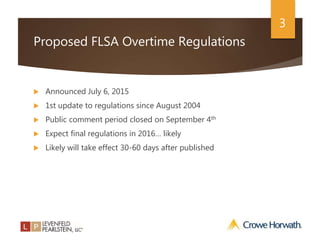
Proposed FLSA Overtime Regulations
 Announced July 6, 2015
 1st update to regulations since August 2004
 Public comment period closed on September 4th
 Expect final regulations in 2016… likely
 Likely will take effect 30-60 days after published
4
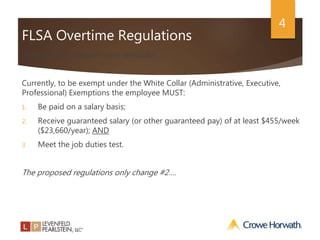
FLSA Overtime Regulations
Exempt status requirements reminder…..
Currently, to be exempt under the White Collar (Administrative, Executive,
Professional) Exemptions the employee MUST:
1. Be paid on a salary basis;
2. Receive guaranteed salary (or other guaranteed pay) of at least $455/week
($23,660/year); AND
3. Meet the job duties test.
The proposed regulations only change #2….
5
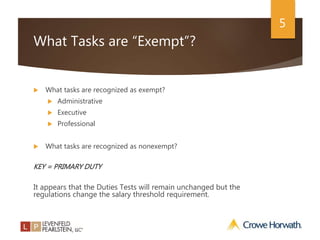
What Tasks are “Exempt”?
 What tasks are recognized as exempt?
 Administrative
 Executive
 Professional
 What tasks are recognized as nonexempt?
KEY = PRIMARY DUTY
It appears that the Duties Tests will remain unchanged but the
regulations change the salary threshold requirement.
6
Final FLSA Exemption Revisions To Be
Issued Soon
 June 29, 2015: The Wage and Hour Division of the Department of Labor issues the
Proposed Rule and Request for Comments:
 29 CFR Part 541 RIN 1235 – AA11: Defining and Delimiting the Exemptions for
Executive, Administrative, Professional, Outside Sales and Computer Employees
 Sixty day comment period
 Proposed drastic increase in minimum salary for White Collar exemptions.
 Did not include any changes to job duties tests, but left door open.
7
What Do the Proposed Regulations
Change?
New proposed minimum guaranteed pay:
 NPRM suggests $970 per week ($50,440 per year)
 40th Percentile of full time salaried employees, nationwide
 Prediction for final is based on anticipated Q2 2015 – Q1 2016 data. With delay, it will
likely be higher.
 NPRM also increases threshold for Highly Compensated Employee exception –
but doesn’t apply in Illinois
 Annual increases
Two possible methods for annual increases:
 Fixed percentile of salaried employees
 40th percentile for given year (90th for Highly Compensated)
 CPI-U
8
Response to Proposed Regulations
 September 4, 2015: Comment period officially ends. Published comments address
the following issues:
 High cost to non-metro areas of the country and the built-in inflation factor with 40th
percentile of weekly earnings factor; and
 It is projected that 122 million workers will be affected by the salary threshold increase
but less than 1% of them will receive salary raises to the new threshold
 This accentuates the concerns around reclassifying exempt to non-exempt and controlling
OT costs
 Since late October → mixed messages about timing of
final regulations
9
Proposed FSLA Overtime Regulations
 Steps to take in anticipation of new regulations:
 Identify exempt employees making salary <$52k/year
 Identify commissioned exempt employees making guaranteed pay <$52k/year
 Weigh financial and cultural impact of pay increase vs transition to non-exempt
 Consider using change in regulations as opening to change status of questionably-
classified employees
 Consider how you will annually assess whether minimum salary is satisfied
10
Specific Application to Your
Organization
Key Questions:
1. Which positions currently have incumbents who are considered exempt paid below the
expected new minimum salary threshold?
2. Which major option do you select?
 Automatically raise the exempt incumbents’ salaries to the new minimum (option 1)
 Reclassify employees to non-exempt (option 2)
3. What are the consequences for each option?
 Which option would cost more?
 Which option has greater risk?
 How best do we make and implement this decision?
11
Communication is Vital
 Critical conversations addressing undesired change
 Consistent conversations to maintain accuracy and policy
compliance
 Prepared communications to ensure quality messaging
 FAQs and a single source as the point of contact for
questions.
12
FAQs that may apply to your
organization
 Why is my position being reclassified?
 What do these changes mean to me?
 Is this a demotion?
 How do I record my time?
 How is overtime calculated?
 When will I begin receiving overtime pay?
 My job hasn’t changed, if I’m getting overtime now, shouldn’t I
always have gotten it?
13
FAQs continued
 How does this reclassification impact my benefits?
 How does this impact my bonus or incentive compensation?
 Who can I talk to about my follow-up questions?
 Will I receive less pay?
 Can I work as much overtime as I want (or as I usually do)?
 What if I want comp time instead of overtime pay?
14
Other Questions/Concerns That May
Arise?
 Will I receive back pay for the extra hours I’ve worked in the past (i.e.
week, month, year…)?
 How will this change be communicated to my peers, direct reports,
and/or the company in general?
 How will this affect my career aspirations at this organization?
15
Considerations for Companies
 Identify those currently exempt employees below the salary threshold
 Analyze the cost of options including raising salary to new threshold or
paying overtime premiums
 Consider non-financial implications affecting employees
 Consider impact on retirement plans, incentive compensation and
bonuses
 Formulate a compliance, communications and implementation strategy

IL ESOP 2016 Fair Labor Standards Act Regulations

  • 1.
    Implementing the newFair Labor Standards Act Regulations ILLINOIS ESOP CONFERENCE – CHAMPAIGN -MARCH 10, 2016
  • 2.
    2 Today’s Panel David S.Horvath Crowe Horwath LLP Tel 630.586.5117 David.Horvath@crowehorwath.com . Laura B. Friedel Levenfeld Pearlstein. LLC Tel 312.476.7510 lfriedel@lplegal.com
  • 3.
    3 Proposed FLSA OvertimeRegulations  Announced July 6, 2015  1st update to regulations since August 2004  Public comment period closed on September 4th  Expect final regulations in 2016… likely  Likely will take effect 30-60 days after published
  • 4.
    4 FLSA Overtime Regulations Exemptstatus requirements reminder….. Currently, to be exempt under the White Collar (Administrative, Executive, Professional) Exemptions the employee MUST: 1. Be paid on a salary basis; 2. Receive guaranteed salary (or other guaranteed pay) of at least $455/week ($23,660/year); AND 3. Meet the job duties test. The proposed regulations only change #2….
  • 5.
    5 What Tasks are“Exempt”?  What tasks are recognized as exempt?  Administrative  Executive  Professional  What tasks are recognized as nonexempt? KEY = PRIMARY DUTY It appears that the Duties Tests will remain unchanged but the regulations change the salary threshold requirement.
  • 6.
    6 Final FLSA ExemptionRevisions To Be Issued Soon  June 29, 2015: The Wage and Hour Division of the Department of Labor issues the Proposed Rule and Request for Comments:  29 CFR Part 541 RIN 1235 – AA11: Defining and Delimiting the Exemptions for Executive, Administrative, Professional, Outside Sales and Computer Employees  Sixty day comment period  Proposed drastic increase in minimum salary for White Collar exemptions.  Did not include any changes to job duties tests, but left door open.
  • 7.
    7 What Do theProposed Regulations Change? New proposed minimum guaranteed pay:  NPRM suggests $970 per week ($50,440 per year)  40th Percentile of full time salaried employees, nationwide  Prediction for final is based on anticipated Q2 2015 – Q1 2016 data. With delay, it will likely be higher.  NPRM also increases threshold for Highly Compensated Employee exception – but doesn’t apply in Illinois  Annual increases Two possible methods for annual increases:  Fixed percentile of salaried employees  40th percentile for given year (90th for Highly Compensated)  CPI-U
  • 8.
    8 Response to ProposedRegulations  September 4, 2015: Comment period officially ends. Published comments address the following issues:  High cost to non-metro areas of the country and the built-in inflation factor with 40th percentile of weekly earnings factor; and  It is projected that 122 million workers will be affected by the salary threshold increase but less than 1% of them will receive salary raises to the new threshold  This accentuates the concerns around reclassifying exempt to non-exempt and controlling OT costs  Since late October → mixed messages about timing of final regulations
  • 9.
    9 Proposed FSLA OvertimeRegulations  Steps to take in anticipation of new regulations:  Identify exempt employees making salary <$52k/year  Identify commissioned exempt employees making guaranteed pay <$52k/year  Weigh financial and cultural impact of pay increase vs transition to non-exempt  Consider using change in regulations as opening to change status of questionably- classified employees  Consider how you will annually assess whether minimum salary is satisfied
  • 10.
    10 Specific Application toYour Organization Key Questions: 1. Which positions currently have incumbents who are considered exempt paid below the expected new minimum salary threshold? 2. Which major option do you select?  Automatically raise the exempt incumbents’ salaries to the new minimum (option 1)  Reclassify employees to non-exempt (option 2) 3. What are the consequences for each option?  Which option would cost more?  Which option has greater risk?  How best do we make and implement this decision?
  • 11.
    11 Communication is Vital Critical conversations addressing undesired change  Consistent conversations to maintain accuracy and policy compliance  Prepared communications to ensure quality messaging  FAQs and a single source as the point of contact for questions.
  • 12.
    12 FAQs that mayapply to your organization  Why is my position being reclassified?  What do these changes mean to me?  Is this a demotion?  How do I record my time?  How is overtime calculated?  When will I begin receiving overtime pay?  My job hasn’t changed, if I’m getting overtime now, shouldn’t I always have gotten it?
  • 13.
    13 FAQs continued  Howdoes this reclassification impact my benefits?  How does this impact my bonus or incentive compensation?  Who can I talk to about my follow-up questions?  Will I receive less pay?  Can I work as much overtime as I want (or as I usually do)?  What if I want comp time instead of overtime pay?
  • 14.
    14 Other Questions/Concerns ThatMay Arise?  Will I receive back pay for the extra hours I’ve worked in the past (i.e. week, month, year…)?  How will this change be communicated to my peers, direct reports, and/or the company in general?  How will this affect my career aspirations at this organization?
  • 15.
    15 Considerations for Companies Identify those currently exempt employees below the salary threshold  Analyze the cost of options including raising salary to new threshold or paying overtime premiums  Consider non-financial implications affecting employees  Consider impact on retirement plans, incentive compensation and bonuses  Formulate a compliance, communications and implementation strategy