1.

Web Services and Enabling Technologies

2.

Use the ReportNet SDK

3.

Authenticate Using the SDK

4.

Retrieve Application Content

5.

Run Reports Using the SDK

6.

Update and Add Application Content

7.

Pass Parameters to Reports

8.

End to End Workshop

Cognos ReportNet - SDK for Developers
Objectives
 In this module, we will:


examine authentication using the SDK



use the SOAP Trace Utility to troubleshoot errors



discuss the use of passport IDs and single sign-on



examine passport ID retrieval from ReportNet



set passport IDs using the SDK



examine the retrieval of available namespaces



use an XML DOM to traverse message content
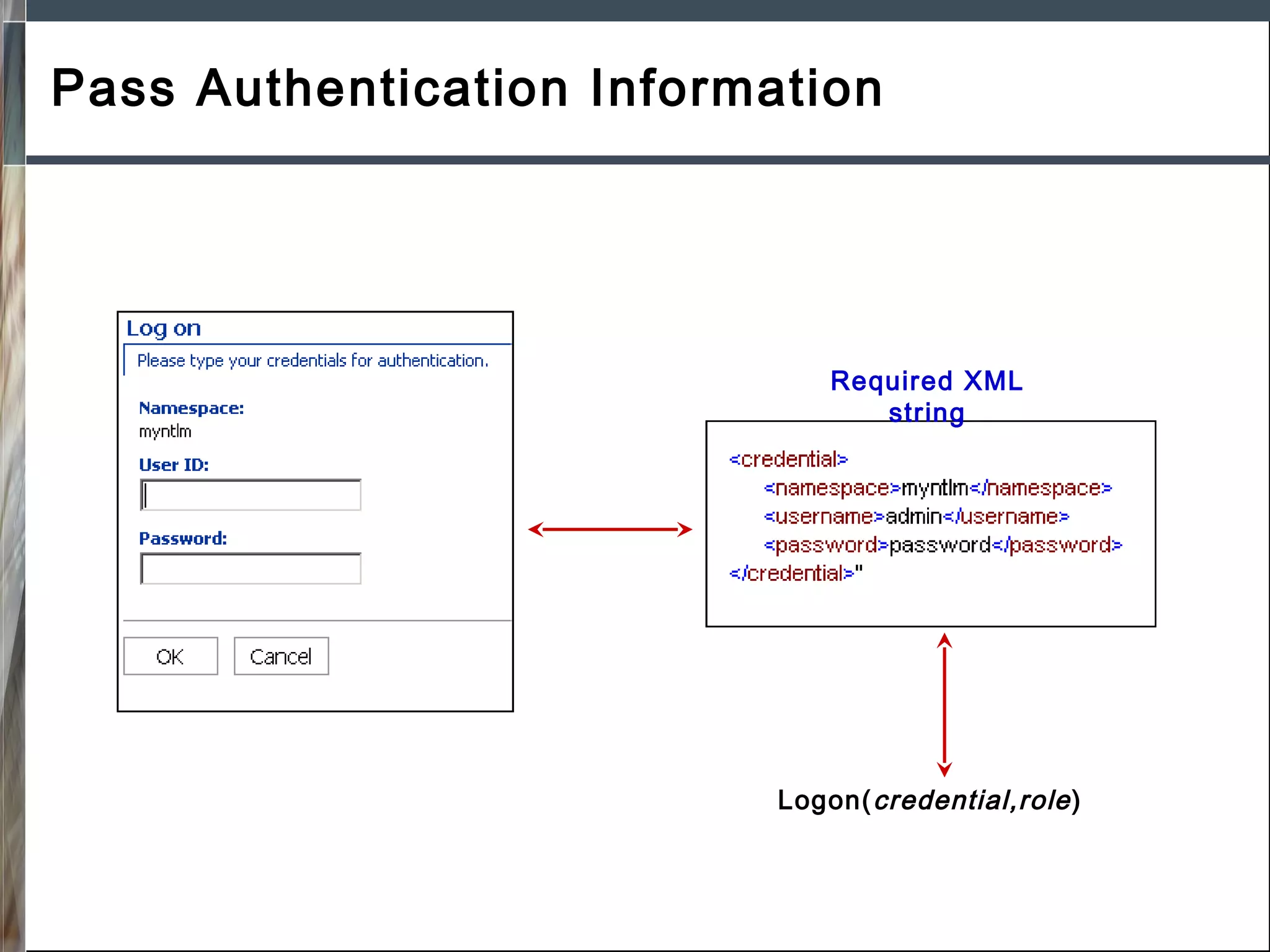
Pass Authentication Information

Required XML
string

Logon( credential,role )
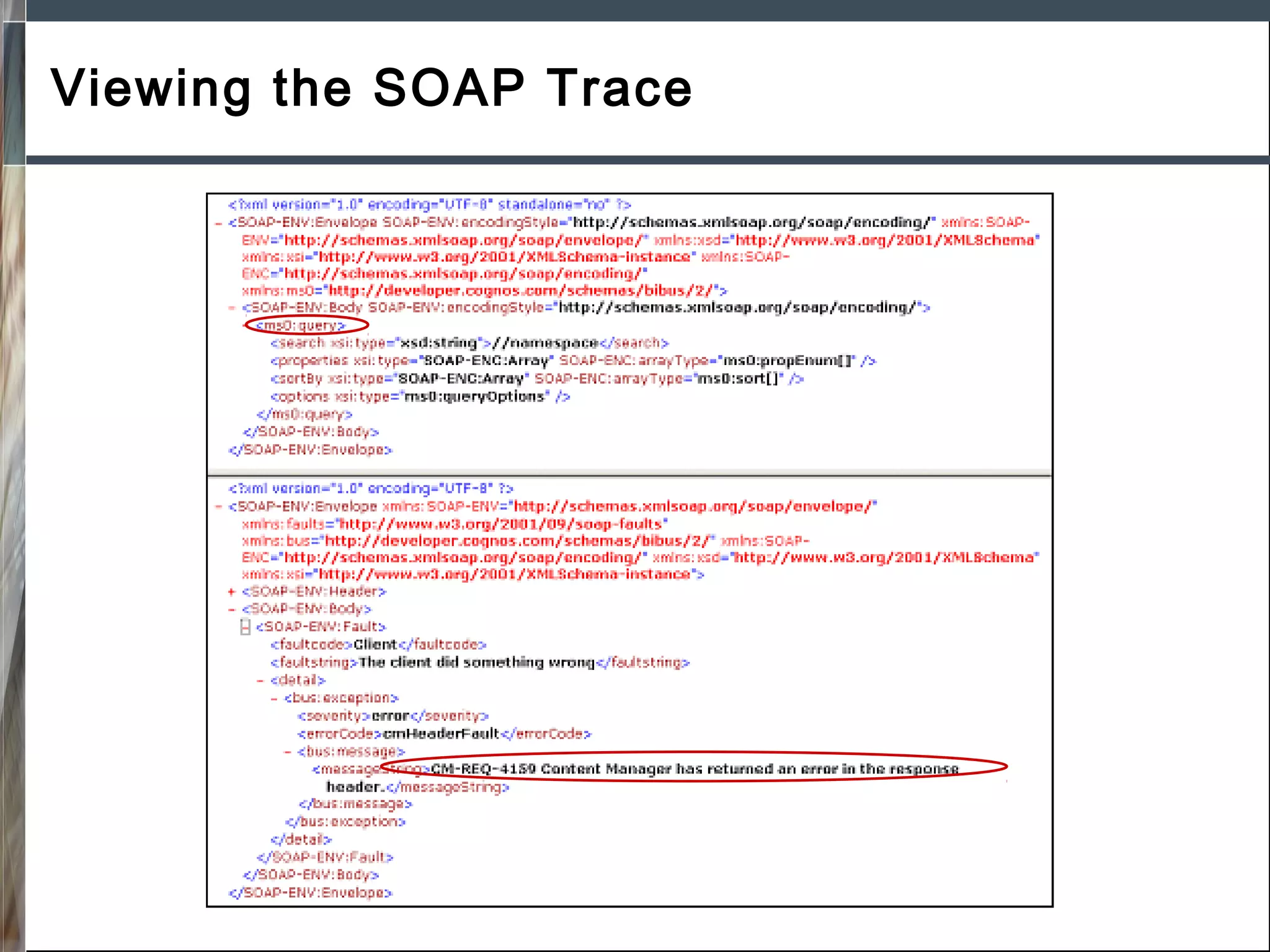
Viewing the SOAP Trace
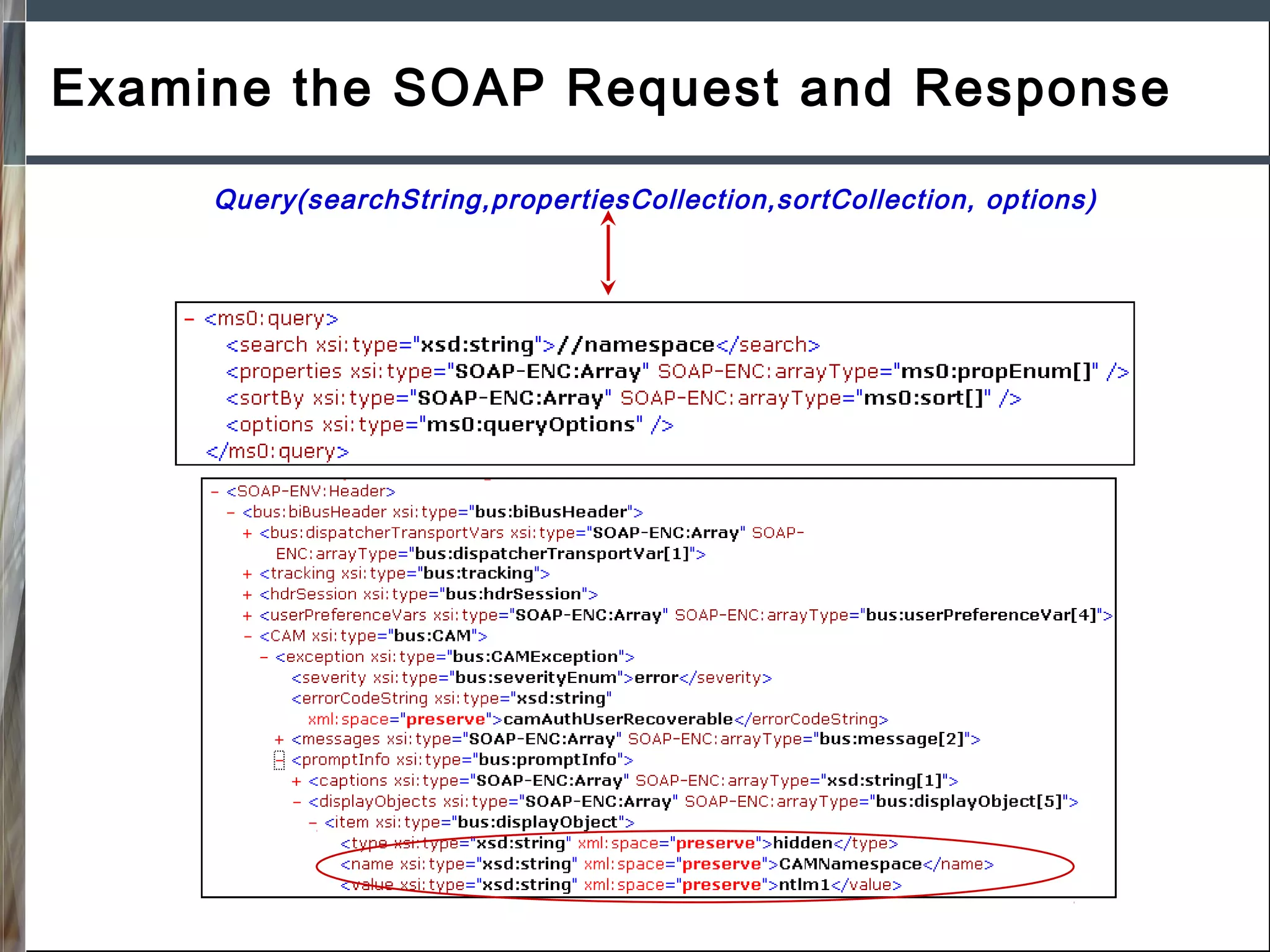
Examine the SOAP Request and Response
Query(searchString,propertiesCollection,sortCollection, options)
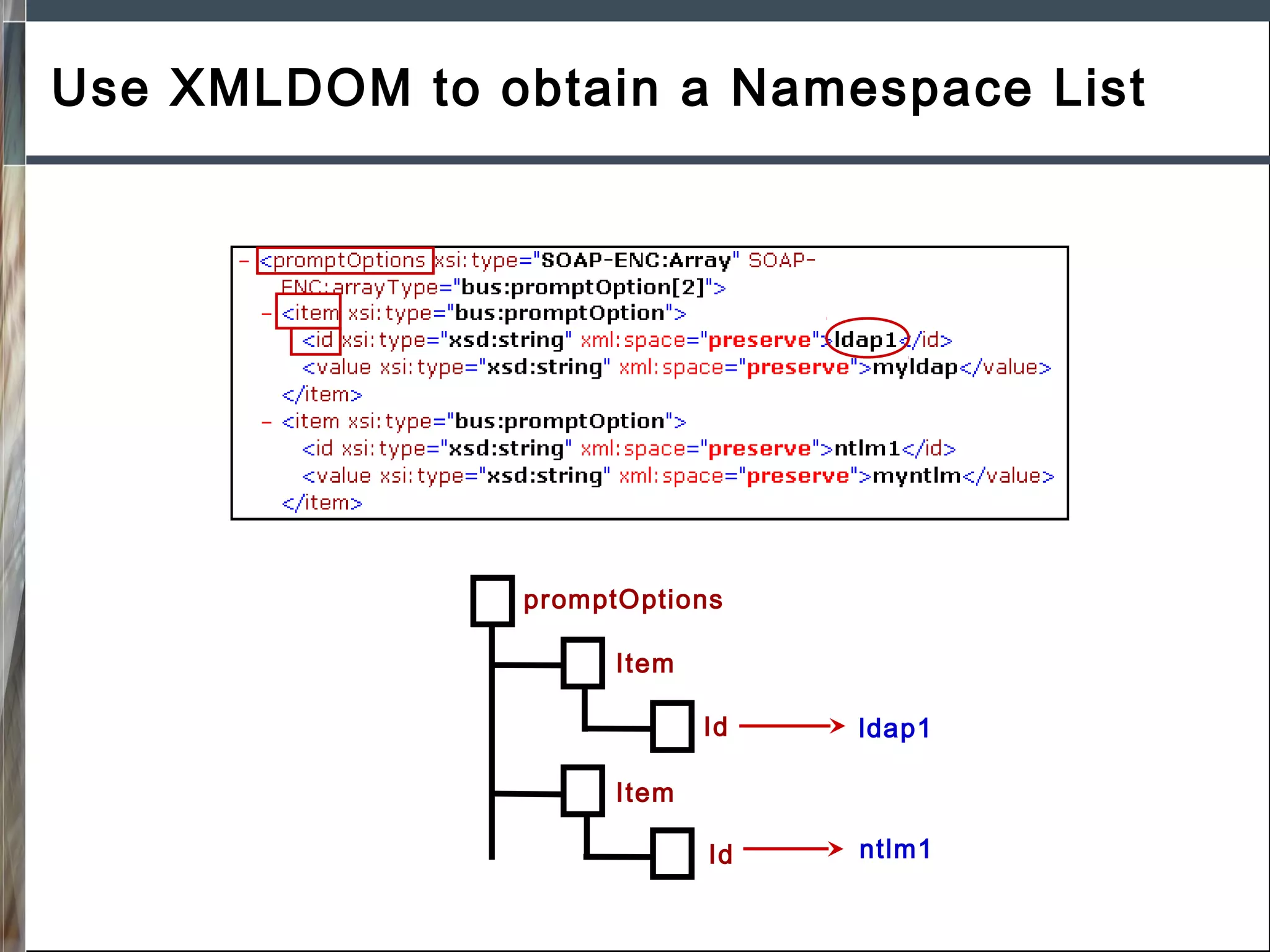
Use XMLDOM to obtain a Namespace List

promptOptions
Item
Id

ldap1

Id

ntlm1

Item
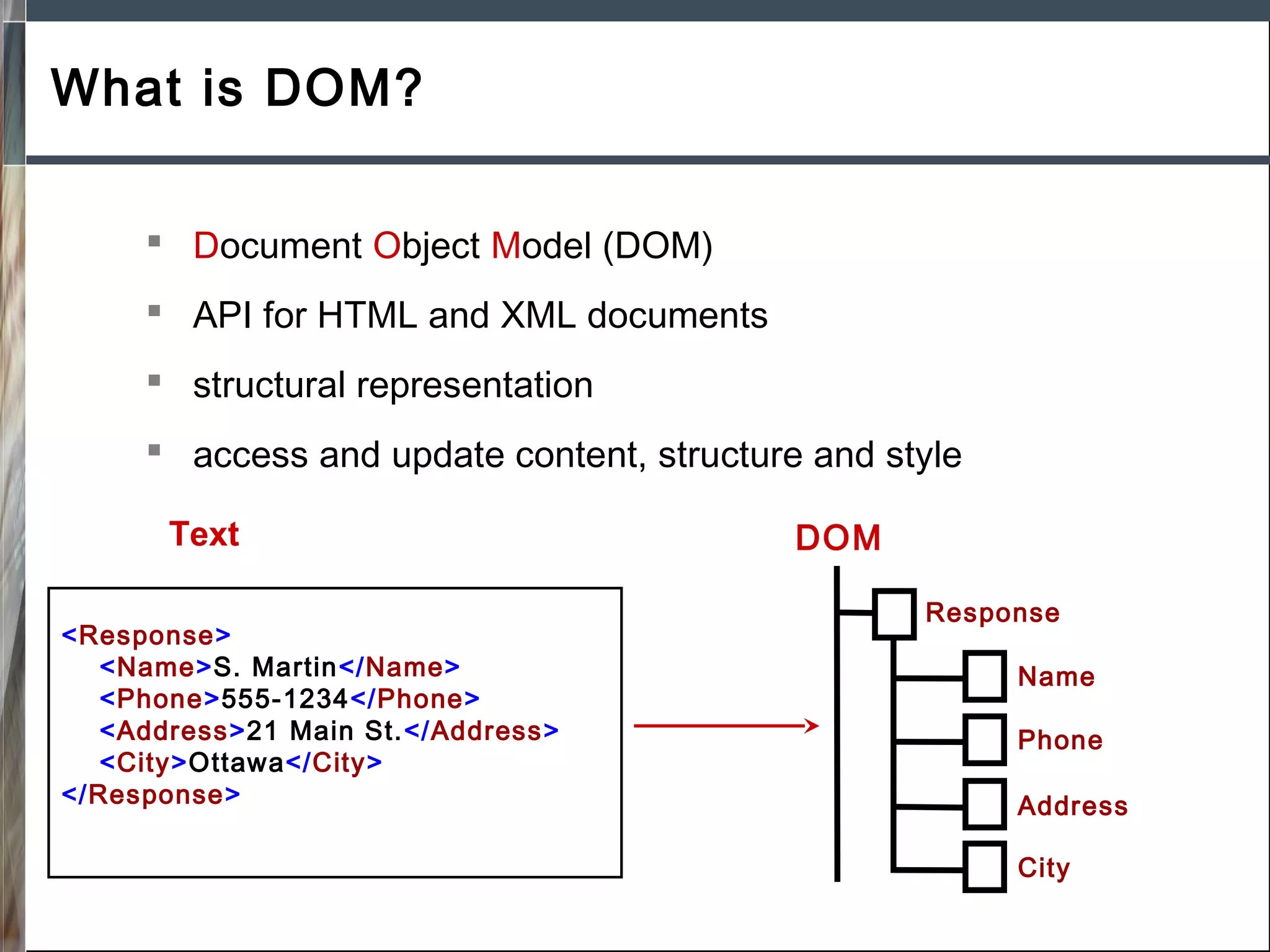
What is DOM?
 Document Object Model (DOM)
 API for HTML and XML documents
 structural representation
 access and update content, structure and style
Text
<Response>
<Name>S. Martin</Name>
<Phone>555-1234</Phone>
<Address>21 Main St.</Address>
<City>Ottawa</City>
</Response>

DOM
Response
Name
Phone
Address
City
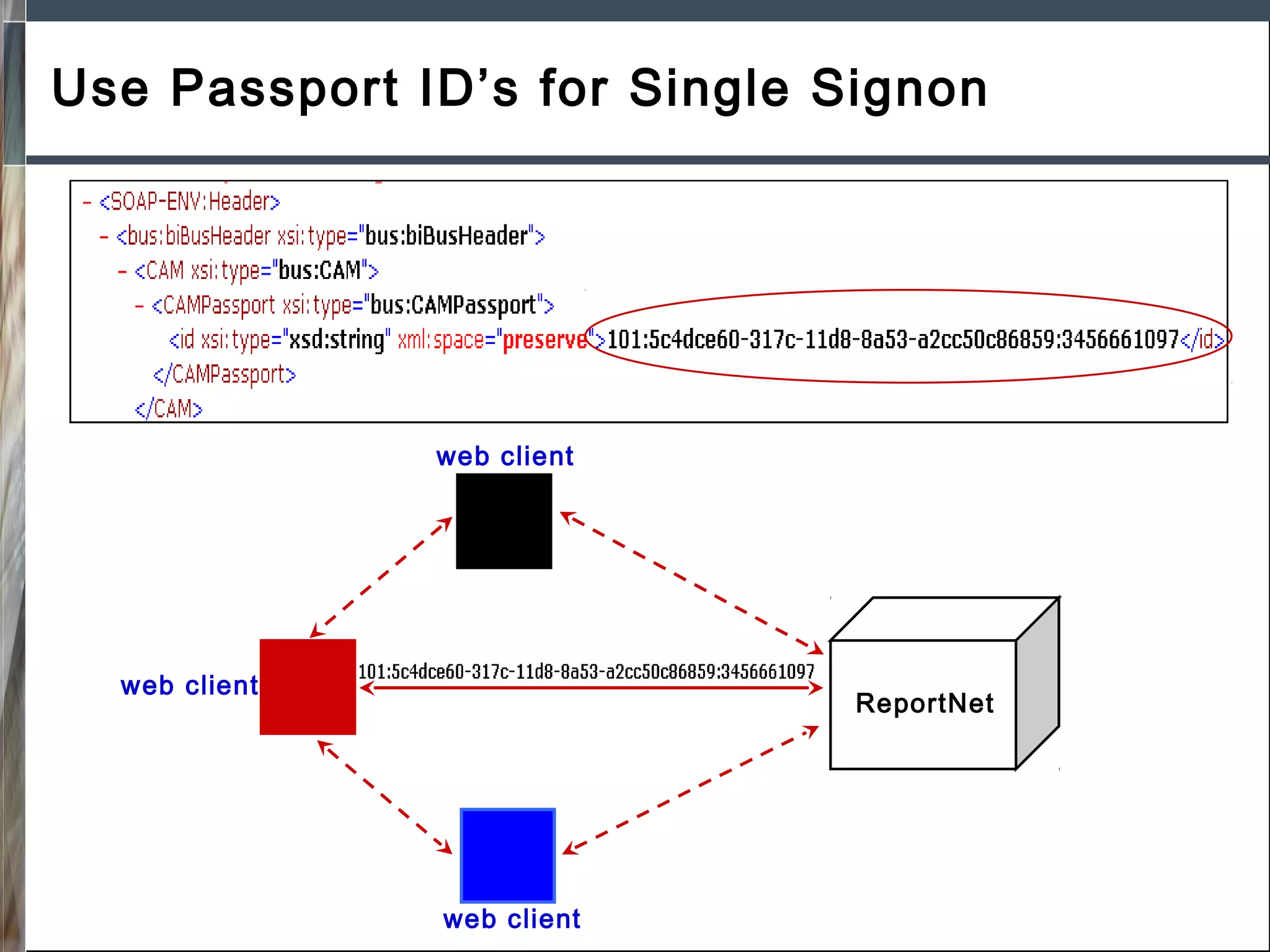
Use Passport ID’s for Single Signon

web client

web client

ReportNet

web client
Workshop 3-1
 Log On to ReportNet Using the
SDK
Summary
 In this module, we have:


examined authentication using the SDK



used the SOAP Trace Utility to troubleshoot errors



discussed the use of passport IDs and single sign-on



examined passport ID retrieval from ReportNet



set passport IDs using the SDK



examined the retrieval of available namespaces



used an XML DOM to traverse message content

Authentication using Cognos java/ASP SDK

  • 1.
    1. Web Services andEnabling Technologies 2. Use the ReportNet SDK 3. Authenticate Using the SDK 4. Retrieve Application Content 5. Run Reports Using the SDK 6. Update and Add Application Content 7. Pass Parameters to Reports 8. End to End Workshop Cognos ReportNet - SDK for Developers
  • 2.
    Objectives  In thismodule, we will:  examine authentication using the SDK  use the SOAP Trace Utility to troubleshoot errors  discuss the use of passport IDs and single sign-on  examine passport ID retrieval from ReportNet  set passport IDs using the SDK  examine the retrieval of available namespaces  use an XML DOM to traverse message content
  • 3.
    Pass Authentication Information RequiredXML string Logon( credential,role )
  • 4.
  • 5.
    Examine the SOAPRequest and Response Query(searchString,propertiesCollection,sortCollection, options)
  • 6.
    Use XMLDOM toobtain a Namespace List promptOptions Item Id ldap1 Id ntlm1 Item
  • 7.
    What is DOM? Document Object Model (DOM)  API for HTML and XML documents  structural representation  access and update content, structure and style Text <Response> <Name>S. Martin</Name> <Phone>555-1234</Phone> <Address>21 Main St.</Address> <City>Ottawa</City> </Response> DOM Response Name Phone Address City
  • 8.
    Use Passport ID’sfor Single Signon web client web client ReportNet web client
  • 9.
    Workshop 3-1  LogOn to ReportNet Using the SDK
  • 10.
    Summary  In thismodule, we have:  examined authentication using the SDK  used the SOAP Trace Utility to troubleshoot errors  discussed the use of passport IDs and single sign-on  examined passport ID retrieval from ReportNet  set passport IDs using the SDK  examined the retrieval of available namespaces  used an XML DOM to traverse message content

Editor's Notes

  • #3 Define FM and how it is used with other ReportNet components Examine the terminology used within the FM world, and some outside (e.g., Cognos Connection, QS, RS) Examine and describe how FM fits into the overall CRN workflow process Examine the FM process; emphasize that this process is the basis for the flow of the course; flow of the modules, including module to module, within a given module, and within demos and workshops.
  • #7 The Document Object Model (DOM) is an API for HTML and XML documents. It provides a structural representation of the document. As seen in the diagram, the elements of an XML document are parsed by the DOM and stored in nodes in a tree structure. DOM allows programs and scripts to dynamically access and update the content, structure and style of documents. It is important to realize that DOM loads the entire document into memory. If the document is large, using DOM can be very resource intensive and slow. In this case you may want to look at the alternative: SAX.
  • #8 The Document Object Model (DOM) is an API for HTML and XML documents. It provides a structural representation of the document. As seen in the diagram, the elements of an XML document are parsed by the DOM and stored in nodes in a tree structure. DOM allows programs and scripts to dynamically access and update the content, structure and style of documents. It is important to realize that DOM loads the entire document into memory. If the document is large, using DOM can be very resource intensive and slow. In this case you may want to look at the alternative: SAX.
  • #10 Show both the PDF and HTML versions of the SDK documentation. Show BI Bus Reference (Methods and Classes) and how to traverse the classes hierarchy and browse the Methods (showing sample code portions). Use schedule to show how this class can be a child of both baseReport and jobDefinition.
  • #11 Define FM and how it is used with other ReportNet components Examine the terminology used within the FM world, and some outside (e.g., Cognos Connection, QS, RS) Examine and describe how FM fits into the overall CRN workflow process Examine the FM process; emphasize that this process is the basis for the flow of the course; flow of the modules, including module to module, within a given module, and within demos and workshops.