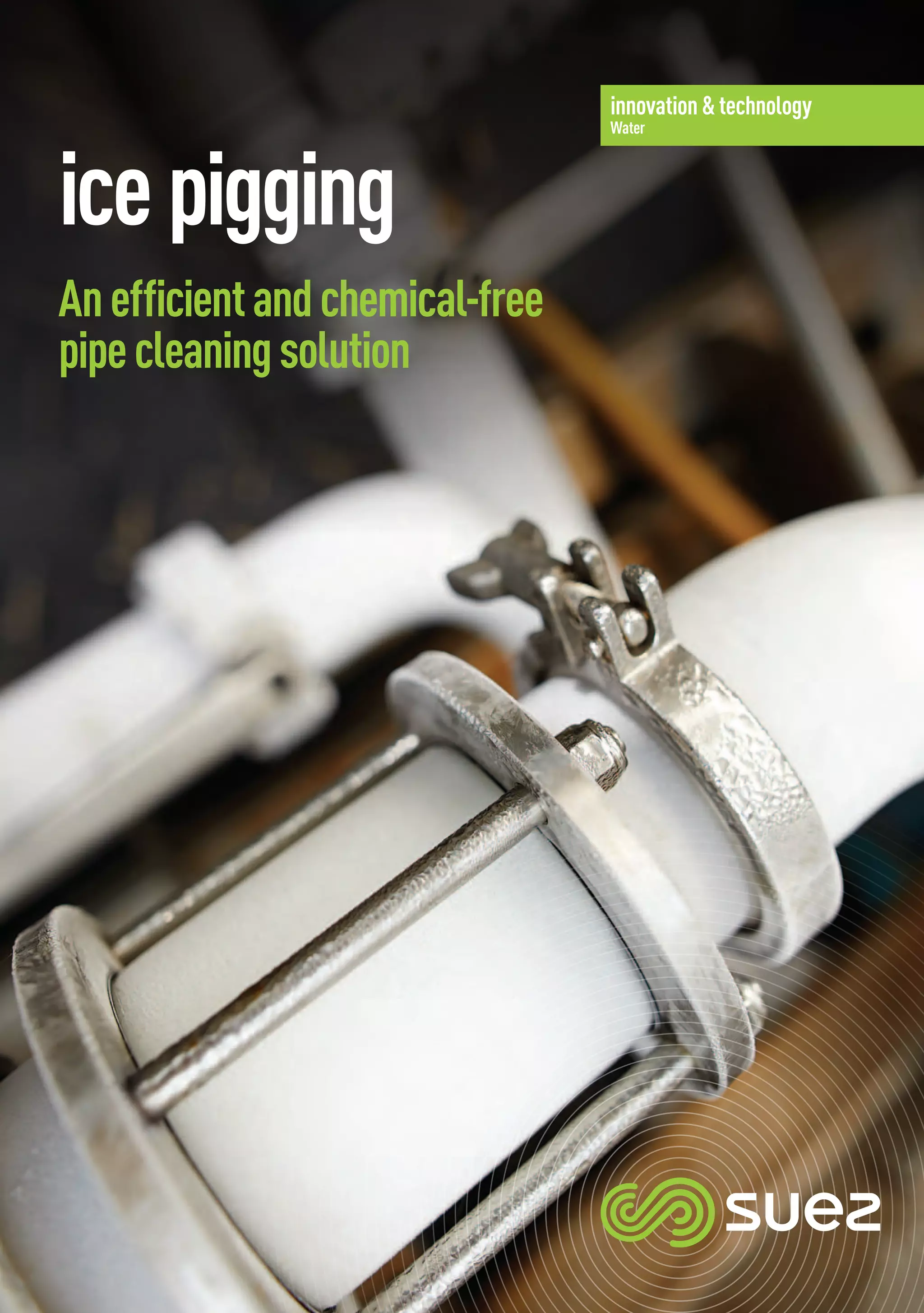

icepigging
Anefficientandchemical-free
pipecleaningsolution
innovation & technology
Water
2
With time, drinking and
wastewater infrastructure
can develop issues that
impact water quality and
network reliability.
In drinking water networks, the
presence of iron, manganese
and biofilms can cause water
discolouration and consumer
complaints. They may also pose
health risks.
Iron and manganese can
accumulate due to poor filtration
at the water treatment stage, or
with deterioration of water network
infrastructure.
Biofilms are biological growths on
the internal surface of pipes which
typically grow in environments with
high manganese or aluminium
content, or where the chlorination
of water is not possible.
3
In networks carrying chlorinated
or chloraminated water, reactions
with biofilms can lead to the
creation of TriHaloMethanes
(THMs) which may also pose
health risks. Cleaning pipes and
other infrastructure helps remove
sediment, improving water quality
and optimising network operations.
In wastewater networks, sewage
can decrease flow rates causing
increased odours, blockages, and,
in severe cases, flooding to nearby
properties. Cleaning sewer pipes
can extend asset life and reduce
occurrences of wastewater
main failure.
To assist water operators in
delivering quality water and
wastewater services, SUEZ has
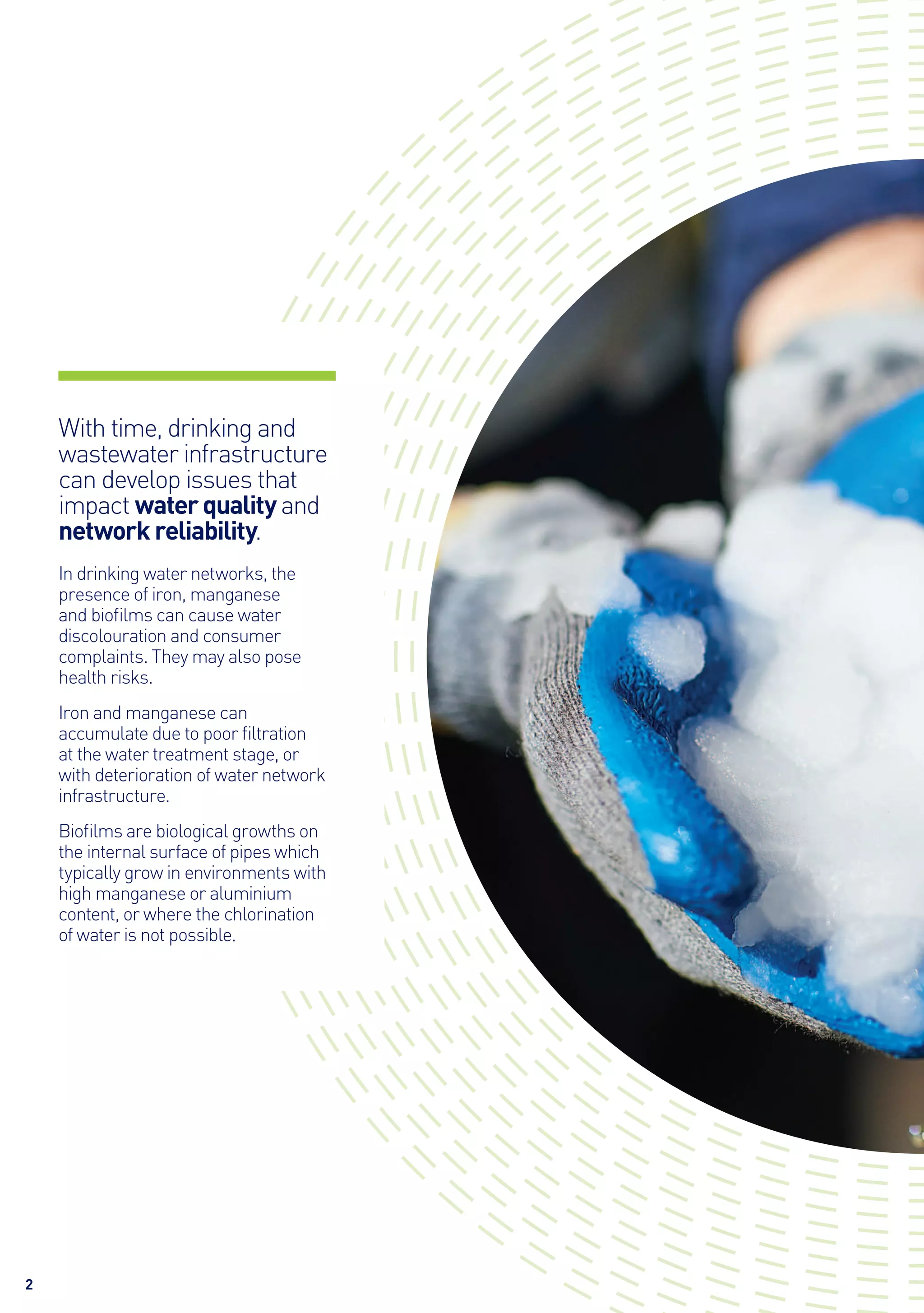
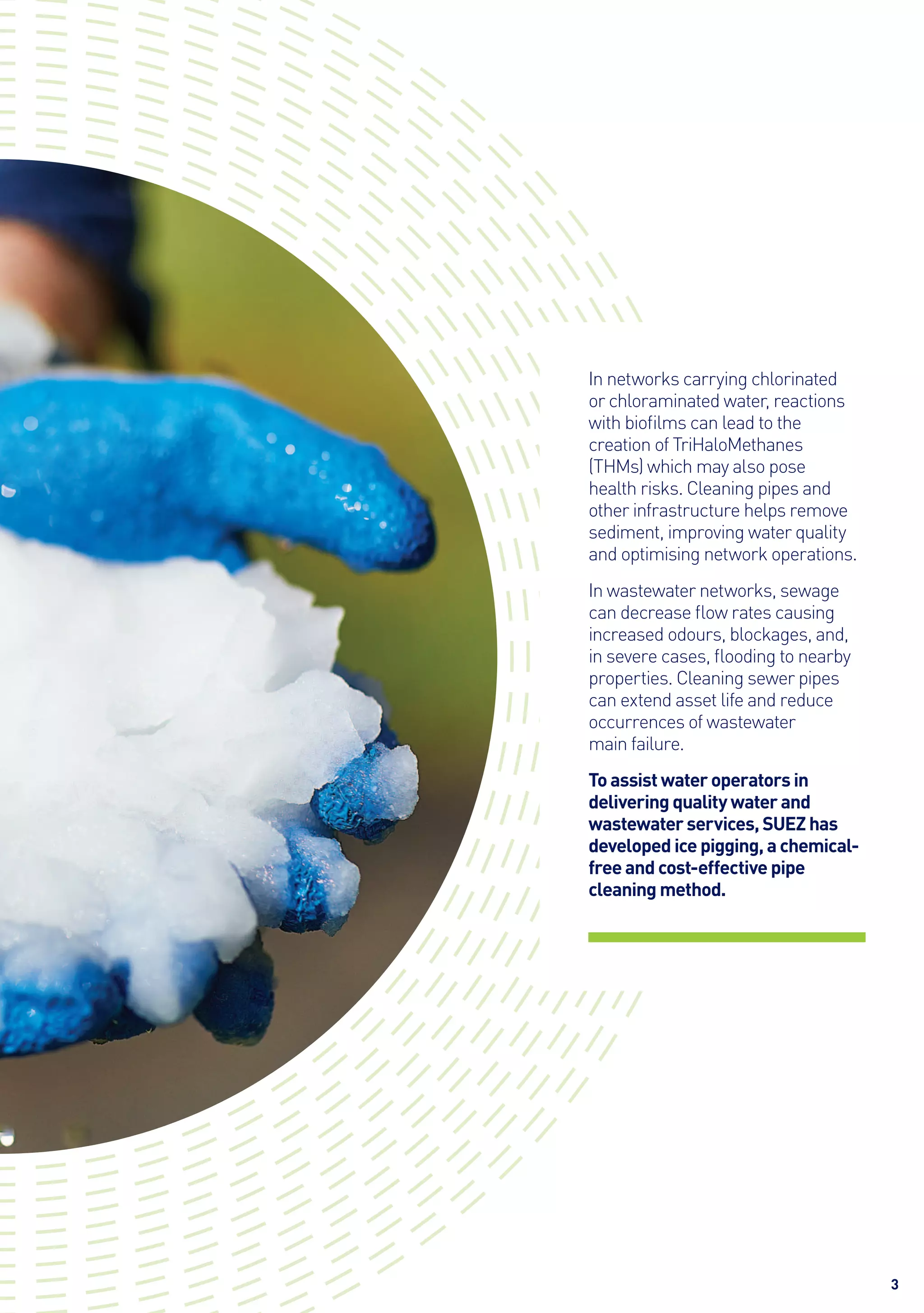
developed ice pigging, a chemical-
free and cost-effective pipe
cleaning method.
4
whatis
icepigging?
4
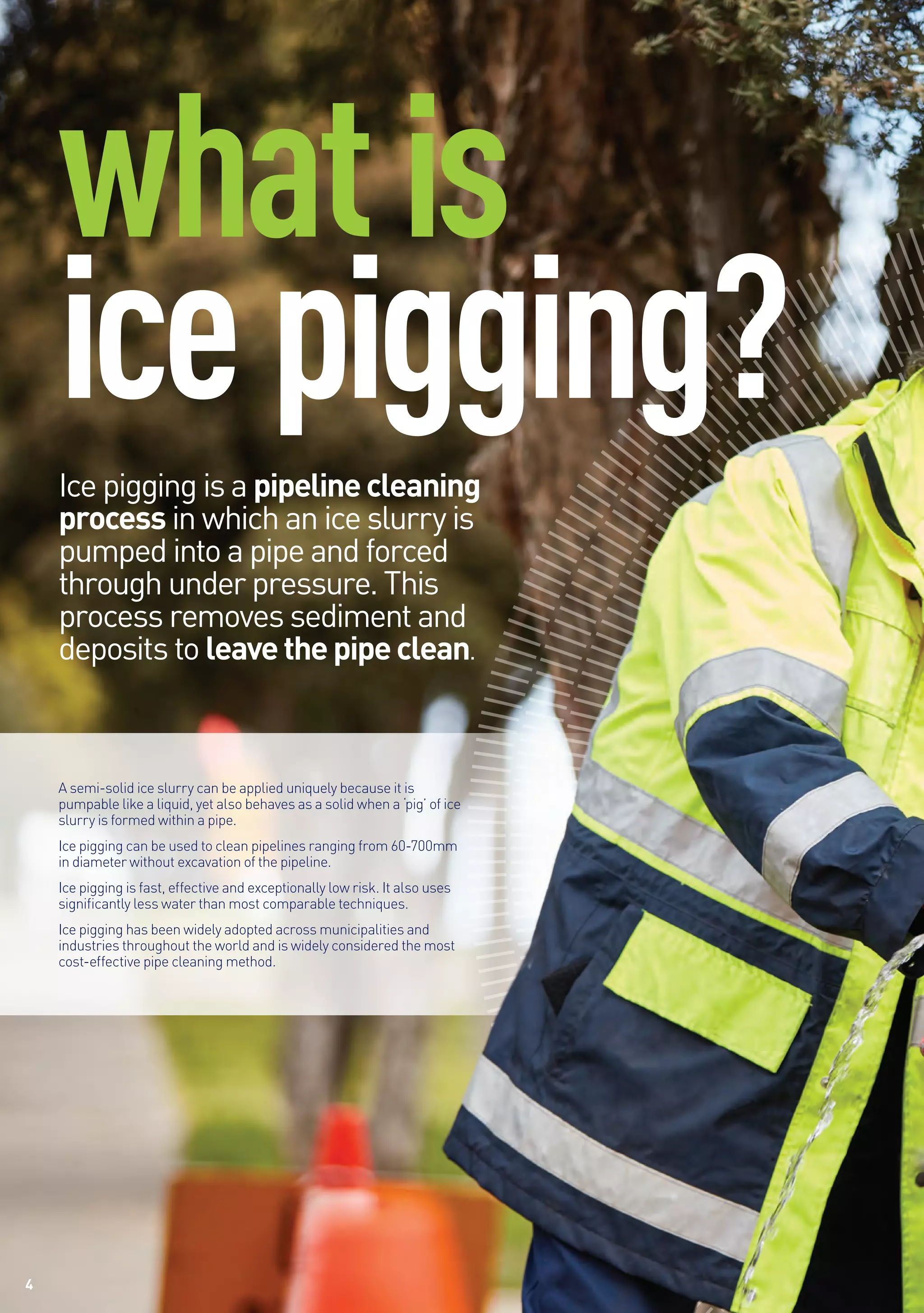
Ice pigging is a pipelinecleaning
process in which an ice slurry is
pumped into a pipe and forced
through under pressure. This
process removes sediment and
deposits to leavethepipeclean.
A semi-solid ice slurry can be applied uniquely because it is
pumpable like a liquid, yet also behaves as a solid when a ‘pig’ of ice
slurry is formed within a pipe.
Ice pigging can be used to clean pipelines ranging from 60-700mm
in diameter without excavation of the pipeline.
Ice pigging is fast, effective and exceptionally low risk. It also uses
significantly less water than most comparable techniques.
Ice pigging has been widely adopted across municipalities and
industries throughout the world and is widely considered the most
cost-effective pipe cleaning method.
5
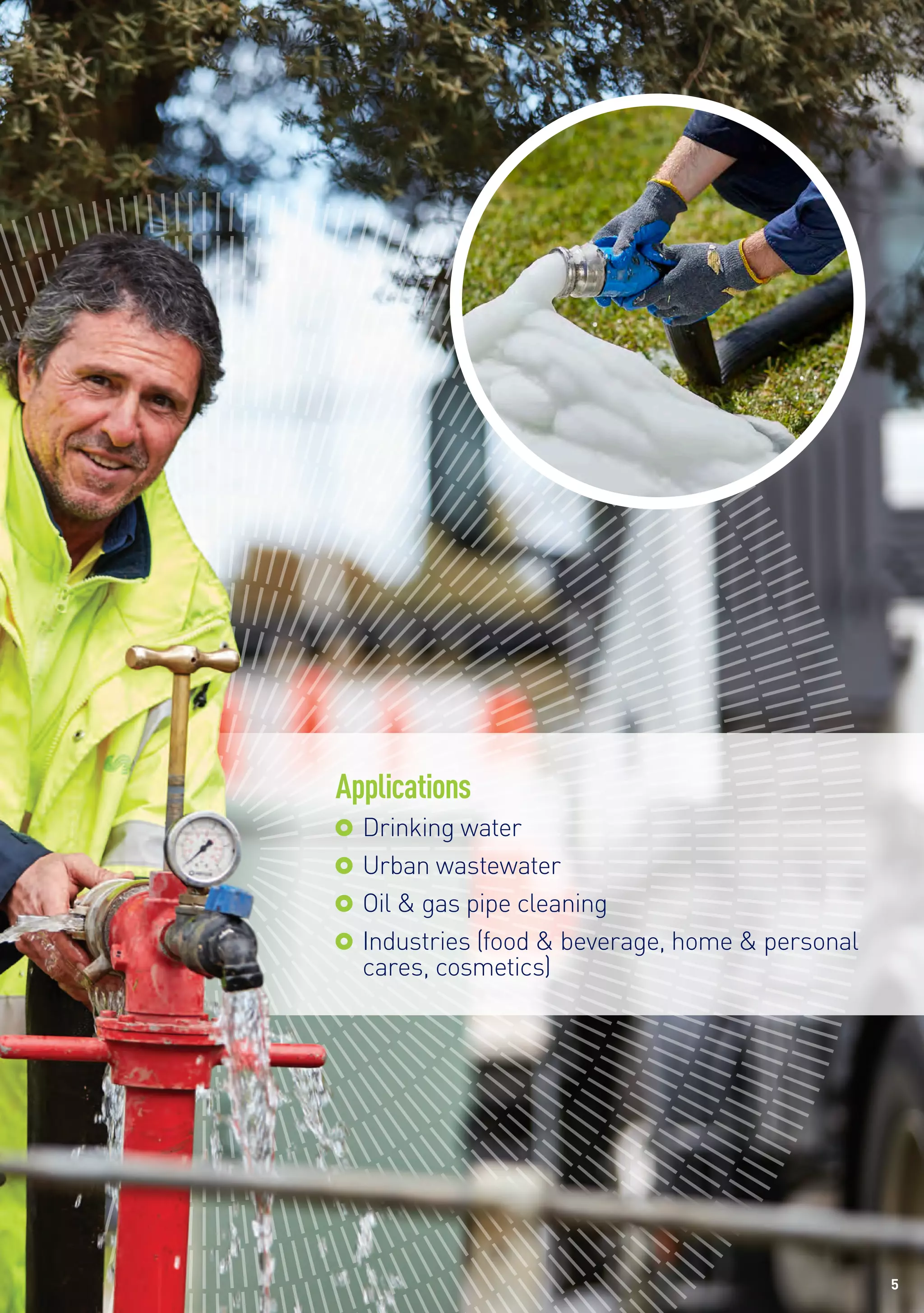
Applications
	Drinking water
	Urban wastewater
	Oil & gas pipe cleaning
	Industries (food & beverage, home & personal
cares, cosmetics)
6
the
advantages
ofice
pigging
6
7
Operationalefficiency
	 Up to 1000 times more
effective at removing
sediment and biofilm than
traditional flushing
	 Ice slurry can flow through
pipes of different diameters,
bends, and pipe fittings
	 Ice pigging takes half the
time normally required by
other techniques
	Pipes are typically only
isolated for 30 to 180
minutes, depending on the
length of pipes to be cleaned
	Exceptionally low-risk. Ice
blockages can be resolved by
simply allowing ice to melt.
	 Ice pigging allows cleaning
of pipes without harmful
chemicals.
	Ice pigging process produces
quantifiable results
Costeffectiveness
	 Ice pigging uses up to 50%
less water than traditional
techniques such as flushing
or swabbing
	Cost-effective, particularly
when considering the
amount of sediment removed
	Ice pigging generally
requires no excavation
Serviceimprovement
	Reduce service disruption
8
drinking
water
pipes
understanding
theicepigging
processfor
Isolatethemain
The main is isolated by
closing valves upstream and
downstream of the section to
be cleaned.
Inserttheice
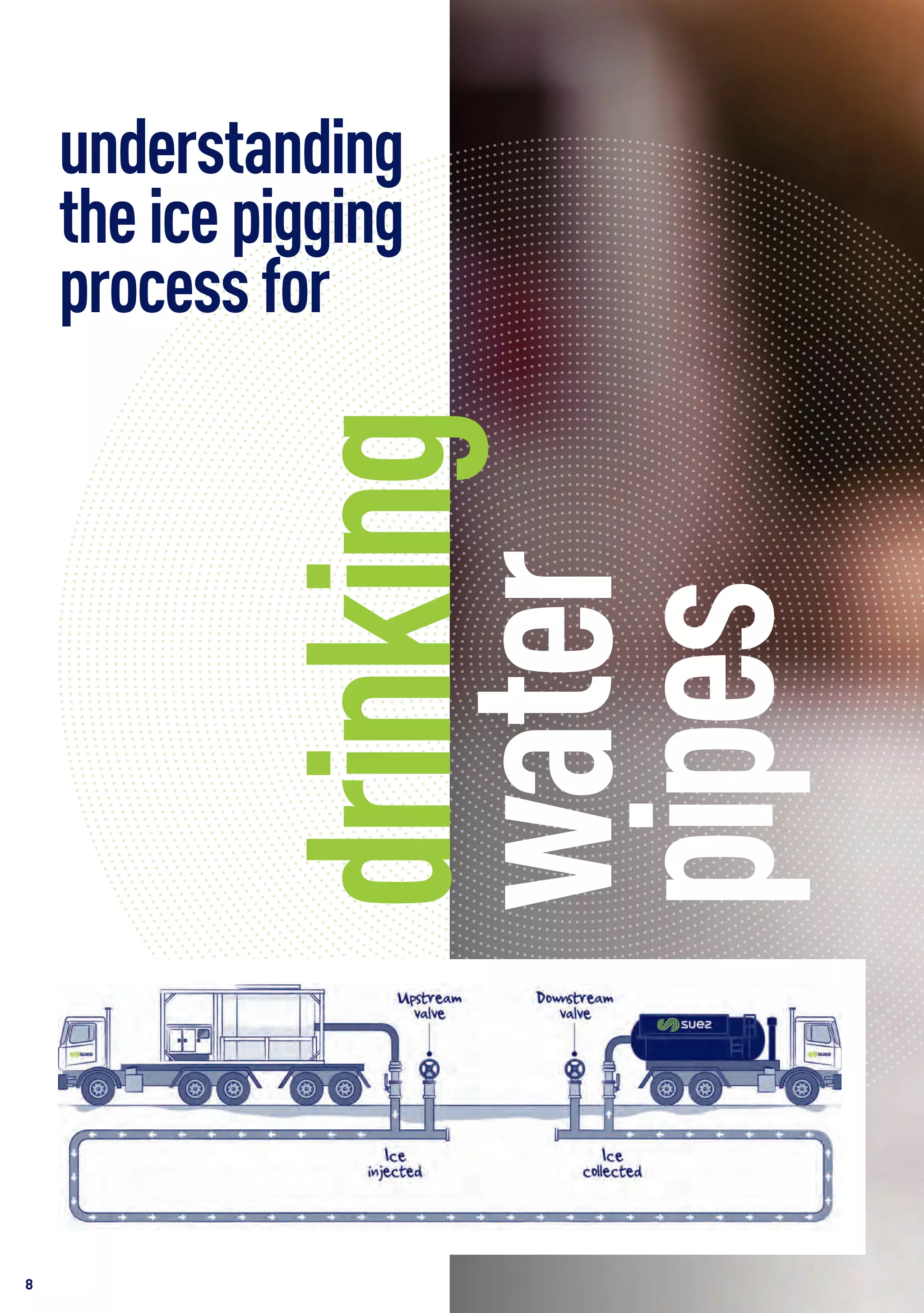
The ice slurry is pumped into the
pipe via a fire hydrant or similar
fitting. The downstream pressure
in the pipe is monitored and
managed at the outlet point via a
fire hydrant. A ‘pig’ of ice
is formed.
Openupstreamvalve
The ice is pushed along the pipe
using the natural pressure in the
network. To do this, the upstream
valve is opened and flow at the
outlet hydrant is used to control
the speed of the ice. As the ice
flows through the pipe it passes
over every surface and collects
sediment and biofilm.
Collecticepig
Water in front of the pig
is discharged normally.
Temperature at the outlet point
warns of the arrival of the ice,
which allows the sediment-laden
ice to be collected separately
using a tanker if required.
Flushandreturn
toservice
The pipe is flushed to the
appropriate standard and
promptly returned to service.
The process is efficient, rapid
and exceptionally low risk.
step1 step2
step3 step4 step5
9
10
urban
wastewater
pipes
understanding
theicepigging
processfor
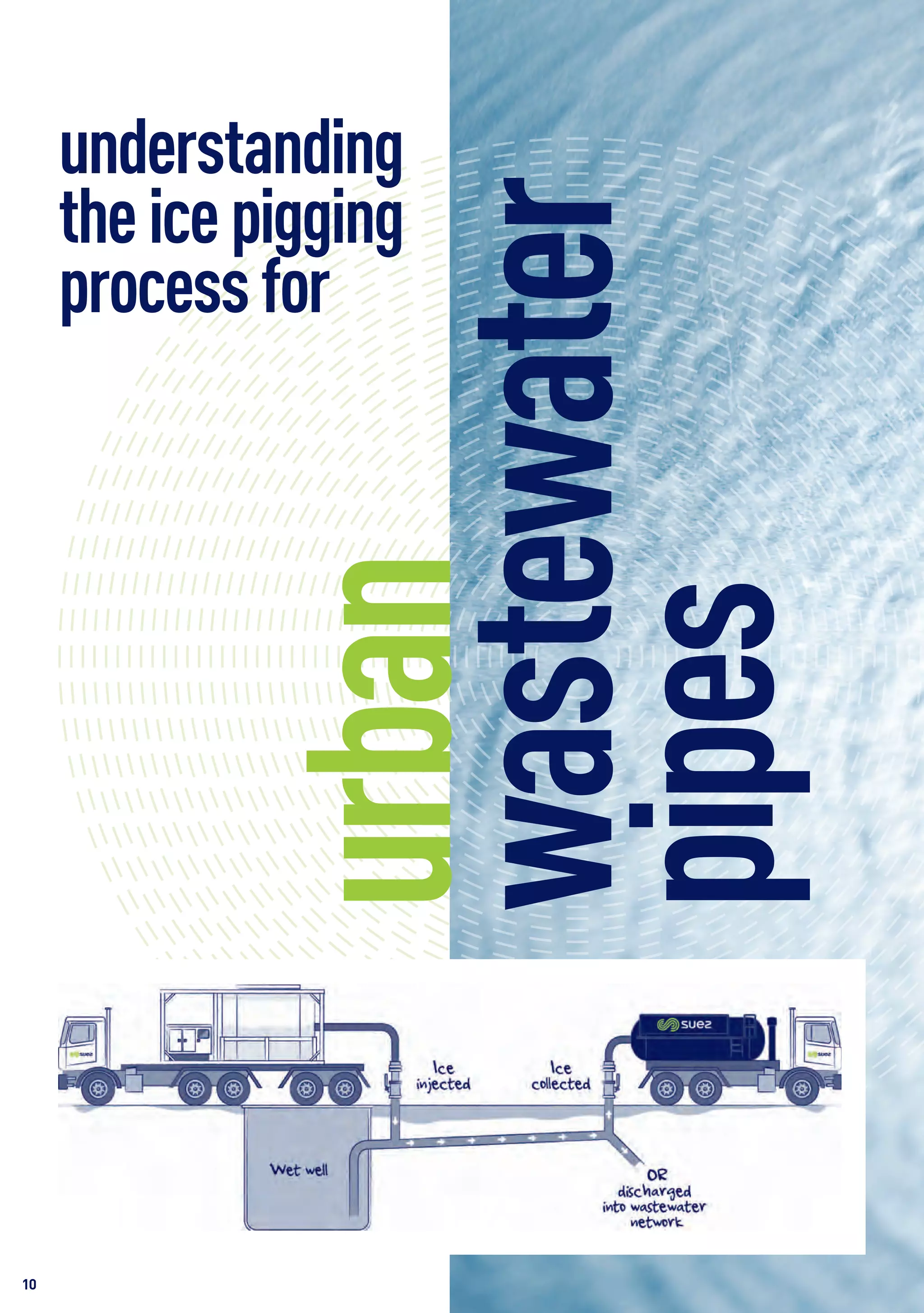
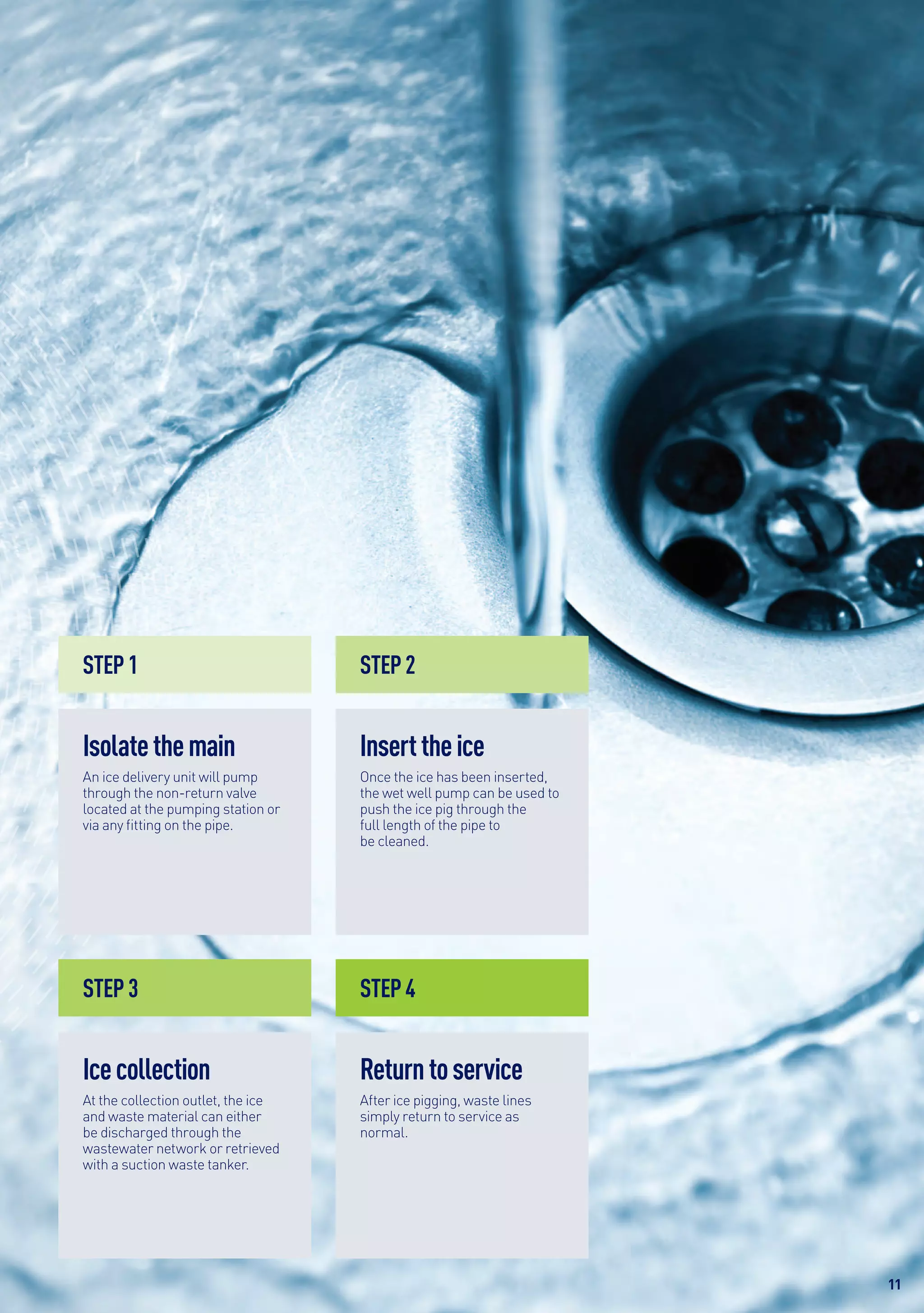
Icecollection
At the collection outlet, the ice
and waste material can either
be discharged through the
wastewater network or retrieved
with a suction waste tanker.
Returntoservice
After ice pigging, waste lines
simply return to service as
normal.
Isolatethemain
An ice delivery unit will pump
through the non-return valve
located at the pumping station or
via any fitting on the pipe.
Inserttheice
Once the ice has been inserted,
the wet well pump can be used to
push the ice pig through the
full length of the pipe to
be cleaned.
step1 step2
step3 step4
11
12
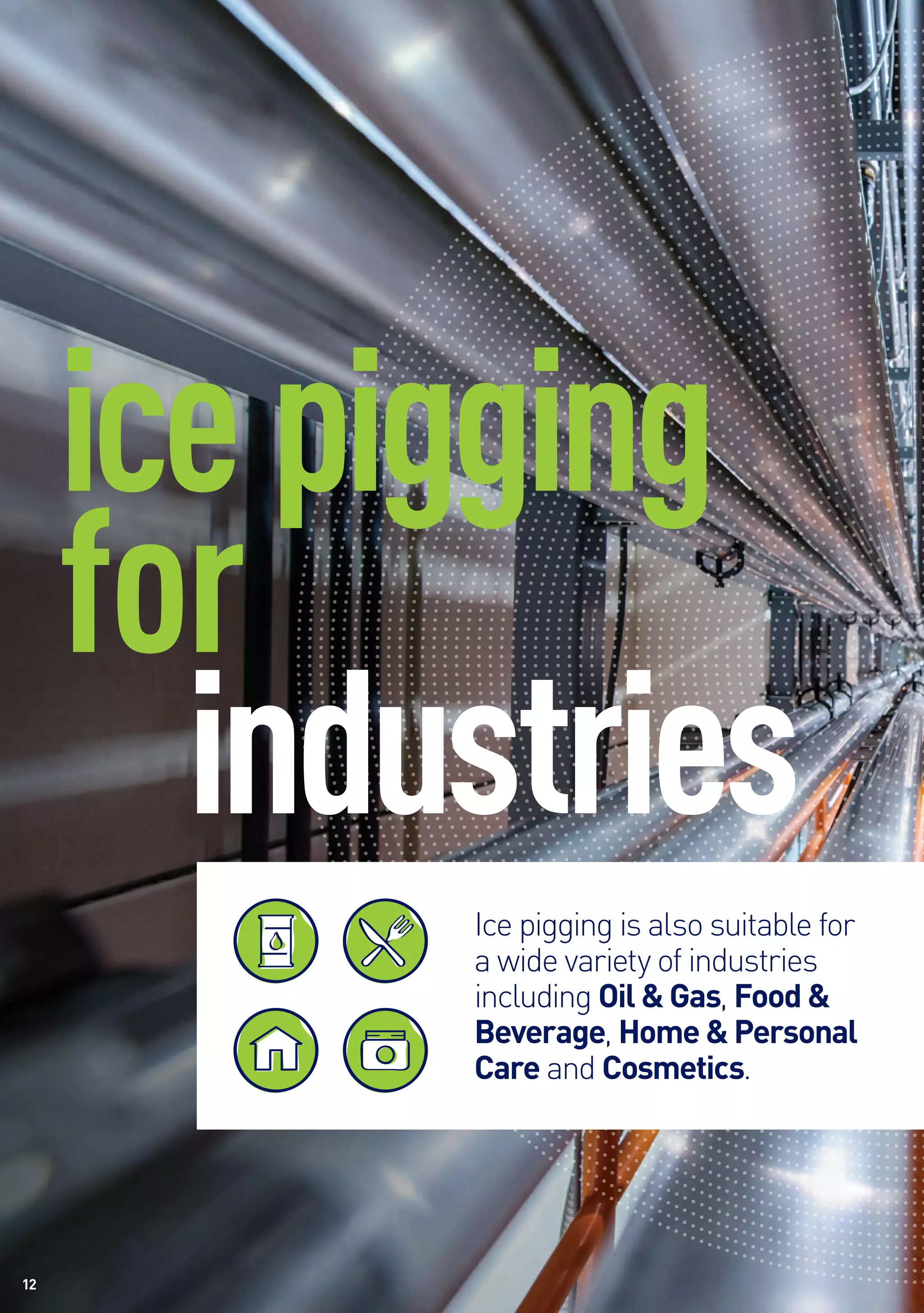
Ice pigging is also suitable for
a wide variety of industries
including Oil & Gas, Food &
Beverage, Home & Personal
Care and Cosmetics.
icepigging
for
industries
12
Contactourlocalteam
formoredetails
Benefits
	 Improved product recovery
	 Faster change-over between products
	 Reduced CIP (clean in place) times
	 Decreased effluent production
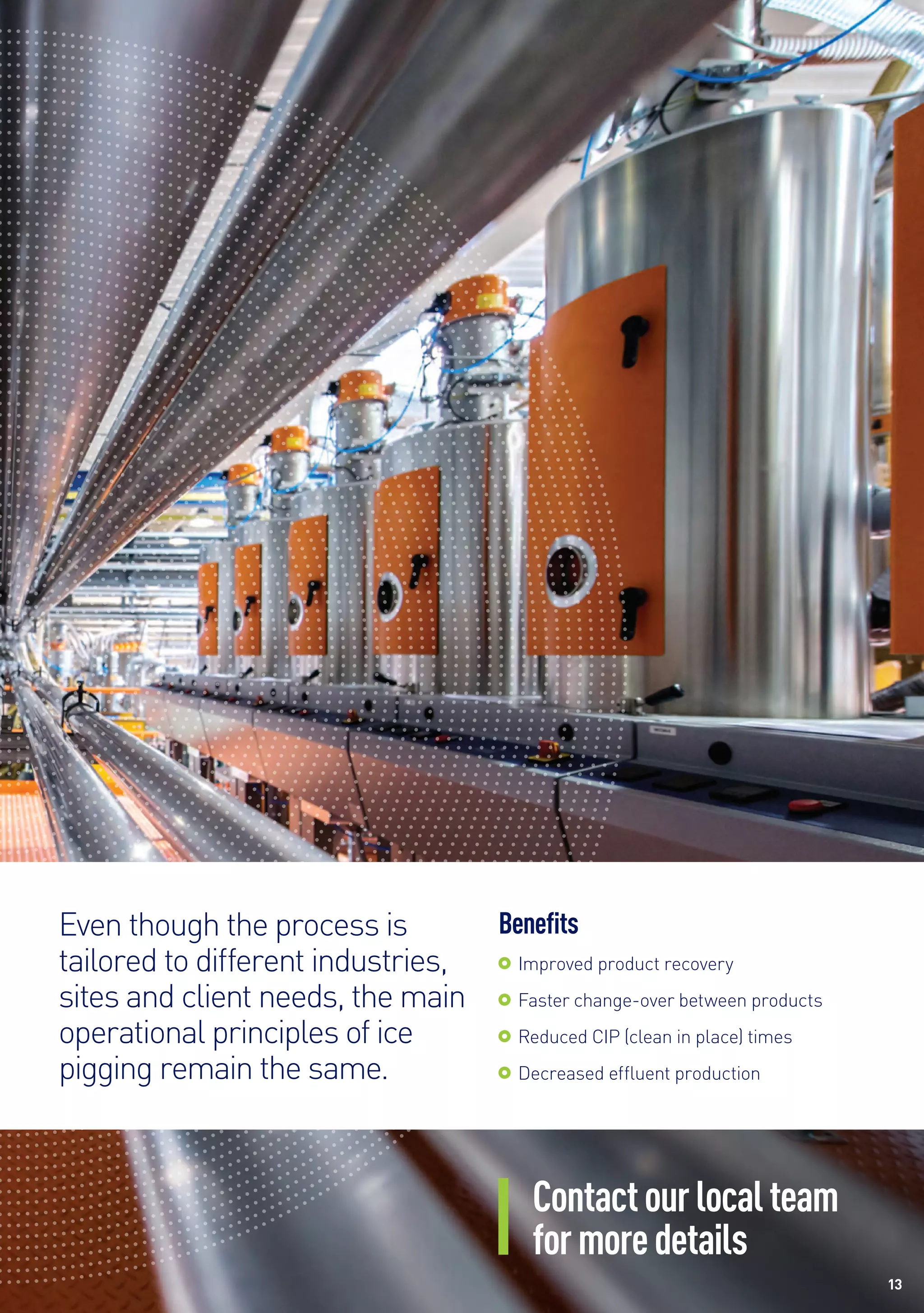
Even though the process is
tailored to different industries,
sites and client needs, the main
operational principles of ice
pigging remain the same.
13
14
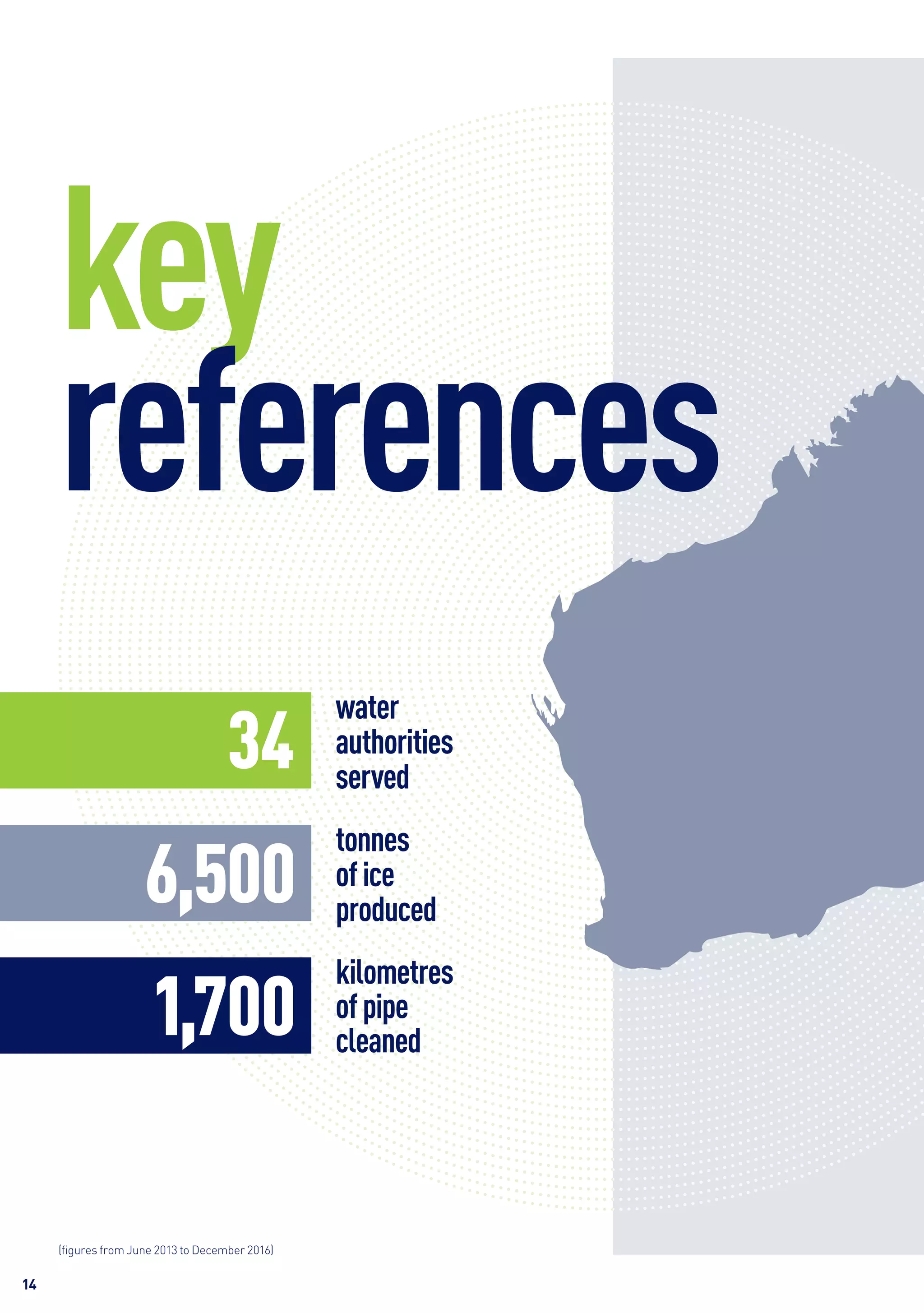
key
references
Long Island
water
authorities
served
tonnes
ofice
produced
kilometres
ofpipe
cleaned
(figures from June 2013 to December 2016)
15
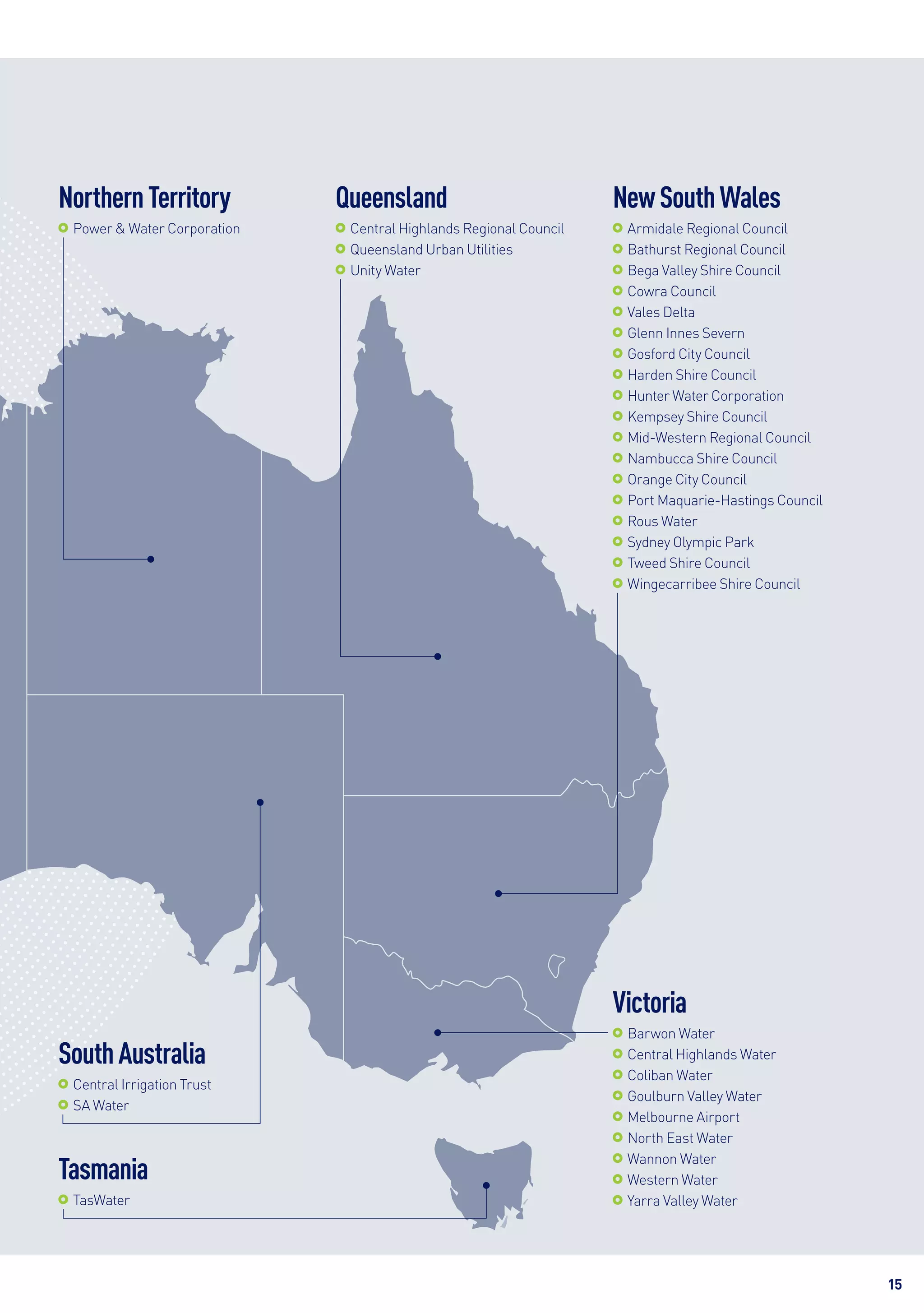
Saida
Queensland
	Central Highlands Regional Council
	Queensland Urban Utilities
	Unity Water
NorthernTerritory
	Power & Water Corporation
SouthAustralia
	Central Irrigation Trust
	SA Water
Tasmania
	TasWater
Victoria
	Barwon Water
	Central Highlands Water
	Coliban Water
	Goulburn Valley Water
	Melbourne Airport
	North East Water
	Wannon Water
	Western Water
	Yarra Valley Water
NewSouthWales
	Armidale Regional Council
	Bathurst Regional Council
	Bega Valley Shire Council
	Cowra Council
	Vales Delta
	Glenn Innes Severn
	Gosford City Council
	Harden Shire Council
	Hunter Water Corporation
	Kempsey Shire Council
	Mid-Western Regional Council
	Nambucca Shire Council
	Orange City Council
	Port Maquarie-Hastings Council
	Rous Water
	Sydney Olympic Park
	Tweed Shire Council
	Wingecarribee Shire Council
16
IMAG02523
Printed on 100% recycled paper created entirely
from post consumer waste, using vegetable
oil based inks and an alcohol-free ISO 14001
certified printing process.
SUEZAustralia&NewZealand
Level 3, 3 Rider Boulevard
RHODES NSW 2138 Australia
State Offices
QUEENSLAND
28 Weyba Street
Banyo QLD 4014
SOUTH AUSTRALIA
133 Cormack Road
Wingfield SA 5013
WESTERN AUSTRALIA
116 Kurnall Road
Welshpool WA 6106

Ice pigging - A sustainable pipe cleaning process

  • 1.
  • 2.
    2 With time, drinkingand wastewater infrastructure can develop issues that impact water quality and network reliability. In drinking water networks, the presence of iron, manganese and biofilms can cause water discolouration and consumer complaints. They may also pose health risks. Iron and manganese can accumulate due to poor filtration at the water treatment stage, or with deterioration of water network infrastructure. Biofilms are biological growths on the internal surface of pipes which typically grow in environments with high manganese or aluminium content, or where the chlorination of water is not possible.
  • 3.
    3 In networks carryingchlorinated or chloraminated water, reactions with biofilms can lead to the creation of TriHaloMethanes (THMs) which may also pose health risks. Cleaning pipes and other infrastructure helps remove sediment, improving water quality and optimising network operations. In wastewater networks, sewage can decrease flow rates causing increased odours, blockages, and, in severe cases, flooding to nearby properties. Cleaning sewer pipes can extend asset life and reduce occurrences of wastewater main failure. To assist water operators in delivering quality water and wastewater services, SUEZ has developed ice pigging, a chemical- free and cost-effective pipe cleaning method.
  • 4.
    4 whatis icepigging? 4 Ice pigging isa pipelinecleaning process in which an ice slurry is pumped into a pipe and forced through under pressure. This process removes sediment and deposits to leavethepipeclean. A semi-solid ice slurry can be applied uniquely because it is pumpable like a liquid, yet also behaves as a solid when a ‘pig’ of ice slurry is formed within a pipe. Ice pigging can be used to clean pipelines ranging from 60-700mm in diameter without excavation of the pipeline. Ice pigging is fast, effective and exceptionally low risk. It also uses significantly less water than most comparable techniques. Ice pigging has been widely adopted across municipalities and industries throughout the world and is widely considered the most cost-effective pipe cleaning method.
  • 5.
    5 Applications Drinking water Urban wastewater Oil& gas pipe cleaning Industries (food & beverage, home & personal cares, cosmetics)
  • 6.
  • 7.
    7 Operationalefficiency Up to1000 times more effective at removing sediment and biofilm than traditional flushing Ice slurry can flow through pipes of different diameters, bends, and pipe fittings Ice pigging takes half the time normally required by other techniques Pipes are typically only isolated for 30 to 180 minutes, depending on the length of pipes to be cleaned Exceptionally low-risk. Ice blockages can be resolved by simply allowing ice to melt. Ice pigging allows cleaning of pipes without harmful chemicals. Ice pigging process produces quantifiable results Costeffectiveness Ice pigging uses up to 50% less water than traditional techniques such as flushing or swabbing Cost-effective, particularly when considering the amount of sediment removed Ice pigging generally requires no excavation Serviceimprovement Reduce service disruption
  • 8.
  • 9.
    Isolatethemain The main isisolated by closing valves upstream and downstream of the section to be cleaned. Inserttheice The ice slurry is pumped into the pipe via a fire hydrant or similar fitting. The downstream pressure in the pipe is monitored and managed at the outlet point via a fire hydrant. A ‘pig’ of ice is formed. Openupstreamvalve The ice is pushed along the pipe using the natural pressure in the network. To do this, the upstream valve is opened and flow at the outlet hydrant is used to control the speed of the ice. As the ice flows through the pipe it passes over every surface and collects sediment and biofilm. Collecticepig Water in front of the pig is discharged normally. Temperature at the outlet point warns of the arrival of the ice, which allows the sediment-laden ice to be collected separately using a tanker if required. Flushandreturn toservice The pipe is flushed to the appropriate standard and promptly returned to service. The process is efficient, rapid and exceptionally low risk. step1 step2 step3 step4 step5 9
  • 10.
  • 11.
    Icecollection At the collectionoutlet, the ice and waste material can either be discharged through the wastewater network or retrieved with a suction waste tanker. Returntoservice After ice pigging, waste lines simply return to service as normal. Isolatethemain An ice delivery unit will pump through the non-return valve located at the pumping station or via any fitting on the pipe. Inserttheice Once the ice has been inserted, the wet well pump can be used to push the ice pig through the full length of the pipe to be cleaned. step1 step2 step3 step4 11
  • 12.
    12 Ice pigging isalso suitable for a wide variety of industries including Oil & Gas, Food & Beverage, Home & Personal Care and Cosmetics. icepigging for industries 12
  • 13.
    Contactourlocalteam formoredetails Benefits Improved productrecovery Faster change-over between products Reduced CIP (clean in place) times Decreased effluent production Even though the process is tailored to different industries, sites and client needs, the main operational principles of ice pigging remain the same. 13
  • 14.
  • 15.
    15 Saida Queensland Central Highlands RegionalCouncil Queensland Urban Utilities Unity Water NorthernTerritory Power & Water Corporation SouthAustralia Central Irrigation Trust SA Water Tasmania TasWater Victoria Barwon Water Central Highlands Water Coliban Water Goulburn Valley Water Melbourne Airport North East Water Wannon Water Western Water Yarra Valley Water NewSouthWales Armidale Regional Council Bathurst Regional Council Bega Valley Shire Council Cowra Council Vales Delta Glenn Innes Severn Gosford City Council Harden Shire Council Hunter Water Corporation Kempsey Shire Council Mid-Western Regional Council Nambucca Shire Council Orange City Council Port Maquarie-Hastings Council Rous Water Sydney Olympic Park Tweed Shire Council Wingecarribee Shire Council
  • 16.
    16 IMAG02523 Printed on 100%recycled paper created entirely from post consumer waste, using vegetable oil based inks and an alcohol-free ISO 14001 certified printing process. SUEZAustralia&NewZealand Level 3, 3 Rider Boulevard RHODES NSW 2138 Australia State Offices QUEENSLAND 28 Weyba Street Banyo QLD 4014 SOUTH AUSTRALIA 133 Cormack Road Wingfield SA 5013 WESTERN AUSTRALIA 116 Kurnall Road Welshpool WA 6106