

Impact on Providers
     Presented By: Superia Inc.
Agenda


• ICD 10 Compliance-An Introduction
• ICD 10 Compliance-How it will impact the
  providers?
• How to comply with ICD 10?
• Superia ICD 10 Compliance Service
• Q&A session
ICD 10-An Introduction


    •    ICD-10 CM & PCS is an upgrade of the US-developed
         clinical modification (ICD-9-CM) of Diagnosis and
         Procedure Codes, first adopted in 1979.
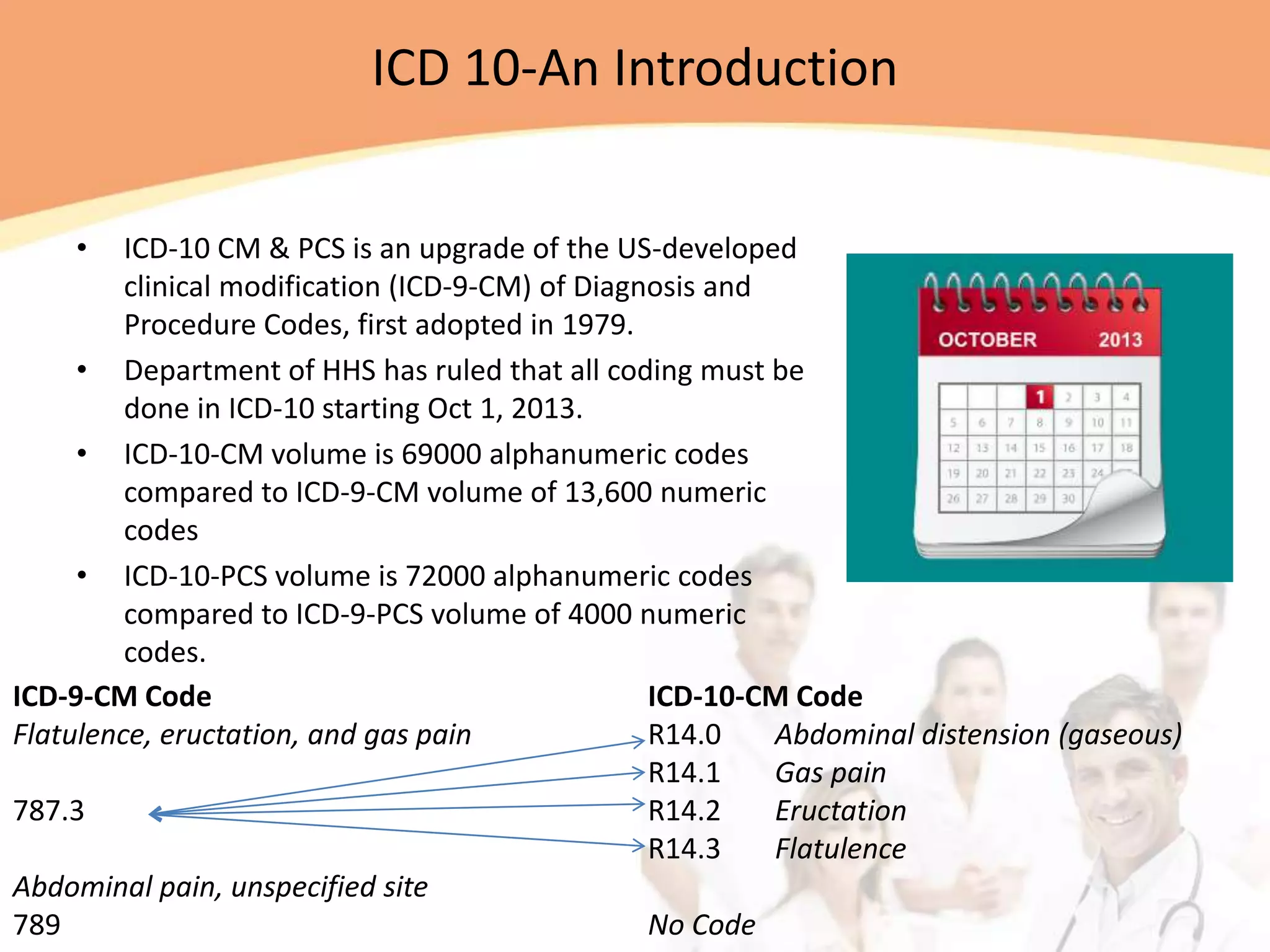
     • Department of HHS has ruled that all coding must be
         done in ICD-10 starting Oct 1, 2013.
     • ICD-10-CM volume is 69000 alphanumeric codes
         compared to ICD-9-CM volume of 13,600 numeric
         codes
     • ICD-10-PCS volume is 72000 alphanumeric codes
         compared to ICD-9-PCS volume of 4000 numeric
         codes.
ICD-9-CM Code                                     ICD-10-CM Code
Flatulence, eructation, and gas pain              R14.0    Abdominal distension (gaseous)
                                                  R14.1    Gas pain
787.3                                             R14.2    Eructation
                                                  R14.3    Flatulence
Abdominal pain, unspecified site
789                                               No Code
ICD 10 Compliance-How it will impact the
providers?

 •   Complexity and volume (5 times) in the coding will
     demand changes to existing “Superbills”.
 •   Practice management Systems, Insurance Coverage
     Systems, Billing Systems will have to changed
 •   An inability to comply with implementation may
     result in massive fines and rejected claims
 •   According to Delloite, significant changes in
     reimbursement patterns may impact provider cash
     flow for a considerable period of time.
 •   Significant changes to Health Plans, documentation
     requirements, coverage considerations.
 •   Across-the-board training to clinical and admin staffs
     for learning the new codes and relearning of code
     relationships.
How to comply with ICD-10?

 •   Evaluating all clinical, financial and business systems
     that currently use ICD-9 codes.
 •   Overall Risk and Impact Assessment.
 •   Gap Analysis between current and future state.
 •   Compliance Project Plan
 •   Identification of capital cost, one time cost and
     recurring cost and budget for it.
 •   Compliance Implementation
 •   Conduct internal testing
 •   Payer system integration
 •   Conduct external testing
 •   Start Parallel processing
 •   Complete Transition
How to comply with ICD-10?-Suggested timeline by
CMS

 Phase 1: Implementation plan development and impact
    assessment.
 Timeline: 1st qtr 2009 – 2nd qtr 2011

 Phase 2: Implementation preparation
 Timeline:1st qtr 2011 – 2nd qtr 2013

 Phase 3: “Go live” preparation
 Timeline: 1st qtr 2013 – 3rd qtr 2013

 Phase 4: Post-implementation Follow-Up
 Timeline: 4th qtr 2013 – 4th qtr 2014
Superia ICD-10 Compliance Service

 •   Assessment and Planning Services- A combination of
     tools, processes and services for ICD-10 assessment
     and planning
 •   Impact Analysis- An automated tool will provide
     comprehensive assessment of home grown
     applications
 •   Remediation Service- Includes a dual remediation
     approach with application remodeling and
     enhancement, data migration and post-
     implementation support and maintenance
 •   Testing-Complete manual and automated testing to
     ensure 100% implementation.
 •   Implementation Translator-Tool to help your
     organization to do parallel processing.
 •   Training-Training to help your staff in learning the
     new codes and it’s usage in the new system
ICD-10 Q&A Session
Thank You


            Superia Inc.
            info@superiainc.com

Icd 10 Compliance Impact on Providers

  • 1.
    Impact on Providers Presented By: Superia Inc.
  • 2.
    Agenda • ICD 10Compliance-An Introduction • ICD 10 Compliance-How it will impact the providers? • How to comply with ICD 10? • Superia ICD 10 Compliance Service • Q&A session
  • 3.
    ICD 10-An Introduction • ICD-10 CM & PCS is an upgrade of the US-developed clinical modification (ICD-9-CM) of Diagnosis and Procedure Codes, first adopted in 1979. • Department of HHS has ruled that all coding must be done in ICD-10 starting Oct 1, 2013. • ICD-10-CM volume is 69000 alphanumeric codes compared to ICD-9-CM volume of 13,600 numeric codes • ICD-10-PCS volume is 72000 alphanumeric codes compared to ICD-9-PCS volume of 4000 numeric codes. ICD-9-CM Code ICD-10-CM Code Flatulence, eructation, and gas pain R14.0 Abdominal distension (gaseous) R14.1 Gas pain 787.3 R14.2 Eructation R14.3 Flatulence Abdominal pain, unspecified site 789 No Code
  • 4.
    ICD 10 Compliance-Howit will impact the providers? • Complexity and volume (5 times) in the coding will demand changes to existing “Superbills”. • Practice management Systems, Insurance Coverage Systems, Billing Systems will have to changed • An inability to comply with implementation may result in massive fines and rejected claims • According to Delloite, significant changes in reimbursement patterns may impact provider cash flow for a considerable period of time. • Significant changes to Health Plans, documentation requirements, coverage considerations. • Across-the-board training to clinical and admin staffs for learning the new codes and relearning of code relationships.
  • 5.
    How to complywith ICD-10? • Evaluating all clinical, financial and business systems that currently use ICD-9 codes. • Overall Risk and Impact Assessment. • Gap Analysis between current and future state. • Compliance Project Plan • Identification of capital cost, one time cost and recurring cost and budget for it. • Compliance Implementation • Conduct internal testing • Payer system integration • Conduct external testing • Start Parallel processing • Complete Transition
  • 6.
    How to complywith ICD-10?-Suggested timeline by CMS Phase 1: Implementation plan development and impact assessment. Timeline: 1st qtr 2009 – 2nd qtr 2011 Phase 2: Implementation preparation Timeline:1st qtr 2011 – 2nd qtr 2013 Phase 3: “Go live” preparation Timeline: 1st qtr 2013 – 3rd qtr 2013 Phase 4: Post-implementation Follow-Up Timeline: 4th qtr 2013 – 4th qtr 2014
  • 7.
    Superia ICD-10 ComplianceService • Assessment and Planning Services- A combination of tools, processes and services for ICD-10 assessment and planning • Impact Analysis- An automated tool will provide comprehensive assessment of home grown applications • Remediation Service- Includes a dual remediation approach with application remodeling and enhancement, data migration and post- implementation support and maintenance • Testing-Complete manual and automated testing to ensure 100% implementation. • Implementation Translator-Tool to help your organization to do parallel processing. • Training-Training to help your staff in learning the new codes and it’s usage in the new system
  • 8.
  • 9.
    Thank You Superia Inc. info@superiainc.com