HYPERTENSION
REDEFINED
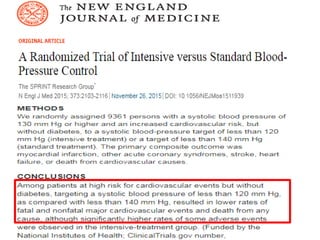
130 is the new high!!!!
Dr. Vinay Tuteja
SMS medical college
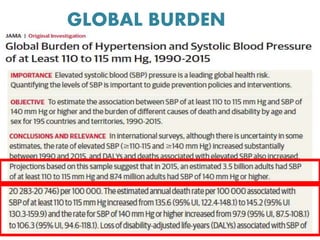
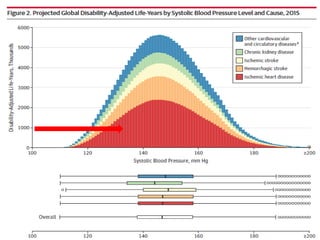
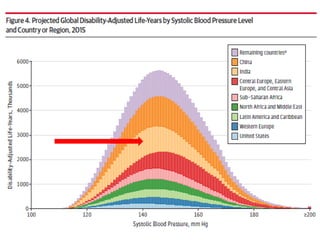
GLOBAL BURDEN
 In the Framingham Heart Study, approximately
90% of adults free of hypertension at age 55 or 65
years developed hypertension during their
lifetimes 4.
 All of these estimates were based on use of the
140/90– mm Hg cutpoint for recognition of
hypertension and would have been higher had the
130/80–mm Hg cutpoint been used.
4. Vasan RS, Beiser A, Seshadri S, et al. Residual lifetime risk for developing hypertension in middle-aged women and men: the Framingham Heart Study. JAMA.
2002;287:1003-10.
LIFETIME RISK OF HYPERTENSION
2017 HIGH BLOOD PRESSURE
PRACTICE GUIDELINES
 It is an update of the NHLBI publication, “The
Seventh Report of the Joint National Committee on
Prevention, Detection, Evaluation and Treatment of
High Blood Pressure” (JNC 7)1.
 It incorporates new information from studies of
office-based BP-related risk of CVD, ambulatory
blood pressure monitoring (ABPM), home blood
pressure monitoring (HBPM), telemedicine, and
various other areas.
1.Chobanian AV, Bakris GL, Black HR, et al; the National High Blood Pressure Education Program Coordinating Committee. Seventh Report of the Joint
National Committee on Prevention, Detection, Evaluation, and Treatment of High Blood Pressure. Hypertension. 2003;42:1206-52.
 The new guidelines were developed by the American
Heart Association, American College of Cardiology and
nine other health professional organizations.
 They were written by a panel of 21 scientists and
health experts who reviewed more than 900 published
studies.2
2.Whelton PK, et al. 2017 High Blood Pressure Clinical Practice Guideline
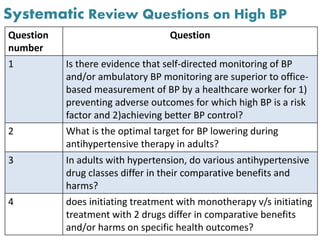
Systematic Review Questions on High BP
Question
number
Question
1 Is there evidence that self-directed monitoring of BP
and/or ambulatory BP monitoring are superior to office-
based measurement of BP by a healthcare worker for 1)
preventing adverse outcomes for which high BP is a risk
factor and 2)achieving better BP control?
2 What is the optimal target for BP lowering during
antihypertensive therapy in adults?
3 In adults with hypertension, do various antihypertensive
drug classes differ in their comparative benefits and
harms?
4 does initiating treatment with monotherapy v/s initiating
treatment with 2 drugs differ in comparative benefits
and/or harms on specific health outcomes?
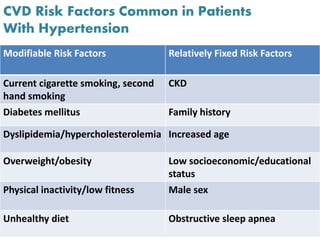
CVD Risk Factors Common in Patients
With Hypertension
Modifiable Risk Factors Relatively Fixed Risk Factors
Current cigarette smoking, second
hand smoking
CKD
Diabetes mellitus Family history
Dyslipidemia/hypercholesterolemia Increased age
Overweight/obesity Low socioeconomic/educational
status
Physical inactivity/low fitness Male sex
Unhealthy diet Obstructive sleep apnea
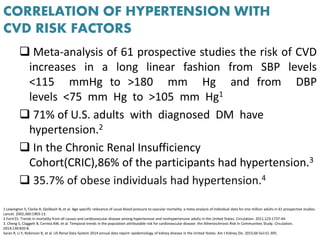
CORRELATION OF HYPERTENSION WITH
CVD RISK FACTORS
 Meta-analysis of 61 prospective studies the risk of CVD
increases in a long linear fashion from SBP levels
<115 mmHg to >180 mm Hg and from DBP
levels <75 mm Hg to >105 mm Hg1
 71% of U.S. adults with diagnosed DM have
hypertension.2
 In the Chronic Renal Insufficiency
Cohort(CRIC),86% of the participants had hypertension.3
 35.7% of obese individuals had hypertension.4
1.Lewington S, Clarke R, Qizilbash N, et al. Age-specific relevance of usual blood pressure to vascular mortality: a meta-analysis of individual data for one million adults in 61 prospective studies.
Lancet. 2002;360:1903-13.
2.Ford ES. Trends in mortality from all causes and cardiovascular disease among hypertensive and nonhypertensive adults in the United States. Circulation. 2011;123:1737-44.
3. Cheng S, Claggett B, Correia AW, et al. Temporal trends in the population attributable risk for cardiovascular disease: the Atherosclerosis Risk in Communities Study. Circulation.
2014;130:820-8.
Saran R, Li Y, Robinson B, et al. US Renal Data System 2014 annual data report: epidemiology of kidney disease in the United States. Am J Kidney Dis. 2015;66 Svii:S1-305.
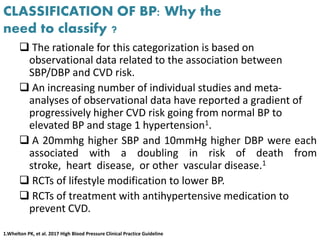
CLASSIFICATION OF BP: Why the
need to classify ?
 The rationale for this categorization is based on
observational data related to the association between
SBP/DBP and CVD risk.
 An increasing number of individual studies and meta-
analyses of observational data have reported a gradient of
progressively higher CVD risk going from normal BP to
elevated BP and stage 1 hypertension1.
 A 20mmhg higher SBP and 10mmHg higher DBP were each
associated with a doubling in risk of death from
stroke, heart disease, or other vascular disease.1
 RCTs of lifestyle modification to lower BP.
 RCTs of treatment with antihypertensive medication to
prevent CVD.
1.Whelton PK, et al. 2017 High Blood Pressure Clinical Practice Guideline
COMPARISON WITH
JNC 7
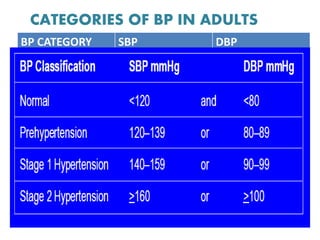
CATEGORIES OF BP IN ADULTS
BP CATEGORY SBP DBP
NORMAL <12Ommhg <80mmhg
ELEVATED BP 120-130mmhg <80mmhg
HYPERTENSION
STAGE 1 130-139mmhg 80-89mmhg
STAGE 2 >140mmhg >90mmhg
PREVALENCE OF HYPERTENSION WITH
NEW GUIDELINES
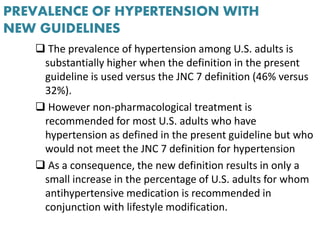
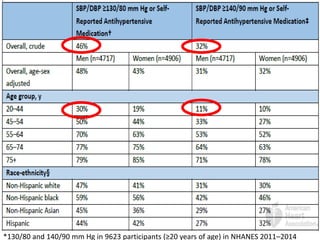
 The prevalence of hypertension among U.S. adults is
substantially higher when the definition in the present
guideline is used versus the JNC 7 definition (46% versus
32%).
 However non-pharmacological treatment is
recommended for most U.S. adults who have
hypertension as defined in the present guideline but who
would not meet the JNC 7 definition for hypertension
 As a consequence, the new definition results in only a
small increase in the percentage of U.S. adults for whom
antihypertensive medication is recommended in
conjunction with lifestyle modification.
*130/80 and 140/90 mm Hg in 9623 participants (≥20 years of age) in NHANES 2011–2014
Are we measuring it properly
Accurate measurement and recording of BP are
essential to categorize level of BP, ascertain BP-
related CVD risk, and guide management of high
BP
Common errors in clinical practice that can lead
to inaccurate estimation of BP include failure to
allow for a rest period and/or talking with the
patient during or immediately before the
recording, improper patient positioning (e.g.,
sitting or lying on an examination table), rapid cuff
deflation and reliance on BPs measured at a single
occasion.
?
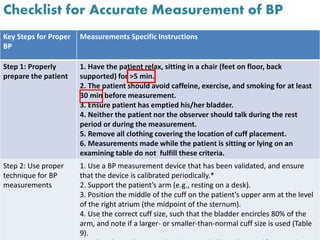
Checklist for Accurate Measurement of BP
Key Steps for Proper
BP
Measurements Specific Instructions
Step 1: Properly
prepare the patient
1. Have the patient relax, sitting in a chair (feet on floor, back
supported) for >5 min.
2. The patient should avoid caffeine, exercise, and smoking for at least
30 min before measurement.
3. Ensure patient has emptied his/her bladder.
4. Neither the patient nor the observer should talk during the rest
period or during the measurement.
5. Remove all clothing covering the location of cuff placement.
6. Measurements made while the patient is sitting or lying on an
examining table do not fulfill these criteria.
Step 2: Use proper
technique for BP
measurements
1. Use a BP measurement device that has been validated, and ensure
that the device is calibrated periodically.*
2. Support the patient’s arm (e.g., resting on a desk).
3. Position the middle of the cuff on the patient’s upper arm at the level
of the right atrium (the midpoint of the sternum).
4. Use the correct cuff size, such that the bladder encircles 80% of the
arm, and note if a larger- or smaller-than-normal cuff size is used (Table
9).
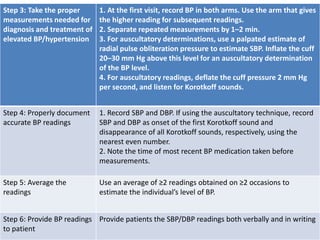
Step 3: Take the proper
measurements needed for
diagnosis and treatment of
elevated BP/hypertension
1. At the first visit, record BP in both arms. Use the arm that gives
the higher reading for subsequent readings.
2. Separate repeated measurements by 1–2 min.
3. For auscultatory determinations, use a palpated estimate of
radial pulse obliteration pressure to estimate SBP. Inflate the cuff
20–30 mm Hg above this level for an auscultatory determination
of the BP level.
4. For auscultatory readings, deflate the cuff pressure 2 mm Hg
per second, and listen for Korotkoff sounds.
Step 4: Properly document
accurate BP readings
1. Record SBP and DBP. If using the auscultatory technique, record
SBP and DBP as onset of the first Korotkoff sound and
disappearance of all Korotkoff sounds, respectively, using the
nearest even number.
2. Note the time of most recent BP medication taken before
measurements.
Step 5: Average the
readings
Use an average of ≥2 readings obtained on ≥2 occasions to
estimate the individual’s level of BP.
Step 6: Provide BP readings
to patient
Provide patients the SBP/DBP readings both verbally and in writing
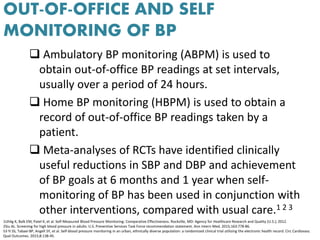
OUT-OF-OFFICE AND SELF
MONITORING OF BP
 Ambulatory BP monitoring (ABPM) is used to
obtain out-of-office BP readings at set intervals,
usually over a period of 24 hours.
 Home BP monitoring (HBPM) is used to obtain a
record of out-of-office BP readings taken by a
patient.
 Meta-analyses of RCTs have identified clinically
useful reductions in SBP and DBP and achievement
of BP goals at 6 months and 1 year when self-
monitoring of BP has been used in conjunction with
other interventions, compared with usual care.1 2 3
1Uhlig K, Balk EM, Patel K, et al. Self-Measured Blood Pressure Monitoring: Comparative Effectiveness. Rockville, MD: Agency for Healthcare Research and Quality (U.S.); 2012.
2Siu AL. Screening for high blood pressure in adults: U.S. Preventive Services Task Force recommendation statement. Ann Intern Med. 2015;163:778-86.
53 Yi SS, Tabaei BP, Angell SY, et al. Self-blood pressure monitoring in an urban, ethnically diverse population: a randomized clinical trial utilizing the electronic health record. Circ Cardiovasc
Qual Outcomes. 2015;8:138-45.
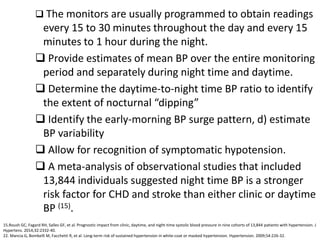
 The monitors are usually programmed to obtain readings
every 15 to 30 minutes throughout the day and every 15
minutes to 1 hour during the night.
 Provide estimates of mean BP over the entire monitoring
period and separately during night time and daytime.
 Determine the daytime-to-night time BP ratio to identify
the extent of nocturnal “dipping”
 Identify the early-morning BP surge pattern, d) estimate
BP variability
 Allow for recognition of symptomatic hypotension.
 A meta-analysis of observational studies that included
13,844 individuals suggested night time BP is a stronger
risk factor for CHD and stroke than either clinic or daytime
BP (15).
15.Roush GC, Fagard RH, Salles GF, et al. Prognostic impact from clinic, daytime, and night-time systolic blood pressure in nine cohorts of 13,844 patients with hypertension. J
Hypertens. 2014;32:2332-40.
22. Mancia G, Bombelli M, Facchetti R, et al. Long-term risk of sustained hypertension in white-coat or masked hypertension. Hypertension. 2009;54:226-32.
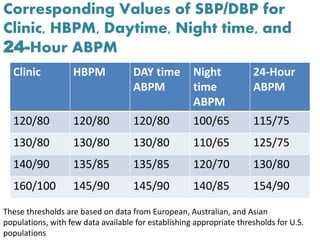
Corresponding Values of SBP/DBP for
Clinic, HBPM, Daytime, Night time, and
24-Hour ABPM
Clinic HBPM DAY time
ABPM
Night
time
ABPM
24-Hour
ABPM
120/80 120/80 120/80 100/65 115/75
130/80 130/80 130/80 110/65 125/75
140/90 135/85 135/85 120/70 130/80
160/100 145/90 145/90 140/85 154/90
These thresholds are based on data from European, Australian, and Asian
populations, with few data available for establishing appropriate thresholds for U.S.
populations
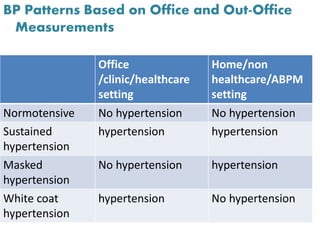
BP Patterns Based on Office and Out-Office
Measurements
Office
/clinic/healthcare
setting
Home/non
healthcare/ABPM
setting
Normotensive No hypertension No hypertension
Sustained
hypertension
hypertension hypertension
Masked
hypertension
No hypertension hypertension
White coat
hypertension
hypertension No hypertension
 The prevalence of masked hypertension varies
from 10% to 26% (mean 13%) in population-based
surveys and from 14% to 30% in normotensive clinic
populations.
 The risk of CVD and all-cause mortality in
persons with masked hypertension is similar to that
noted in those with sustained hypertension and
about twice as high as the corresponding risk in
their normotensive counterparts .
Clinical situations in which ambulatory
blood pressure monitoring may be
helpful:
 Suspected white-coat hypertension in patients with
hypertension and no target organ damage
 Hypotensive symptoms with antihypertensive
medication
 Episodic hypertension
Autonomic dysfunction
Detection of White Coat effect and
masked Hypertension in Patients on drug
therapy
Detection of White Coat and masked
hypertension in Patients Not on Drug Therapy
Telehealth Interventions to Improve
Hypertension Control
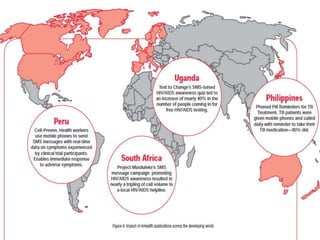
 Telehealth strategies includes telemedicine, digital
health (“eHealth”), and mobile computing and
communication technologies (“mHealth”).
These are new and innovative tools to allow patients to
be connected to services which include health
information on demand, health record management, and
the remote, real-time monitoring of chronic conditions
such as diabetes, asthma, and hypertension.
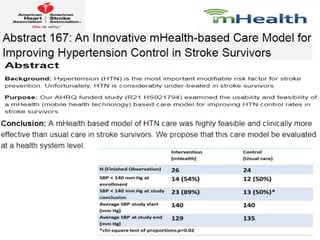
 mHealth interventions show promise in reducing SBP in
patients with hypertension.
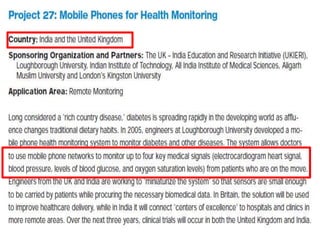
The Partnership has three core commitments:
 To support the use of rapid response mobile
telecommunications to aid disaster relief.
 To develop health data systems that improve access
to health data thereby helping to combat disease.
 To promote research and innovative initiatives using
technology as an agent and tool for international
development.
CAUSES OF HYPERTENSION
Genetic predisposition
 Hypertension is a complex polygenic disorder in which many
genes or gene combinations influence BP.
 Although several monogenic forms of hypertension have
been identified, such as glucocorticoid-remediable
aldosteronism, Liddle’s syndrome, Gordon’s syndrome, and
others in which single-gene mutations fully explain the
pathophysiology of hypertension, these disorders are rare.
 Genetic variants contributing to BP and hypertension
includes more than 25 rare mutations and 120 single-
nucleotide polymorphisms.
Environmental Risk Factors
Overweight and Obesity
 There is a direct relationship between overweight/obesity
and hypertension.
The relationship with BP is even stronger for waist-to-hip
ratio.
Attributable risk estimates from the Nurses Health Study
suggest that obesity may be responsible for about 40% of
hypertension.
In the Framingham Offspring Study, the corresponding
estimates were even higher (78% in men and 65% in
women)
Sodium Intake
 Sodium intake is positively associated with BP.
 Excessive consumption of sodium is independently
associated with an increased risk of stroke.
 Salt sensitivity is a quantitative trait in which an increase
in sodium load disproportionately increases BP.
 Salt sensitivity is especially common in blacks, older
adults, and those with a higher level of BP or
comorbidities such as CKD, DM.
 Standard DASH diet: You can consume up to 2,300
milligrams (mg) of sodium a day.
 Lower sodium DASH diet: You can consume up to 1,500
mg of sodium a day.
 The American Heart Association recommends 1,500 mg a
day of sodium as an upper limit for all adult.
Potassium
Potassium intake is inversely related to BP It is also
inversely related to stroke lower sodium–potassium
ratio being associated with a lower level of BP
Physical fitness
Alcohol
Childhood Risk Factors and BP Tracking
 BP distribution in the general population increases
with age.
 Several factors, including genetic factors and
development of obesity, increase the likelihood that a
high childhood BP will lead to future hypertension.
 Premature birth is associated with a 4–mm Hg
higher SBP and a 3–mm Hg higher DBP in adulthood,
with somewhat larger effects in women than in men.
 Low birth weight from other causes also contributes
to higher BP in later life (4).
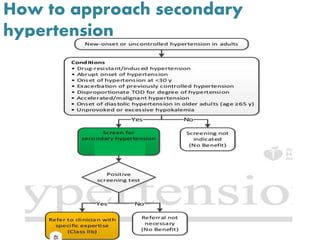
How to approach secondary
hypertension
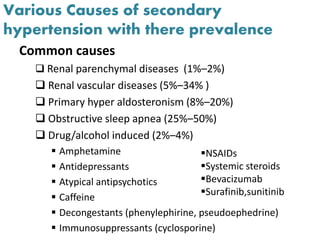
Various Causes of secondary
hypertension with there prevalence
Common causes
 Renal parenchymal diseases (1%–2%)
 Renal vascular diseases (5%–34% )
 Primary hyper aldosteronism (8%–20%)
 Obstructive sleep apnea (25%–50%)
 Drug/alcohol induced (2%–4%)
 Amphetamine
 Antidepressants
 Atypical antipsychotics
 Caffeine
 Decongestants (phenylephirine, pseudoephedrine)
 Immunosuppressants (cyclosporine)
NSAIDs
Systemic steroids
Bevacizumab
Surafinib,sunitinib
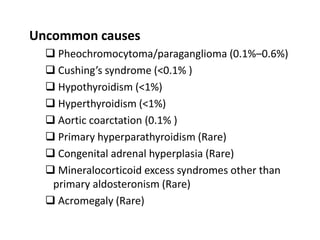
Uncommon causes
 Pheochromocytoma/paraganglioma (0.1%–0.6%)
 Cushing’s syndrome (<0.1% )
 Hypothyroidism (<1%)
 Hyperthyroidism (<1%)
 Aortic coarctation (0.1% )
 Primary hyperparathyroidism (Rare)
 Congenital adrenal hyperplasia (Rare)
 Mineralocorticoid excess syndromes other than
primary aldosteronism (Rare)
 Acromegaly (Rare)
Primary Aldosteronism
 Primary aldosteronism is one of the most frequent
disorders that causes secondary hypertension (20% of
patients with resistant hypertension) .
 The toxic tissue effects of aldosterone induce greater target
organ damage in primary aldosteronism than in primary
hypertension.
 Patients with primary aldosteronism have a 3.7-fold
increase in HF, a 4.2-fold increase in stroke, a 6.5-fold
increase in MI, a 12.1-fold increase in atrial fibrillation (AF)
increased kidney damage.
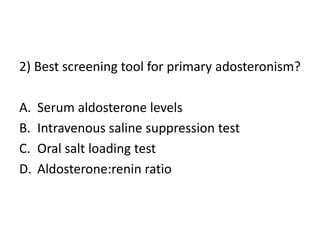
 The aldosterone:renin activity ratio is currently the most
accurate and reliable means of screening for primary
aldosteronism.
 The diagnosis of primary aldosteronism generally requires a
confirmatory test i.e. intravenous saline suppression test or
oral salt-loading test.
 If the diagnosis of primary aldosteronism is confirmed and
the patient is willing for surgery, the patient is referred for
an adrenal venous sampling procedure to determine
whether the increased aldosterone production is unilateral
or bilateral in origin.
 If the patient has bilaterally increased aldosterone secretion
on adrenal venous sampling or has a unilateral source of
excess aldosterone production but cannot undergo surgery,
the patient is treated with spironolactone or eplerenone as
agent of choice.
Renal artery stenosis
 Atherosclerotic disease (90%) is by far the most common
cause of renal artery stenosis, whereas nonatherosclerotic
disease (of which fibromuscular dysplasia is the most
common) is much less prevalent and tends to occur in
younger, healthier patients
 Medical therapy is recommended for adults with
atherosclerotic renal artery stenosis ,no RCT to date has
demonstrated a clinical advantage of renal artery
revascularization (with either angioplasty or stenting) over
medical therapy.
 In adults with renal artery stenosis for whom medical
management has failed and those with non-
atherosclerotic disease, including fibro-muscular
dysplasia, it may be reasonable to refer the patient for
consideration of revascularization i.e. percutaneous renal
artery angioplasty and/or stent placement.
Obstructive Sleep Apnea
 Obstructive sleep apnea is a common chronic condition
characterized by recurrent collapse of upper airways during
sleep, inducing intermittent episodes of apnea/hypopnea,
hypoxemia, and sleep disruption.
 It is a risk factor for several CVDs, including hypertension,
coronary and cerebrovascular diseases, HF, and AF.
 It is highly prevalent in adults with resistant hypertension
(≥80%).
CPAP is an efficacious treatment for improving obstructive
sleep apnea.
 However, studies of the effects of CPAP on BP have
demonstrated only small effects on BP (e.g., 2– to 3–mm Hg
reductions), with results dependent on patient compliance
with CPAP use, severity of obstructive sleep apnea, and
presence of daytime sleepiness in study participants.
CONTROLLING HYPERTENSION
NON PHARMACOLOGICAL THERAPY
PHARMACOLOGICAL THERAPY
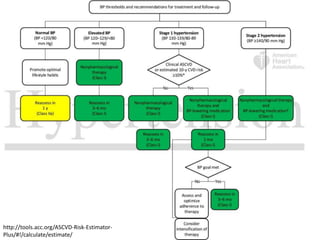
http://tools.acc.org/ASCVD-Risk-Estimator-
Plus/#!/calculate/estimate/
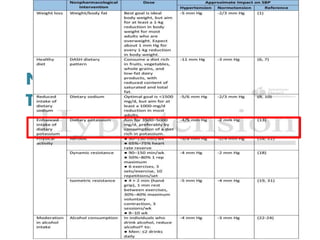
NON PHARMACOLOGICAL
THERAPY
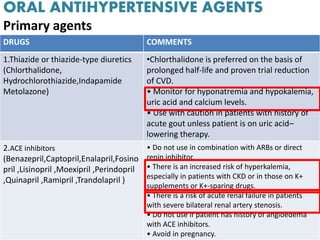
ORAL ANTIHYPERTENSIVE AGENTS
Primary agents
DRUGS COMMENTS
1.Thiazide or thiazide-type diuretics
(Chlorthalidone,
Hydrochlorothiazide,Indapamide
Metolazone)
•Chlorthalidone is preferred on the basis of
prolonged half-life and proven trial reduction
of CVD.
• Monitor for hyponatremia and hypokalemia,
uric acid and calcium levels.
• Use with caution in patients with history of
acute gout unless patient is on uric acid–
lowering therapy.
2.ACE inhibitors
(Benazepril,Captopril,Enalapril,Fosino
pril ,Lisinopril ,Moexipril ,Perindopril
,Quinapril ,Ramipril ,Trandolapril )
• Do not use in combination with ARBs or direct
renin inhibitor.
• There is an increased risk of hyperkalemia,
especially in patients with CKD or in those on K+
supplements or K+-sparing drugs.
• There is a risk of acute renal failure in patients
with severe bilateral renal artery stenosis.
• Do not use if patient has history of angioedema
with ACE inhibitors.
• Avoid in pregnancy.
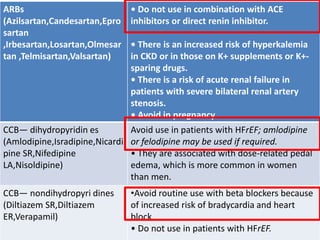
ARBs
(Azilsartan,Candesartan,Epro
sartan
,Irbesartan,Losartan,Olmesar
tan ,Telmisartan,Valsartan)
• Do not use in combination with ACE
inhibitors or direct renin inhibitor.
• There is an increased risk of hyperkalemia
in CKD or in those on K+ supplements or K+-
sparing drugs.
• There is a risk of acute renal failure in
patients with severe bilateral renal artery
stenosis.
• Avoid in pregnancy.
CCB— dihydropyridin es
(Amlodipine,Isradipine,Nicardi
pine SR,Nifedipine
LA,Nisoldipine)
Avoid use in patients with HFrEF; amlodipine
or felodipine may be used if required.
• They are associated with dose-related pedal
edema, which is more common in women
than men.
CCB— nondihydropyri dines
(Diltiazem SR,Diltiazem
ER,Verapamil)
•Avoid routine use with beta blockers because
of increased risk of bradycardia and heart
block.
• Do not use in patients with HFrEF.
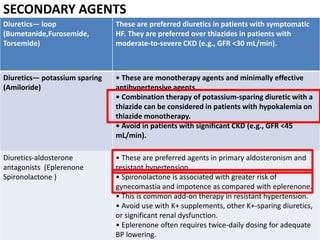
SECONDARY AGENTS
Diuretics— loop
(Bumetanide,Furosemide,
Torsemide)
These are preferred diuretics in patients with symptomatic
HF. They are preferred over thiazides in patients with
moderate-to-severe CKD (e.g., GFR <30 mL/min).
Diuretics— potassium sparing
(Amiloride)
• These are monotherapy agents and minimally effective
antihypertensive agents.
• Combination therapy of potassium-sparing diuretic with a
thiazide can be considered in patients with hypokalemia on
thiazide monotherapy.
• Avoid in patients with significant CKD (e.g., GFR <45
mL/min).
Diuretics-aldosterone
antagonists (Eplerenone
Spironolactone )
• These are preferred agents in primary aldosteronism and
resistant hypertension.
• Spironolactone is associated with greater risk of
gynecomastia and impotence as compared with eplerenone.
• This is common add-on therapy in resistant hypertension.
• Avoid use with K+ supplements, other K+-sparing diuretics,
or significant renal dysfunction.
• Eplerenone often requires twice-daily dosing for adequate
BP lowering.
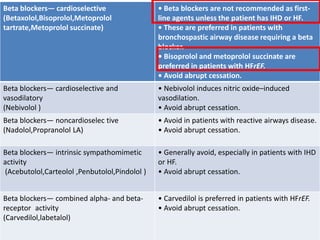
Beta blockers— cardioselective
(Betaxolol,Bisoprolol,Metoprolol
tartrate,Metoprolol succinate)
• Beta blockers are not recommended as first-
line agents unless the patient has IHD or HF.
• These are preferred in patients with
bronchospastic airway disease requiring a beta
blocker.
• Bisoprolol and metoprolol succinate are
preferred in patients with HFrEF.
• Avoid abrupt cessation.
Beta blockers— cardioselective and
vasodilatory
(Nebivolol )
• Nebivolol induces nitric oxide–induced
vasodilation.
• Avoid abrupt cessation.
Beta blockers— noncardioselec tive
(Nadolol,Propranolol LA)
• Avoid in patients with reactive airways disease.
• Avoid abrupt cessation.
Beta blockers— intrinsic sympathomimetic
activity
(Acebutolol,Carteolol ,Penbutolol,Pindolol )
• Generally avoid, especially in patients with IHD
or HF.
• Avoid abrupt cessation.
Beta blockers— combined alpha- and beta-
receptor activity
(Carvedilol,labetalol)
• Carvedilol is preferred in patients with HFrEF.
• Avoid abrupt cessation.
Direct renin inhibitor
(Aliskiren )
• Do not use in combination with ACE
inhibitors or ARBs.
• Aliskiren is very long acting.
• There is an increased risk of
hyperkalemia in CKD or in those on K+
supplements or K+-sparing drugs.
• Aliskiren may cause acute renal failure
in patients with severe bilateral renal
artery stenosis.
• Avoid in pregnancy
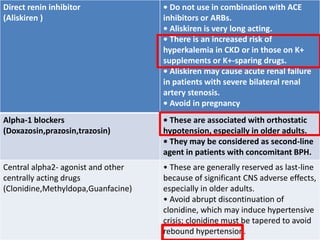
Alpha-1 blockers
(Doxazosin,prazosin,trazosin)
• These are associated with orthostatic
hypotension, especially in older adults.
• They may be considered as second-line
agent in patients with concomitant BPH.
Central alpha2- agonist and other
centrally acting drugs
(Clonidine,Methyldopa,Guanfacine)
• These are generally reserved as last-line
because of significant CNS adverse effects,
especially in older adults.
• Avoid abrupt discontinuation of
clonidine, which may induce hypertensive
crisis; clonidine must be tapered to avoid
rebound hypertension.
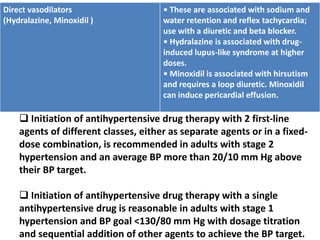
Direct vasodilators
(Hydralazine, Minoxidil )
• These are associated with sodium and
water retention and reflex tachycardia;
use with a diuretic and beta blocker.
• Hydralazine is associated with drug-
induced lupus-like syndrome at higher
doses.
• Minoxidil is associated with hirsutism
and requires a loop diuretic. Minoxidil
can induce pericardial effusion.
 Initiation of antihypertensive drug therapy with 2 first-line
agents of different classes, either as separate agents or in a fixed-
dose combination, is recommended in adults with stage 2
hypertension and an average BP more than 20/10 mm Hg above
their BP target.
 Initiation of antihypertensive drug therapy with a single
antihypertensive drug is reasonable in adults with stage 1
hypertension and BP goal <130/80 mm Hg with dosage titration
and sequential addition of other agents to achieve the BP target.
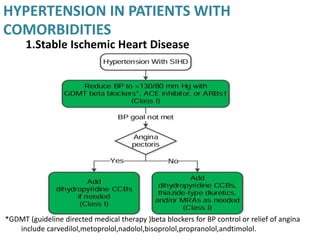
HYPERTENSION IN PATIENTS WITH
COMORBIDITIES
*GDMT (guideline directed medical therapy )beta blockers for BP control or relief of angina
include carvedilol,metoprolol,nadolol,bisoprolol,propranolol,andtimolol.
1.Stable Ischemic Heart Disease
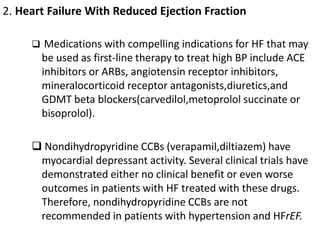
2. Heart Failure With Reduced Ejection Fraction
 Medications with compelling indications for HF that may
be used as first-line therapy to treat high BP include ACE
inhibitors or ARBs, angiotensin receptor inhibitors,
mineralocorticoid receptor antagonists,diuretics,and
GDMT beta blockers(carvedilol,metoprolol succinate or
bisoprolol).
 Nondihydropyridine CCBs (verapamil,diltiazem) have
myocardial depressant activity. Several clinical trials have
demonstrated either no clinical benefit or even worse
outcomes in patients with HF treated with these drugs.
Therefore, nondihydropyridine CCBs are not
recommended in patients with hypertension and HFrEF.
3. Heart Failure With Preserved Ejection Fraction
 In adults with HFpEF who present with symptoms of
volume overload, diuretics should be prescribed to
control hypertension.
 Adults with HFpEF and persistent hypertension after
management of volume overload should be prescribed
ACE inhibitors or ARBs and beta blockers titrated to
attain SBP of less than 130 mm Hg.
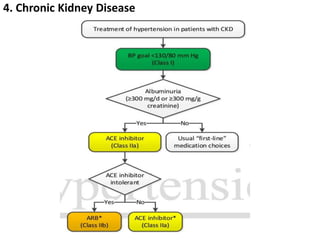
4. Chronic Kidney Disease
5.Hypertension After Renal Transplantation
 After kidney transplantation, hypertension is common
because of pre-existing kidney disease, the effects of
immunosuppressive medications, and the presence of
allograft pathology .
 Hypertension may accelerate target organ damage and
kidney function decline, particularly when proteinuria is
present.
 Use of calcineurin inhibitor–based immunosuppressant
regimens after transplantation is associated with a high
(70% to 90%) prevalence of hypertension.
 Most studies favour CCBs to reduce graft loss and
maintain higher GFR, with some evidence suggesting
potential harm from ACE inhibitors because of anaemia,
hyperkalemia, and lower GFR.
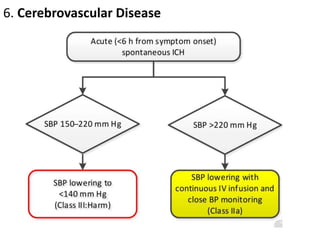
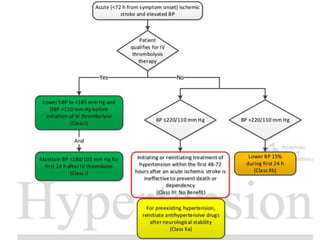
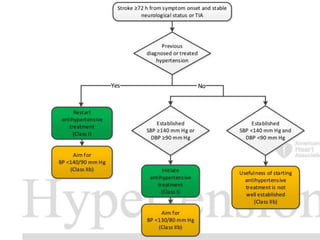
6. Cerebrovascular Disease
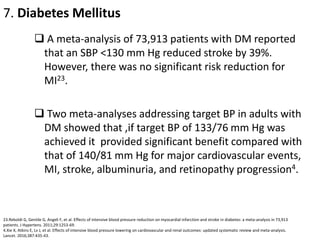
7. Diabetes Mellitus
 A meta-analysis of 73,913 patients with DM reported
that an SBP <130 mm Hg reduced stroke by 39%.
However, there was no significant risk reduction for
MI23.
 Two meta-analyses addressing target BP in adults with
DM showed that ,if target BP of 133/76 mm Hg was
achieved it provided significant benefit compared with
that of 140/81 mm Hg for major cardiovascular events,
MI, stroke, albuminuria, and retinopathy progression4.
23.Reboldi G, Gentile G, Angeli F, et al. Effects of intensive blood pressure reduction on myocardial infarction and stroke in diabetes: a meta-analysis in 73,913
patients. J Hypertens. 2011;29:1253-69.
4.Xie X, Atkins E, Lv J, et al. Effects of intensive blood pressure lowering on cardiovascular and renal outcomes: updated systematic review and meta-analysis.
Lancet. 2016;387:435-43.
BP control is more difficult to achieve in patients with DM
than in those without DM, necessitating use of
combination therapy in the majority of patients27.
 In adults with DM and hypertension, all first-line classes of
antihypertensive agents (i.e., diuretics, ACE inhibitors,
ARBs, and CCBs) are useful and effective
 ACE inhibitors and ARBs have the best efficacy among the
drug classes on urinary albumin excretion.
 A meta-analysis of RCTs of primary prevention of
albuminuria in patients with DM demonstrated a significant
reduction in progression of moderately to severely
increased albuminuria with the use of ACE inhibitors or
ARBs11.
Mancia G, Schumacher H, Redon J, et al. Blood pressure targets recommended by guidelines and incidence of cardiovascular and renal events in the Ongoing Telmisartan Alone and in Combination With
Ramipril Global Endpoint Trial (ONTARGET). Circulation. 2011;124:1727-36.
11. Palmer SC, Mavridis D, Navarese E, et al. Comparative efficacy and safety of blood pressure-lowering agents in adults with diabetes and kidney disease: a network meta-analysis. Lancet.
2015;385:2047-56.
8. Atrial Fibrillation
 AF and hypertension are common and often
coexistent conditions, both of which increase in
frequency with age.
 AF occurs in 3% to 4% of the population (>65 years)
of age.
 Hypertension is present in more than 80% of patients
with AF and is by far the most common co morbid
condition, regardless of age.
 RAS blockade in theory is the treatment of choice for
hypertension in patients with prior AF.
 Treatment of hypertension with an ARB can be useful
for prevention of recurrence of AF1 2
1. Healey JS, Baranchuk A, Crystal E, et al. Prevention of atrial fibrillation with angiotensin-converting enzyme inhibitors and angiotensin receptor blockers: a
meta-analysis. J Am Coll Cardiol. 2005;45:1832-9.
2. Zhao D, Wang Z-M, Wang L-S. Prevention of atrial fibrillation with renin-angiotensin system inhibitors on essential hypertensive patients: a meta-analysis of
randomized controlled trials. J Biomed Res. 2015;29:475-85.
9. Valvular Heart Disease
 Hypertension is a risk factor for the development of aortic
stenosis.
 Combination of hypertension and aortic stenosis, “2
resistors in series,” increases the rate of complications.
 RAS blockade may be advantageous because of the
potentially beneficial effects on LV fibrosis3.
 Diuretics should be used sparingly in patients with small
LV chamber dimensions.
 Beta blockers may be appropriate for patients with aortic
stenosis who have reduced ejection fraction, prior MI,
arrhythmias, or angina pectoris
3. Bull S, Loudon M, Francis JM, et al. A prospective, double-blind, randomized controlled trial of the angiotensin-converting enzyme
inhibitor Ramipril In Aortic Stenosis (RIAS trial). Eur Heart J Cardiovasc Imaging. 2015;16:834- 41.
 Vasodilator therapy can reduce the LV volume and
mass and improve LV performance in patients with
aortic regurgitation.
 Beta blockers may result in increased diastolic filling
period because of bradycardia, potentially causing
increased aortic insufficiency.
10. Aortic Disease
 Beta blockers are recommended as the preferred
antihypertensive agents in patients with
hypertension and thoracic aortic disease (1, 2)
1. Genoni M, Paul M, Jenni R, et al. Chronic beta-blocker therapy improves outcome and reduces treatment costs in chronic
type B aortic dissection. Eur J Cardiothorac Surg. 2001;19:606-10.
2. Suzuki T, Isselbacher EM, Nienaber CA, et al. Type-selective benefits of medications in treatment of acute aortic
dissection (from the International Registry of Acute Aortic Dissection [IRAD]). Am J Cardiol. 2012;109:122-7.
SPECIAL CONSIDERATION
PREGNANCY
BP usually declines during the first trimester of
pregnancy and then slowly rises.
 Hypertension management during pregnancy includes 4
general areas
1) the newly pregnant mother with existing
hypertension
2) incident hypertension
3) preeclampsia
4) severe hypertension(often in the setting of
preeclampsia, requiring urgent treatment to prevent
HF, stroke, and adverse foetal outcomes).
 BP management during pregnancy is complicated by the
fact that many commonly used antihypertensive agents,
including ACE inhibitors and ARBs are contraindicated
during pregnancy because of potential harm to the fetus.
 Beta blockers and CCBs appear superior to alpha-
methyldopa in preventing preeclampsia.
 Women with hypertension who become pregnant or are
planning to become pregnant should be transitioned to
methyldopa,nifedipine and/or labetalol during pregnancy(4-
6).
4. Pucci M, Sarween N, Knox E, et al. Angiotensin-converting enzyme inhibitors and angiotensin receptor blockers in women of childbearing
age: risks versus benefits. Expert Rev Clin Pharmacol. 2015;8:221-31.
5. Moretti ME, Caprara D, Drehuta I, et al. The fetal safety of angiotensin converting enzyme inhibitors and angiotensin II receptor blockers.
Obstet Gynecol Int. 2012;2012:658310.
6. Ferrer RL, Sibai BM, Mulrow CD, et al. Management of mild chronic hypertension during pregnancy: a review. Obstet Gynecol.
2000;96:849-60.
PATIENTS UNDERGOING SURGICAL PROCEDURES
 In patients with hypertension undergoing major
surgery who have been on beta blockers chronically,
beta blockers should be continued.
 In patients with hypertension undergoing planned
elective major surgery, it is reasonable to continue
medical therapy for hypertension until surgery.
 In patients with hypertension undergoing major
surgery, discontinuation of ACE inhibitors or ARBs
preoperatively may be considered.
 In patients with planned elective major surgery and SBP of
180 mm Hg or higher or DBP of 110 mm Hg or higher,
deferring surgery may be considered.
 For patients undergoing surgery, abrupt preoperative
discontinuation of beta blockers or clonidine is potentially
harmful.
 Beta blockers should not be started on the day of surgery
in beta blocker– naïve patients.
 Patients with intraoperative hypertension should be
managed with intravenous medications until such time as
oral medications can be resumed.
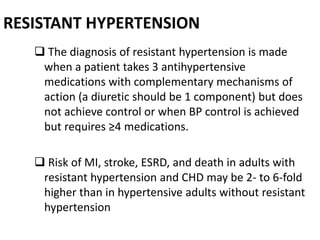
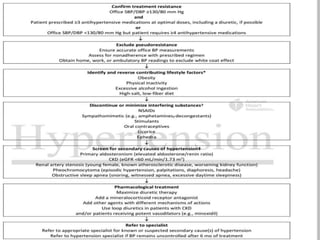
RESISTANT HYPERTENSION
 The diagnosis of resistant hypertension is made
when a patient takes 3 antihypertensive
medications with complementary mechanisms of
action (a diuretic should be 1 component) but does
not achieve control or when BP control is achieved
but requires ≥4 medications.
 Risk of MI, stroke, ESRD, and death in adults with
resistant hypertension and CHD may be 2- to 6-fold
higher than in hypertensive adults without resistant
hypertension
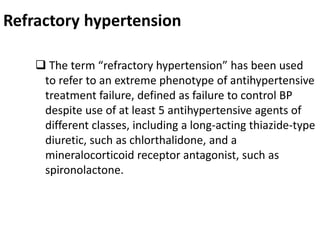
Refractory hypertension
 The term “refractory hypertension” has been used
to refer to an extreme phenotype of antihypertensive
treatment failure, defined as failure to control BP
despite use of at least 5 antihypertensive agents of
different classes, including a long-acting thiazide-type
diuretic, such as chlorthalidone, and a
mineralocorticoid receptor antagonist, such as
spironolactone.
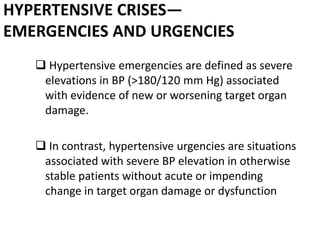
HYPERTENSIVE CRISES—
EMERGENCIES AND URGENCIES
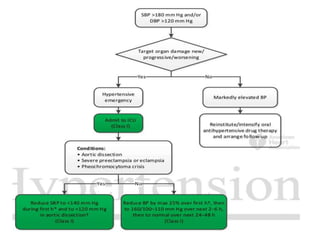
 Hypertensive emergencies are defined as severe
elevations in BP (>180/120 mm Hg) associated
with evidence of new or worsening target organ
damage.
 In contrast, hypertensive urgencies are situations
associated with severe BP elevation in otherwise
stable patients without acute or impending
change in target organ damage or dysfunction
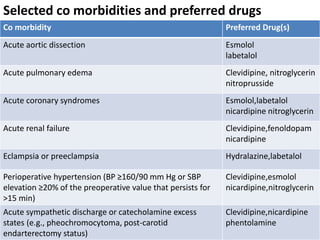
Selected co morbidities and preferred drugs
Co morbidity Preferred Drug(s)
Acute aortic dissection Esmolol
labetalol
Acute pulmonary edema Clevidipine, nitroglycerin
nitroprusside
Acute coronary syndromes Esmolol,labetalol
nicardipine nitroglycerin
Acute renal failure Clevidipine,fenoldopam
nicardipine
Eclampsia or preeclampsia Hydralazine,labetalol
Perioperative hypertension (BP ≥160/90 mm Hg or SBP
elevation ≥20% of the preoperative value that persists for
>15 min)
Clevidipine,esmolol
nicardipine,nitroglycerin
Acute sympathetic discharge or catecholamine excess
states (e.g., pheochromocytoma, post-carotid
endarterectomy status)
Clevidipine,nicardipine
phentolamine
TAKE HOME MESSAGE
“Guidelines are intended to define
practices meeting the needs of
patients in most but not all
circumstances and should not
replace the clinical judgment.”
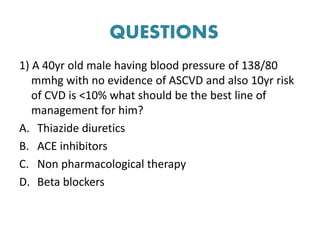
QUESTIONS
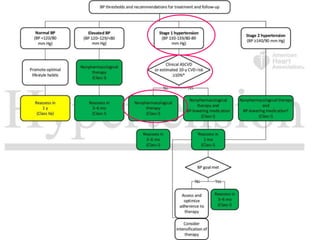
1) A 40yr old male having blood pressure of 138/80
mmhg with no evidence of ASCVD and also 10yr risk
of CVD is <10% what should be the best line of
management for him?
A. Thiazide diuretics
B. ACE inhibitors
C. Non pharmacological therapy
D. Beta blockers
2) Best screening tool for primary adosteronism?
A. Serum aldosterone levels
B. Intravenous saline suppression test
C. Oral salt loading test
D. Aldosterone:renin ratio
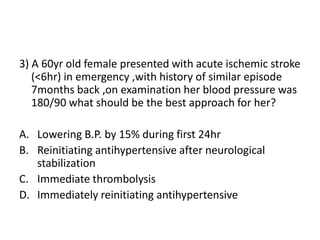
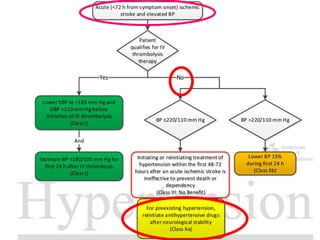
3) A 60yr old female presented with acute ischemic stroke
(<6hr) in emergency ,with history of similar episode
7months back ,on examination her blood pressure was
180/90 what should be the best approach for her?
A. Lowering B.P. by 15% during first 24hr
B. Reinitiating antihypertensive after neurological
stabilization
C. Immediate thrombolysis
D. Immediately reinitiating antihypertensive
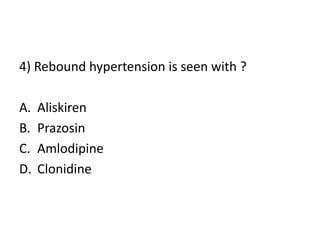
4) Rebound hypertension is seen with ?
A. Aliskiren
B. Prazosin
C. Amlodipine
D. Clonidine
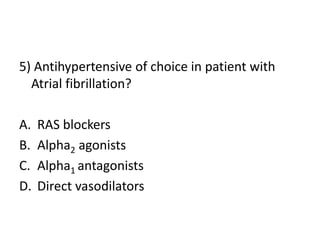
5) Antihypertensive of choice in patient with
Atrial fibrillation?
A. RAS blockers
B. Alpha2 agonists
C. Alpha1 antagonists
D. Direct vasodilators
THANK YOU !!!

Hypertension redefined

  • 1.
    HYPERTENSION REDEFINED 130 is thenew high!!!! Dr. Vinay Tuteja SMS medical college
  • 2.
  • 3.
     In theFramingham Heart Study, approximately 90% of adults free of hypertension at age 55 or 65 years developed hypertension during their lifetimes 4.  All of these estimates were based on use of the 140/90– mm Hg cutpoint for recognition of hypertension and would have been higher had the 130/80–mm Hg cutpoint been used. 4. Vasan RS, Beiser A, Seshadri S, et al. Residual lifetime risk for developing hypertension in middle-aged women and men: the Framingham Heart Study. JAMA. 2002;287:1003-10. LIFETIME RISK OF HYPERTENSION
  • 6.
    2017 HIGH BLOODPRESSURE PRACTICE GUIDELINES  It is an update of the NHLBI publication, “The Seventh Report of the Joint National Committee on Prevention, Detection, Evaluation and Treatment of High Blood Pressure” (JNC 7)1.  It incorporates new information from studies of office-based BP-related risk of CVD, ambulatory blood pressure monitoring (ABPM), home blood pressure monitoring (HBPM), telemedicine, and various other areas. 1.Chobanian AV, Bakris GL, Black HR, et al; the National High Blood Pressure Education Program Coordinating Committee. Seventh Report of the Joint National Committee on Prevention, Detection, Evaluation, and Treatment of High Blood Pressure. Hypertension. 2003;42:1206-52.
  • 7.
     The newguidelines were developed by the American Heart Association, American College of Cardiology and nine other health professional organizations.  They were written by a panel of 21 scientists and health experts who reviewed more than 900 published studies.2 2.Whelton PK, et al. 2017 High Blood Pressure Clinical Practice Guideline
  • 8.
    Systematic Review Questionson High BP Question number Question 1 Is there evidence that self-directed monitoring of BP and/or ambulatory BP monitoring are superior to office- based measurement of BP by a healthcare worker for 1) preventing adverse outcomes for which high BP is a risk factor and 2)achieving better BP control? 2 What is the optimal target for BP lowering during antihypertensive therapy in adults? 3 In adults with hypertension, do various antihypertensive drug classes differ in their comparative benefits and harms? 4 does initiating treatment with monotherapy v/s initiating treatment with 2 drugs differ in comparative benefits and/or harms on specific health outcomes?
  • 9.
    CVD Risk FactorsCommon in Patients With Hypertension Modifiable Risk Factors Relatively Fixed Risk Factors Current cigarette smoking, second hand smoking CKD Diabetes mellitus Family history Dyslipidemia/hypercholesterolemia Increased age Overweight/obesity Low socioeconomic/educational status Physical inactivity/low fitness Male sex Unhealthy diet Obstructive sleep apnea
  • 10.
    CORRELATION OF HYPERTENSIONWITH CVD RISK FACTORS  Meta-analysis of 61 prospective studies the risk of CVD increases in a long linear fashion from SBP levels <115 mmHg to >180 mm Hg and from DBP levels <75 mm Hg to >105 mm Hg1  71% of U.S. adults with diagnosed DM have hypertension.2  In the Chronic Renal Insufficiency Cohort(CRIC),86% of the participants had hypertension.3  35.7% of obese individuals had hypertension.4 1.Lewington S, Clarke R, Qizilbash N, et al. Age-specific relevance of usual blood pressure to vascular mortality: a meta-analysis of individual data for one million adults in 61 prospective studies. Lancet. 2002;360:1903-13. 2.Ford ES. Trends in mortality from all causes and cardiovascular disease among hypertensive and nonhypertensive adults in the United States. Circulation. 2011;123:1737-44. 3. Cheng S, Claggett B, Correia AW, et al. Temporal trends in the population attributable risk for cardiovascular disease: the Atherosclerosis Risk in Communities Study. Circulation. 2014;130:820-8. Saran R, Li Y, Robinson B, et al. US Renal Data System 2014 annual data report: epidemiology of kidney disease in the United States. Am J Kidney Dis. 2015;66 Svii:S1-305.
  • 11.
    CLASSIFICATION OF BP:Why the need to classify ?  The rationale for this categorization is based on observational data related to the association between SBP/DBP and CVD risk.  An increasing number of individual studies and meta- analyses of observational data have reported a gradient of progressively higher CVD risk going from normal BP to elevated BP and stage 1 hypertension1.  A 20mmhg higher SBP and 10mmHg higher DBP were each associated with a doubling in risk of death from stroke, heart disease, or other vascular disease.1  RCTs of lifestyle modification to lower BP.  RCTs of treatment with antihypertensive medication to prevent CVD. 1.Whelton PK, et al. 2017 High Blood Pressure Clinical Practice Guideline
  • 12.
  • 13.
    CATEGORIES OF BPIN ADULTS BP CATEGORY SBP DBP NORMAL <12Ommhg <80mmhg ELEVATED BP 120-130mmhg <80mmhg HYPERTENSION STAGE 1 130-139mmhg 80-89mmhg STAGE 2 >140mmhg >90mmhg
  • 15.
    PREVALENCE OF HYPERTENSIONWITH NEW GUIDELINES  The prevalence of hypertension among U.S. adults is substantially higher when the definition in the present guideline is used versus the JNC 7 definition (46% versus 32%).  However non-pharmacological treatment is recommended for most U.S. adults who have hypertension as defined in the present guideline but who would not meet the JNC 7 definition for hypertension  As a consequence, the new definition results in only a small increase in the percentage of U.S. adults for whom antihypertensive medication is recommended in conjunction with lifestyle modification.
  • 16.
    *130/80 and 140/90mm Hg in 9623 participants (≥20 years of age) in NHANES 2011–2014
  • 17.
    Are we measuringit properly Accurate measurement and recording of BP are essential to categorize level of BP, ascertain BP- related CVD risk, and guide management of high BP Common errors in clinical practice that can lead to inaccurate estimation of BP include failure to allow for a rest period and/or talking with the patient during or immediately before the recording, improper patient positioning (e.g., sitting or lying on an examination table), rapid cuff deflation and reliance on BPs measured at a single occasion. ?
  • 18.
    Checklist for AccurateMeasurement of BP Key Steps for Proper BP Measurements Specific Instructions Step 1: Properly prepare the patient 1. Have the patient relax, sitting in a chair (feet on floor, back supported) for >5 min. 2. The patient should avoid caffeine, exercise, and smoking for at least 30 min before measurement. 3. Ensure patient has emptied his/her bladder. 4. Neither the patient nor the observer should talk during the rest period or during the measurement. 5. Remove all clothing covering the location of cuff placement. 6. Measurements made while the patient is sitting or lying on an examining table do not fulfill these criteria. Step 2: Use proper technique for BP measurements 1. Use a BP measurement device that has been validated, and ensure that the device is calibrated periodically.* 2. Support the patient’s arm (e.g., resting on a desk). 3. Position the middle of the cuff on the patient’s upper arm at the level of the right atrium (the midpoint of the sternum). 4. Use the correct cuff size, such that the bladder encircles 80% of the arm, and note if a larger- or smaller-than-normal cuff size is used (Table 9).
  • 19.
    Step 3: Takethe proper measurements needed for diagnosis and treatment of elevated BP/hypertension 1. At the first visit, record BP in both arms. Use the arm that gives the higher reading for subsequent readings. 2. Separate repeated measurements by 1–2 min. 3. For auscultatory determinations, use a palpated estimate of radial pulse obliteration pressure to estimate SBP. Inflate the cuff 20–30 mm Hg above this level for an auscultatory determination of the BP level. 4. For auscultatory readings, deflate the cuff pressure 2 mm Hg per second, and listen for Korotkoff sounds. Step 4: Properly document accurate BP readings 1. Record SBP and DBP. If using the auscultatory technique, record SBP and DBP as onset of the first Korotkoff sound and disappearance of all Korotkoff sounds, respectively, using the nearest even number. 2. Note the time of most recent BP medication taken before measurements. Step 5: Average the readings Use an average of ≥2 readings obtained on ≥2 occasions to estimate the individual’s level of BP. Step 6: Provide BP readings to patient Provide patients the SBP/DBP readings both verbally and in writing
  • 20.
    OUT-OF-OFFICE AND SELF MONITORINGOF BP  Ambulatory BP monitoring (ABPM) is used to obtain out-of-office BP readings at set intervals, usually over a period of 24 hours.  Home BP monitoring (HBPM) is used to obtain a record of out-of-office BP readings taken by a patient.  Meta-analyses of RCTs have identified clinically useful reductions in SBP and DBP and achievement of BP goals at 6 months and 1 year when self- monitoring of BP has been used in conjunction with other interventions, compared with usual care.1 2 3 1Uhlig K, Balk EM, Patel K, et al. Self-Measured Blood Pressure Monitoring: Comparative Effectiveness. Rockville, MD: Agency for Healthcare Research and Quality (U.S.); 2012. 2Siu AL. Screening for high blood pressure in adults: U.S. Preventive Services Task Force recommendation statement. Ann Intern Med. 2015;163:778-86. 53 Yi SS, Tabaei BP, Angell SY, et al. Self-blood pressure monitoring in an urban, ethnically diverse population: a randomized clinical trial utilizing the electronic health record. Circ Cardiovasc Qual Outcomes. 2015;8:138-45.
  • 21.
     The monitorsare usually programmed to obtain readings every 15 to 30 minutes throughout the day and every 15 minutes to 1 hour during the night.  Provide estimates of mean BP over the entire monitoring period and separately during night time and daytime.  Determine the daytime-to-night time BP ratio to identify the extent of nocturnal “dipping”  Identify the early-morning BP surge pattern, d) estimate BP variability  Allow for recognition of symptomatic hypotension.  A meta-analysis of observational studies that included 13,844 individuals suggested night time BP is a stronger risk factor for CHD and stroke than either clinic or daytime BP (15). 15.Roush GC, Fagard RH, Salles GF, et al. Prognostic impact from clinic, daytime, and night-time systolic blood pressure in nine cohorts of 13,844 patients with hypertension. J Hypertens. 2014;32:2332-40. 22. Mancia G, Bombelli M, Facchetti R, et al. Long-term risk of sustained hypertension in white-coat or masked hypertension. Hypertension. 2009;54:226-32.
  • 22.
    Corresponding Values ofSBP/DBP for Clinic, HBPM, Daytime, Night time, and 24-Hour ABPM Clinic HBPM DAY time ABPM Night time ABPM 24-Hour ABPM 120/80 120/80 120/80 100/65 115/75 130/80 130/80 130/80 110/65 125/75 140/90 135/85 135/85 120/70 130/80 160/100 145/90 145/90 140/85 154/90 These thresholds are based on data from European, Australian, and Asian populations, with few data available for establishing appropriate thresholds for U.S. populations
  • 24.
    BP Patterns Basedon Office and Out-Office Measurements Office /clinic/healthcare setting Home/non healthcare/ABPM setting Normotensive No hypertension No hypertension Sustained hypertension hypertension hypertension Masked hypertension No hypertension hypertension White coat hypertension hypertension No hypertension
  • 25.
     The prevalenceof masked hypertension varies from 10% to 26% (mean 13%) in population-based surveys and from 14% to 30% in normotensive clinic populations.  The risk of CVD and all-cause mortality in persons with masked hypertension is similar to that noted in those with sustained hypertension and about twice as high as the corresponding risk in their normotensive counterparts .
  • 26.
    Clinical situations inwhich ambulatory blood pressure monitoring may be helpful:  Suspected white-coat hypertension in patients with hypertension and no target organ damage  Hypotensive symptoms with antihypertensive medication  Episodic hypertension Autonomic dysfunction
  • 27.
    Detection of WhiteCoat effect and masked Hypertension in Patients on drug therapy
  • 28.
    Detection of WhiteCoat and masked hypertension in Patients Not on Drug Therapy
  • 29.
    Telehealth Interventions toImprove Hypertension Control  Telehealth strategies includes telemedicine, digital health (“eHealth”), and mobile computing and communication technologies (“mHealth”). These are new and innovative tools to allow patients to be connected to services which include health information on demand, health record management, and the remote, real-time monitoring of chronic conditions such as diabetes, asthma, and hypertension.  mHealth interventions show promise in reducing SBP in patients with hypertension.
  • 30.
    The Partnership hasthree core commitments:  To support the use of rapid response mobile telecommunications to aid disaster relief.  To develop health data systems that improve access to health data thereby helping to combat disease.  To promote research and innovative initiatives using technology as an agent and tool for international development.
  • 34.
    CAUSES OF HYPERTENSION Geneticpredisposition  Hypertension is a complex polygenic disorder in which many genes or gene combinations influence BP.  Although several monogenic forms of hypertension have been identified, such as glucocorticoid-remediable aldosteronism, Liddle’s syndrome, Gordon’s syndrome, and others in which single-gene mutations fully explain the pathophysiology of hypertension, these disorders are rare.  Genetic variants contributing to BP and hypertension includes more than 25 rare mutations and 120 single- nucleotide polymorphisms.
  • 35.
    Environmental Risk Factors Overweightand Obesity  There is a direct relationship between overweight/obesity and hypertension. The relationship with BP is even stronger for waist-to-hip ratio. Attributable risk estimates from the Nurses Health Study suggest that obesity may be responsible for about 40% of hypertension. In the Framingham Offspring Study, the corresponding estimates were even higher (78% in men and 65% in women)
  • 36.
    Sodium Intake  Sodiumintake is positively associated with BP.  Excessive consumption of sodium is independently associated with an increased risk of stroke.  Salt sensitivity is a quantitative trait in which an increase in sodium load disproportionately increases BP.  Salt sensitivity is especially common in blacks, older adults, and those with a higher level of BP or comorbidities such as CKD, DM.  Standard DASH diet: You can consume up to 2,300 milligrams (mg) of sodium a day.  Lower sodium DASH diet: You can consume up to 1,500 mg of sodium a day.  The American Heart Association recommends 1,500 mg a day of sodium as an upper limit for all adult.
  • 37.
    Potassium Potassium intake isinversely related to BP It is also inversely related to stroke lower sodium–potassium ratio being associated with a lower level of BP Physical fitness Alcohol
  • 38.
    Childhood Risk Factorsand BP Tracking  BP distribution in the general population increases with age.  Several factors, including genetic factors and development of obesity, increase the likelihood that a high childhood BP will lead to future hypertension.  Premature birth is associated with a 4–mm Hg higher SBP and a 3–mm Hg higher DBP in adulthood, with somewhat larger effects in women than in men.  Low birth weight from other causes also contributes to higher BP in later life (4).
  • 39.
    How to approachsecondary hypertension
  • 40.
    Various Causes ofsecondary hypertension with there prevalence Common causes  Renal parenchymal diseases (1%–2%)  Renal vascular diseases (5%–34% )  Primary hyper aldosteronism (8%–20%)  Obstructive sleep apnea (25%–50%)  Drug/alcohol induced (2%–4%)  Amphetamine  Antidepressants  Atypical antipsychotics  Caffeine  Decongestants (phenylephirine, pseudoephedrine)  Immunosuppressants (cyclosporine) NSAIDs Systemic steroids Bevacizumab Surafinib,sunitinib
  • 41.
    Uncommon causes  Pheochromocytoma/paraganglioma(0.1%–0.6%)  Cushing’s syndrome (<0.1% )  Hypothyroidism (<1%)  Hyperthyroidism (<1%)  Aortic coarctation (0.1% )  Primary hyperparathyroidism (Rare)  Congenital adrenal hyperplasia (Rare)  Mineralocorticoid excess syndromes other than primary aldosteronism (Rare)  Acromegaly (Rare)
  • 42.
    Primary Aldosteronism  Primaryaldosteronism is one of the most frequent disorders that causes secondary hypertension (20% of patients with resistant hypertension) .  The toxic tissue effects of aldosterone induce greater target organ damage in primary aldosteronism than in primary hypertension.  Patients with primary aldosteronism have a 3.7-fold increase in HF, a 4.2-fold increase in stroke, a 6.5-fold increase in MI, a 12.1-fold increase in atrial fibrillation (AF) increased kidney damage.  The aldosterone:renin activity ratio is currently the most accurate and reliable means of screening for primary aldosteronism.
  • 43.
     The diagnosisof primary aldosteronism generally requires a confirmatory test i.e. intravenous saline suppression test or oral salt-loading test.  If the diagnosis of primary aldosteronism is confirmed and the patient is willing for surgery, the patient is referred for an adrenal venous sampling procedure to determine whether the increased aldosterone production is unilateral or bilateral in origin.  If the patient has bilaterally increased aldosterone secretion on adrenal venous sampling or has a unilateral source of excess aldosterone production but cannot undergo surgery, the patient is treated with spironolactone or eplerenone as agent of choice.
  • 44.
    Renal artery stenosis Atherosclerotic disease (90%) is by far the most common cause of renal artery stenosis, whereas nonatherosclerotic disease (of which fibromuscular dysplasia is the most common) is much less prevalent and tends to occur in younger, healthier patients  Medical therapy is recommended for adults with atherosclerotic renal artery stenosis ,no RCT to date has demonstrated a clinical advantage of renal artery revascularization (with either angioplasty or stenting) over medical therapy.
  • 45.
     In adultswith renal artery stenosis for whom medical management has failed and those with non- atherosclerotic disease, including fibro-muscular dysplasia, it may be reasonable to refer the patient for consideration of revascularization i.e. percutaneous renal artery angioplasty and/or stent placement.
  • 46.
    Obstructive Sleep Apnea Obstructive sleep apnea is a common chronic condition characterized by recurrent collapse of upper airways during sleep, inducing intermittent episodes of apnea/hypopnea, hypoxemia, and sleep disruption.  It is a risk factor for several CVDs, including hypertension, coronary and cerebrovascular diseases, HF, and AF.  It is highly prevalent in adults with resistant hypertension (≥80%). CPAP is an efficacious treatment for improving obstructive sleep apnea.  However, studies of the effects of CPAP on BP have demonstrated only small effects on BP (e.g., 2– to 3–mm Hg reductions), with results dependent on patient compliance with CPAP use, severity of obstructive sleep apnea, and presence of daytime sleepiness in study participants.
  • 47.
    CONTROLLING HYPERTENSION NON PHARMACOLOGICALTHERAPY PHARMACOLOGICAL THERAPY
  • 48.
  • 49.
  • 50.
    ORAL ANTIHYPERTENSIVE AGENTS Primaryagents DRUGS COMMENTS 1.Thiazide or thiazide-type diuretics (Chlorthalidone, Hydrochlorothiazide,Indapamide Metolazone) •Chlorthalidone is preferred on the basis of prolonged half-life and proven trial reduction of CVD. • Monitor for hyponatremia and hypokalemia, uric acid and calcium levels. • Use with caution in patients with history of acute gout unless patient is on uric acid– lowering therapy. 2.ACE inhibitors (Benazepril,Captopril,Enalapril,Fosino pril ,Lisinopril ,Moexipril ,Perindopril ,Quinapril ,Ramipril ,Trandolapril ) • Do not use in combination with ARBs or direct renin inhibitor. • There is an increased risk of hyperkalemia, especially in patients with CKD or in those on K+ supplements or K+-sparing drugs. • There is a risk of acute renal failure in patients with severe bilateral renal artery stenosis. • Do not use if patient has history of angioedema with ACE inhibitors. • Avoid in pregnancy.
  • 51.
    ARBs (Azilsartan,Candesartan,Epro sartan ,Irbesartan,Losartan,Olmesar tan ,Telmisartan,Valsartan) • Donot use in combination with ACE inhibitors or direct renin inhibitor. • There is an increased risk of hyperkalemia in CKD or in those on K+ supplements or K+- sparing drugs. • There is a risk of acute renal failure in patients with severe bilateral renal artery stenosis. • Avoid in pregnancy. CCB— dihydropyridin es (Amlodipine,Isradipine,Nicardi pine SR,Nifedipine LA,Nisoldipine) Avoid use in patients with HFrEF; amlodipine or felodipine may be used if required. • They are associated with dose-related pedal edema, which is more common in women than men. CCB— nondihydropyri dines (Diltiazem SR,Diltiazem ER,Verapamil) •Avoid routine use with beta blockers because of increased risk of bradycardia and heart block. • Do not use in patients with HFrEF.
  • 52.
    SECONDARY AGENTS Diuretics— loop (Bumetanide,Furosemide, Torsemide) Theseare preferred diuretics in patients with symptomatic HF. They are preferred over thiazides in patients with moderate-to-severe CKD (e.g., GFR <30 mL/min). Diuretics— potassium sparing (Amiloride) • These are monotherapy agents and minimally effective antihypertensive agents. • Combination therapy of potassium-sparing diuretic with a thiazide can be considered in patients with hypokalemia on thiazide monotherapy. • Avoid in patients with significant CKD (e.g., GFR <45 mL/min). Diuretics-aldosterone antagonists (Eplerenone Spironolactone ) • These are preferred agents in primary aldosteronism and resistant hypertension. • Spironolactone is associated with greater risk of gynecomastia and impotence as compared with eplerenone. • This is common add-on therapy in resistant hypertension. • Avoid use with K+ supplements, other K+-sparing diuretics, or significant renal dysfunction. • Eplerenone often requires twice-daily dosing for adequate BP lowering.
  • 53.
    Beta blockers— cardioselective (Betaxolol,Bisoprolol,Metoprolol tartrate,Metoprololsuccinate) • Beta blockers are not recommended as first- line agents unless the patient has IHD or HF. • These are preferred in patients with bronchospastic airway disease requiring a beta blocker. • Bisoprolol and metoprolol succinate are preferred in patients with HFrEF. • Avoid abrupt cessation. Beta blockers— cardioselective and vasodilatory (Nebivolol ) • Nebivolol induces nitric oxide–induced vasodilation. • Avoid abrupt cessation. Beta blockers— noncardioselec tive (Nadolol,Propranolol LA) • Avoid in patients with reactive airways disease. • Avoid abrupt cessation. Beta blockers— intrinsic sympathomimetic activity (Acebutolol,Carteolol ,Penbutolol,Pindolol ) • Generally avoid, especially in patients with IHD or HF. • Avoid abrupt cessation. Beta blockers— combined alpha- and beta- receptor activity (Carvedilol,labetalol) • Carvedilol is preferred in patients with HFrEF. • Avoid abrupt cessation.
  • 54.
    Direct renin inhibitor (Aliskiren) • Do not use in combination with ACE inhibitors or ARBs. • Aliskiren is very long acting. • There is an increased risk of hyperkalemia in CKD or in those on K+ supplements or K+-sparing drugs. • Aliskiren may cause acute renal failure in patients with severe bilateral renal artery stenosis. • Avoid in pregnancy Alpha-1 blockers (Doxazosin,prazosin,trazosin) • These are associated with orthostatic hypotension, especially in older adults. • They may be considered as second-line agent in patients with concomitant BPH. Central alpha2- agonist and other centrally acting drugs (Clonidine,Methyldopa,Guanfacine) • These are generally reserved as last-line because of significant CNS adverse effects, especially in older adults. • Avoid abrupt discontinuation of clonidine, which may induce hypertensive crisis; clonidine must be tapered to avoid rebound hypertension.
  • 55.
    Direct vasodilators (Hydralazine, Minoxidil) • These are associated with sodium and water retention and reflex tachycardia; use with a diuretic and beta blocker. • Hydralazine is associated with drug- induced lupus-like syndrome at higher doses. • Minoxidil is associated with hirsutism and requires a loop diuretic. Minoxidil can induce pericardial effusion.  Initiation of antihypertensive drug therapy with 2 first-line agents of different classes, either as separate agents or in a fixed- dose combination, is recommended in adults with stage 2 hypertension and an average BP more than 20/10 mm Hg above their BP target.  Initiation of antihypertensive drug therapy with a single antihypertensive drug is reasonable in adults with stage 1 hypertension and BP goal <130/80 mm Hg with dosage titration and sequential addition of other agents to achieve the BP target.
  • 56.
    HYPERTENSION IN PATIENTSWITH COMORBIDITIES *GDMT (guideline directed medical therapy )beta blockers for BP control or relief of angina include carvedilol,metoprolol,nadolol,bisoprolol,propranolol,andtimolol. 1.Stable Ischemic Heart Disease
  • 57.
    2. Heart FailureWith Reduced Ejection Fraction  Medications with compelling indications for HF that may be used as first-line therapy to treat high BP include ACE inhibitors or ARBs, angiotensin receptor inhibitors, mineralocorticoid receptor antagonists,diuretics,and GDMT beta blockers(carvedilol,metoprolol succinate or bisoprolol).  Nondihydropyridine CCBs (verapamil,diltiazem) have myocardial depressant activity. Several clinical trials have demonstrated either no clinical benefit or even worse outcomes in patients with HF treated with these drugs. Therefore, nondihydropyridine CCBs are not recommended in patients with hypertension and HFrEF.
  • 58.
    3. Heart FailureWith Preserved Ejection Fraction  In adults with HFpEF who present with symptoms of volume overload, diuretics should be prescribed to control hypertension.  Adults with HFpEF and persistent hypertension after management of volume overload should be prescribed ACE inhibitors or ARBs and beta blockers titrated to attain SBP of less than 130 mm Hg.
  • 60.
  • 61.
    5.Hypertension After RenalTransplantation  After kidney transplantation, hypertension is common because of pre-existing kidney disease, the effects of immunosuppressive medications, and the presence of allograft pathology .  Hypertension may accelerate target organ damage and kidney function decline, particularly when proteinuria is present.  Use of calcineurin inhibitor–based immunosuppressant regimens after transplantation is associated with a high (70% to 90%) prevalence of hypertension.  Most studies favour CCBs to reduce graft loss and maintain higher GFR, with some evidence suggesting potential harm from ACE inhibitors because of anaemia, hyperkalemia, and lower GFR.
  • 62.
  • 65.
    7. Diabetes Mellitus A meta-analysis of 73,913 patients with DM reported that an SBP <130 mm Hg reduced stroke by 39%. However, there was no significant risk reduction for MI23.  Two meta-analyses addressing target BP in adults with DM showed that ,if target BP of 133/76 mm Hg was achieved it provided significant benefit compared with that of 140/81 mm Hg for major cardiovascular events, MI, stroke, albuminuria, and retinopathy progression4. 23.Reboldi G, Gentile G, Angeli F, et al. Effects of intensive blood pressure reduction on myocardial infarction and stroke in diabetes: a meta-analysis in 73,913 patients. J Hypertens. 2011;29:1253-69. 4.Xie X, Atkins E, Lv J, et al. Effects of intensive blood pressure lowering on cardiovascular and renal outcomes: updated systematic review and meta-analysis. Lancet. 2016;387:435-43.
  • 66.
    BP control ismore difficult to achieve in patients with DM than in those without DM, necessitating use of combination therapy in the majority of patients27.  In adults with DM and hypertension, all first-line classes of antihypertensive agents (i.e., diuretics, ACE inhibitors, ARBs, and CCBs) are useful and effective  ACE inhibitors and ARBs have the best efficacy among the drug classes on urinary albumin excretion.  A meta-analysis of RCTs of primary prevention of albuminuria in patients with DM demonstrated a significant reduction in progression of moderately to severely increased albuminuria with the use of ACE inhibitors or ARBs11. Mancia G, Schumacher H, Redon J, et al. Blood pressure targets recommended by guidelines and incidence of cardiovascular and renal events in the Ongoing Telmisartan Alone and in Combination With Ramipril Global Endpoint Trial (ONTARGET). Circulation. 2011;124:1727-36. 11. Palmer SC, Mavridis D, Navarese E, et al. Comparative efficacy and safety of blood pressure-lowering agents in adults with diabetes and kidney disease: a network meta-analysis. Lancet. 2015;385:2047-56.
  • 67.
    8. Atrial Fibrillation AF and hypertension are common and often coexistent conditions, both of which increase in frequency with age.  AF occurs in 3% to 4% of the population (>65 years) of age.  Hypertension is present in more than 80% of patients with AF and is by far the most common co morbid condition, regardless of age.  RAS blockade in theory is the treatment of choice for hypertension in patients with prior AF.  Treatment of hypertension with an ARB can be useful for prevention of recurrence of AF1 2 1. Healey JS, Baranchuk A, Crystal E, et al. Prevention of atrial fibrillation with angiotensin-converting enzyme inhibitors and angiotensin receptor blockers: a meta-analysis. J Am Coll Cardiol. 2005;45:1832-9. 2. Zhao D, Wang Z-M, Wang L-S. Prevention of atrial fibrillation with renin-angiotensin system inhibitors on essential hypertensive patients: a meta-analysis of randomized controlled trials. J Biomed Res. 2015;29:475-85.
  • 68.
    9. Valvular HeartDisease  Hypertension is a risk factor for the development of aortic stenosis.  Combination of hypertension and aortic stenosis, “2 resistors in series,” increases the rate of complications.  RAS blockade may be advantageous because of the potentially beneficial effects on LV fibrosis3.  Diuretics should be used sparingly in patients with small LV chamber dimensions.  Beta blockers may be appropriate for patients with aortic stenosis who have reduced ejection fraction, prior MI, arrhythmias, or angina pectoris 3. Bull S, Loudon M, Francis JM, et al. A prospective, double-blind, randomized controlled trial of the angiotensin-converting enzyme inhibitor Ramipril In Aortic Stenosis (RIAS trial). Eur Heart J Cardiovasc Imaging. 2015;16:834- 41.
  • 69.
     Vasodilator therapycan reduce the LV volume and mass and improve LV performance in patients with aortic regurgitation.  Beta blockers may result in increased diastolic filling period because of bradycardia, potentially causing increased aortic insufficiency.
  • 70.
    10. Aortic Disease Beta blockers are recommended as the preferred antihypertensive agents in patients with hypertension and thoracic aortic disease (1, 2) 1. Genoni M, Paul M, Jenni R, et al. Chronic beta-blocker therapy improves outcome and reduces treatment costs in chronic type B aortic dissection. Eur J Cardiothorac Surg. 2001;19:606-10. 2. Suzuki T, Isselbacher EM, Nienaber CA, et al. Type-selective benefits of medications in treatment of acute aortic dissection (from the International Registry of Acute Aortic Dissection [IRAD]). Am J Cardiol. 2012;109:122-7.
  • 71.
    SPECIAL CONSIDERATION PREGNANCY BP usuallydeclines during the first trimester of pregnancy and then slowly rises.  Hypertension management during pregnancy includes 4 general areas 1) the newly pregnant mother with existing hypertension 2) incident hypertension 3) preeclampsia 4) severe hypertension(often in the setting of preeclampsia, requiring urgent treatment to prevent HF, stroke, and adverse foetal outcomes).
  • 72.
     BP managementduring pregnancy is complicated by the fact that many commonly used antihypertensive agents, including ACE inhibitors and ARBs are contraindicated during pregnancy because of potential harm to the fetus.  Beta blockers and CCBs appear superior to alpha- methyldopa in preventing preeclampsia.  Women with hypertension who become pregnant or are planning to become pregnant should be transitioned to methyldopa,nifedipine and/or labetalol during pregnancy(4- 6). 4. Pucci M, Sarween N, Knox E, et al. Angiotensin-converting enzyme inhibitors and angiotensin receptor blockers in women of childbearing age: risks versus benefits. Expert Rev Clin Pharmacol. 2015;8:221-31. 5. Moretti ME, Caprara D, Drehuta I, et al. The fetal safety of angiotensin converting enzyme inhibitors and angiotensin II receptor blockers. Obstet Gynecol Int. 2012;2012:658310. 6. Ferrer RL, Sibai BM, Mulrow CD, et al. Management of mild chronic hypertension during pregnancy: a review. Obstet Gynecol. 2000;96:849-60.
  • 73.
    PATIENTS UNDERGOING SURGICALPROCEDURES  In patients with hypertension undergoing major surgery who have been on beta blockers chronically, beta blockers should be continued.  In patients with hypertension undergoing planned elective major surgery, it is reasonable to continue medical therapy for hypertension until surgery.  In patients with hypertension undergoing major surgery, discontinuation of ACE inhibitors or ARBs preoperatively may be considered.
  • 74.
     In patientswith planned elective major surgery and SBP of 180 mm Hg or higher or DBP of 110 mm Hg or higher, deferring surgery may be considered.  For patients undergoing surgery, abrupt preoperative discontinuation of beta blockers or clonidine is potentially harmful.  Beta blockers should not be started on the day of surgery in beta blocker– naïve patients.  Patients with intraoperative hypertension should be managed with intravenous medications until such time as oral medications can be resumed.
  • 75.
    RESISTANT HYPERTENSION  Thediagnosis of resistant hypertension is made when a patient takes 3 antihypertensive medications with complementary mechanisms of action (a diuretic should be 1 component) but does not achieve control or when BP control is achieved but requires ≥4 medications.  Risk of MI, stroke, ESRD, and death in adults with resistant hypertension and CHD may be 2- to 6-fold higher than in hypertensive adults without resistant hypertension
  • 77.
    Refractory hypertension  Theterm “refractory hypertension” has been used to refer to an extreme phenotype of antihypertensive treatment failure, defined as failure to control BP despite use of at least 5 antihypertensive agents of different classes, including a long-acting thiazide-type diuretic, such as chlorthalidone, and a mineralocorticoid receptor antagonist, such as spironolactone.
  • 78.
    HYPERTENSIVE CRISES— EMERGENCIES ANDURGENCIES  Hypertensive emergencies are defined as severe elevations in BP (>180/120 mm Hg) associated with evidence of new or worsening target organ damage.  In contrast, hypertensive urgencies are situations associated with severe BP elevation in otherwise stable patients without acute or impending change in target organ damage or dysfunction
  • 80.
    Selected co morbiditiesand preferred drugs Co morbidity Preferred Drug(s) Acute aortic dissection Esmolol labetalol Acute pulmonary edema Clevidipine, nitroglycerin nitroprusside Acute coronary syndromes Esmolol,labetalol nicardipine nitroglycerin Acute renal failure Clevidipine,fenoldopam nicardipine Eclampsia or preeclampsia Hydralazine,labetalol Perioperative hypertension (BP ≥160/90 mm Hg or SBP elevation ≥20% of the preoperative value that persists for >15 min) Clevidipine,esmolol nicardipine,nitroglycerin Acute sympathetic discharge or catecholamine excess states (e.g., pheochromocytoma, post-carotid endarterectomy status) Clevidipine,nicardipine phentolamine
  • 81.
    TAKE HOME MESSAGE “Guidelinesare intended to define practices meeting the needs of patients in most but not all circumstances and should not replace the clinical judgment.”
  • 82.
    QUESTIONS 1) A 40yrold male having blood pressure of 138/80 mmhg with no evidence of ASCVD and also 10yr risk of CVD is <10% what should be the best line of management for him? A. Thiazide diuretics B. ACE inhibitors C. Non pharmacological therapy D. Beta blockers
  • 84.
    2) Best screeningtool for primary adosteronism? A. Serum aldosterone levels B. Intravenous saline suppression test C. Oral salt loading test D. Aldosterone:renin ratio
  • 85.
    3) A 60yrold female presented with acute ischemic stroke (<6hr) in emergency ,with history of similar episode 7months back ,on examination her blood pressure was 180/90 what should be the best approach for her? A. Lowering B.P. by 15% during first 24hr B. Reinitiating antihypertensive after neurological stabilization C. Immediate thrombolysis D. Immediately reinitiating antihypertensive
  • 87.
    4) Rebound hypertensionis seen with ? A. Aliskiren B. Prazosin C. Amlodipine D. Clonidine
  • 88.
    5) Antihypertensive ofchoice in patient with Atrial fibrillation? A. RAS blockers B. Alpha2 agonists C. Alpha1 antagonists D. Direct vasodilators
  • 89.