Hypertension(HTN)
Meirong Wen
Asian Community Care Management
11/30/2015
Definition
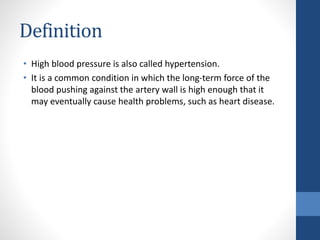
• High blood pressure is also called hypertension.
• It is a common condition in which the long-term force of the
blood pushing against the artery wall is high enough that it
may eventually cause health problems, such as heart disease.
Symptoms
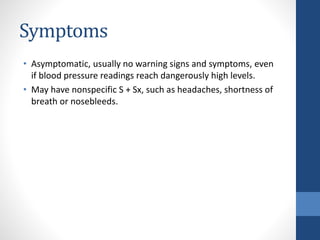
• Asymptomatic, usually no warning signs and symptoms, even
if blood pressure readings reach dangerously high levels.
• May have nonspecific S + Sx, such as headaches, shortness of
breath or nosebleeds.
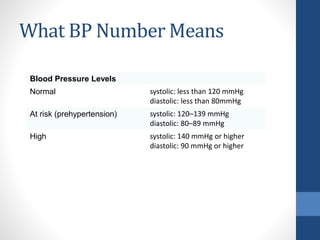
What BP Number Means
Blood Pressure Levels
Normal systolic: less than 120 mmHg
diastolic: less than 80mmHg
At risk (prehypertension) systolic: 120–139 mmHg
diastolic: 80–89 mmHg
High systolic: 140 mmHg or higher
diastolic: 90 mmHg or higher
Causes
Primary(essential) hypertension
No identifiable cause of high blood pressure, tends to develop
gradually over many years.
Secondary hypertension
Caused by an underlying condition, including:
• Obstructive sleep apnea
• Kidney problems
• Thyroid problems
• Illegal drugs, such as cocaine and amphetamines
• Certain medications, such as birth control pills, cold remedies,
decongestants, OTC pain relievers
• Alcohol abuse or chronic alcohol use
Risk Factor
• Race: If you're African American, there's a good chance that
you or a relative has HBP.
• Gender: Starting at age 65, women are more likely to have
high blood pressure than men.
• Family History
• Advanced age
• Lack of physical activity
• Too much sodium in your diet
• Being overweight and obesity
• Too much alcohol intake
• Using tobacco
• stress
Treatment/Intervention
Lifestyle modifications:
• Eat healthy food, try the Dietary Approaches to Stop
HTN(DASH) diet
• Reduce salt intake, avoid table salt.
• Increase physical activity
• Maintain a healthy weight
• Manage stress
• Avoid tobacco smoke
• Limit alcohol intake
• Monitor your blood pressure at home
Medication Regimen:
• Take medication as prescribed
Medication
Thiazide diuretics
Hydrochlorothiazide (Microzide), chlorthalidone……
Beta blockers
Acebutolol (sectral), atenolol (Tenormin)……
Angiotensin-converting enzyme(ACE)inhibitors
Lisinopril (Zestril), benazepril (Lotensin), captopril (Capoten)……
Angiotensin II receptor blockers(ARBs)
Candesartan (Atacand), losartan (Cozaar)……
Calcium channel blockers
Amlodipine (Norvasc), diltiazem (Cardizem)
Medication Continued…
Alpha blockers
Doxazosin(cardura), Prazosin (Minipress)…
Alpha-beta blockers
Carvedilol (Coreg), labetalol (Trandate)…
Central-acting agents
Clonidine (Catapres, Kapvay), Guanfacine (Intunivm Tenex)
Vasodilators
Hydralazine and minoxidil
Aldosterone antagonists
Spironolactone (Aldactone), Eplerenone (Inspra)
Side Effect of antihypertensive
medications
• Cough
• Diarrhea or constipation
• Dizziness or light-headedness
• Erection problems
• Feeling nervous
• Feeling tired, weak, drowsy, or a lack of energy
• Headache
• Nausea or vomitting
• Skin rash
• Weight loss or gain without trying
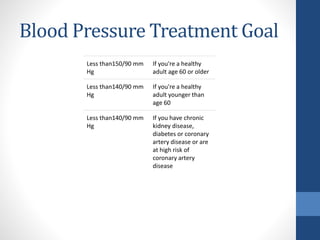
Blood Pressure Treatment Goal
Less than150/90 mm
Hg
If you're a healthy
adult age 60 or older
Less than140/90 mm
Hg
If you're a healthy
adult younger than
age 60
Less than140/90 mm
Hg
If you have chronic
kidney disease,
diabetes or coronary
artery disease or are
at high risk of
coronary artery
disease
Care Manager's Intervention
Evidence-based Guidelines
• Telephonic care management
• Lifestyle modification education
• Risk assessment
• Hypertension assessment
Outcome Measures
• Medication adherence
• Lifestyle changes
• BP within normal range
• Response to treatment
• Effective of evaluation assessments & screening tools
References
• 1)
http://www.heart.org/HEARTORG/Conditions/HighBloodPress
ure/High-Blood-Pressure-or-
Hypertension_UCM_002020_SubHomePage.jsp#
• 2) http://www.mayoclinic.org/diseases-conditions/high-
blood-pressure/basics/definition/con-20019580
• 3)
http://www.cdc.gov/dhdsp/data_statistics/fact_sheets/fs_blo
odpressure.htm
• 4)
https://www.nlm.nih.gov/medlineplus/ency/article/007484.ht
m

Hypertension education

  • 1.
  • 2.
    Definition • High bloodpressure is also called hypertension. • It is a common condition in which the long-term force of the blood pushing against the artery wall is high enough that it may eventually cause health problems, such as heart disease.
  • 3.
    Symptoms • Asymptomatic, usuallyno warning signs and symptoms, even if blood pressure readings reach dangerously high levels. • May have nonspecific S + Sx, such as headaches, shortness of breath or nosebleeds.
  • 4.
    What BP NumberMeans Blood Pressure Levels Normal systolic: less than 120 mmHg diastolic: less than 80mmHg At risk (prehypertension) systolic: 120–139 mmHg diastolic: 80–89 mmHg High systolic: 140 mmHg or higher diastolic: 90 mmHg or higher
  • 5.
    Causes Primary(essential) hypertension No identifiablecause of high blood pressure, tends to develop gradually over many years. Secondary hypertension Caused by an underlying condition, including: • Obstructive sleep apnea • Kidney problems • Thyroid problems • Illegal drugs, such as cocaine and amphetamines • Certain medications, such as birth control pills, cold remedies, decongestants, OTC pain relievers • Alcohol abuse or chronic alcohol use
  • 6.
    Risk Factor • Race:If you're African American, there's a good chance that you or a relative has HBP. • Gender: Starting at age 65, women are more likely to have high blood pressure than men. • Family History • Advanced age • Lack of physical activity • Too much sodium in your diet • Being overweight and obesity • Too much alcohol intake • Using tobacco • stress
  • 7.
    Treatment/Intervention Lifestyle modifications: • Eathealthy food, try the Dietary Approaches to Stop HTN(DASH) diet • Reduce salt intake, avoid table salt. • Increase physical activity • Maintain a healthy weight • Manage stress • Avoid tobacco smoke • Limit alcohol intake • Monitor your blood pressure at home Medication Regimen: • Take medication as prescribed
  • 8.
    Medication Thiazide diuretics Hydrochlorothiazide (Microzide),chlorthalidone…… Beta blockers Acebutolol (sectral), atenolol (Tenormin)…… Angiotensin-converting enzyme(ACE)inhibitors Lisinopril (Zestril), benazepril (Lotensin), captopril (Capoten)…… Angiotensin II receptor blockers(ARBs) Candesartan (Atacand), losartan (Cozaar)…… Calcium channel blockers Amlodipine (Norvasc), diltiazem (Cardizem)
  • 9.
    Medication Continued… Alpha blockers Doxazosin(cardura),Prazosin (Minipress)… Alpha-beta blockers Carvedilol (Coreg), labetalol (Trandate)… Central-acting agents Clonidine (Catapres, Kapvay), Guanfacine (Intunivm Tenex) Vasodilators Hydralazine and minoxidil Aldosterone antagonists Spironolactone (Aldactone), Eplerenone (Inspra)
  • 10.
    Side Effect ofantihypertensive medications • Cough • Diarrhea or constipation • Dizziness or light-headedness • Erection problems • Feeling nervous • Feeling tired, weak, drowsy, or a lack of energy • Headache • Nausea or vomitting • Skin rash • Weight loss or gain without trying
  • 11.
    Blood Pressure TreatmentGoal Less than150/90 mm Hg If you're a healthy adult age 60 or older Less than140/90 mm Hg If you're a healthy adult younger than age 60 Less than140/90 mm Hg If you have chronic kidney disease, diabetes or coronary artery disease or are at high risk of coronary artery disease
  • 12.
    Care Manager's Intervention Evidence-basedGuidelines • Telephonic care management • Lifestyle modification education • Risk assessment • Hypertension assessment
  • 13.
    Outcome Measures • Medicationadherence • Lifestyle changes • BP within normal range • Response to treatment • Effective of evaluation assessments & screening tools
  • 14.
    References • 1) http://www.heart.org/HEARTORG/Conditions/HighBloodPress ure/High-Blood-Pressure-or- Hypertension_UCM_002020_SubHomePage.jsp# • 2)http://www.mayoclinic.org/diseases-conditions/high- blood-pressure/basics/definition/con-20019580 • 3) http://www.cdc.gov/dhdsp/data_statistics/fact_sheets/fs_blo odpressure.htm • 4) https://www.nlm.nih.gov/medlineplus/ency/article/007484.ht m

Editor's Notes

  • #3 According to CDC, About 70 million American adults (29%) have high blood pressure—that’s 1 in every 3 adults. About 1 in 3 American adults has prehypertension—blood pressure numbers that are higher than normal—but not yet in the high blood pressure range. Only about half (52%) of people with high blood pressure have their condition under control.
  • #5 A blood pressure reading, given in millimeters of mercury. Systolic pressure: pressure in your arteries when your heart beats. Diastolic pressure: pressure in your arteries between beats
  • #8 DASH diet emphasizes fruits, vegetables, whole grains, poultry, fish and low-fat dairy foods, eat less saturated fat and trans fat. Stress coping techniques: muscle relaxation, deep breathing, meditation, listen to soothing music, getting regular physical activity and adequate sleep can help too. Limit one drink a day for female and two drinks a day for men
  • #11 Educate member to report to PCP if he/she has side effects or the side effects are causing him/her problems. Never change the dose or stop taking a medicine without consult your PCP. Educate member on fall precautions and preventions if member has dizziness or light-headedness.