HYDROGEN STORAGE
Hydrogen and Fuel Cell Technologies Office
• The Hydrogen and Fuel Cell Technologies Office (HFTO) is developing
onboard automotive hydrogen storage systems that allow for a
driving range of more than 300 miles while meeting cost, safety, and
performance requirements
Why Study Hydrogen Storage
• Hydrogen storage is a key enabling technology for the advancement
of hydrogen and fuel cell technologies in applications including
stationary power, portable power, and transportation. Hydrogen has
the highest energy per mass of any fuel; however, its low ambient
temperature density results in a low energy per unit volume,
therefore requiring the development of advanced storage methods
that have potential for higher energy density
How Hydrogen Storage Works
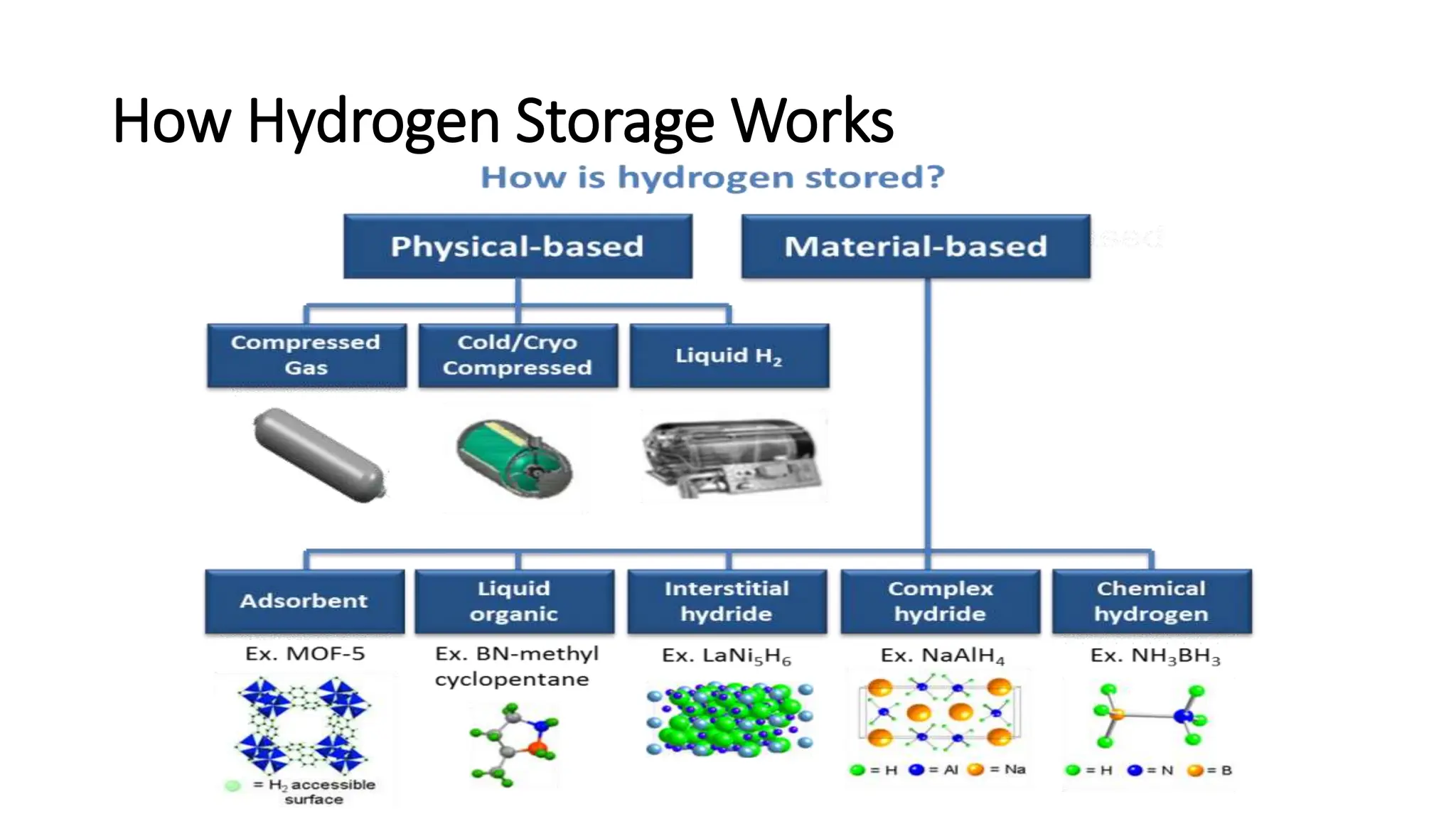
• Hydrogen can be stored physically as either a gas or a liquid. Storage
of hydrogen as a gas typically requires high-pressure tanks (350–700
bar [5,000–10,000 psi] tank pressure). Storage of hydrogen as a liquid
requires cryogenic temperatures because the boiling point of
hydrogen at one atmosphere pressure is −252.8°C. Hydrogen can also
be stored on the surfaces of solids (by adsorption) or within solids (by
absorption)
How Hydrogen Storage Works
Research and Development Goals
• HFTO conducts research and development activities to advance hydrogen
storage systems technology and develop novel hydrogen storage materials.
The goal is to provide adequate hydrogen storage to meet the U.S.
Department of Energy (DOE) hydrogen storage targets for onboard light-
duty vehicle, material-handling equipment, and portable
power applications. By 2020, HFTO aims to develop and verify onboard
automotive hydrogen storage systems achieving targets that will allow
hydrogen-fueled vehicle platforms to meet customer performance
expectations for range, passenger and cargo space, refueling time, and
overall vehicle performance. Specific system targets include the following:
• 1.5 kWh/kg system (4.5 wt.% hydrogen)
• 1.0 kWh/L system (0.030 kg hydrogen/L)
• $10/kWh ($333/kg stored hydrogen capacity)
• The collaborative Hydrogen Storage Engineering Center of
Excellence conducts analysis activities to determine the current status of
materials-based storage system technologies.
• The Hydrogen Materials—Advanced Research Consortium
(HyMARC) conducts foundational research to understand the interaction of
hydrogen with materials in relation to the formation and release of
hydrogen from hydrogen storage materials
Research and Development Goals
Challenges
The 2010 U.S. light-duty vehicle sales distribution by driving range.
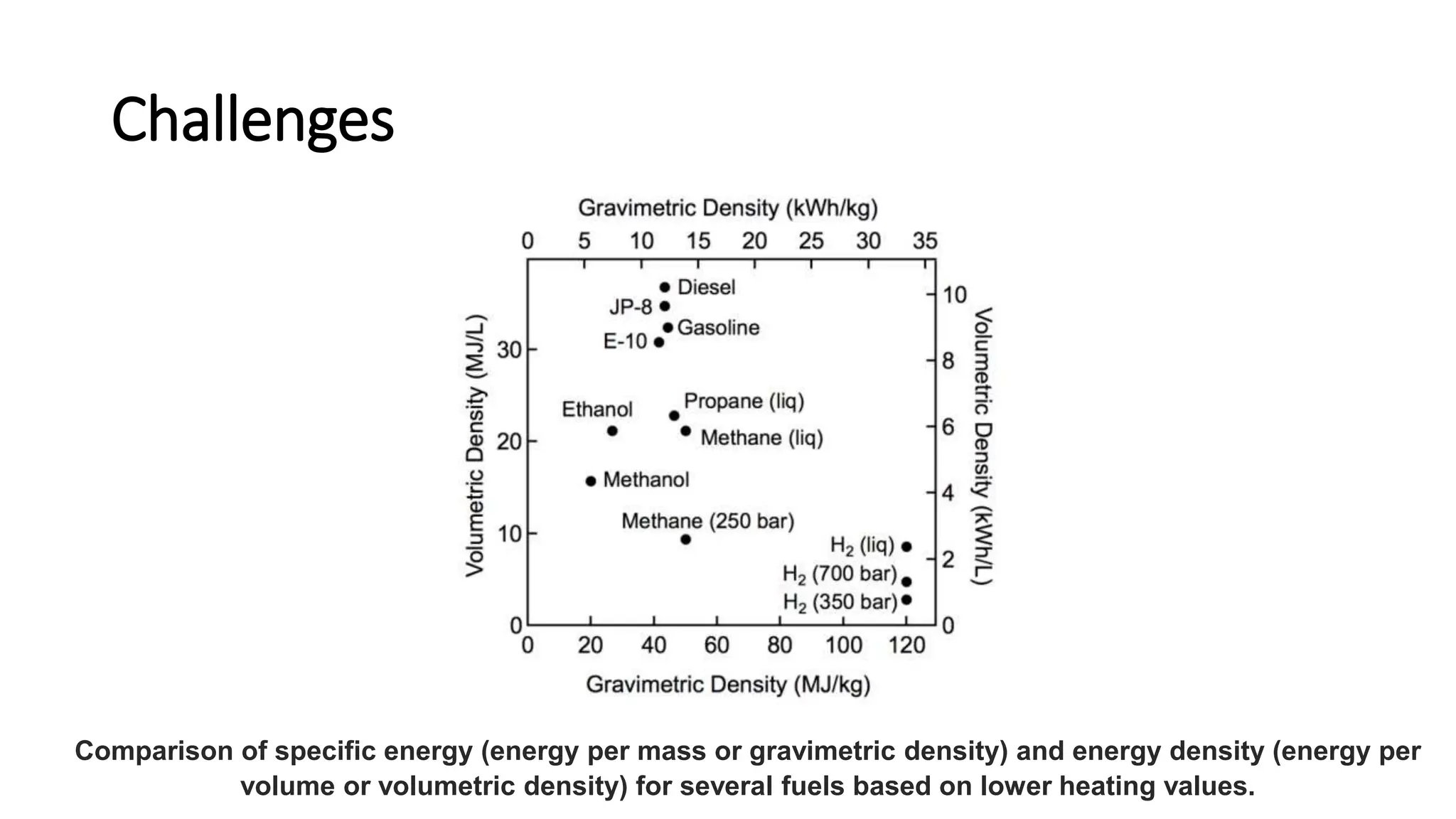
Comparison of specific energy (energy per mass or gravimetric density) and energy density (energy per
volume or volumetric density) for several fuels based on lower heating values.
Challenges
• High density hydrogen storage is a challenge for stationary and
portable applications and remains a significant challenge for
transportation applications. Presently available storage options
typically require large-volume systems that store hydrogen in gaseous
form. This is less of an issue for stationary applications, where the
footprint of compressed gas tanks may be less critical.
Challenges
• However, fuel-cell-powered vehicles require enough hydrogen to
provide a driving range of more than 300 miles with the ability to
quickly and easily refuel the vehicle. While some light-duty hydrogen
fuel cell electric vehicles (FCEVs) that are capable of this range have
emerged onto the market, these vehicles will rely on compressed gas
onboard storage using large-volume, high-pressure composite vessels.
The required large storage volumes may have less impact for larger
vehicles, but providing sufficient hydrogen storage across all light-
duty platforms remains a challenge. The importance of the 300-mile-
range goal can be appreciated by looking at the sales distribution by
range chart on this page, which shows that most vehicles sold today
are capable of exceeding this minimum
Challenges
• On a mass basis, hydrogen has nearly three times the energy content of
gasoline—120 MJ/kg for hydrogen versus 44 MJ/kg for gasoline. On a
volume basis, however, the situation is reversed; liquid hydrogen has a
density of 8 MJ/L whereas gasoline has a density of 32 MJ/L, as shown in
the figure comparing energy densities of fuels based on lower heating
values. Onboard hydrogen storage capacities of 5–13 kg hydrogen will be
required to meet the driving range for the full range of light-duty vehicle
platforms
Challenges
• To overcome these challenges HFTO is pursuing two strategic
pathways, targeting both near-term and long-term solutions. The
near-term pathway focuses on compressed gas storage, using
advanced pressure vessels made of fiber reinforced composites that
are capable of reaching 700 bar pressure, with a major emphasis on
system cost reduction. The long-term pathway focuses on both (1)
cold or cryo-compressed hydrogen storage, where increased
hydrogen density and insulated pressure vessels may allow for DOE
targets to be met and (2) materials-based hydrogen storage
technologies, including sorbents, chemical hydrogen storage
materials, and metal hydrides, with properties having potential to
meet DOE hydrogen storage targets.
Challenges

Hydrogen Storage Hydrogen and Fuel Cell Technologies.pptx

  • 1.
    HYDROGEN STORAGE Hydrogen andFuel Cell Technologies Office
  • 2.
    • The Hydrogenand Fuel Cell Technologies Office (HFTO) is developing onboard automotive hydrogen storage systems that allow for a driving range of more than 300 miles while meeting cost, safety, and performance requirements
  • 3.
    Why Study HydrogenStorage • Hydrogen storage is a key enabling technology for the advancement of hydrogen and fuel cell technologies in applications including stationary power, portable power, and transportation. Hydrogen has the highest energy per mass of any fuel; however, its low ambient temperature density results in a low energy per unit volume, therefore requiring the development of advanced storage methods that have potential for higher energy density
  • 4.
  • 5.
    • Hydrogen canbe stored physically as either a gas or a liquid. Storage of hydrogen as a gas typically requires high-pressure tanks (350–700 bar [5,000–10,000 psi] tank pressure). Storage of hydrogen as a liquid requires cryogenic temperatures because the boiling point of hydrogen at one atmosphere pressure is −252.8°C. Hydrogen can also be stored on the surfaces of solids (by adsorption) or within solids (by absorption) How Hydrogen Storage Works
  • 6.
    Research and DevelopmentGoals • HFTO conducts research and development activities to advance hydrogen storage systems technology and develop novel hydrogen storage materials. The goal is to provide adequate hydrogen storage to meet the U.S. Department of Energy (DOE) hydrogen storage targets for onboard light- duty vehicle, material-handling equipment, and portable power applications. By 2020, HFTO aims to develop and verify onboard automotive hydrogen storage systems achieving targets that will allow hydrogen-fueled vehicle platforms to meet customer performance expectations for range, passenger and cargo space, refueling time, and overall vehicle performance. Specific system targets include the following: • 1.5 kWh/kg system (4.5 wt.% hydrogen) • 1.0 kWh/L system (0.030 kg hydrogen/L) • $10/kWh ($333/kg stored hydrogen capacity)
  • 7.
    • The collaborativeHydrogen Storage Engineering Center of Excellence conducts analysis activities to determine the current status of materials-based storage system technologies. • The Hydrogen Materials—Advanced Research Consortium (HyMARC) conducts foundational research to understand the interaction of hydrogen with materials in relation to the formation and release of hydrogen from hydrogen storage materials Research and Development Goals
  • 8.
    Challenges The 2010 U.S.light-duty vehicle sales distribution by driving range.
  • 9.
    Comparison of specificenergy (energy per mass or gravimetric density) and energy density (energy per volume or volumetric density) for several fuels based on lower heating values. Challenges
  • 10.
    • High densityhydrogen storage is a challenge for stationary and portable applications and remains a significant challenge for transportation applications. Presently available storage options typically require large-volume systems that store hydrogen in gaseous form. This is less of an issue for stationary applications, where the footprint of compressed gas tanks may be less critical. Challenges
  • 11.
    • However, fuel-cell-poweredvehicles require enough hydrogen to provide a driving range of more than 300 miles with the ability to quickly and easily refuel the vehicle. While some light-duty hydrogen fuel cell electric vehicles (FCEVs) that are capable of this range have emerged onto the market, these vehicles will rely on compressed gas onboard storage using large-volume, high-pressure composite vessels. The required large storage volumes may have less impact for larger vehicles, but providing sufficient hydrogen storage across all light- duty platforms remains a challenge. The importance of the 300-mile- range goal can be appreciated by looking at the sales distribution by range chart on this page, which shows that most vehicles sold today are capable of exceeding this minimum Challenges
  • 12.
    • On amass basis, hydrogen has nearly three times the energy content of gasoline—120 MJ/kg for hydrogen versus 44 MJ/kg for gasoline. On a volume basis, however, the situation is reversed; liquid hydrogen has a density of 8 MJ/L whereas gasoline has a density of 32 MJ/L, as shown in the figure comparing energy densities of fuels based on lower heating values. Onboard hydrogen storage capacities of 5–13 kg hydrogen will be required to meet the driving range for the full range of light-duty vehicle platforms Challenges
  • 13.
    • To overcomethese challenges HFTO is pursuing two strategic pathways, targeting both near-term and long-term solutions. The near-term pathway focuses on compressed gas storage, using advanced pressure vessels made of fiber reinforced composites that are capable of reaching 700 bar pressure, with a major emphasis on system cost reduction. The long-term pathway focuses on both (1) cold or cryo-compressed hydrogen storage, where increased hydrogen density and insulated pressure vessels may allow for DOE targets to be met and (2) materials-based hydrogen storage technologies, including sorbents, chemical hydrogen storage materials, and metal hydrides, with properties having potential to meet DOE hydrogen storage targets. Challenges