Hydrocortisone Please!Allergies, Hives, and VaccinationsTakyra DudleyMedical Terminology Professor Rashidah Abdullah
AllergiesAn allergy is a hypersensitivity to a common substance in the environment or to a medication.It is in direction relation to the immune system.Allergies can be diagnosed using blood tests as well as a scratch test where the body is introduced to allergens.
Allergies cont.Allergies can be genetically influenced as well as environmentally influenced.Allergens can be food, airborne particles such as dust and pollen, as well as medicines like penicillin.
Common signs of allergyNose - swelling of the nasal mucosaSinuses - allergic sinusitis Eyes - redness and itchingAirways - Sneezing, coughing, shortness of breath, wheezing, mucus in the  lungs Ears - feeling of fullness, possibly pain, and impaired hearingSkin - rashes, such as eczema and hivesGastrointestinal tract - abdominal pain, bloating, vomiting, diarrhea
HivesHives is an outbreak of swollen, red bumps that appear on the skin all of a sudden.Hives are a type of allergy.Usually itch but can also burn or sting.These bumps can range in size and are often mistaken for other skin conditions.
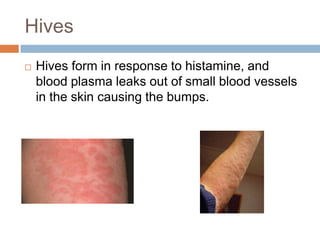
HivesHives form in response to histamine, and blood plasma leaks out of small blood vessels in the skin causing the bumps.
VaccinationsVaccination is the process of introducing the body to viruses and infections to promote the production of antibodies to that disease.This can prevent future sickness and control an outbreak of a diseases.Most common diseases that people are immunized against are Hepatitis B, diptheria, polio, measles and chicken pox.
VaccinationsBefore vaccines for these diseases hundreds and thousand of people lost their lives.Although vaccines save lives they also pose a danger for some who have the adverse response.
Chicken PoxEffects of PolioDiphtheriaAdult with Tetanus
TreatmentsThe easiest way to treat allergies is avoidance. Stay away from foods and animals that may cause an allergic reaction.Diagnosis, identify allergens to prevent accidental introduction to such.And medications for sudden attacks such as injections of epinephrine.
*Takes Bow*Thank you, I hope this presentation was informative.

Hydrocortisone please! tk pres

  • 1.
    Hydrocortisone Please!Allergies, Hives,and VaccinationsTakyra DudleyMedical Terminology Professor Rashidah Abdullah
  • 2.
    AllergiesAn allergy isa hypersensitivity to a common substance in the environment or to a medication.It is in direction relation to the immune system.Allergies can be diagnosed using blood tests as well as a scratch test where the body is introduced to allergens.
  • 3.
    Allergies cont.Allergies canbe genetically influenced as well as environmentally influenced.Allergens can be food, airborne particles such as dust and pollen, as well as medicines like penicillin.
  • 4.
    Common signs ofallergyNose - swelling of the nasal mucosaSinuses - allergic sinusitis Eyes - redness and itchingAirways - Sneezing, coughing, shortness of breath, wheezing, mucus in the lungs Ears - feeling of fullness, possibly pain, and impaired hearingSkin - rashes, such as eczema and hivesGastrointestinal tract - abdominal pain, bloating, vomiting, diarrhea
  • 5.
    HivesHives is anoutbreak of swollen, red bumps that appear on the skin all of a sudden.Hives are a type of allergy.Usually itch but can also burn or sting.These bumps can range in size and are often mistaken for other skin conditions.
  • 6.
    HivesHives form inresponse to histamine, and blood plasma leaks out of small blood vessels in the skin causing the bumps.
  • 7.
    VaccinationsVaccination is theprocess of introducing the body to viruses and infections to promote the production of antibodies to that disease.This can prevent future sickness and control an outbreak of a diseases.Most common diseases that people are immunized against are Hepatitis B, diptheria, polio, measles and chicken pox.
  • 8.
    VaccinationsBefore vaccines forthese diseases hundreds and thousand of people lost their lives.Although vaccines save lives they also pose a danger for some who have the adverse response.
  • 9.
    Chicken PoxEffects ofPolioDiphtheriaAdult with Tetanus
  • 10.
    TreatmentsThe easiest wayto treat allergies is avoidance. Stay away from foods and animals that may cause an allergic reaction.Diagnosis, identify allergens to prevent accidental introduction to such.And medications for sudden attacks such as injections of epinephrine.
  • 11.
    *Takes Bow*Thank you,I hope this presentation was informative.