Download to read offline
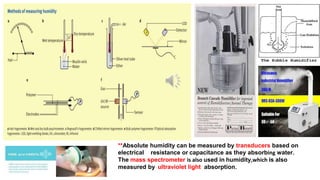
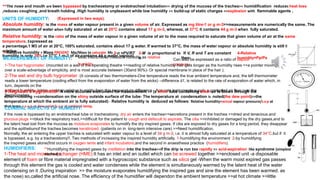
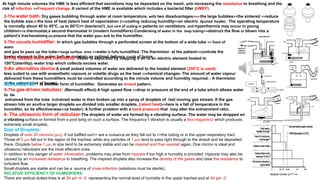

Humidification is important when the nose or mouth are bypassed to prevent drying of the trachea mucosa. Several methods are used to measure humidity including electrical resistance/capacitance transducers, mass spectrometers, and ultraviolet light absorption. Humidifiers aim to saturate inspired gases to 34g/m3 which is normal humidity levels in the upper trachea. Common humidifiers include heat and moisture exchangers (HME), water baths, cascade, and heated element types. Precise control of humidity levels and droplet size is needed to avoid issues like burns, water intoxication, hypoxia, or increased breathing resistance.


![The Sine Wave and Wave Patterns 1[Autosaved].pptx](https://cdn.slidesharecdn.com/ss_thumbnails/thesinewaveandwavepatterns1autosaved-220830094731-ff088a33-thumbnail.jpg?width=640&height=640&fit=bounds)


