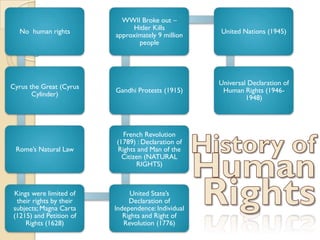



















WWII Broke out –
                              Hitler Kills
  No human rights                                   United Nations (1945)
                         approximately 9 million
                                people


                                                    Universal Declaration of
Cyrus the Great (Cyrus
                         Gandhi Protests (1915)      Human Rights (1946-
       Cylinder)
                                                             1948)


                           French Revolution
                         (1789) : Declaration of
 Rome’s Natural Law      Rights and Man of the
                           Citizen (NATURAL
                                RIGHTS)


Kings were limited of         United State’s
 their rights by their        Declaration of
subjects; Magna Carta    Independence: Individual
(1215) and Petition of      Rights and Right of
    Rights (1628)           Revolution (1776)
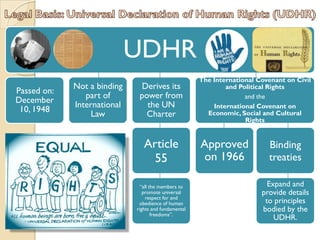
UDHR
                                                      The International Covenant on Civil
             Not a binding    Derives its                     and Political Rights
Passed on:
                part of       power from                            and the
December
             International      the UN                    International Covenant on
 10, 1948
                  Law           Charter                 Economic, Social and Cultural
                                                                    Rights


                                Article               Approved             Binding
                                  55                  on 1966              treaties

                               “all the members to                         Expand and
                                promote universal                        provide details
                                  respect for and
                              obedience of human                          to principles
                             rights and fundamental                      bodied by the
                                     freedoms”.
                                                                             UDHR.
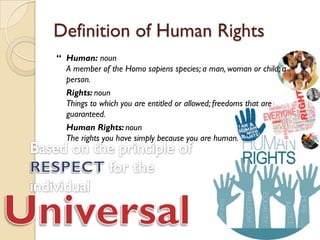
Definition of Human Rights
“ Human: noun
  A member of the Homo sapiens species; a man, woman or child; a
  person.
  Rights: noun
  Things to which you are entitled or allowed; freedoms that are
  guaranteed.
  Human Rights: noun
  The rights you have simply because you are human. ”
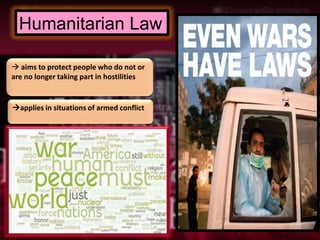
Humanitarian Law

 aims to protect people who do not or
are no longer taking part in hostilities


applies in situations of armed conflict
 Developed through practice and then through treaty law; contains a
very large number of detailed rules that reflect the balance.
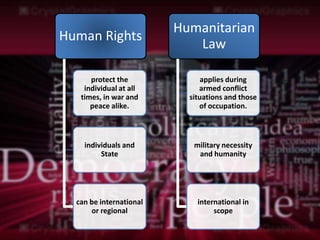
Humanitarian
Human Rights
                            Law

      protect the              applies during
    individual at all         armed conflict
   times, in war and       situations and those
      peace alike.            of occupation.


    individuals and         military necessity
         State               and humanity


  can be international       international in
      or regional                 scope
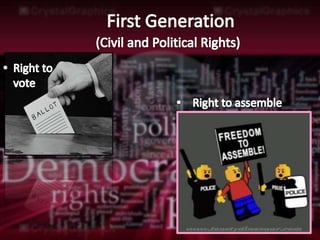
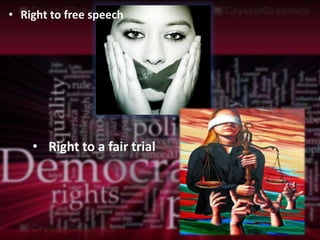
• Right to free speech


    • Right to a fair trial
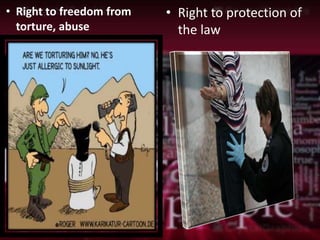
• Right to freedom from   • Right to protection of
  torture, abuse            the law
• Right to education
        Second Generation

   (Economic, Social and Cultural Rights)
• Right to health
• Right to employment
                        • Right to an adequate
                          income
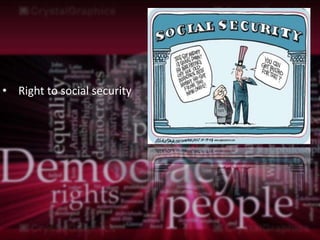
• Right to social security
Right to benefit
Right to economic
                       Right to prosperity      from economic
  development
                                                    growth


                                   Right to a healthy
             Right to social
                                  environment, clean
                harmony
                                   air and water, etc.
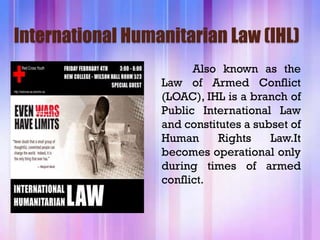
International Humanitarian Law (IHL)
                        Also known as the
                  Law of Armed Conflict
                  (LOAC), IHL is a branch of
                  Public International Law
                  and constitutes a subset of
                  Human      Rights    Law.It
                  becomes operational only
                  during times of armed
                  conflict.
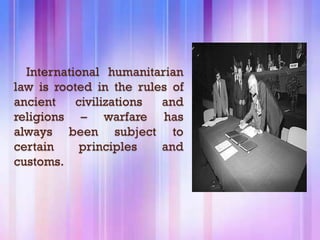
International humanitarian
law is rooted in the rules of
ancient    civilizations and
religions – warfare has
always been subject to
certain     principles   and
customs.
The Geneva Law as it has
evolve since the Battle of
Solferino in 1895 concerned itself
mainly for the protection of the
victims of war while Hague Law
focused on the limitations of the
means and methods of warfare.
Ottawa Treaty of
1997 that banned
the
  production, use
and transfer of anti
personnel mines.
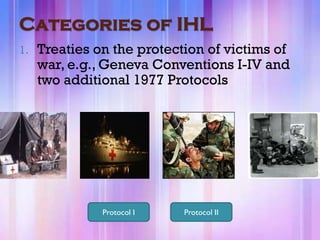
Categories of IHL
1.   Treaties on the protection of victims of
     war, e.g., Geneva Conventions I-IV and
     two additional 1977 Protocols


               Protocol I   Protocol II
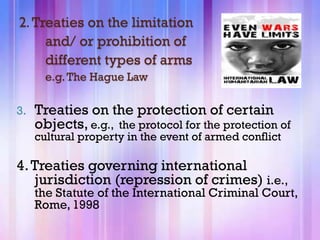
2. Treaties on the limitation
     and/ or prohibition of
     different types of arms
       e.g. The Hague Law

3.   Treaties on the protection of certain
     objects, e.g., the protocol for the protection of
     cultural property in the event of armed conflict

4. Treaties governing international
   jurisdiction (repression of crimes) i.e.,
     the Statute of the International Criminal Court,
     Rome, 1998
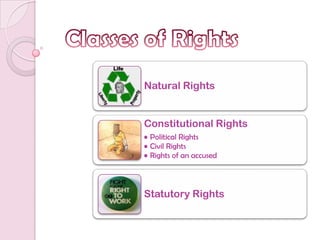
Natural Rights


Constitutional Rights
• Political Rights
• Civil Rights
• Rights of an accused


Statutory Rights
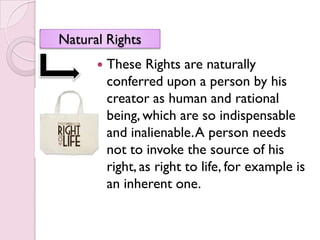
Natural Rights
         These Rights are naturally
          conferred upon a person by his
          creator as human and rational
          being, which are so indispensable
          and inalienable. A person needs
          not to invoke the source of his
          right, as right to life, for example is
          an inherent one.
Constitutional
   Rights

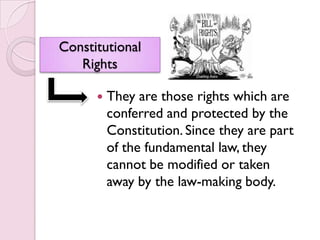
         They are those rights which are
          conferred and protected by the
          Constitution. Since they are part
          of the fundamental law, they
          cannot be modified or taken
          away by the law-making body.
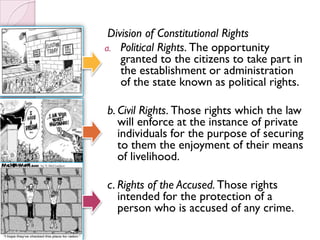
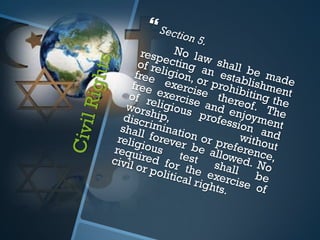
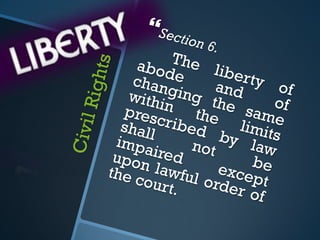
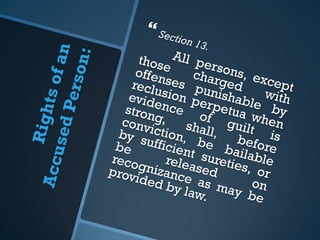
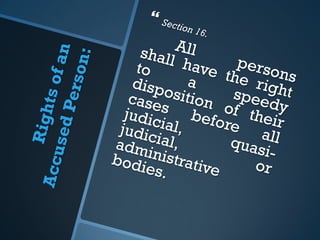
Division of Constitutional Rights
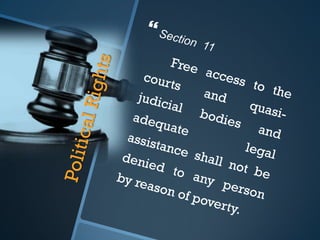
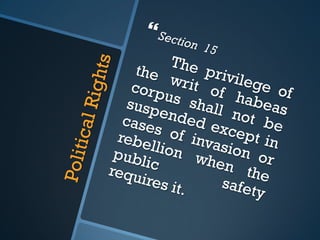
a. Political Rights. The opportunity
    granted to the citizens to take part in
    the establishment or administration
    of the state known as political rights.

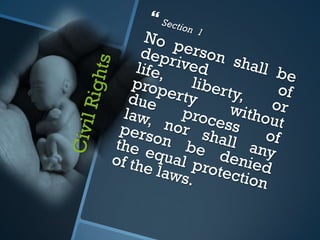
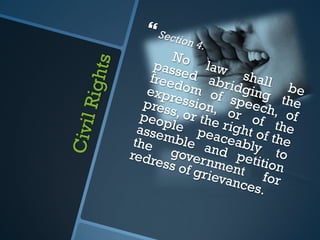
b. Civil Rights. Those rights which the law
   will enforce at the instance of private
   individuals for the purpose of securing
   to them the enjoyment of their means
   of livelihood.

c. Rights of the Accused. Those rights
   intended for the protection of a
   person who is accused of any crime.
Statutory
  Rights


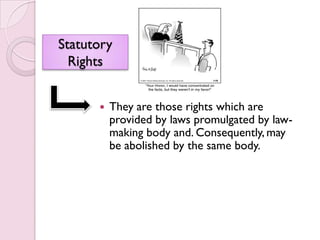
         They are those rights which are
          provided by laws promulgated by law-
          making body and. Consequently, may
          be abolished by the same body.
Human rights
Human rights
Human rights
Human rights
Human rights
Human rights
Human rights
Human rights
Human rights
Human rights
Human rights
Human rights
Human rights
Human rights
Human rights
Human rights
Human rights
Human rights
Human rights
Human rights
Human rights
Human rights
Human rights

Human rights

  • 2.
    WWII Broke out– Hitler Kills No human rights United Nations (1945) approximately 9 million people Universal Declaration of Cyrus the Great (Cyrus Gandhi Protests (1915) Human Rights (1946- Cylinder) 1948) French Revolution (1789) : Declaration of Rome’s Natural Law Rights and Man of the Citizen (NATURAL RIGHTS) Kings were limited of United State’s their rights by their Declaration of subjects; Magna Carta Independence: Individual (1215) and Petition of Rights and Right of Rights (1628) Revolution (1776)
  • 3.
    UDHR The International Covenant on Civil Not a binding Derives its and Political Rights Passed on: part of power from and the December International the UN International Covenant on 10, 1948 Law Charter Economic, Social and Cultural Rights Article Approved Binding 55 on 1966 treaties “all the members to Expand and promote universal provide details respect for and obedience of human to principles rights and fundamental bodied by the freedoms”. UDHR.
  • 4.
    Definition of HumanRights “ Human: noun A member of the Homo sapiens species; a man, woman or child; a person. Rights: noun Things to which you are entitled or allowed; freedoms that are guaranteed. Human Rights: noun The rights you have simply because you are human. ”
  • 6.
    Humanitarian Law  aimsto protect people who do not or are no longer taking part in hostilities applies in situations of armed conflict
  • 7.
     Developed throughpractice and then through treaty law; contains a very large number of detailed rules that reflect the balance.
  • 8.
    Humanitarian Human Rights Law protect the applies during individual at all armed conflict times, in war and situations and those peace alike. of occupation. individuals and military necessity State and humanity can be international international in or regional scope
  • 11.
    • Right tofree speech • Right to a fair trial
  • 12.
    • Right tofreedom from • Right to protection of torture, abuse the law
  • 13.
    • Right toeducation Second Generation (Economic, Social and Cultural Rights)
  • 14.
  • 15.
    • Right toemployment • Right to an adequate income
  • 16.
    • Right tosocial security
  • 17.
    Right to benefit Rightto economic Right to prosperity from economic development growth Right to a healthy Right to social environment, clean harmony air and water, etc.
  • 18.
    International Humanitarian Law(IHL) Also known as the Law of Armed Conflict (LOAC), IHL is a branch of Public International Law and constitutes a subset of Human Rights Law.It becomes operational only during times of armed conflict.
  • 19.
    International humanitarian law isrooted in the rules of ancient civilizations and religions – warfare has always been subject to certain principles and customs.
  • 20.
    The Geneva Lawas it has evolve since the Battle of Solferino in 1895 concerned itself mainly for the protection of the victims of war while Hague Law focused on the limitations of the means and methods of warfare.
  • 21.
    Ottawa Treaty of 1997that banned the production, use and transfer of anti personnel mines.
  • 22.
    Categories of IHL 1. Treaties on the protection of victims of war, e.g., Geneva Conventions I-IV and two additional 1977 Protocols Protocol I Protocol II
  • 23.
    2. Treaties onthe limitation and/ or prohibition of different types of arms e.g. The Hague Law 3. Treaties on the protection of certain objects, e.g., the protocol for the protection of cultural property in the event of armed conflict 4. Treaties governing international jurisdiction (repression of crimes) i.e., the Statute of the International Criminal Court, Rome, 1998
  • 25.
    Natural Rights Constitutional Rights •Political Rights • Civil Rights • Rights of an accused Statutory Rights
  • 26.
    Natural Rights  These Rights are naturally conferred upon a person by his creator as human and rational being, which are so indispensable and inalienable. A person needs not to invoke the source of his right, as right to life, for example is an inherent one.
  • 27.
    Constitutional Rights  They are those rights which are conferred and protected by the Constitution. Since they are part of the fundamental law, they cannot be modified or taken away by the law-making body.
  • 28.
    Division of ConstitutionalRights a. Political Rights. The opportunity granted to the citizens to take part in the establishment or administration of the state known as political rights. b. Civil Rights. Those rights which the law will enforce at the instance of private individuals for the purpose of securing to them the enjoyment of their means of livelihood. c. Rights of the Accused. Those rights intended for the protection of a person who is accused of any crime.
  • 29.
    Statutory Rights  They are those rights which are provided by laws promulgated by law- making body and. Consequently, may be abolished by the same body.