




HUGE:
Running an API at Scale

Sam Ramji
@sramji
Brian Pagano
@brianpagano
Ed Anuff
@edanuff                   Apigee
                          @apigee
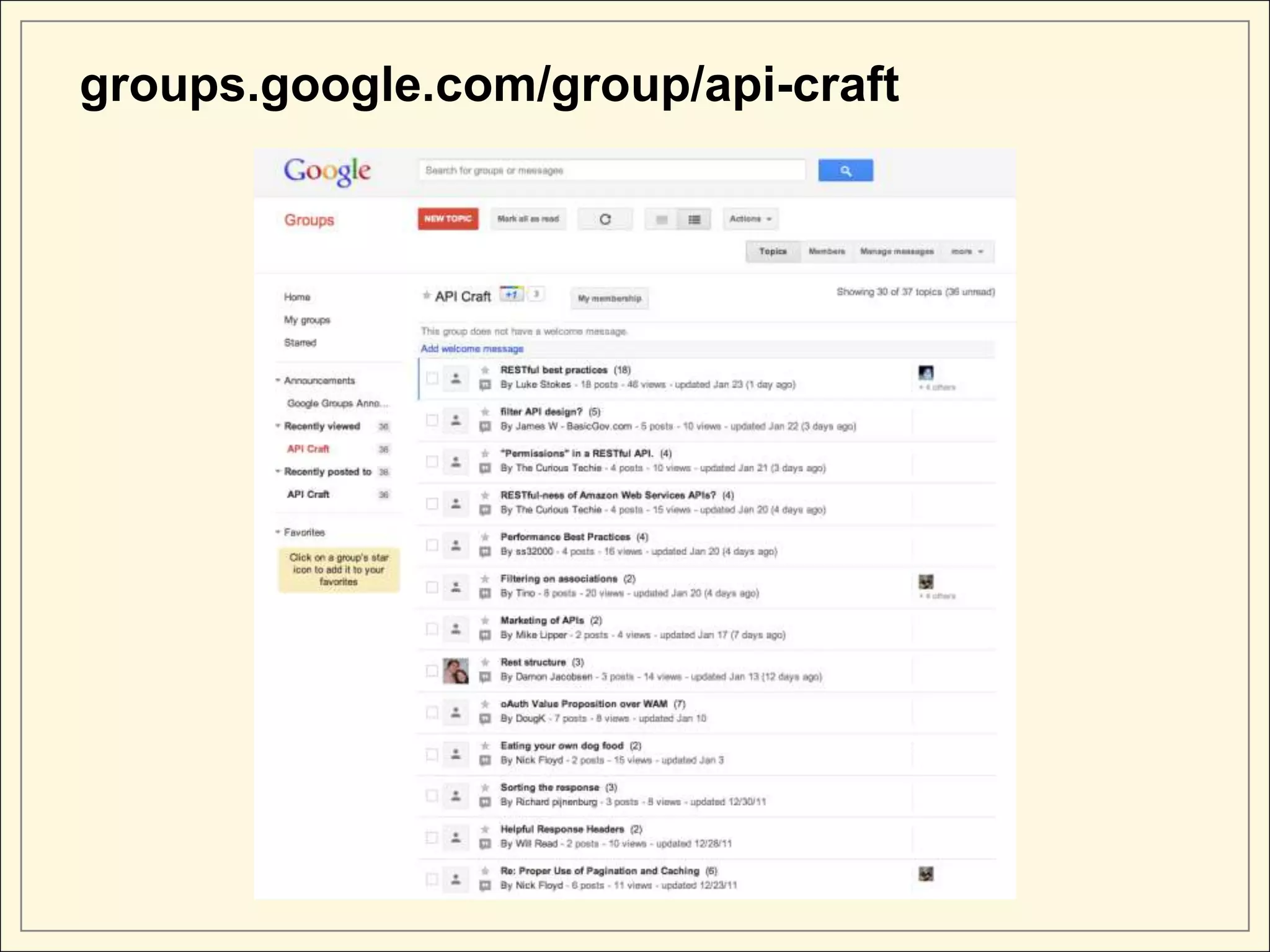
groups.google.com/group/api-craft
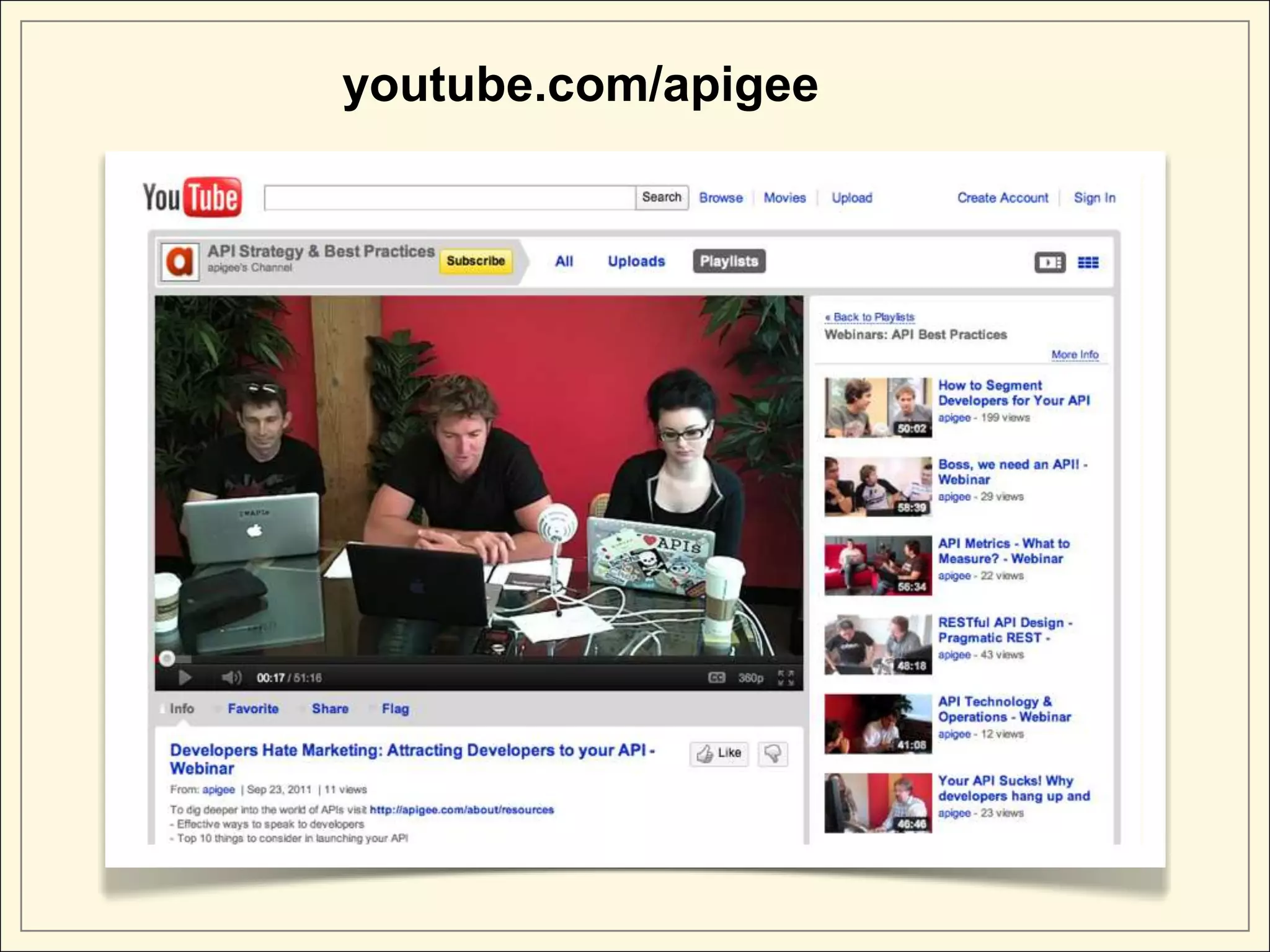
youtube.com/apigee
“   People will do stuff with our API we never
    imagined.
                            -VP of Marketing


“   People will do stuff with our API we never
    imagined.
                                         -CTO
80
     Now What?
“   The constructionist hypothesis breaks
    down when confronted with the twin
    difficulties of scale and complexity.

                             -P.W. Anderson
                            More is Different
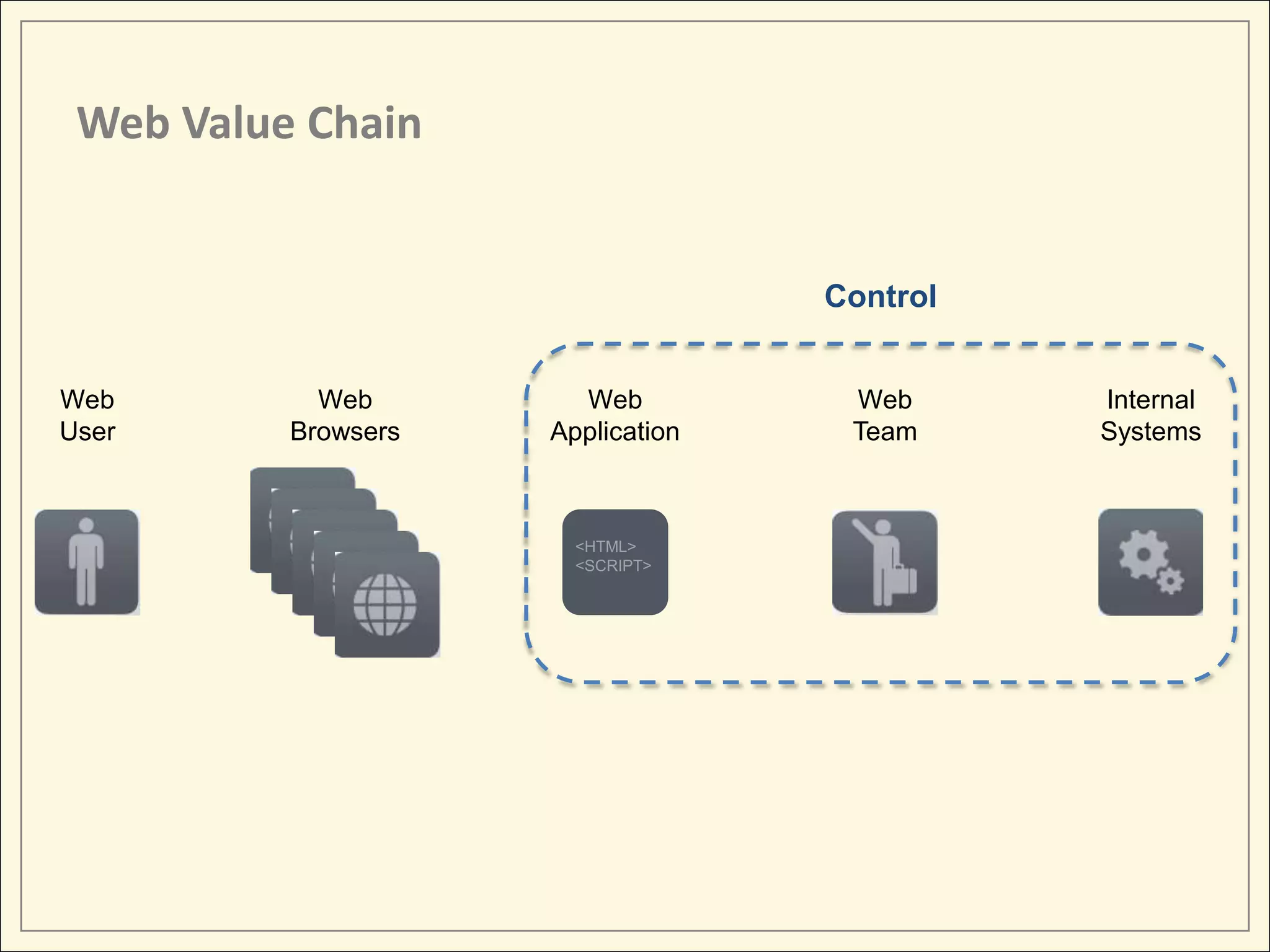
Web Value Chain


                                   Control


Web         Web        Web          Web      Internal
User      Browsers   Application    Team     Systems


                       <HTML>
                       <SCRIPT>
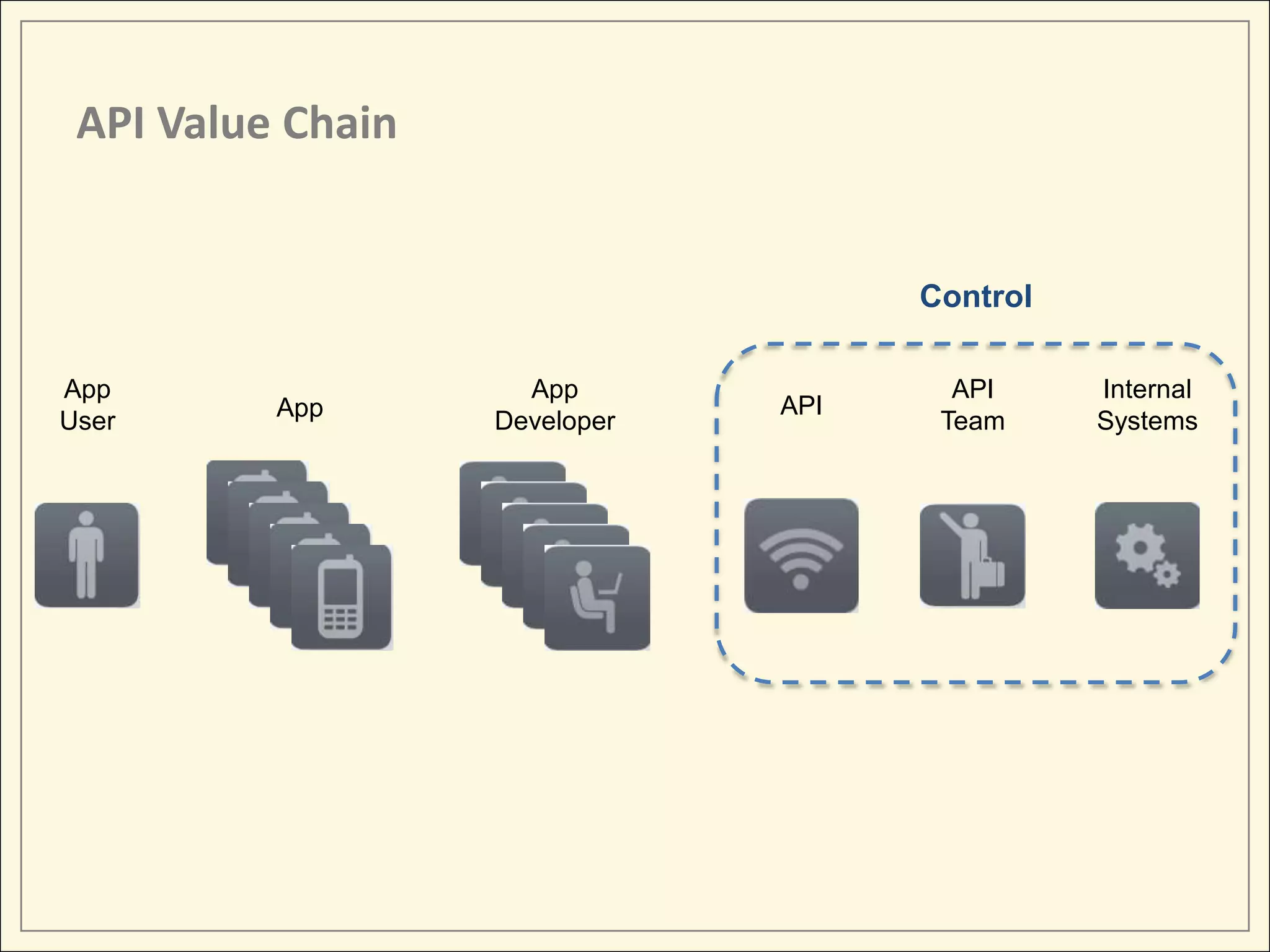
API Value Chain


                                     Control

App                  App               API     Internal
          App                  API
User               Developer          Team     Systems
Running a huge web product and running a huge
API product are different endeavors.
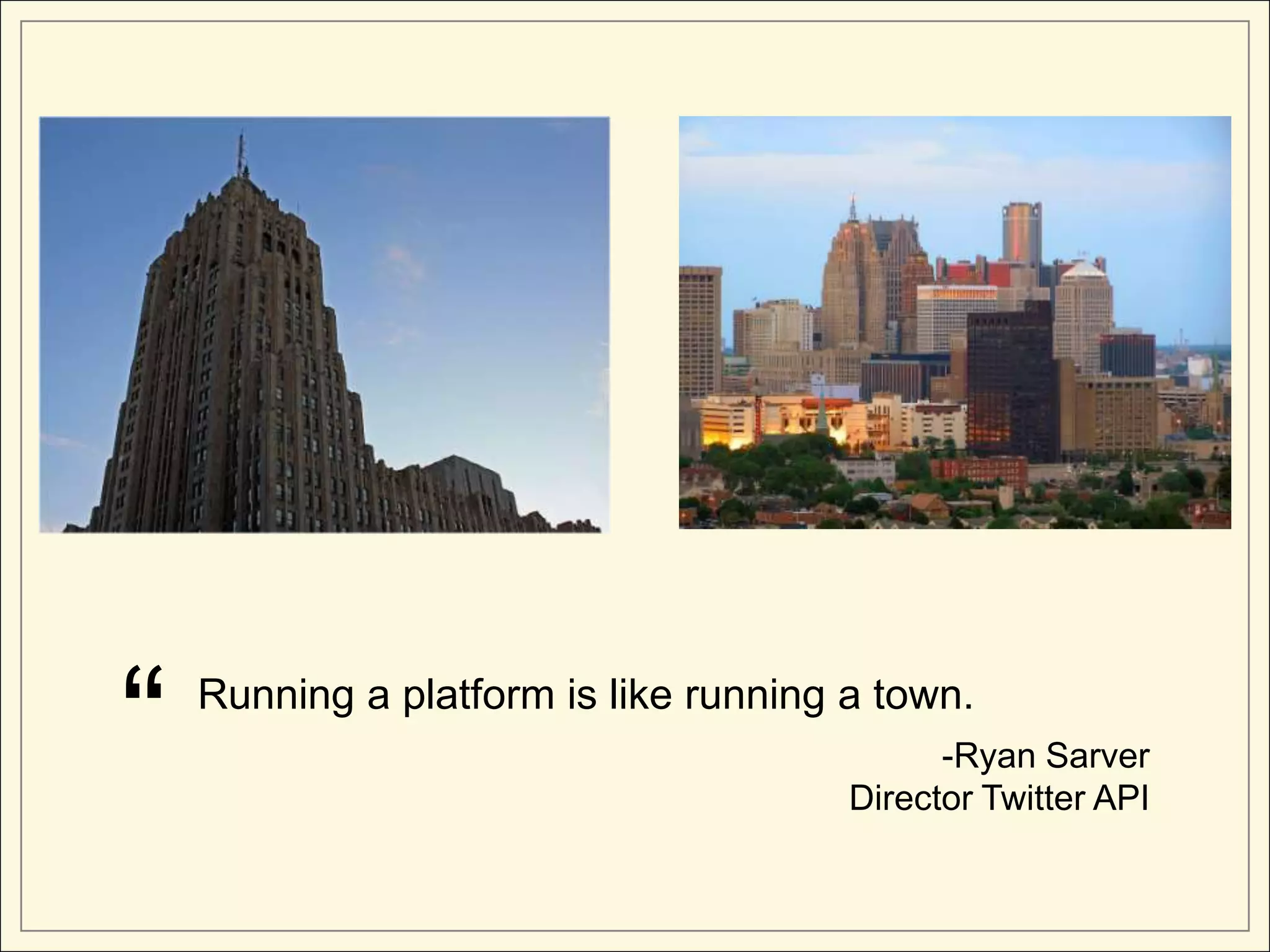
“   Running a platform is like running a town.
                                             -Ryan Sarver
                                       Director Twitter API
Complexity
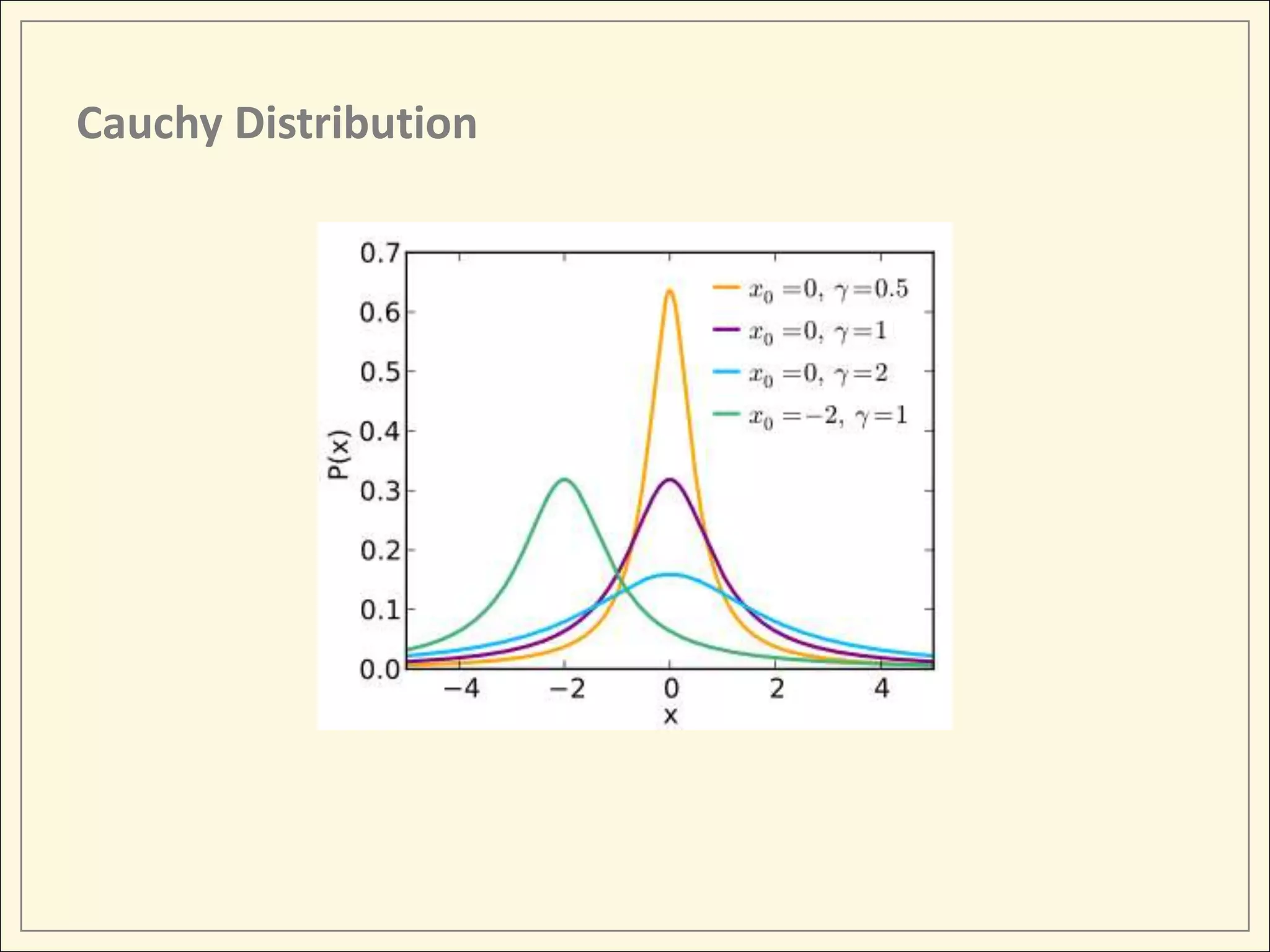
Cauchy Distribution
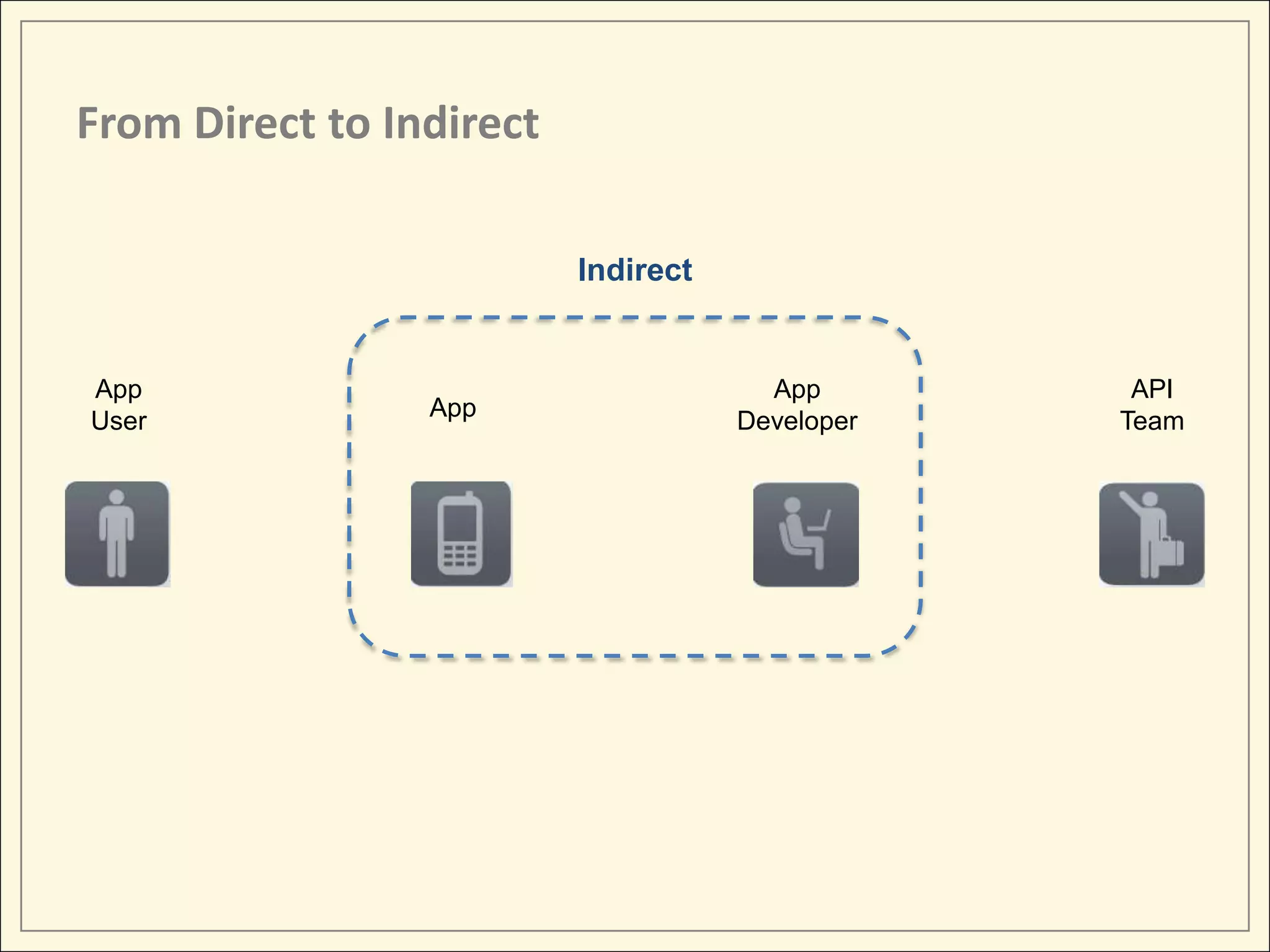
From Direct to Indirect

                          Indirect


App                                    App        API
User             App                 Developer   Team
Manage application developers & applications
Manage relationships between developers’ apps
and our users.
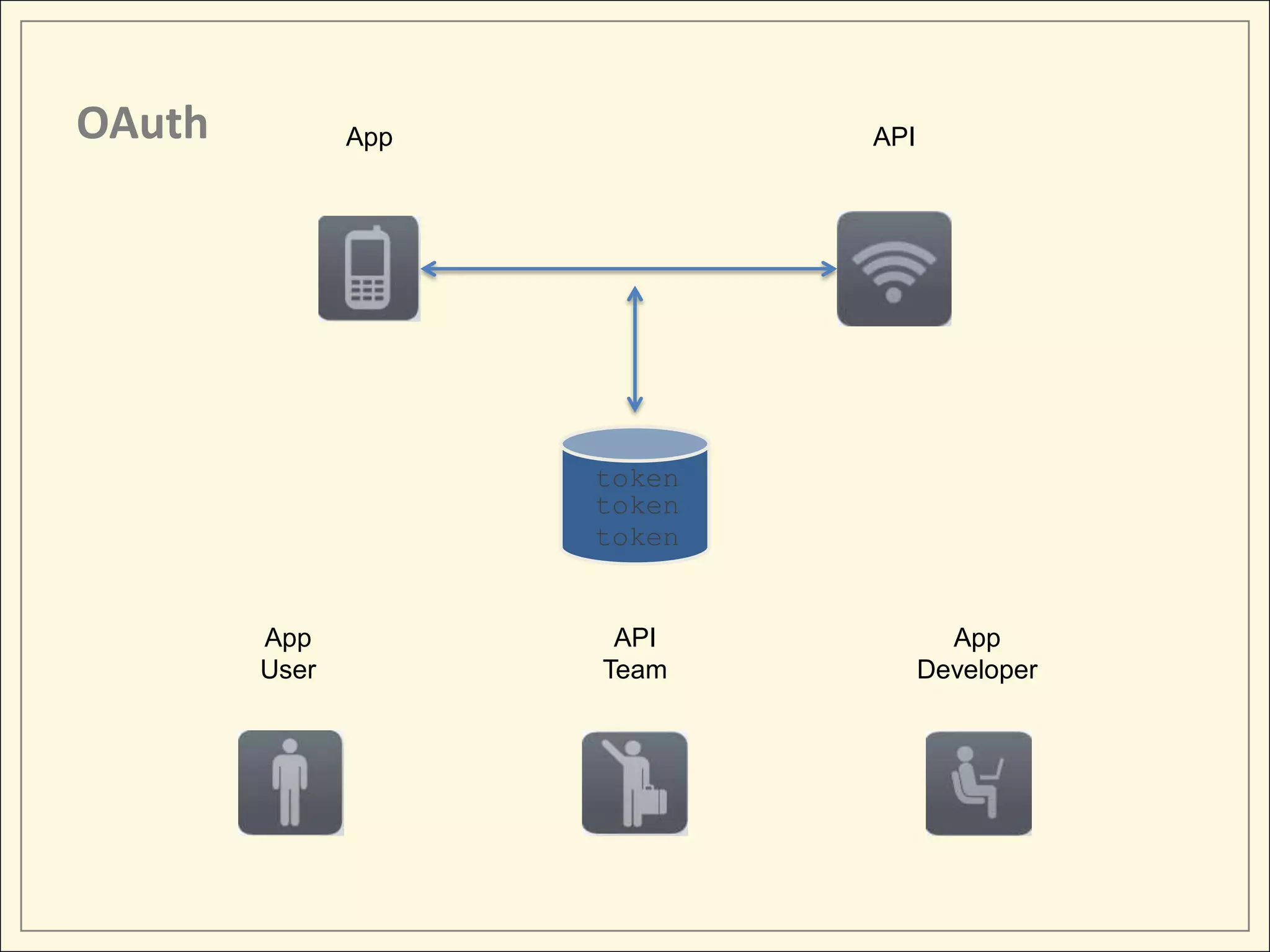
OAuth          App           API


                     token
                     token
                     token


        App           API            App
        User         Team          Developer
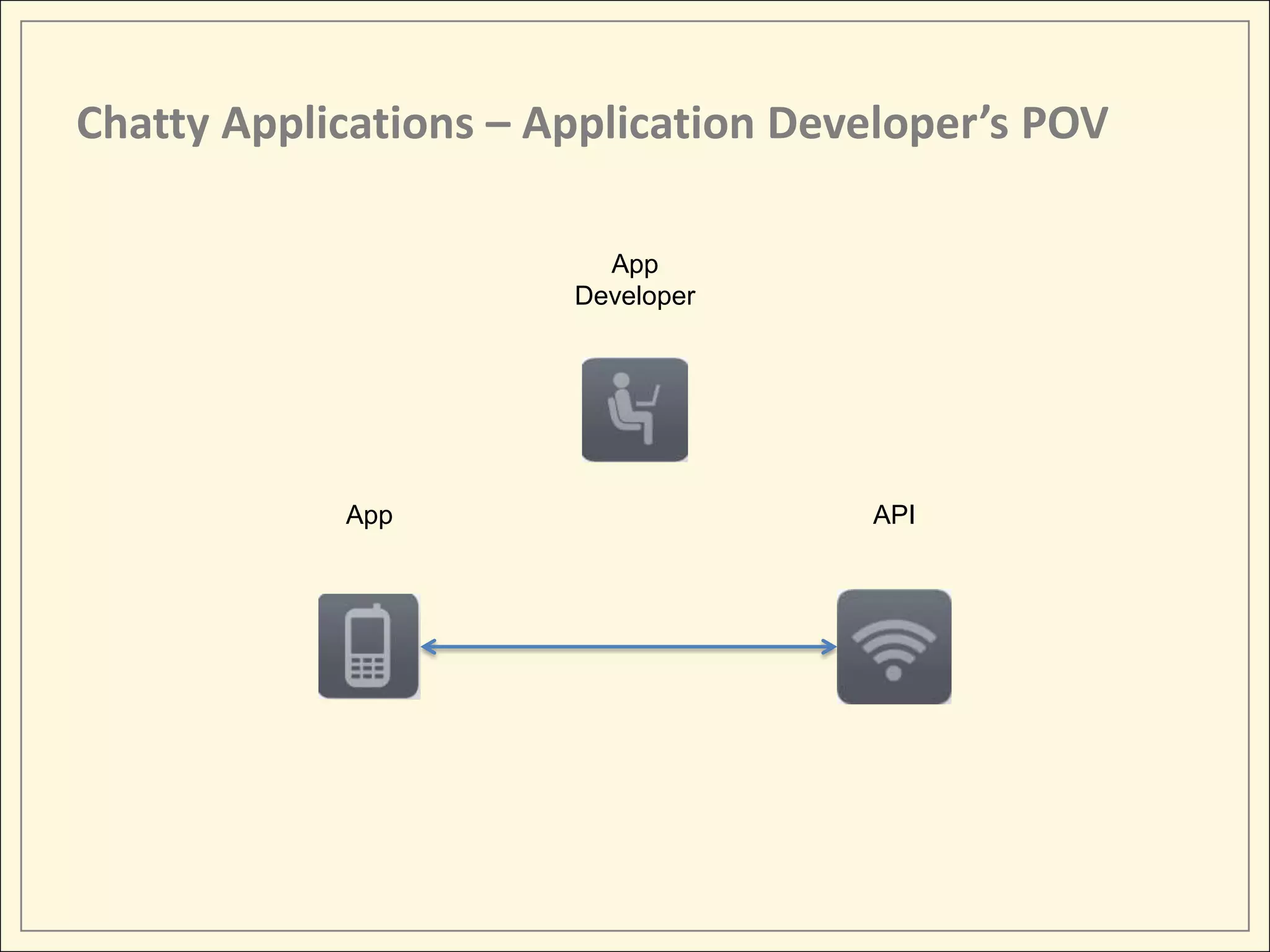
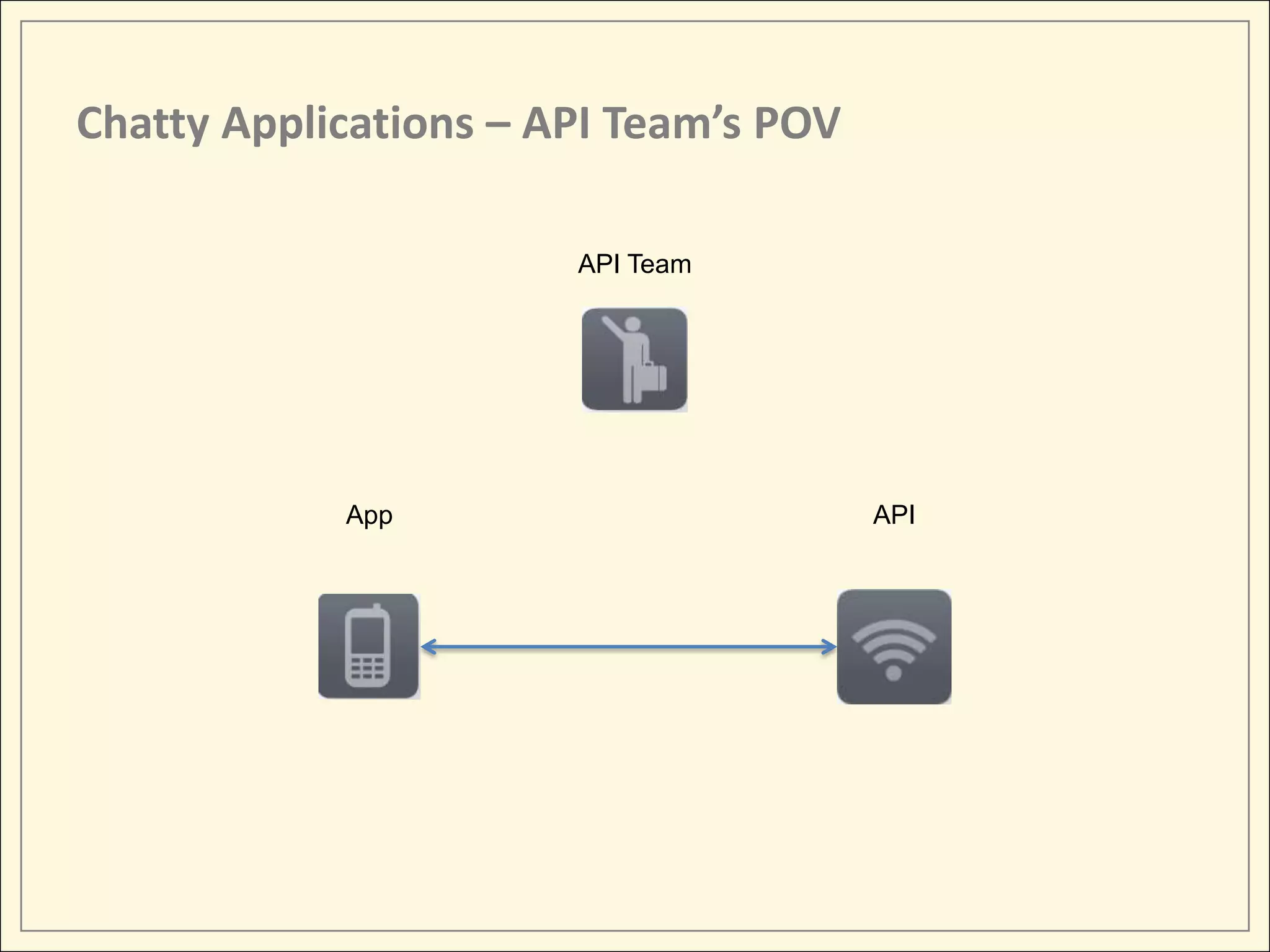
All applications are not created equal.
Chatty Applications – Application Developer’s POV

                         App
                       Developer


            App                      API
Chatty Applications – API Team’s POV

                       API Team


            App                        API
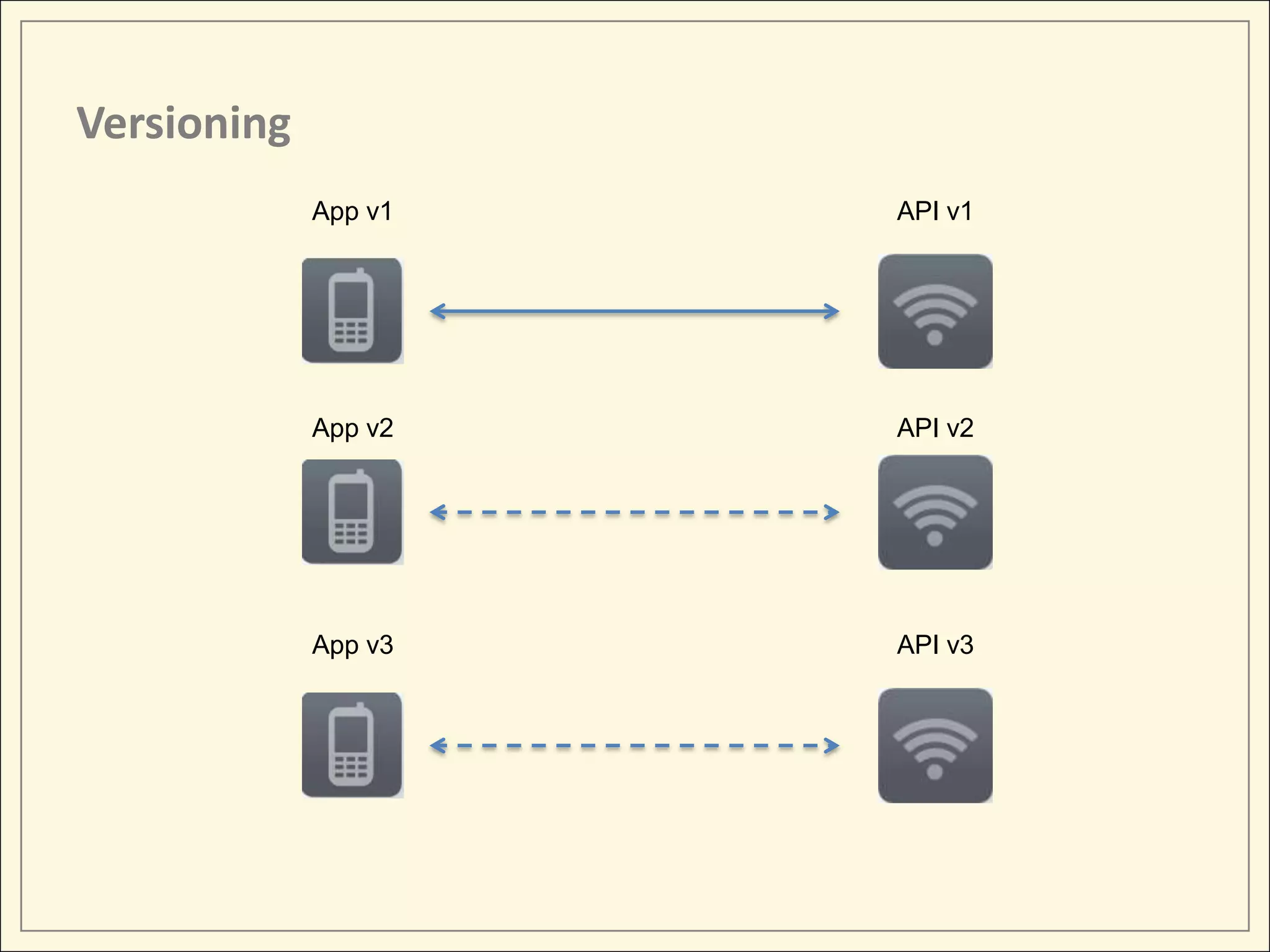
More moving parts, but you can’t stand still.
Versioning
             App v1   API v1


             App v2   API v2


             App v3   API v3
Pro Tip: Do The Good Stuff

• Test Driven Development
• Continuous Integration
• QA
Scale
Scale Doesn’t Happen When You Expect It
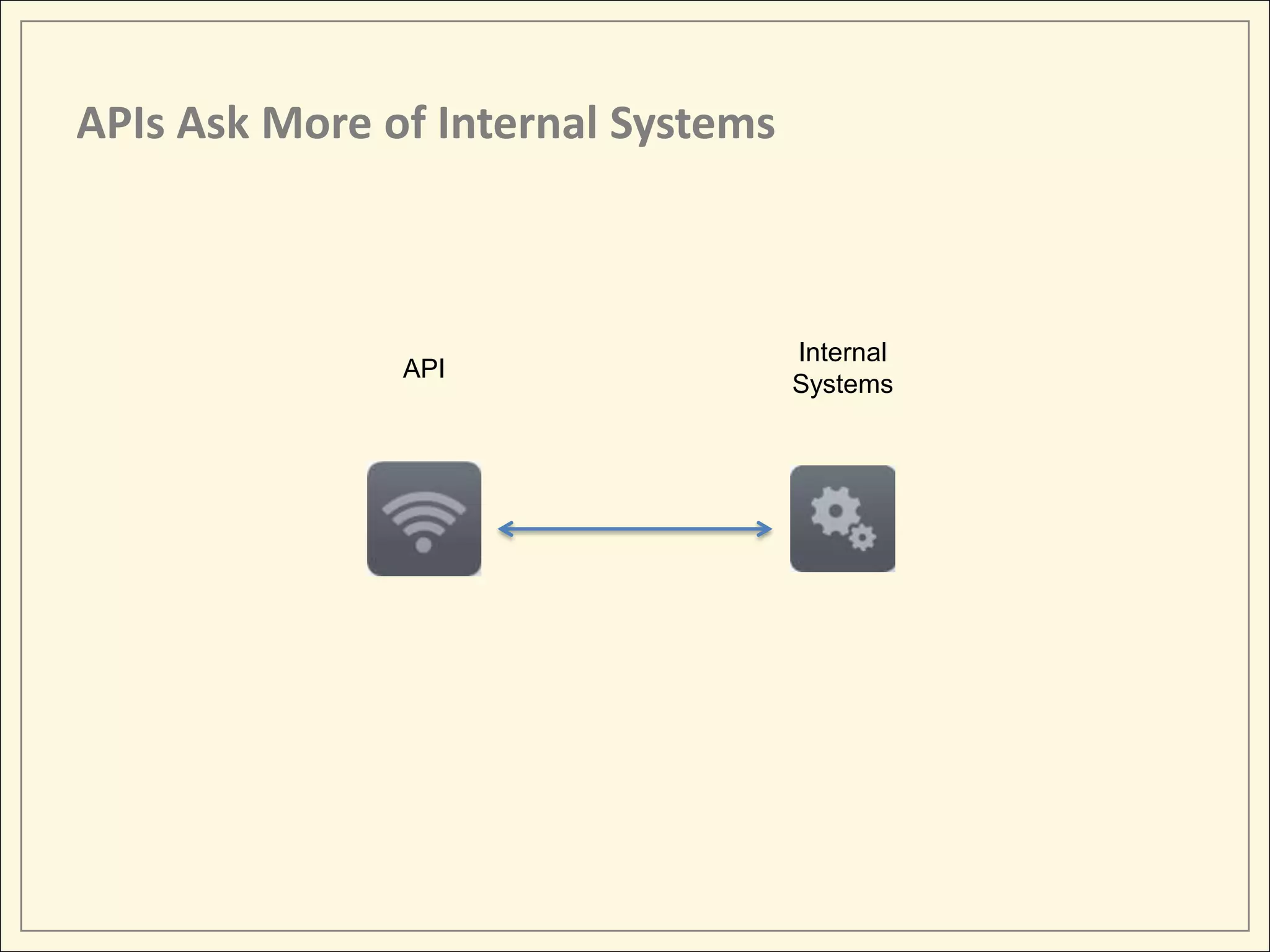
APIs Ask More of Internal Systems


                                    Internal
               API
                                    Systems
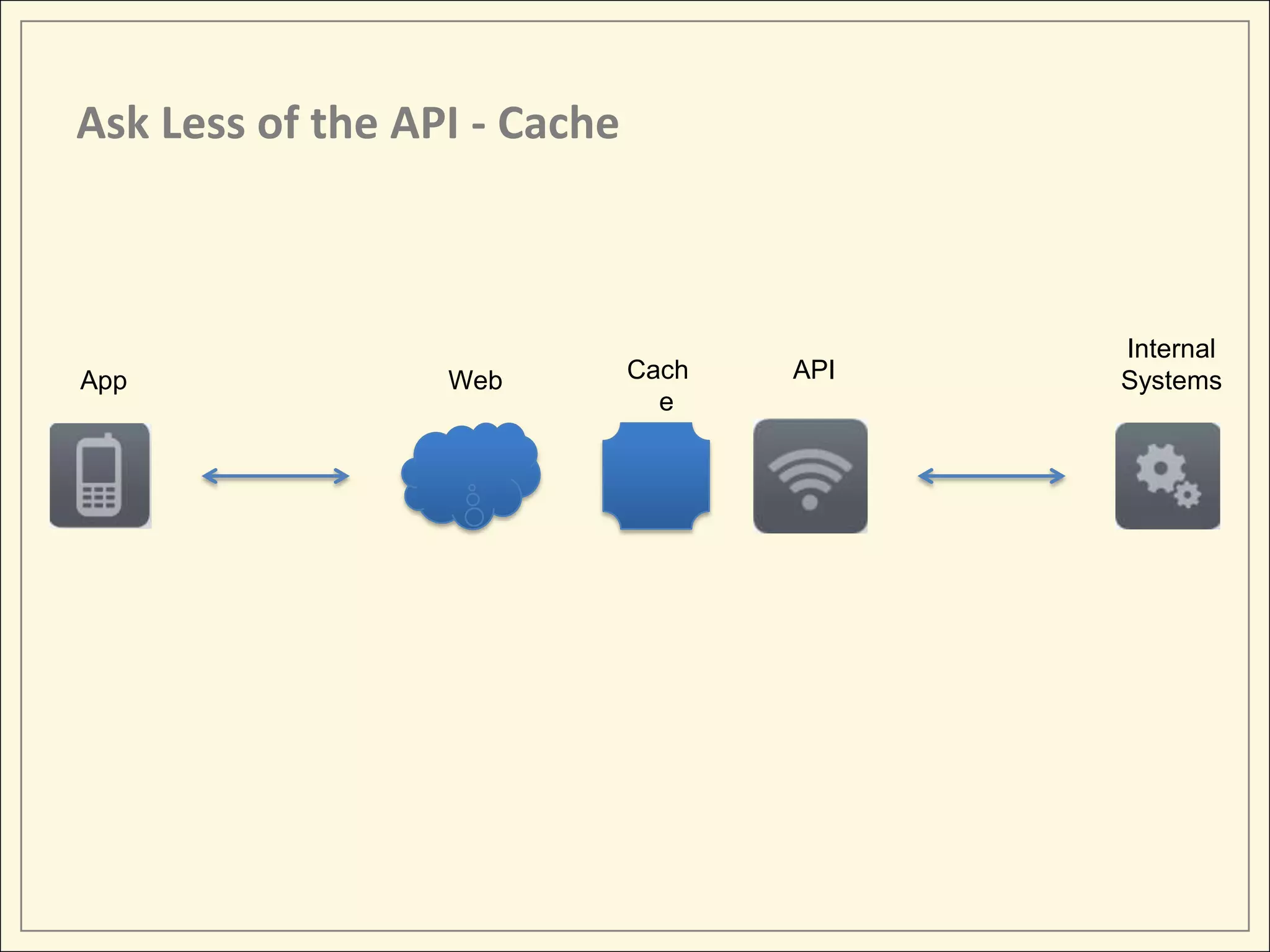
Ask Less of the API - Cache


                                           Internal
App               Web         Cach   API   Systems
                                e
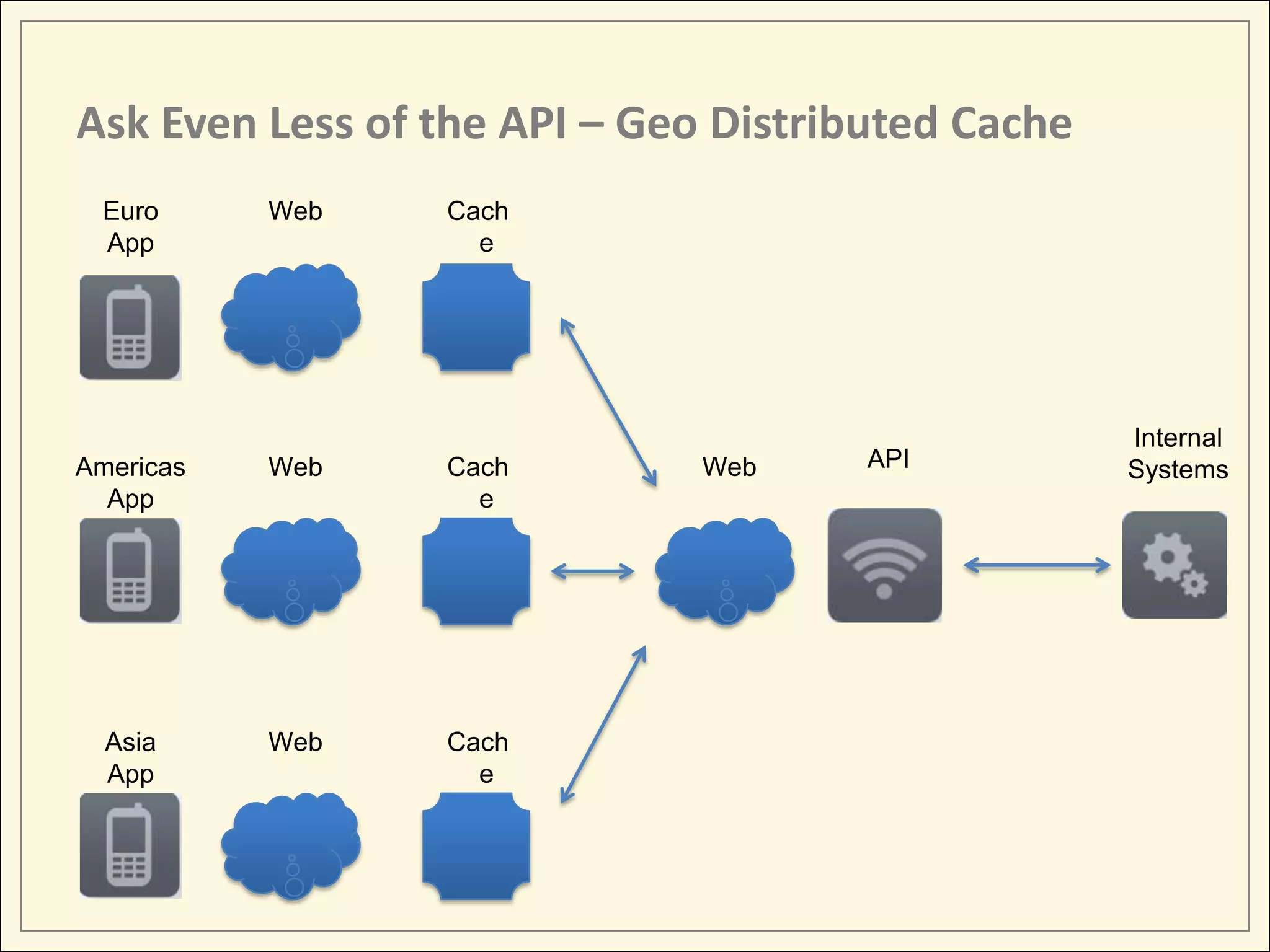
Ask Even Less of the API – Geo Distributed Cache
 Euro      Web   Cach
 App               e


                                                   Internal
Americas   Web   Cach         Web     API          Systems
  App              e


  Asia     Web   Cach
  App              e
THANK YOU
Subscribe to API webinars at:
youtube.com/apigee
THANK YOU
Questions and ideas to:
groups.google.com/group/api-craft
THANK YOU
Contact us at:

@sramji
sramji@apigee.com

@brianpagano
bpagano@apigee.com

@edanuff
ed@apigee.com

Huge: Running an API at Scale

Editor's Notes

  • #2 Creative Commons Attribution-Share Alike 3.0 United States License
  • #5 == ED ==at 6 apart when opening the API: New UI Paradigm - continuous scrolling vs the page load paradigm. 1 to 2 orders of magnitude more content. * you wouldn&apos;t have predicted it - new reader application launched on TechCrunch
  • #7 There is a big difference between running a prototype and running a big API product.
  • #8 In the world of web products there’s variation in browsers. And they can be super wonky. But nowadays those variations are known and predictable.We control everything else. And importantly we control all the code that calls our servers.SAM: trivial complexity because it’s homogenous. There’s variety but the complexity is trivial. You can rely on :BroadbandPC CPUs
  • #9 In the API world we control much less. The variation is much greater. And we can predict very little.Importantly, we don’t control any of the code that hits our servers.
  • #11 CC photoshttp://www.flickr.com/photos/peopleforcherry/3427058289/ http://www.flickr.com/photos/ifmuth/606128545/If running a big web product is like running a big building then running an API is like running a city. Building/Web: linear, rational, predictable. It’s about the technology.City/API: non linear, irrational, unpredictable, its about the people.SAM: Chaos is another way of thinking about complexityFirst responsersJitters in the systemDifferent patterns of behaviourHard to predict
  • #12 What drives complexity?
  • #13 Sam
  • #14 The first driver is going from direct to indirect
  • #15 This is like the role of mayor.Track them: register developers and their appsMake sure they adhere to terms of useCut off violatorsPromote their applicationsKeep them happyCommunicate with themBring them usersSAM: as the API team your attitude has to be permeable. Allow the developers in your community to help you help them. Let’s the citizens be activists.
  • #16 This is totally different than the web and very complex:track our usersTrack the relationships between the apps, developers and our usersThis isn’t just password resetThis is authorizing on behalf of the user which parts of their data that we store that the apps can use
  • #17 What does this mean in terms of scaling up requests and responses?Between any two requests the user might revoke privileges from the appSo we must check every response against the wishes of our users. OAuth increases the number of API calls necessary to get a new client up and running on the API, although if your API is successful then that will average out to not too much. OAuth also means that you have a whole bunch of tokens to maintain -- one per end user, per device, per app -- for a big API that&apos;s easily millions. You need them to be available at all times, and in fact you need to be able to write to that database at all times, not just read from it, so that you can issue new tokens whenever new end users appear or whenever they get a new device. So that&apos;s a lot of tokens. We&apos;re finding that databases like Cassandra and Riak that are eventually consistent and let you write from anywhere are much more effective for this problem than databases that rely on master-slave replication.ED: you’ll be using muscles you’ve never had to use before.
  • #18 You don’t
  • #19 Bad developersDevelopers in a hurryOur API is not clear to themClient-side cachingiOS has restkit which uses Core Data to store data locallyAndroid has restlet for caching and some folks use squid on the client side as a reverse proxy
  • #20 Your API docs might be unclearYou might not be offering guidance on best practicesAPI design might be terribleBut if we do the above correct there are still 2 key considerations:Publish SDK/Libraries or not?With an SDK you can package up your API usage best practices that developers will adoptBut it’s a lot more work: you are now in the software distribution business. At least follow the OSS model: githubetcThe big dog debate: resource-oriented API design or UI-oriented “shortcut” API designProbably do both: resource first as the baseline, then shortcuts as needed by UI
  • #22 You have to version
  • #25 Innovation happens on someone else’s schedule and not yours.
  • #26 You don’t
  • #27 You don’t
  • #28 You don’t