
A PRESENTATION ON HUB AND SPOKE
MODEL IN GCPL
PRESENTED BY
SHEETAL PAVAIYA
A hub and spoke network is a centralized, integrated logistics system
Designed to keep costs down. Hub and spoke distribution centers receive
products from many different origins, consolidate the products, and send
them directly to
destinations.
In Rural There are several small towns and villages away from the cities
where it is not feasible for the distributor in the city to supply goods due to
constrains of time, transportation costs, etc. In such cases, a Super Stockiest
(SS) is appointed by the company who receives the goods from the depot
and dispatches them to the Sub Distributors/Sub Stockiest (Sub DBs). The
Sub DBs in turn supply the goods to the retailers.
Introduction
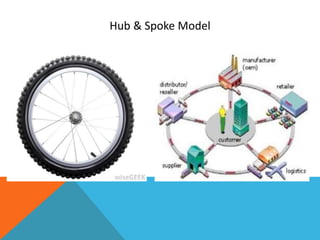
Hub & Spoke Model
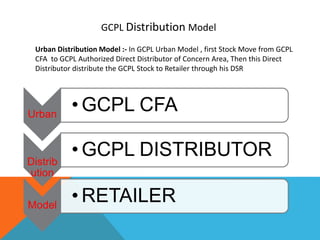
GCPL Distribution Model
Urban Distribution Model :- In GCPL Urban Model , first Stock Move from GCPL
CFA to GCPL Authorized Direct Distributor of Concern Area, Then this Direct
Distributor distribute the GCPL Stock to Retailer through his DSR
Urban
• GCPL CFA
Distrib
ution
• GCPL DISTRIBUTOR
Model
• RETAILER
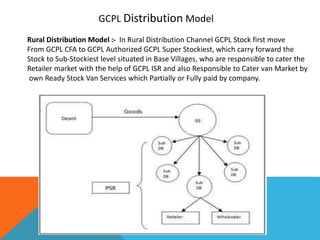
GCPL Distribution Model
Rural Distribution Model :- In Rural Distribution Channel GCPL Stock first move
From GCPL CFA to GCPL Authorized GCPL Super Stockiest, which carry forward the
Stock to Sub-Stockiest level situated in Base Villages, who are responsible to cater the
Retailer market with the help of GCPL ISR and also Responsible to Cater van Market by
own Ready Stock Van Services which Partially or Fully paid by company.
Each SS deals with numerous Sub Stockiest/ Sub DB. The town where the SS is located is
generally in the Centre of the towns where the Sub DBs would be located (hence the SS
represents a Hub and the Sub DBs represent the spokes). The prime task of the SS is to
dispatch the goods to the Sub DB and a SS is generally not required to sell the goods in
the open market. The SS gets a fixed percentage of margin and also in most cases, the
freight incurred to dispatch the goods to the Sub DBs is reimbursed by the company.
The prime role of the Sub DBs is to sell the goods to the retailers (retailing) and
wholesalers in their respective towns, for which they get a fixed margin (the margins
given to the Sub DBs are generally higher than the margins given to a SS because of the
difference in volume). A company representative generally visits the Sub DBs at regular
intervals and helps them in retailing. Pilot Sales Representative (PSR), Rural Sales and
Distribution Representative, Interior Sales Representative are some names given to the
company representative who works with the Sub DBs.
The PSR/ISR also serves as a link between the SS and the Sub DB, and is also
responsible for adding new towns and Sub DBs. The PSR generally visits the Sub DB
towns based on the volume of sales, future potential, competition, etc. It is also the
responsibility of the PSR to ensure that the SS and Sub DBs focus on range selling
rather than focusing on some selective products that are high in demand. Also, the
PSR/ISR is required to ensure that goods are dispatched to the Sub DBs on a regular
basis. Regarding this, let us now understand the two terms “Billing Efficiency” and
“Distribution Efficiency”.
Billing Efficiency: Billing efficiency refers to the % of Sub Stockiest/Sub DBs to whom
goods are sent by the SS during a month. For example, if a SS is responsible for
dispatching goods to 10 Sub DBs, and goods are dispatched to 9 of them in a given
month, the Billing Efficiency would be 90%
Distribution Efficiency: Distribution efficiency refers to the % of brands that are billed
to a particular Sub Stockiest /Sub DB by the Super Stockiest during a month. For
example, if among 20 brands and 14 of them are billed to a particular Sub stockiest,
the Distribution Efficiency would be 70%.

Hub and spoke

  • 1.
    A PRESENTATION ONHUB AND SPOKE MODEL IN GCPL PRESENTED BY SHEETAL PAVAIYA
  • 2.
    A hub andspoke network is a centralized, integrated logistics system Designed to keep costs down. Hub and spoke distribution centers receive products from many different origins, consolidate the products, and send them directly to destinations. In Rural There are several small towns and villages away from the cities where it is not feasible for the distributor in the city to supply goods due to constrains of time, transportation costs, etc. In such cases, a Super Stockiest (SS) is appointed by the company who receives the goods from the depot and dispatches them to the Sub Distributors/Sub Stockiest (Sub DBs). The Sub DBs in turn supply the goods to the retailers. Introduction
  • 3.
  • 4.
    GCPL Distribution Model UrbanDistribution Model :- In GCPL Urban Model , first Stock Move from GCPL CFA to GCPL Authorized Direct Distributor of Concern Area, Then this Direct Distributor distribute the GCPL Stock to Retailer through his DSR Urban • GCPL CFA Distrib ution • GCPL DISTRIBUTOR Model • RETAILER
  • 5.
    GCPL Distribution Model RuralDistribution Model :- In Rural Distribution Channel GCPL Stock first move From GCPL CFA to GCPL Authorized GCPL Super Stockiest, which carry forward the Stock to Sub-Stockiest level situated in Base Villages, who are responsible to cater the Retailer market with the help of GCPL ISR and also Responsible to Cater van Market by own Ready Stock Van Services which Partially or Fully paid by company.
  • 6.
    Each SS dealswith numerous Sub Stockiest/ Sub DB. The town where the SS is located is generally in the Centre of the towns where the Sub DBs would be located (hence the SS represents a Hub and the Sub DBs represent the spokes). The prime task of the SS is to dispatch the goods to the Sub DB and a SS is generally not required to sell the goods in the open market. The SS gets a fixed percentage of margin and also in most cases, the freight incurred to dispatch the goods to the Sub DBs is reimbursed by the company. The prime role of the Sub DBs is to sell the goods to the retailers (retailing) and wholesalers in their respective towns, for which they get a fixed margin (the margins given to the Sub DBs are generally higher than the margins given to a SS because of the difference in volume). A company representative generally visits the Sub DBs at regular intervals and helps them in retailing. Pilot Sales Representative (PSR), Rural Sales and Distribution Representative, Interior Sales Representative are some names given to the company representative who works with the Sub DBs.
  • 7.
    The PSR/ISR alsoserves as a link between the SS and the Sub DB, and is also responsible for adding new towns and Sub DBs. The PSR generally visits the Sub DB towns based on the volume of sales, future potential, competition, etc. It is also the responsibility of the PSR to ensure that the SS and Sub DBs focus on range selling rather than focusing on some selective products that are high in demand. Also, the PSR/ISR is required to ensure that goods are dispatched to the Sub DBs on a regular basis. Regarding this, let us now understand the two terms “Billing Efficiency” and “Distribution Efficiency”. Billing Efficiency: Billing efficiency refers to the % of Sub Stockiest/Sub DBs to whom goods are sent by the SS during a month. For example, if a SS is responsible for dispatching goods to 10 Sub DBs, and goods are dispatched to 9 of them in a given month, the Billing Efficiency would be 90% Distribution Efficiency: Distribution efficiency refers to the % of brands that are billed to a particular Sub Stockiest /Sub DB by the Super Stockiest during a month. For example, if among 20 brands and 14 of them are billed to a particular Sub stockiest, the Distribution Efficiency would be 70%.