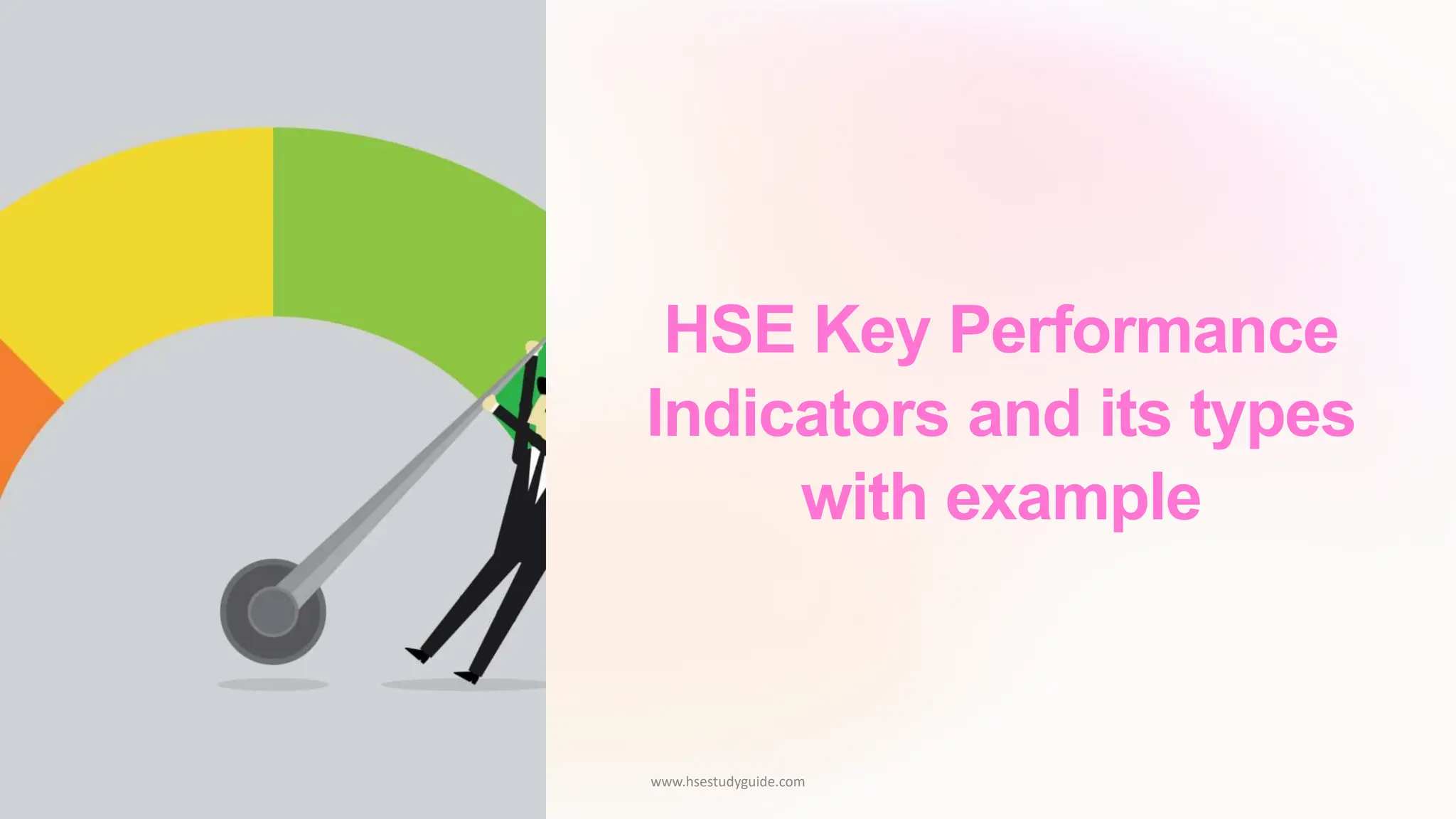
HSE Key Performance
Indicators and its types
with example
www.hsestudyguide.com
HSE Key Performance Indicators
Health, Safety, and Environment (HSE) Key Performance Indicators (KPIs) are
measurable values that demonstrate how effectively an organization is achieving its
HSE objectives. These KPIs are essential for evaluating performance, identifying
areas for improvement, and ensuring compliance with safety standards.
They can be categorized into different types based on the aspects they measure:
www.hsestudyguide.com
1) Leading Indicators KPIs:
• Safety Training Participation Rate: Measures the percentage of employees
who have completed mandatory safety training within a specific period.
• Near Miss Reporting Rate: Calculates the number of reported near-miss
incidents per month or year, reflecting proactive hazard identification.
• Safety Audit Compliance: Tracks the percentage of compliance with safety
standards during internal safety audits or inspections.
• Safety Observation and Intervention Rate: Measures the frequency of safety
observations made by employees and the subsequent interventions
implemented.
www.hsestudyguide.com
2) Lagging Indicators KPIs:
• Lost Time Injury Frequency Rate (LTIFR): Calculates the number of lost time
injuries per million hours worked, indicating the severity of incidents.
• Total Recordable Incident Rate (TRIR): Measures the total number of work-
related injuries, illnesses, and fatalities per hours worked.
• Days Away, Restricted, or Transferred (DART) Rate: Tracks the number of
days away from work, restricted duties, or transferred due to workplace
incidents.
• Environmental Compliance Index: Measures the organization's adherence to
environmental regulations and standards.
www.hsestudyguide.com
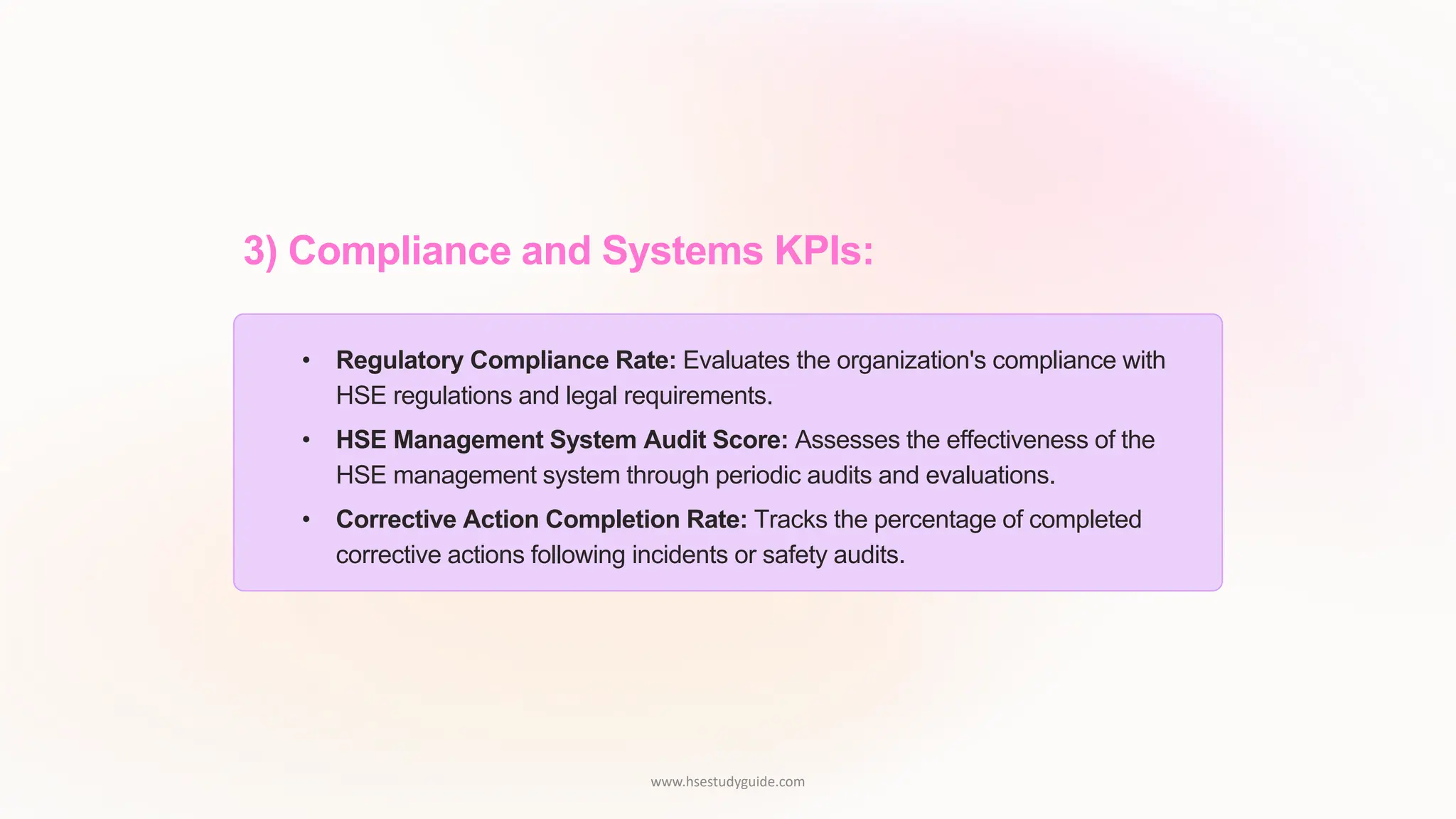
3) Compliance and Systems KPIs:
• Regulatory Compliance Rate: Evaluates the organization's compliance with
HSE regulations and legal requirements.
• HSE Management System Audit Score: Assesses the effectiveness of the
HSE management system through periodic audits and evaluations.
• Corrective Action Completion Rate: Tracks the percentage of completed
corrective actions following incidents or safety audits.
www.hsestudyguide.com
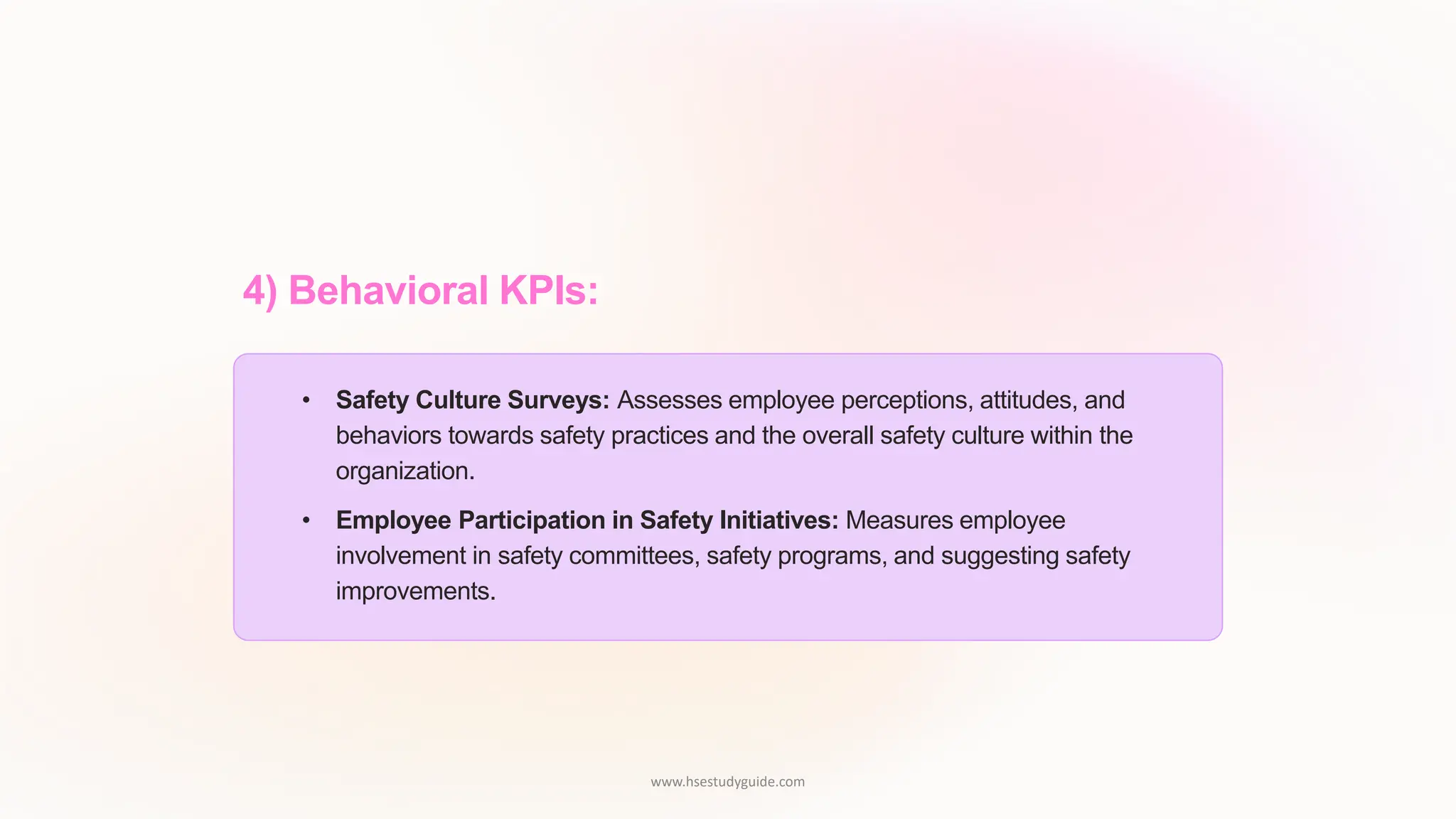
4) Behavioral KPIs:
• Safety Culture Surveys: Assesses employee perceptions, attitudes, and
behaviors towards safety practices and the overall safety culture within the
organization.
• Employee Participation in Safety Initiatives: Measures employee
involvement in safety committees, safety programs, and suggesting safety
improvements.
www.hsestudyguide.com
Scenario: Construction
Company XYZ
www.hsestudyguide.com
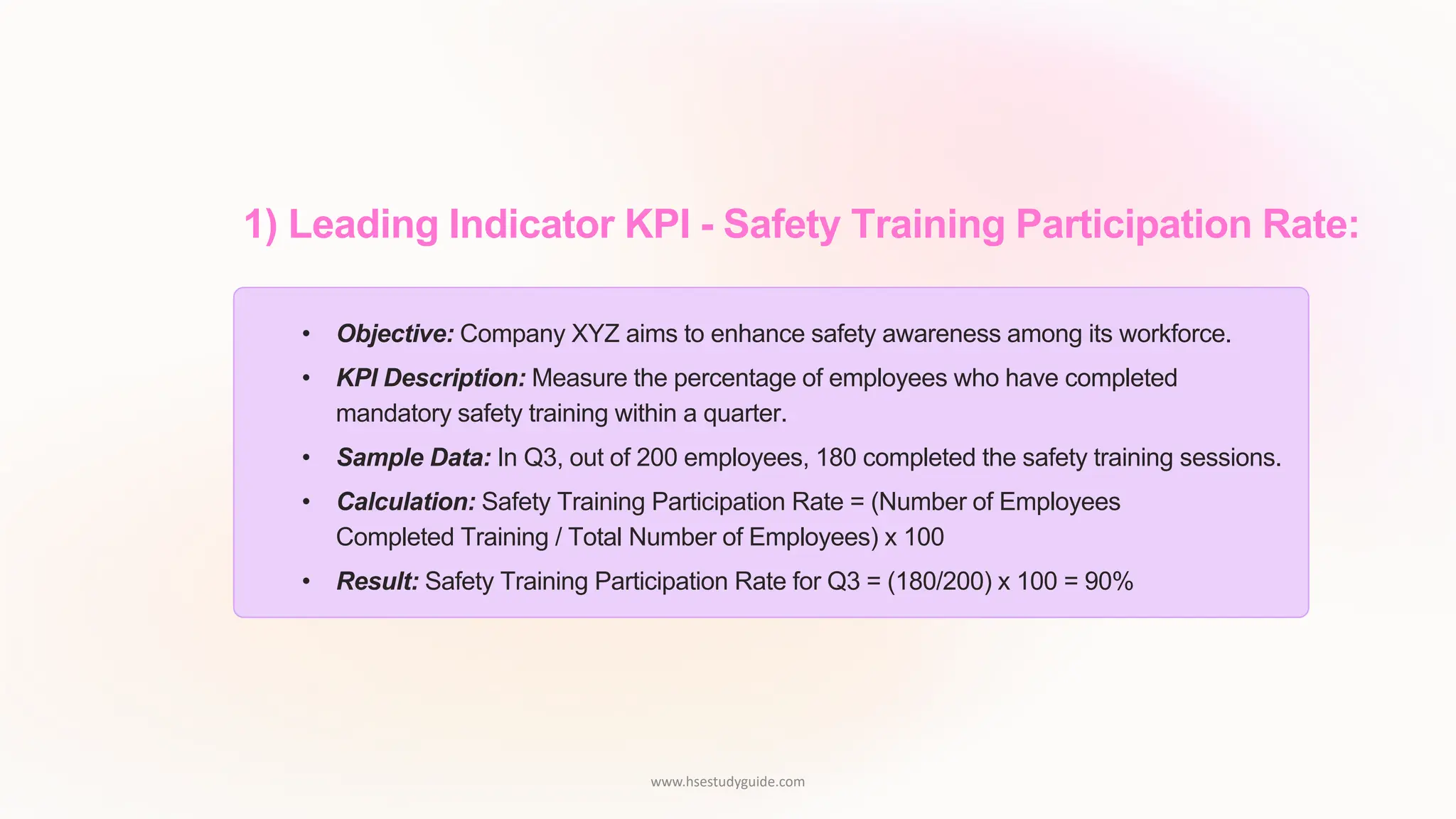
1) Leading Indicator KPI - Safety Training Participation Rate:
• Objective: Company XYZ aims to enhance safety awareness among its workforce.
• KPI Description: Measure the percentage of employees who have completed
mandatory safety training within a quarter.
• Sample Data: In Q3, out of 200 employees, 180 completed the safety training sessions.
• Calculation: Safety Training Participation Rate = (Number of Employees
Completed Training / Total Number of Employees) x 100
• Result: Safety Training Participation Rate for Q3 = (180/200) x 100 = 90%
www.hsestudyguide.com
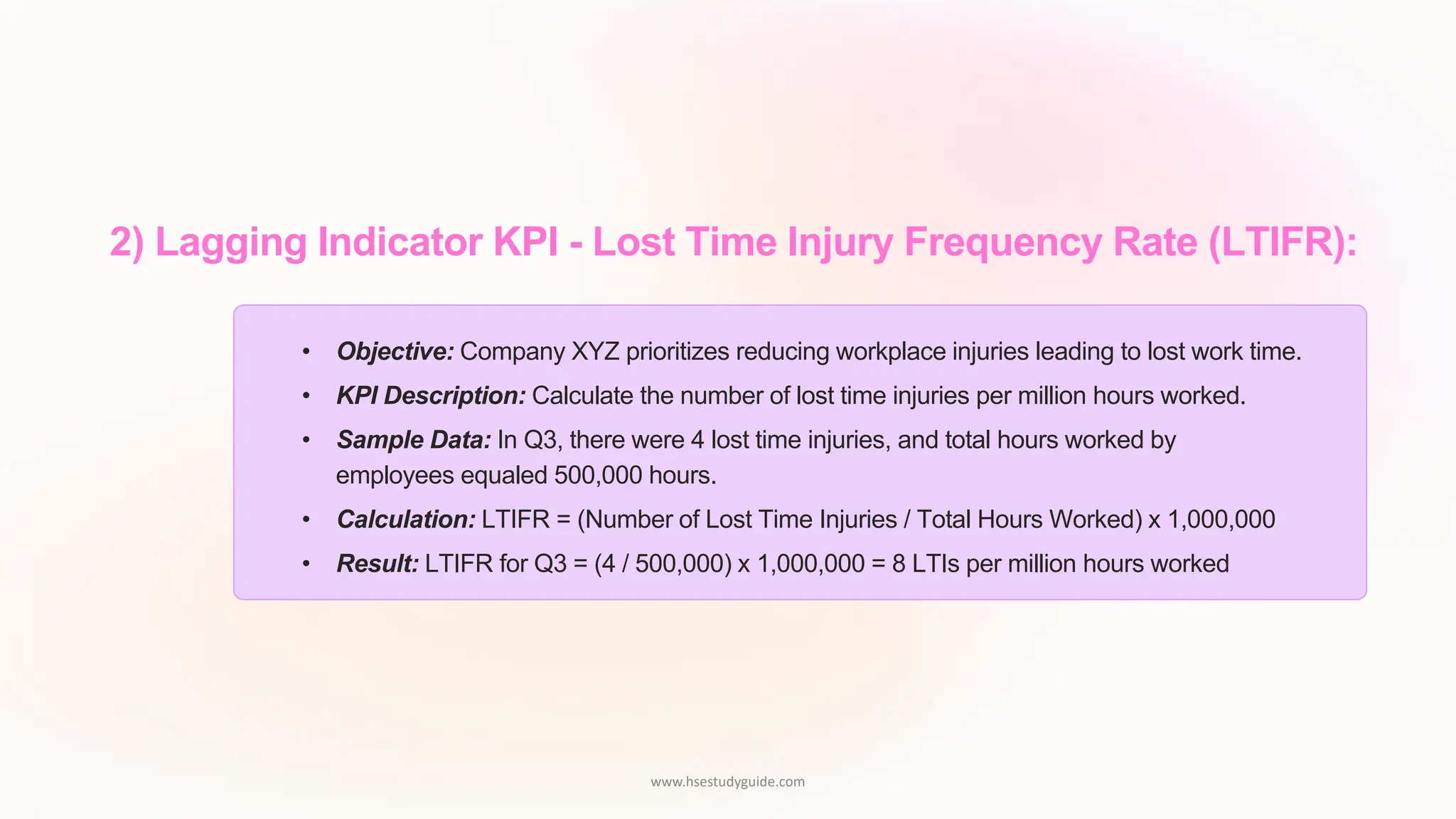
2) Lagging Indicator KPI - Lost Time Injury Frequency Rate (LTIFR):
• Objective: Company XYZ prioritizes reducing workplace injuries leading to lost work time.
• KPI Description: Calculate the number of lost time injuries per million hours worked.
• Sample Data: In Q3, there were 4 lost time injuries, and total hours worked by
employees equaled 500,000 hours.
• Calculation: LTIFR = (Number of Lost Time Injuries / Total Hours Worked) x 1,000,000
• Result: LTIFR for Q3 = (4 / 500,000) x 1,000,000 = 8 LTIs per million hours worked
www.hsestudyguide.com
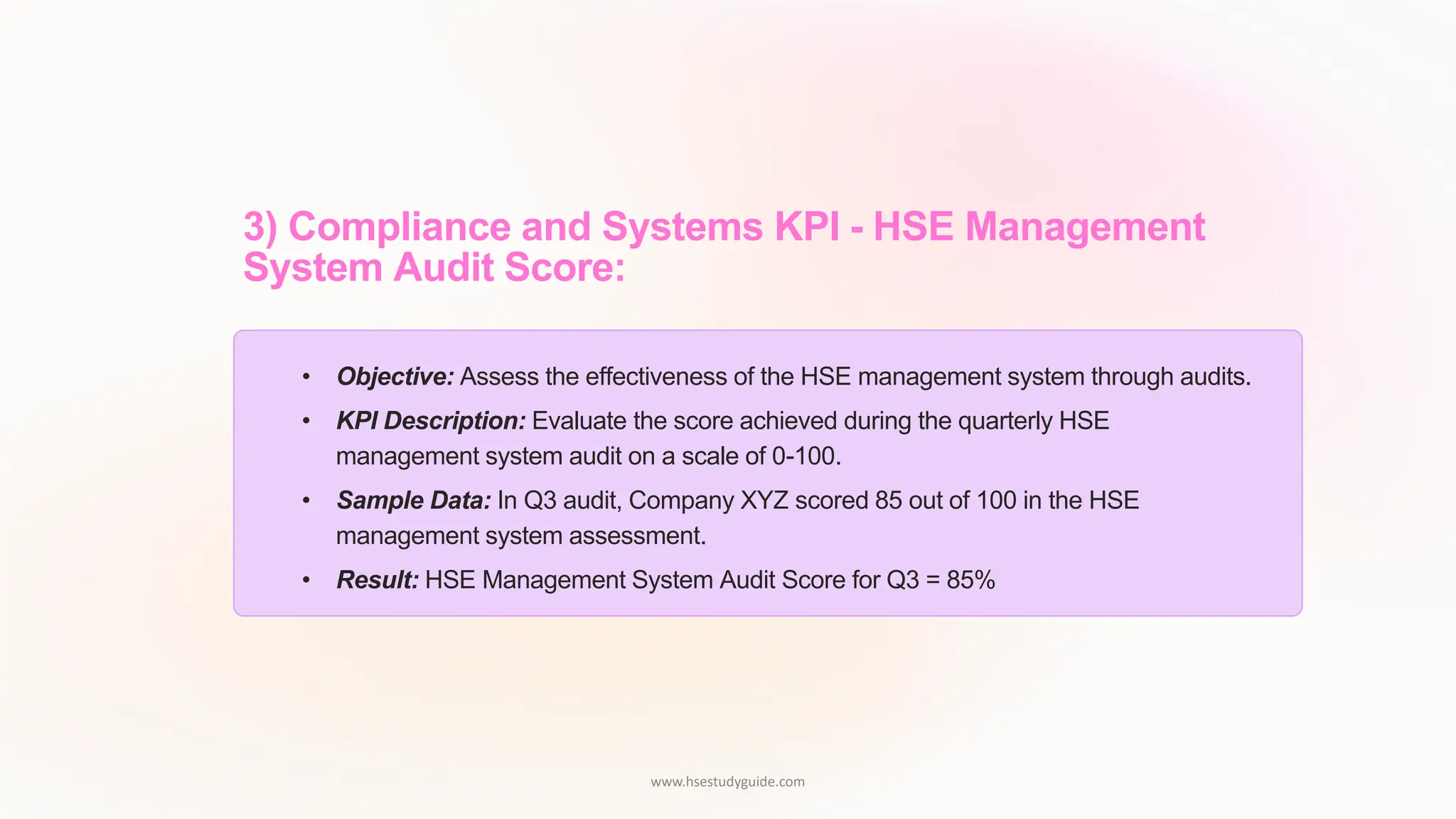
3) Compliance and Systems KPI - HSE Management
System Audit Score:
• Objective: Assess the effectiveness of the HSE management system through audits.
• KPI Description: Evaluate the score achieved during the quarterly HSE
management system audit on a scale of 0-100.
• Sample Data: In Q3 audit, Company XYZ scored 85 out of 100 in the HSE
management system assessment.
• Result: HSE Management System Audit Score for Q3 = 85%
www.hsestudyguide.com
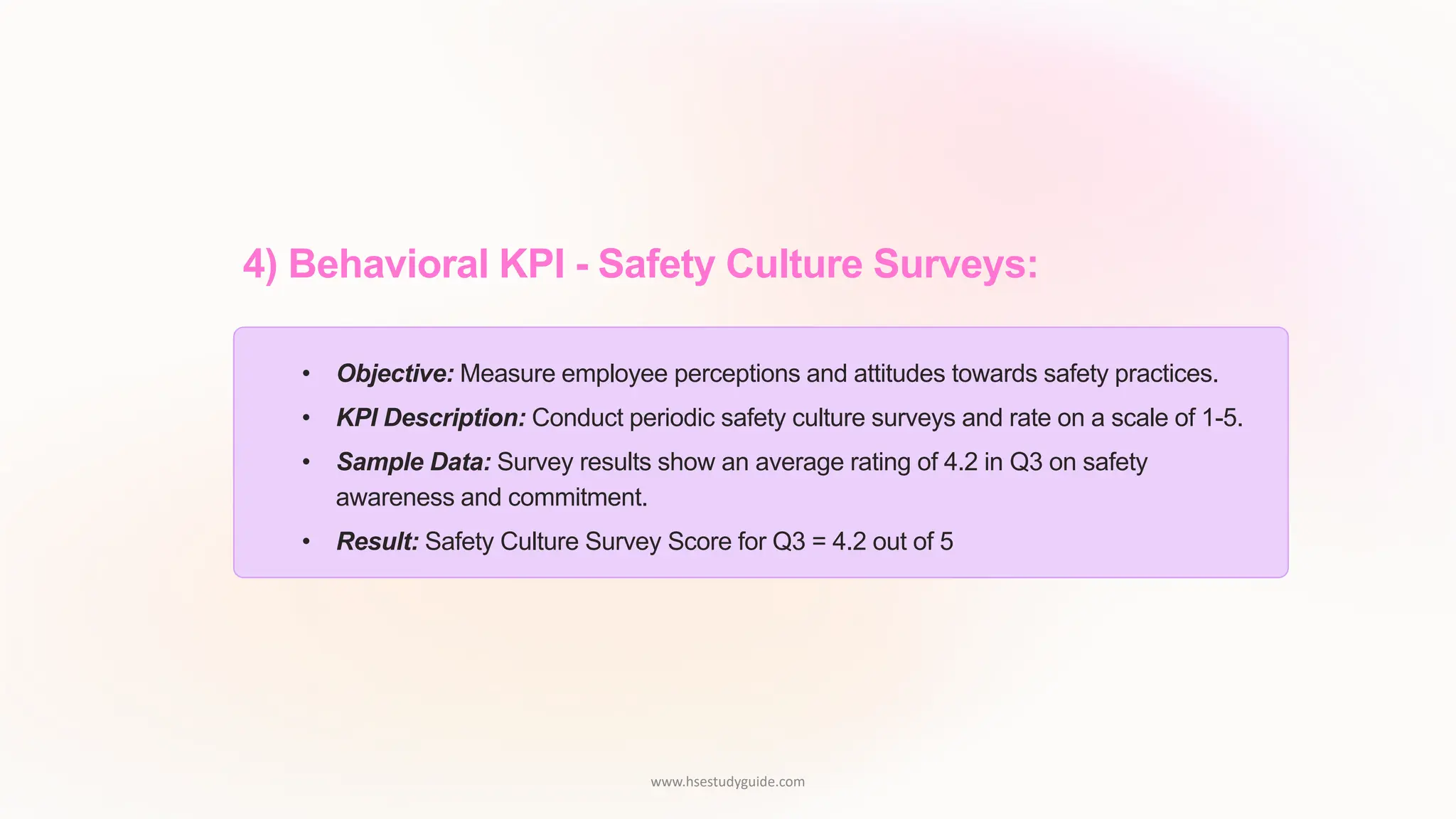
4) Behavioral KPI - Safety Culture Surveys:
• Objective: Measure employee perceptions and attitudes towards safety practices.
• KPI Description: Conduct periodic safety culture surveys and rate on a scale of 1-5.
• Sample Data: Survey results show an average rating of 4.2 in Q3 on safety
awareness and commitment.
• Result: Safety Culture Survey Score for Q3 = 4.2 out of 5
www.hsestudyguide.com

HSE-Key-Performance-Indicators-and-its-types-with-example-1.pptx

  • 1.
    HSE Key Performance Indicatorsand its types with example www.hsestudyguide.com
  • 2.
    HSE Key PerformanceIndicators Health, Safety, and Environment (HSE) Key Performance Indicators (KPIs) are measurable values that demonstrate how effectively an organization is achieving its HSE objectives. These KPIs are essential for evaluating performance, identifying areas for improvement, and ensuring compliance with safety standards. They can be categorized into different types based on the aspects they measure: www.hsestudyguide.com
  • 3.
    1) Leading IndicatorsKPIs: • Safety Training Participation Rate: Measures the percentage of employees who have completed mandatory safety training within a specific period. • Near Miss Reporting Rate: Calculates the number of reported near-miss incidents per month or year, reflecting proactive hazard identification. • Safety Audit Compliance: Tracks the percentage of compliance with safety standards during internal safety audits or inspections. • Safety Observation and Intervention Rate: Measures the frequency of safety observations made by employees and the subsequent interventions implemented. www.hsestudyguide.com
  • 4.
    2) Lagging IndicatorsKPIs: • Lost Time Injury Frequency Rate (LTIFR): Calculates the number of lost time injuries per million hours worked, indicating the severity of incidents. • Total Recordable Incident Rate (TRIR): Measures the total number of work- related injuries, illnesses, and fatalities per hours worked. • Days Away, Restricted, or Transferred (DART) Rate: Tracks the number of days away from work, restricted duties, or transferred due to workplace incidents. • Environmental Compliance Index: Measures the organization's adherence to environmental regulations and standards. www.hsestudyguide.com
  • 5.
    3) Compliance andSystems KPIs: • Regulatory Compliance Rate: Evaluates the organization's compliance with HSE regulations and legal requirements. • HSE Management System Audit Score: Assesses the effectiveness of the HSE management system through periodic audits and evaluations. • Corrective Action Completion Rate: Tracks the percentage of completed corrective actions following incidents or safety audits. www.hsestudyguide.com
  • 6.
    4) Behavioral KPIs: •Safety Culture Surveys: Assesses employee perceptions, attitudes, and behaviors towards safety practices and the overall safety culture within the organization. • Employee Participation in Safety Initiatives: Measures employee involvement in safety committees, safety programs, and suggesting safety improvements. www.hsestudyguide.com
  • 7.
  • 8.
    1) Leading IndicatorKPI - Safety Training Participation Rate: • Objective: Company XYZ aims to enhance safety awareness among its workforce. • KPI Description: Measure the percentage of employees who have completed mandatory safety training within a quarter. • Sample Data: In Q3, out of 200 employees, 180 completed the safety training sessions. • Calculation: Safety Training Participation Rate = (Number of Employees Completed Training / Total Number of Employees) x 100 • Result: Safety Training Participation Rate for Q3 = (180/200) x 100 = 90% www.hsestudyguide.com
  • 9.
    2) Lagging IndicatorKPI - Lost Time Injury Frequency Rate (LTIFR): • Objective: Company XYZ prioritizes reducing workplace injuries leading to lost work time. • KPI Description: Calculate the number of lost time injuries per million hours worked. • Sample Data: In Q3, there were 4 lost time injuries, and total hours worked by employees equaled 500,000 hours. • Calculation: LTIFR = (Number of Lost Time Injuries / Total Hours Worked) x 1,000,000 • Result: LTIFR for Q3 = (4 / 500,000) x 1,000,000 = 8 LTIs per million hours worked www.hsestudyguide.com
  • 10.
    3) Compliance andSystems KPI - HSE Management System Audit Score: • Objective: Assess the effectiveness of the HSE management system through audits. • KPI Description: Evaluate the score achieved during the quarterly HSE management system audit on a scale of 0-100. • Sample Data: In Q3 audit, Company XYZ scored 85 out of 100 in the HSE management system assessment. • Result: HSE Management System Audit Score for Q3 = 85% www.hsestudyguide.com
  • 11.
    4) Behavioral KPI- Safety Culture Surveys: • Objective: Measure employee perceptions and attitudes towards safety practices. • KPI Description: Conduct periodic safety culture surveys and rate on a scale of 1-5. • Sample Data: Survey results show an average rating of 4.2 in Q3 on safety awareness and commitment. • Result: Safety Culture Survey Score for Q3 = 4.2 out of 5 www.hsestudyguide.com
  • 12.