Downloaded 211 times
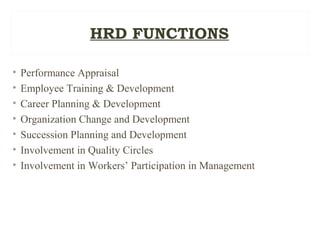
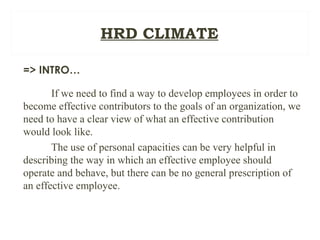









HRD functions include performance appraisal, employee training and development, career planning, organizational change management, succession planning, involvement in quality circles, and worker participation in management. An effective HRD climate requires top-down commitment from management, managers playing a motivational role in developing employee competencies, management having faith in employees, open communication and feedback, and a supportive personnel management system. Measuring HRD climate can include assessing managerial assumptions about human nature, values and leadership style, organizational size, and structure. Developing human capital is important for organizational success and competitive advantage through intellectual capital like skills and knowledge, social capital like relationships, and emotional capital like self-confidence.


