Adult Immunization 2010
Human Papillomavirus Vaccine
Segment

This material is in the public domain
This information is valid as of May 25, 2010
Human Papillomavirus
• More than 100 types
– More than 60 cutaneous types
 Can lead to skin warts
– 40 mucosal types
 high risk types (particularly 16 and 18)
– cervical cell abnormalities
– certain anogenital cancers
 Low risk types (particularly 6 and 11)
– cervical cell abnormalities- usually
resolve spontaneously and do not
lead to cancer
– genital warts
– respiratory papillomatosis
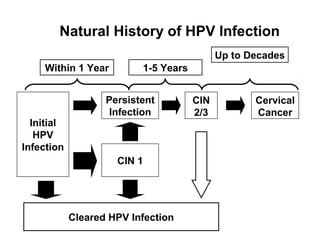
Natural History of HPV Infection
Up to Decades
Within 1 Year

Initial
HPV
Infection

1-5 Years

Persistent
Infection

CIN 1

Cleared HPV Infection

CIN
2/3

Cervical
Cancer
Natural History of HPV Infection
Up to Decades
Within 1 Year

Initial
HPV
Infection

1-5 Years

Persistent
Infection

CIN 1

Cleared HPV Infection

CIN
2/3

Cervical
Cancer
HPV-associated Conditions
HPV 16, 18
Cervical cancer
High/low grade cervical
abnormalities
Anal, Vulvar, Vaginal,
Penile
Head and neck cancers

HPV 6, 11
Low grade cervical
abnormalities
Genital warts
RRP

Estimated %
70%
30%-50%

10%

10%
90%
90%
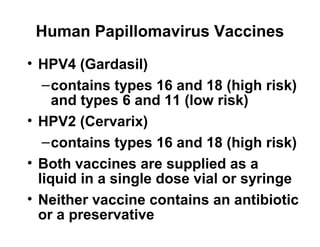
Human Papillomavirus Vaccines
• HPV4 (Gardasil)
– contains types 16 and 18 (high risk)
and types 6 and 11 (low risk)
• HPV2 (Cervarix)
– contains types 16 and 18 (high risk)
• Both vaccines are supplied as a
liquid in a single dose vial or syringe
• Neither vaccine contains an antibiotic
or a preservative
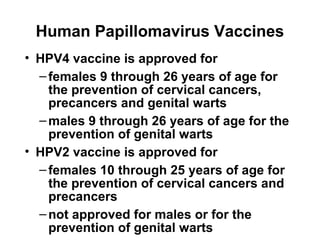
Human Papillomavirus Vaccines
• HPV4 vaccine is approved for
– females 9 through 26 years of age for
the prevention of cervical cancers,
precancers and genital warts
– males 9 through 26 years of age for the
prevention of genital warts
• HPV2 vaccine is approved for
– females 10 through 25 years of age for
the prevention of cervical cancers and
precancers
– not approved for males or for the
prevention of genital warts
HPV Vaccine Schedule and Intervals
• HPV4- 0, 2, 6 months
• HPV2- 0, 1, 6 months
• ACIP recommends- 0, 1 to 2, 6
months
• ACIP has not defined a maximum
interval between HPV vaccine doses
• If the interval between doses is
longer than recommended continue
the series where it was interrupted
Correct and consistent condom
use may have a protective effect
on HPV acquisition, reduce the
risk for HPV-associated diseases,
and mitigate the adverse
consequences of infection
with HPV.
This statement is required by section 317 of
the Public Health Service Act, 42 U.S.C., 243
HPV Vaccine Recommendations
• Recommended age for routine HPV
vaccination is 11 or 12 years
• Vaccination is recommended for
females 13 through 26 years of age
not previously vaccinated or who
have not completed the full 3-dose
series
• The 3 dose series of HPV4 may be
administered to males 9 through 26
years of age to reduce their likelihood
of acquiring genital warts
HPV Vaccine Special Situations
• Females 26 years of age or younger with
equivocal or abnormal Pap test, positive
HPV DNA, or genital warts may be
vaccinated
– vaccine will have no effect on existing
disease or infection
• Females 26 years of age or younger who
are lactating and breastfeeding, or are
immunocompromised may be vaccinated
• Vaccination not recommended for
pregnant women
– pregnancy testing is not needed before
vaccination
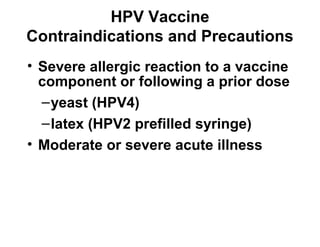
HPV Vaccine
Contraindications and Precautions
• Severe allergic reaction to a vaccine
component or following a prior dose
– yeast (HPV4)
– latex (HPV2 prefilled syringe)
• Moderate or severe acute illness
HPV Vaccine
Adverse Reactions
• Local reaction

20% - 90%

(pain, redness, swelling)

• Temperature 100°F
10% - 13%
or higher
• Serious adverse events
None
HPV Vaccine and Cervical Cancer Screening
• Cervical cancer screening
recommendations have NOT changed for
females who receive HPV vaccine
• Females who are vaccinated could
subsequently be infected with a high-risk
HPV type not in either vaccine
• Females who were sexually active prior to
vaccination could have been infected with
a vaccine-type HPV before vaccination
• Healthcare providers who administer HPV
vaccine should educate women about the
importance of cervical cancer screening
National Center for Immunization
and Respiratory Diseases
Contact Information

• Telephone
• Email
• Website

(800) CDC-INFO
nipinfo@cdc.gov
http://www.cdc.gov/vaccines/

• Broadcast Updates and Resources
Web Page
http://www.cdc.gov/vaccines/ed/webcasts.htm

Hpv

  • 1.
    Adult Immunization 2010 HumanPapillomavirus Vaccine Segment This material is in the public domain This information is valid as of May 25, 2010
  • 2.
    Human Papillomavirus • Morethan 100 types – More than 60 cutaneous types  Can lead to skin warts – 40 mucosal types  high risk types (particularly 16 and 18) – cervical cell abnormalities – certain anogenital cancers  Low risk types (particularly 6 and 11) – cervical cell abnormalities- usually resolve spontaneously and do not lead to cancer – genital warts – respiratory papillomatosis
  • 3.
    Natural History ofHPV Infection Up to Decades Within 1 Year Initial HPV Infection 1-5 Years Persistent Infection CIN 1 Cleared HPV Infection CIN 2/3 Cervical Cancer
  • 4.
    Natural History ofHPV Infection Up to Decades Within 1 Year Initial HPV Infection 1-5 Years Persistent Infection CIN 1 Cleared HPV Infection CIN 2/3 Cervical Cancer
  • 5.
    HPV-associated Conditions HPV 16,18 Cervical cancer High/low grade cervical abnormalities Anal, Vulvar, Vaginal, Penile Head and neck cancers HPV 6, 11 Low grade cervical abnormalities Genital warts RRP Estimated % 70% 30%-50% 10% 10% 90% 90%
  • 6.
    Human Papillomavirus Vaccines •HPV4 (Gardasil) – contains types 16 and 18 (high risk) and types 6 and 11 (low risk) • HPV2 (Cervarix) – contains types 16 and 18 (high risk) • Both vaccines are supplied as a liquid in a single dose vial or syringe • Neither vaccine contains an antibiotic or a preservative
  • 7.
    Human Papillomavirus Vaccines •HPV4 vaccine is approved for – females 9 through 26 years of age for the prevention of cervical cancers, precancers and genital warts – males 9 through 26 years of age for the prevention of genital warts • HPV2 vaccine is approved for – females 10 through 25 years of age for the prevention of cervical cancers and precancers – not approved for males or for the prevention of genital warts
  • 8.
    HPV Vaccine Scheduleand Intervals • HPV4- 0, 2, 6 months • HPV2- 0, 1, 6 months • ACIP recommends- 0, 1 to 2, 6 months • ACIP has not defined a maximum interval between HPV vaccine doses • If the interval between doses is longer than recommended continue the series where it was interrupted
  • 9.
    Correct and consistentcondom use may have a protective effect on HPV acquisition, reduce the risk for HPV-associated diseases, and mitigate the adverse consequences of infection with HPV. This statement is required by section 317 of the Public Health Service Act, 42 U.S.C., 243
  • 10.
    HPV Vaccine Recommendations •Recommended age for routine HPV vaccination is 11 or 12 years • Vaccination is recommended for females 13 through 26 years of age not previously vaccinated or who have not completed the full 3-dose series • The 3 dose series of HPV4 may be administered to males 9 through 26 years of age to reduce their likelihood of acquiring genital warts
  • 11.
    HPV Vaccine SpecialSituations • Females 26 years of age or younger with equivocal or abnormal Pap test, positive HPV DNA, or genital warts may be vaccinated – vaccine will have no effect on existing disease or infection • Females 26 years of age or younger who are lactating and breastfeeding, or are immunocompromised may be vaccinated • Vaccination not recommended for pregnant women – pregnancy testing is not needed before vaccination
  • 12.
    HPV Vaccine Contraindications andPrecautions • Severe allergic reaction to a vaccine component or following a prior dose – yeast (HPV4) – latex (HPV2 prefilled syringe) • Moderate or severe acute illness
  • 13.
    HPV Vaccine Adverse Reactions •Local reaction 20% - 90% (pain, redness, swelling) • Temperature 100°F 10% - 13% or higher • Serious adverse events None
  • 14.
    HPV Vaccine andCervical Cancer Screening • Cervical cancer screening recommendations have NOT changed for females who receive HPV vaccine • Females who are vaccinated could subsequently be infected with a high-risk HPV type not in either vaccine • Females who were sexually active prior to vaccination could have been infected with a vaccine-type HPV before vaccination • Healthcare providers who administer HPV vaccine should educate women about the importance of cervical cancer screening
  • 15.
    National Center forImmunization and Respiratory Diseases Contact Information • Telephone • Email • Website (800) CDC-INFO nipinfo@cdc.gov http://www.cdc.gov/vaccines/ • Broadcast Updates and Resources Web Page http://www.cdc.gov/vaccines/ed/webcasts.htm