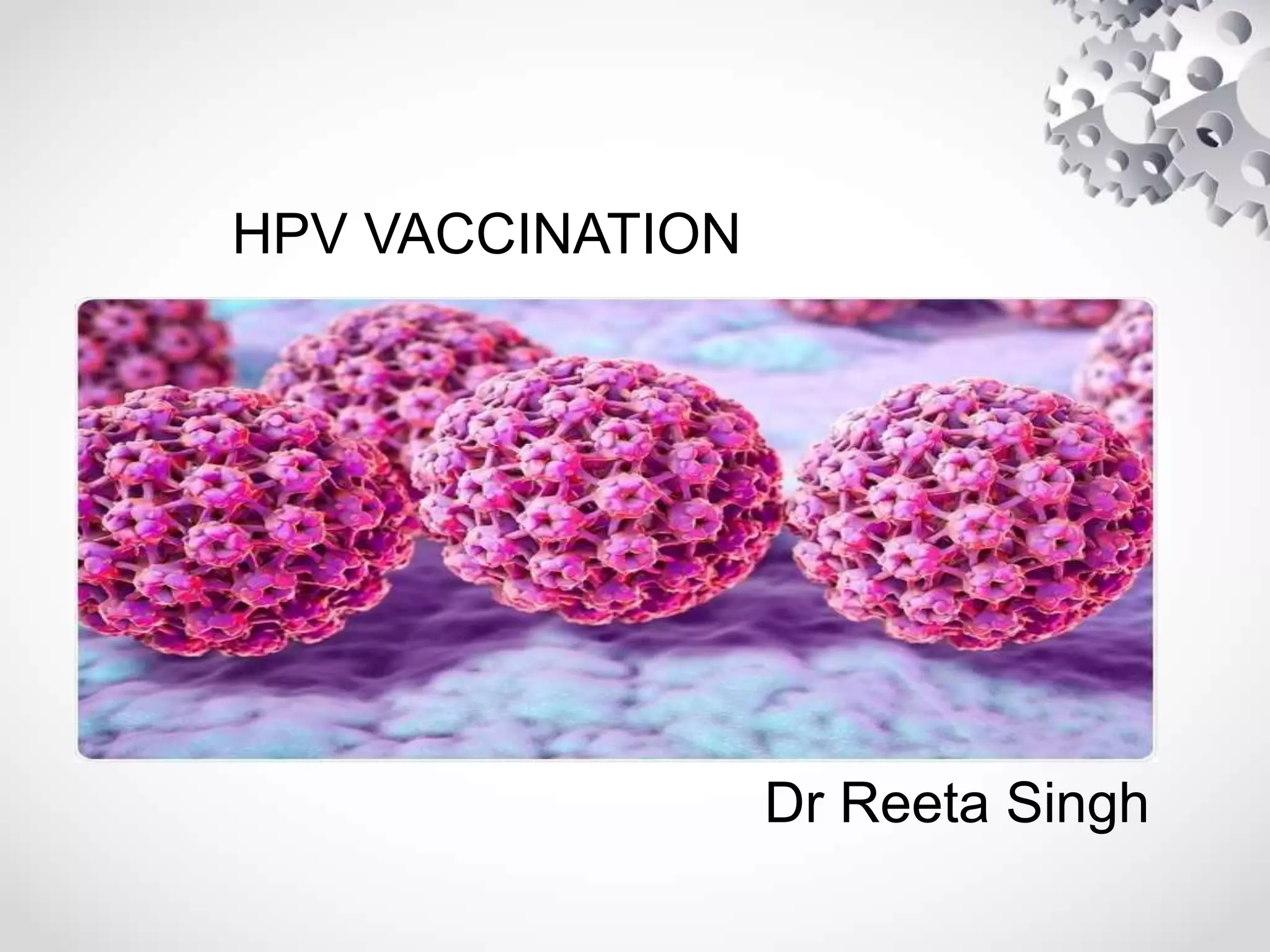
HPV VACCINATION
Dr Reeta Singh
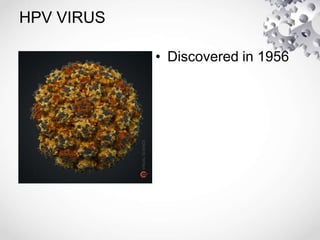
HPV VIRUS
• Discovered in 1956
Harald zur hausen
1984 - discovered the corelation
between virus and precancer/
cancer of cervix.
2008 received NOBEL AWARD
for same.
HPV Vaccine
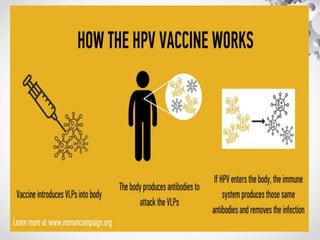
• Recombinant vaccine
• Composed of virus like particle
• non-infectious
• not contain viral DNA
• Contain L1 protein of capsid
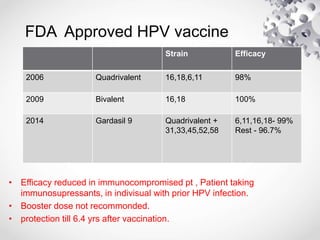
FDA Approved HPV vaccine
• Efficacy reduced in immunocompromised pt , Patient taking
immunosupressants, in indivisual with prior HPV infection.
• Booster dose not recommonded.
• protection till 6.4 yrs after vaccination.
Strain Efficacy
2006 Quadrivalent 16,18,6,11 98%
2009 Bivalent 16,18 100%
2014 Gardasil 9 Quadrivalent +
31,33,45,52,58
6,11,16,18- 99%
Rest - 96.7%
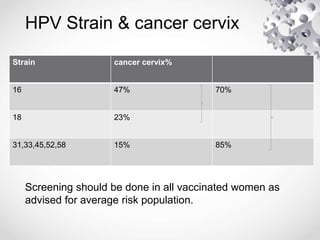
HPV Strain & cancer cervix
Screening should be done in all vaccinated women as
advised for average risk population.
Strain cancer cervix%
16 47% 70%
18 23%
31,33,45,52,58 15% 85%
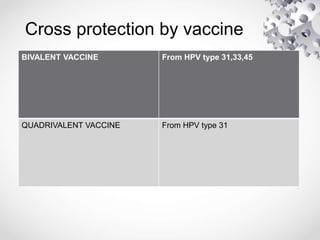
Cross protection by vaccine
BIVALENT VACCINE From HPV type 31,33,45
QUADRIVALENT VACCINE From HPV type 31
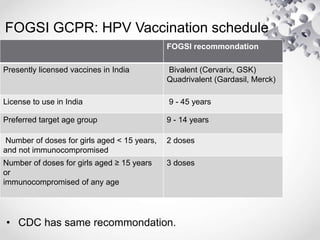
FOGSI GCPR: HPV Vaccination schedule
• CDC has same recommondation.
FOGSI recommondation
Presently licensed vaccines in India Bivalent (Cervarix, GSK)
Quadrivalent (Gardasil, Merck)
License to use in India 9 - 45 years
Preferred target age group 9 - 14 years
Number of doses for girls aged < 15 years,
and not immunocompromised
2 doses
Number of doses for girls aged ≥ 15 years
or
immunocompromised of any age
3 doses
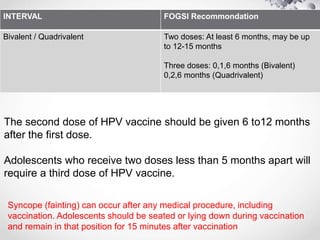
The second dose of HPV vaccine should be given 6 to12 months
after the first dose.
Adolescents who receive two doses less than 5 months apart will
require a third dose of HPV vaccine.
Syncope (fainting) can occur after any medical procedure, including
vaccination. Adolescents should be seated or lying down during vaccination
and remain in that position for 15 minutes after vaccination
INTERVAL FOGSI Recommondation
Bivalent / Quadrivalent Two doses: At least 6 months, may be up
to 12-15 months
Three doses: 0,1,6 months (Bivalent)
0,2,6 months (Quadrivalent)
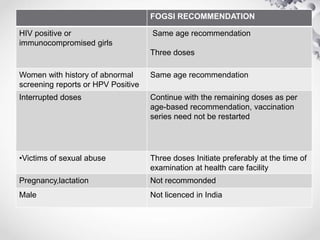
FOGSI RECOMMENDATION
HIV positive or
immunocompromised girls
Same age recommendation
Three doses
Women with history of abnormal
screening reports or HPV Positive
Same age recommendation
Interrupted doses Continue with the remaining doses as per
age-based recommendation, vaccination
series need not be restarted
•Victims of sexual abuse Three doses Initiate preferably at the time of
examination at health care facility
Pregnancy,lactation Not recommonded
Male Not licenced in India
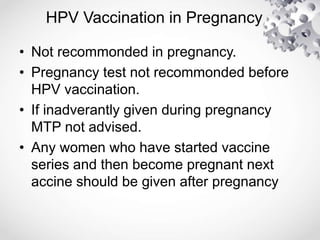
HPV Vaccination in Pregnancy
• Not recommonded in pregnancy.
• Pregnancy test not recommonded before
HPV vaccination.
• If inadverantly given during pregnancy
MTP not advised.
• Any women who have started vaccine
series and then become pregnant next
accine should be given after pregnancy
Safety
• All 3 available vaccines are found to be
safe & effective in men & women.
Contraindications and Precautions
• A severe allergic reaction (e.g., anaphylaxis) to a
vaccine component or following a prior dose of
HPV vaccine
• Anaphylactic allergy to latex is a contraindication
to bivalent HPV vaccine in a prefilled syringe
since the tip cap might contain natural rubber
latex.
• Quadrivalent and 9-valent HPV vaccines are
produced in Saccharomyces cerevisiae (baker’s
yeast) and are contraindicated for persons with
a history of immediate hypersensitivity to yeast.
Contraindications and Precautions
• A moderate or severe acute illness.
• A minor acute illness (e.g., diarrhea or mild
upper respiratory tract infection, with or
without fever) is not a reason to defer
vaccination.
Adverse Reactions
• The most common adverse reactions - local reactions at
the site of injection.
• pain, redness, or swelling were reported by 20% to 90%
of recipients.
• Local reaction was more with Gardesal 9
• A temperature of 100°F during the 15 days after
vaccination was reported in 10% to 13% of HPV vaccine
recipients.
• systemic adverse reactions -nausea, dizziness, myalgia,
and malaise in few racipient.
• No serious adverse events have been associated with
any HPV vaccine.
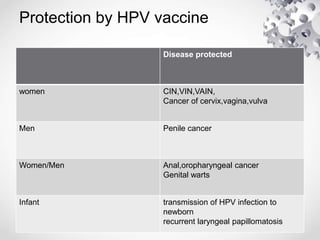
Protection by HPV vaccine
Disease protected
women CIN,VIN,VAIN,
Cancer of cervix,vagina,vulva
Men Penile cancer
Women/Men Anal,oropharyngeal cancer
Genital warts
Infant transmission of HPV infection to
newborn
recurrent laryngeal papillomatosis
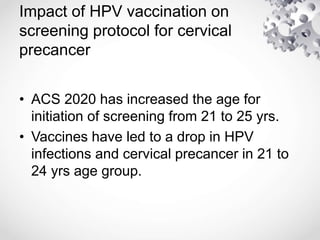
Impact of HPV vaccination on
screening protocol for cervical
precancer
• ACS 2020 has increased the age for
initiation of screening from 21 to 25 yrs.
• Vaccines have led to a drop in HPV
infections and cervical precancer in 21 to
24 yrs age group.
Hpv vaccination

Hpv vaccination

  • 1.
  • 2.
  • 3.
    Harald zur hausen 1984- discovered the corelation between virus and precancer/ cancer of cervix. 2008 received NOBEL AWARD for same.
  • 4.
    HPV Vaccine • Recombinantvaccine • Composed of virus like particle • non-infectious • not contain viral DNA • Contain L1 protein of capsid
  • 6.
    FDA Approved HPVvaccine • Efficacy reduced in immunocompromised pt , Patient taking immunosupressants, in indivisual with prior HPV infection. • Booster dose not recommonded. • protection till 6.4 yrs after vaccination. Strain Efficacy 2006 Quadrivalent 16,18,6,11 98% 2009 Bivalent 16,18 100% 2014 Gardasil 9 Quadrivalent + 31,33,45,52,58 6,11,16,18- 99% Rest - 96.7%
  • 7.
    HPV Strain &cancer cervix Screening should be done in all vaccinated women as advised for average risk population. Strain cancer cervix% 16 47% 70% 18 23% 31,33,45,52,58 15% 85%
  • 8.
    Cross protection byvaccine BIVALENT VACCINE From HPV type 31,33,45 QUADRIVALENT VACCINE From HPV type 31
  • 9.
    FOGSI GCPR: HPVVaccination schedule • CDC has same recommondation. FOGSI recommondation Presently licensed vaccines in India Bivalent (Cervarix, GSK) Quadrivalent (Gardasil, Merck) License to use in India 9 - 45 years Preferred target age group 9 - 14 years Number of doses for girls aged < 15 years, and not immunocompromised 2 doses Number of doses for girls aged ≥ 15 years or immunocompromised of any age 3 doses
  • 10.
    The second doseof HPV vaccine should be given 6 to12 months after the first dose. Adolescents who receive two doses less than 5 months apart will require a third dose of HPV vaccine. Syncope (fainting) can occur after any medical procedure, including vaccination. Adolescents should be seated or lying down during vaccination and remain in that position for 15 minutes after vaccination INTERVAL FOGSI Recommondation Bivalent / Quadrivalent Two doses: At least 6 months, may be up to 12-15 months Three doses: 0,1,6 months (Bivalent) 0,2,6 months (Quadrivalent)
  • 11.
    FOGSI RECOMMENDATION HIV positiveor immunocompromised girls Same age recommendation Three doses Women with history of abnormal screening reports or HPV Positive Same age recommendation Interrupted doses Continue with the remaining doses as per age-based recommendation, vaccination series need not be restarted •Victims of sexual abuse Three doses Initiate preferably at the time of examination at health care facility Pregnancy,lactation Not recommonded Male Not licenced in India
  • 12.
    HPV Vaccination inPregnancy • Not recommonded in pregnancy. • Pregnancy test not recommonded before HPV vaccination. • If inadverantly given during pregnancy MTP not advised. • Any women who have started vaccine series and then become pregnant next accine should be given after pregnancy
  • 13.
    Safety • All 3available vaccines are found to be safe & effective in men & women.
  • 14.
    Contraindications and Precautions •A severe allergic reaction (e.g., anaphylaxis) to a vaccine component or following a prior dose of HPV vaccine • Anaphylactic allergy to latex is a contraindication to bivalent HPV vaccine in a prefilled syringe since the tip cap might contain natural rubber latex. • Quadrivalent and 9-valent HPV vaccines are produced in Saccharomyces cerevisiae (baker’s yeast) and are contraindicated for persons with a history of immediate hypersensitivity to yeast.
  • 15.
    Contraindications and Precautions •A moderate or severe acute illness. • A minor acute illness (e.g., diarrhea or mild upper respiratory tract infection, with or without fever) is not a reason to defer vaccination.
  • 16.
    Adverse Reactions • Themost common adverse reactions - local reactions at the site of injection. • pain, redness, or swelling were reported by 20% to 90% of recipients. • Local reaction was more with Gardesal 9 • A temperature of 100°F during the 15 days after vaccination was reported in 10% to 13% of HPV vaccine recipients. • systemic adverse reactions -nausea, dizziness, myalgia, and malaise in few racipient. • No serious adverse events have been associated with any HPV vaccine.
  • 17.
    Protection by HPVvaccine Disease protected women CIN,VIN,VAIN, Cancer of cervix,vagina,vulva Men Penile cancer Women/Men Anal,oropharyngeal cancer Genital warts Infant transmission of HPV infection to newborn recurrent laryngeal papillomatosis
  • 18.
    Impact of HPVvaccination on screening protocol for cervical precancer • ACS 2020 has increased the age for initiation of screening from 21 to 25 yrs. • Vaccines have led to a drop in HPV infections and cervical precancer in 21 to 24 yrs age group.