When Deciding
to Give a Business Loan
Things Banks Look for
Whether or Not
Lenders have stringent guidelines
that they follow when assessing
small business loan applications.
Many bankers are forced to turn down applications
that do not meet the standards set by the bank.
The following outlines the key aspects that are
examined in the financing process.
Need Help with
your Business
Plan?
Banks will analyze the
business owner’s current
financial situation including
net worth, details on assets,
and past credit history.
Personal Financial Information
Your business must pledge certain
assets to back up the loan to
minimize the risk to the bank. If you
fail to make proper payments on the
loan, the lender may seize these
assets.
Collateral
Bankers will assess the
past financial
performance of the
business. In order to do
so, they require past
audited financial
statements.
Financial Performance of the Business
Financial Projections
Your team must compile financial projections for
the business. Lenders will evaluate future cash
flows and your ability to pay back the loan over
the term.
If your business has
substantial accounts
receivable or accounts
payable with third-party
vendors, the lender will often
need those agreements to
assess the stability of these
vendors.
Vendor Agreements
Business Plan
Compiling a concise
business plan will allow
the bank to see key
accomplishments of the
business to date and a
roadmap for where the
business plans to go in
the future.
Management Team
Lenders like to see owners
and management team
members that have
experience in running their
own business and have a
past track record of paying
back business loans.
Market Conditions
Loan officers will analyze a
company’s industry and market. If
the business is entering into a
high-risk industry, the bank will
take that into account.
Personal Investment
in the Business
Most lenders require
business owners to invest a
certain amount of capital
into the company to make
sure they have ‘skin in the
game.’
Allocation of Funds
Lenders will require the
owner to disclose where the
funds from the loan will be
allocated towards. The use
of funds should be allotted
towards certain assets and
working capital allowing for
growth.
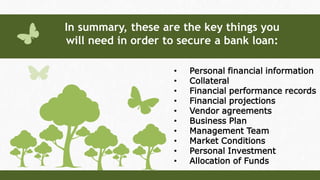
• Personal financial information
• Collateral
• Financial performance records
• Financial projections
• Vendor agreements
• Business Plan
• Management Team
• Market Conditions
• Personal Investment
• Allocation of Funds
In summary, these are the key things you
will need in order to secure a bank loan:
BusinessPlanTemplate.com
helps entrepreneurs, business
owners and executives create
plans to grow their organizations.
Learn more about our
Business Plan Services at
www.businessplantemplate.com

How to Secure a Business Loan

  • 1.
    When Deciding to Givea Business Loan Things Banks Look for Whether or Not
  • 2.
    Lenders have stringentguidelines that they follow when assessing small business loan applications.
  • 3.
    Many bankers areforced to turn down applications that do not meet the standards set by the bank. The following outlines the key aspects that are examined in the financing process.
  • 4.
    Need Help with yourBusiness Plan?
  • 5.
    Banks will analyzethe business owner’s current financial situation including net worth, details on assets, and past credit history. Personal Financial Information
  • 6.
    Your business mustpledge certain assets to back up the loan to minimize the risk to the bank. If you fail to make proper payments on the loan, the lender may seize these assets. Collateral
  • 7.
    Bankers will assessthe past financial performance of the business. In order to do so, they require past audited financial statements. Financial Performance of the Business
  • 8.
    Financial Projections Your teammust compile financial projections for the business. Lenders will evaluate future cash flows and your ability to pay back the loan over the term.
  • 9.
    If your businesshas substantial accounts receivable or accounts payable with third-party vendors, the lender will often need those agreements to assess the stability of these vendors. Vendor Agreements
  • 10.
    Business Plan Compiling aconcise business plan will allow the bank to see key accomplishments of the business to date and a roadmap for where the business plans to go in the future.
  • 11.
    Management Team Lenders liketo see owners and management team members that have experience in running their own business and have a past track record of paying back business loans.
  • 12.
    Market Conditions Loan officerswill analyze a company’s industry and market. If the business is entering into a high-risk industry, the bank will take that into account.
  • 13.
    Personal Investment in theBusiness Most lenders require business owners to invest a certain amount of capital into the company to make sure they have ‘skin in the game.’
  • 14.
    Allocation of Funds Lenderswill require the owner to disclose where the funds from the loan will be allocated towards. The use of funds should be allotted towards certain assets and working capital allowing for growth.
  • 15.
    • Personal financialinformation • Collateral • Financial performance records • Financial projections • Vendor agreements • Business Plan • Management Team • Market Conditions • Personal Investment • Allocation of Funds In summary, these are the key things you will need in order to secure a bank loan:
  • 16.
    BusinessPlanTemplate.com helps entrepreneurs, business ownersand executives create plans to grow their organizations. Learn more about our Business Plan Services at www.businessplantemplate.com

Editor's Notes