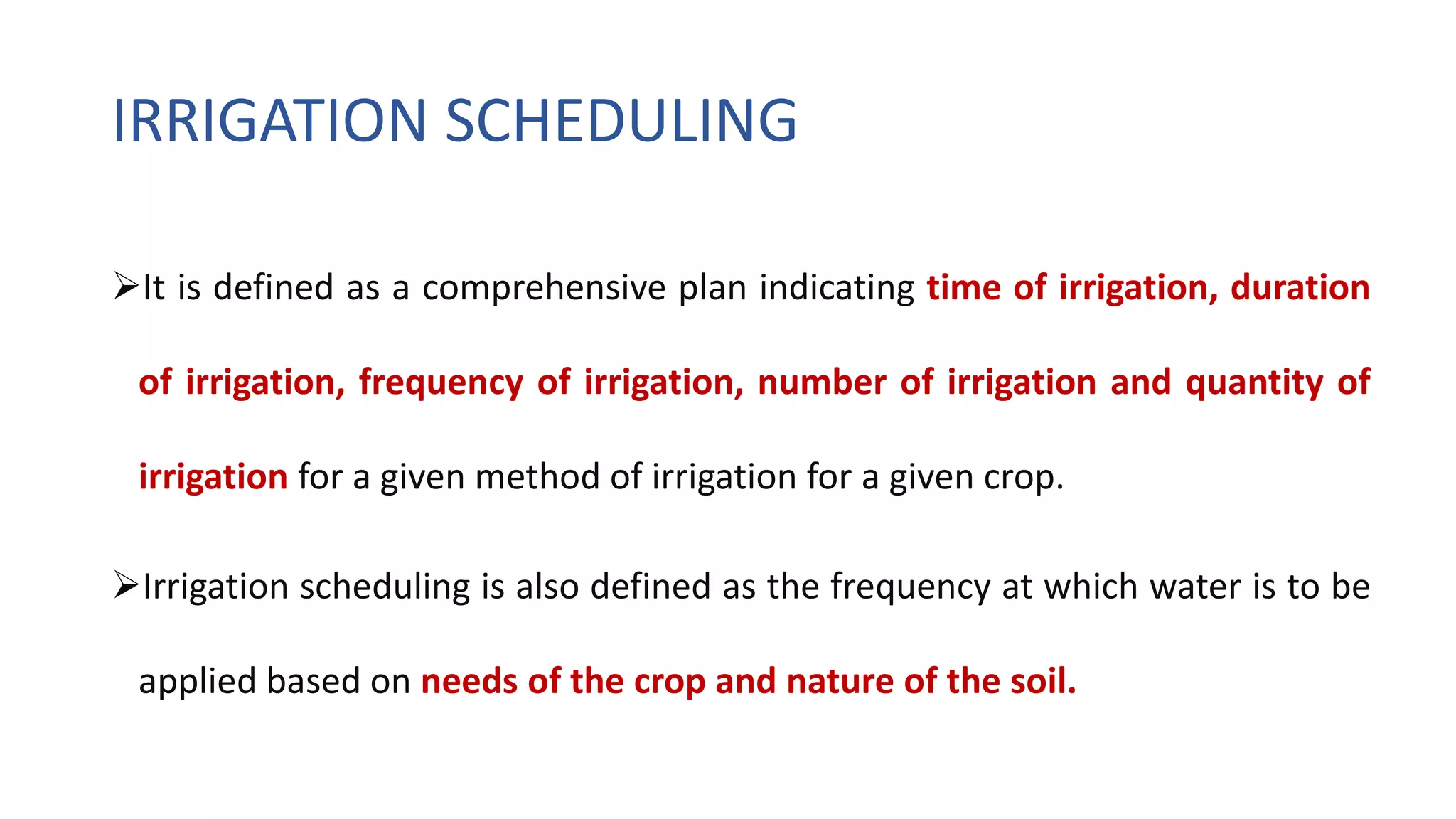
1. Irrigation management involves scheduling irrigation appropriately based on soil type, crop water requirements, and other factors to efficiently use water resources.
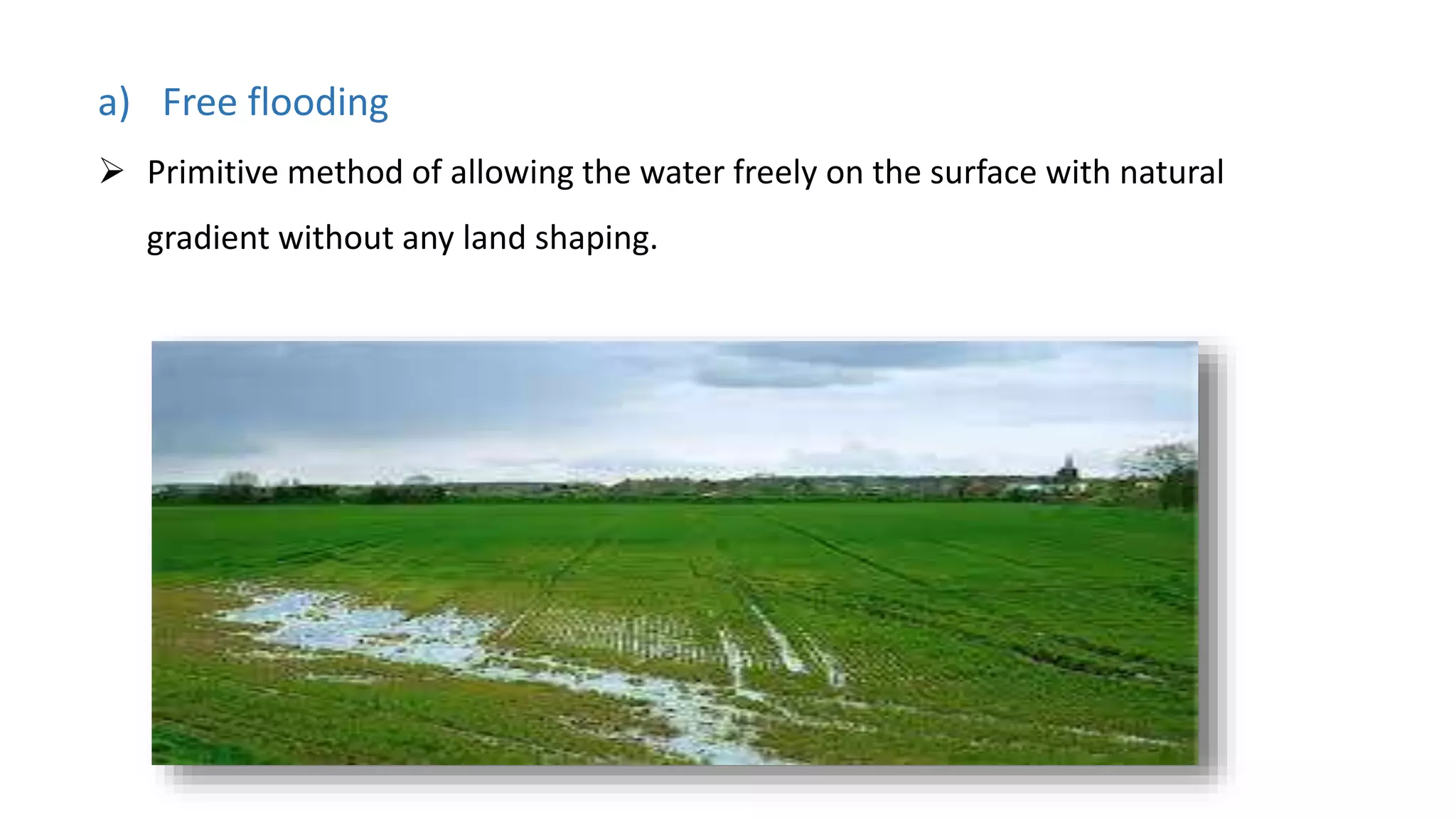
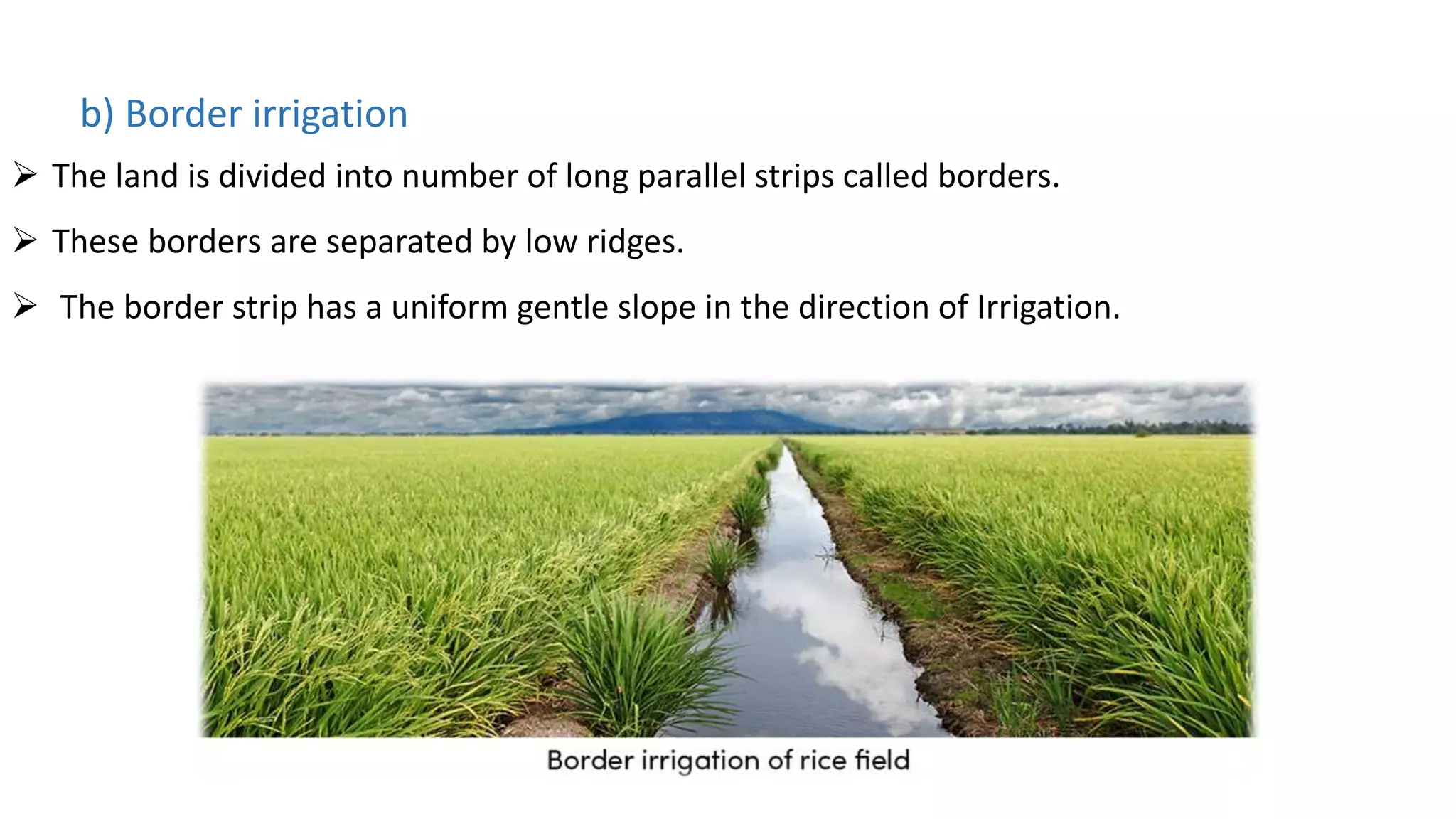
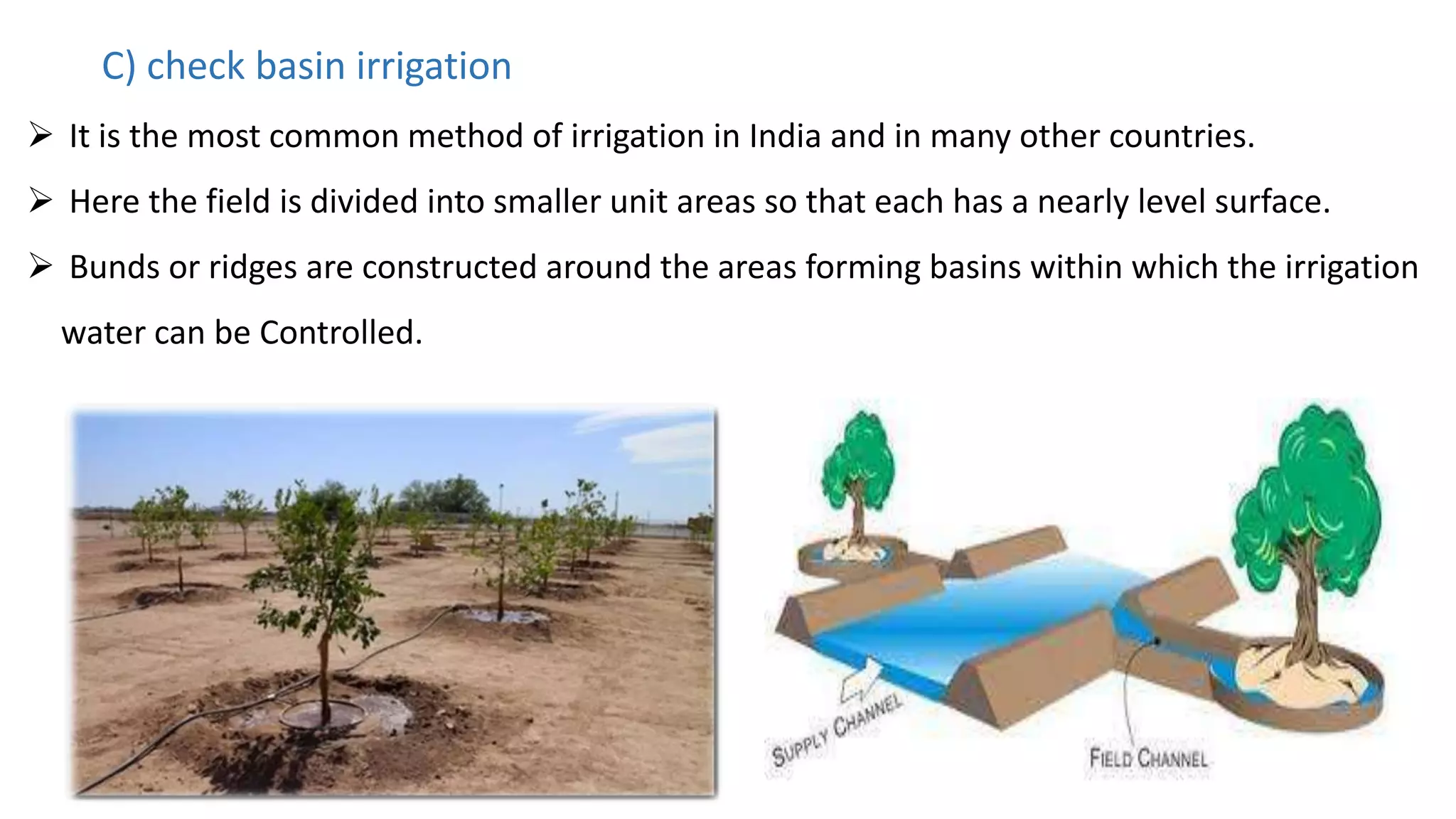
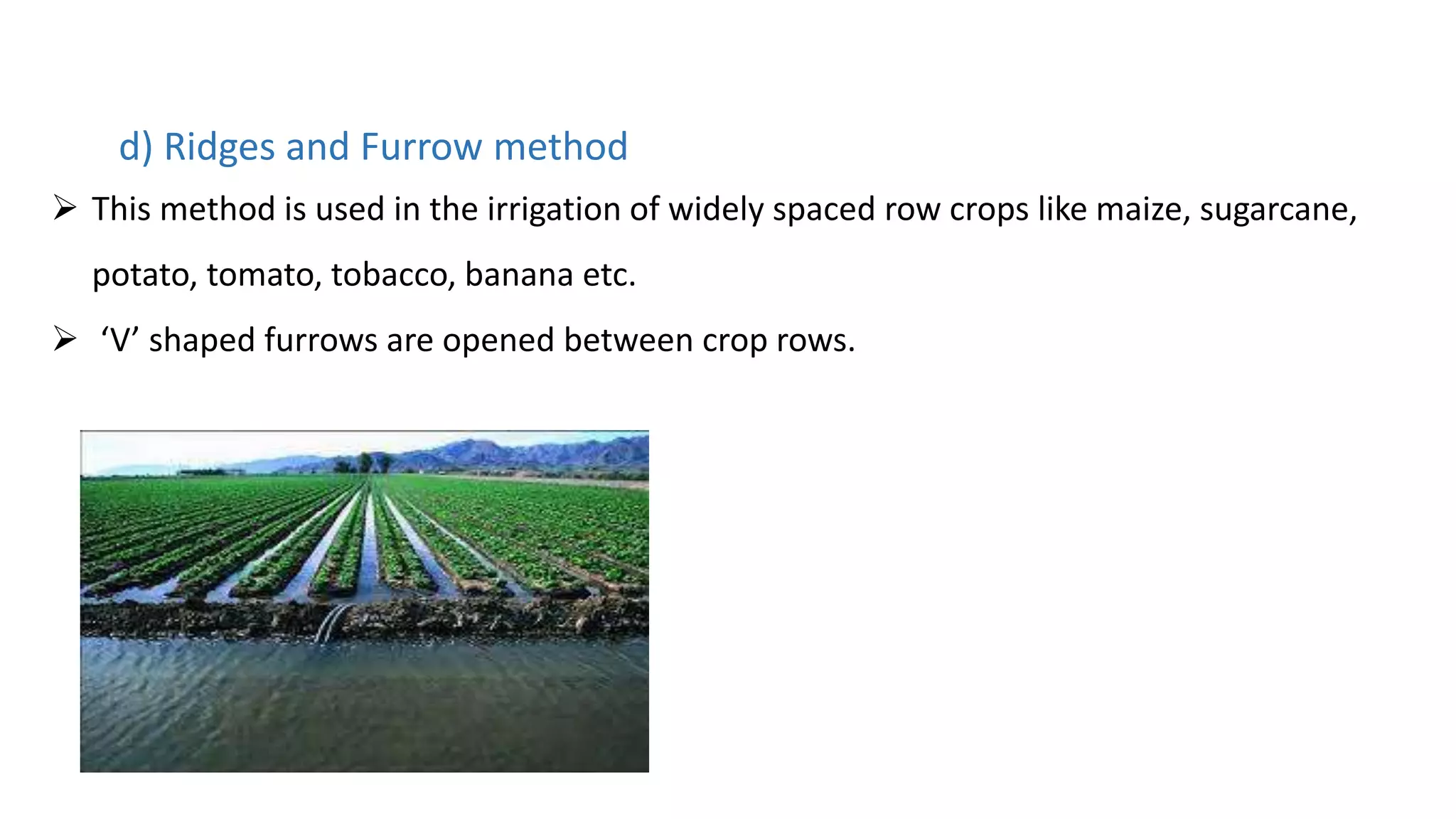
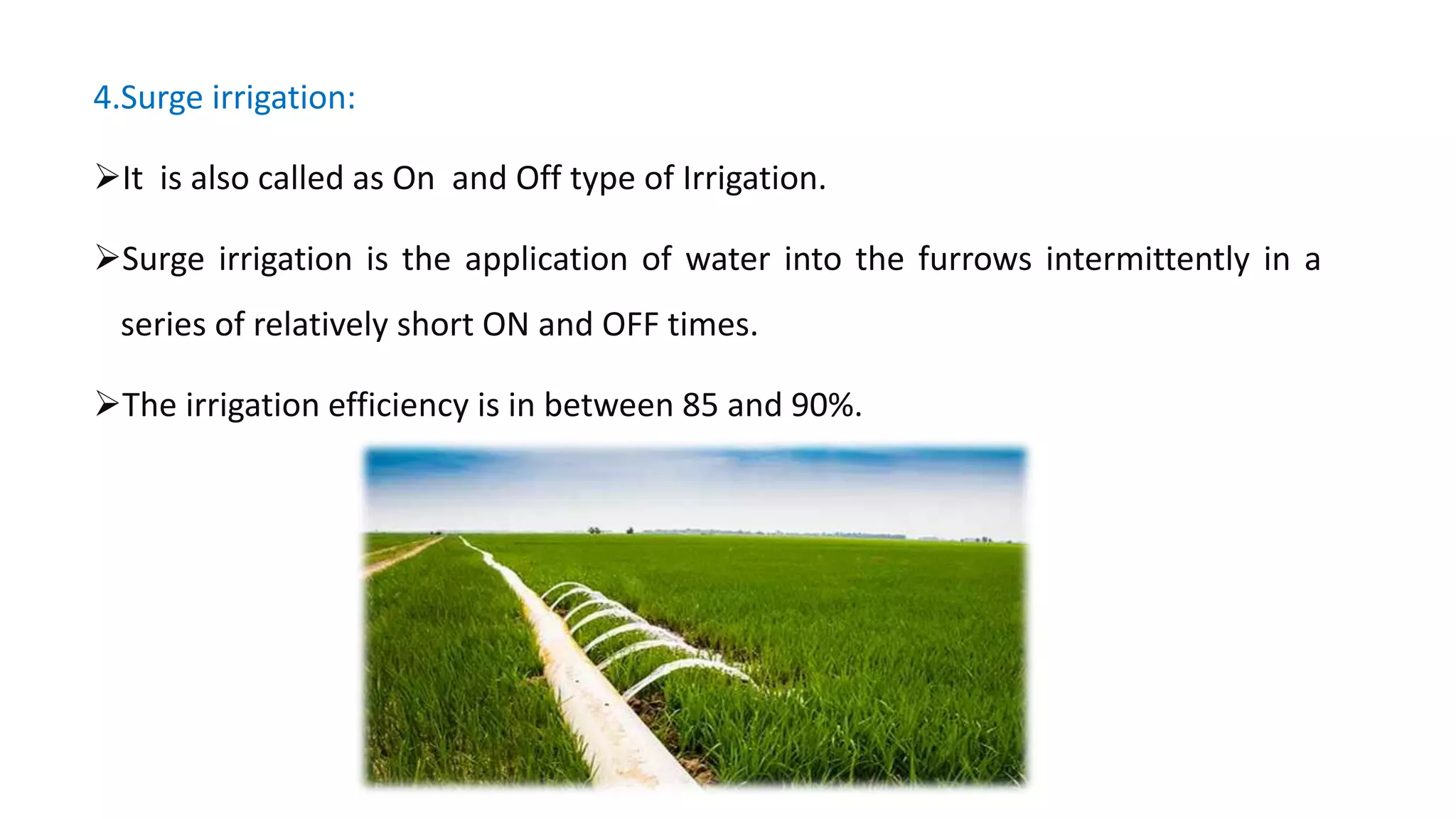
2. Common methods of surface irrigation include border irrigation, check basin irrigation, and ridges and furrows irrigation which involve dividing fields into strips or basins and flooding or furrowing the land.
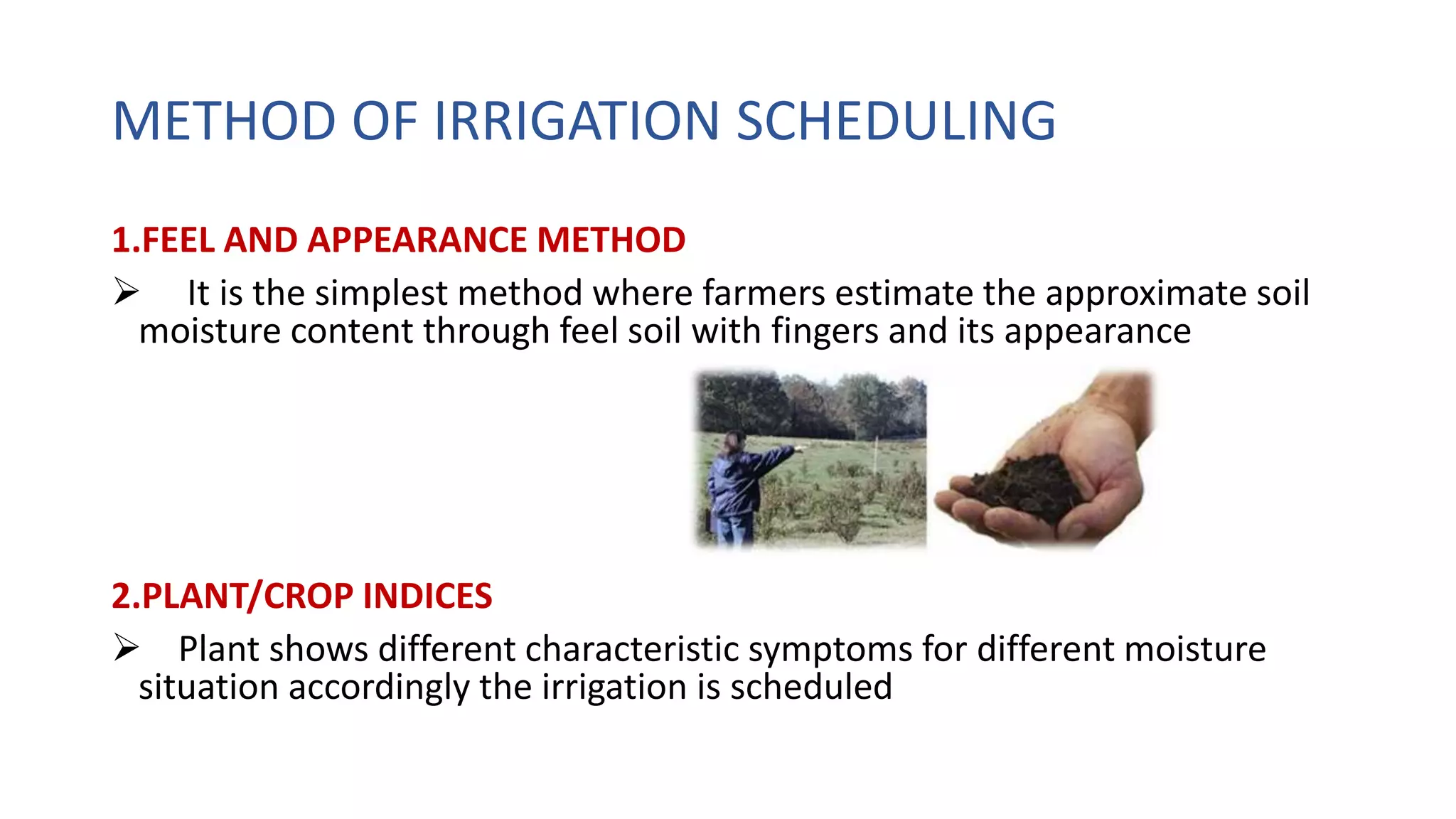
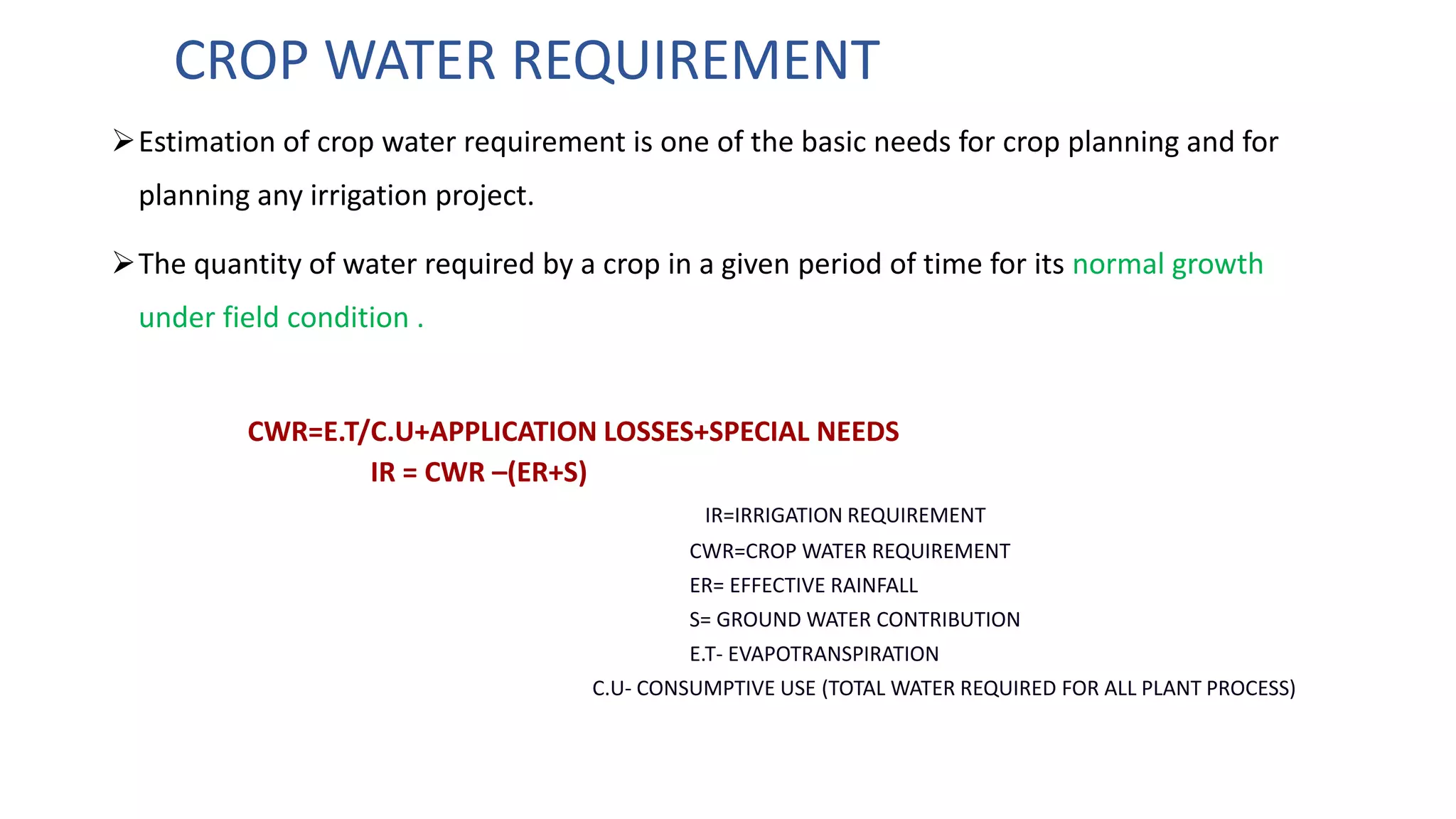
3. Factors considered in irrigation scheduling include soil type, crop water needs, available water supply, and allowing sufficient drying time between irrigations based on the crop's water depletion level. Monitoring soil moisture, plant conditions, and pan evaporation can help determine irrigation timing.