Instructional slide show created by Scott Smith
   Put on the harness
     The belay loop goes in front
     The legs go in the leg loops
     Pull up the waist band
 Put on the helmet
 Put on gloves
 Tighten all straps so that only three fingers fit
  between the straps and the user
 Make sure you double back all straps
 Put carabineers and rappel or belaying devices
  on the harness via gear loops or belay loop
 Using webbing,
  rope, daisy chain,
  etc. to secure
  yourself to the top   Safety Rope
  of cliff while you
  work on the
  remainder of the
  preparation work
 Use the bowline to
  tie in
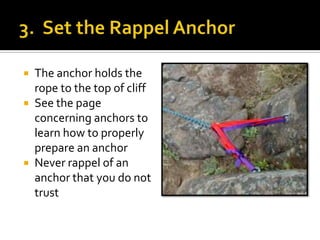
 The anchor holds the
  rope to the top of cliff
 See the page
  concerning anchors to
  learn how to properly
  prepare an anchor
 Never rappel of an
  anchor that you do not
  trust
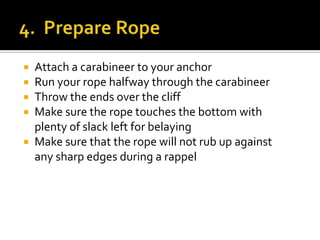
 Attach a carabineer to your anchor
 Run your rope halfway through the carabineer
 Throw the ends over the cliff
 Make sure the rope touches the bottom with
  plenty of slack left for belaying
 Make sure that the rope will not rub up against
  any sharp edges during a rappel
   Pull the rope back to the
    top of the cliff
   Pass both strands
    through the big hole and
    loop them over the shaft
    and lock it to the harness
    using a locking
    carabineer
   Make sure the loose end
    of the rope hangs at the
    side of your dominant
    hand
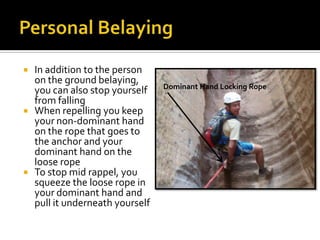
   In addition to the person
    on the ground belaying,
                                  Dominant Hand Locking Rope
    you can also stop yourself
    from falling
   When repelling you keep
    your non-dominant hand
    on the rope that goes to
    the anchor and your
    dominant hand on the
    loose rope
   To stop mid rappel, you
    squeeze the loose rope in
    your dominant hand and
    pull it underneath yourself
 Call “On belay,” to the person belaying you when
  you are ready
 Do not move to the edge of the cliff until you get
  the respond, “Belay on” form the person belaying
 Next, unclip from the safety harness
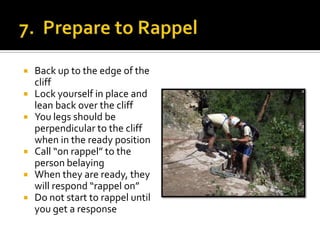
   Back up to the edge of the
    cliff
   Lock yourself in place and
    lean back over the cliff
   You legs should be
    perpendicular to the cliff
    when in the ready position
   Call “on rappel” to the
    person belaying
   When they are ready, they
    will respond “rappel on”
   Do not start to rappel until
    you get a response
   Bend your legs and push of the wall
   Loosen your grip with your dominant hand to begin
    to descend
     You can control how fast you descend by varying how
      much brake you are putting on
 Keep your legs perpendicular to the cliff during the
  entire rappel
 Continue to bounce off the cliff using your legs until
  you reach the bottom
 You may also walk yourself down the cliff if you
  prefer that to bounding down
   After landing call “off belay” to the person belaying
   Once they respond with “belay off” you can unclip
    the belay device and remove it from the rope
   The final step is to recover the rope
   This will vary depending on how you set up
    the anchor
   The method used here just requires you to
    pull on one of the end of the ropes hanging
    down
   You loose a carabineer at each rappel with
    this method, but you save a lot of time

How To Rappel

  • 1.
    Instructional slide showcreated by Scott Smith
  • 2.
    Put on the harness  The belay loop goes in front  The legs go in the leg loops  Pull up the waist band  Put on the helmet  Put on gloves  Tighten all straps so that only three fingers fit between the straps and the user  Make sure you double back all straps  Put carabineers and rappel or belaying devices on the harness via gear loops or belay loop
  • 3.
     Using webbing, rope, daisy chain, etc. to secure yourself to the top Safety Rope of cliff while you work on the remainder of the preparation work  Use the bowline to tie in
  • 4.
     The anchorholds the rope to the top of cliff  See the page concerning anchors to learn how to properly prepare an anchor  Never rappel of an anchor that you do not trust
  • 5.
     Attach acarabineer to your anchor  Run your rope halfway through the carabineer  Throw the ends over the cliff  Make sure the rope touches the bottom with plenty of slack left for belaying  Make sure that the rope will not rub up against any sharp edges during a rappel
  • 6.
    Pull the rope back to the top of the cliff  Pass both strands through the big hole and loop them over the shaft and lock it to the harness using a locking carabineer  Make sure the loose end of the rope hangs at the side of your dominant hand
  • 7.
    In addition to the person on the ground belaying, Dominant Hand Locking Rope you can also stop yourself from falling  When repelling you keep your non-dominant hand on the rope that goes to the anchor and your dominant hand on the loose rope  To stop mid rappel, you squeeze the loose rope in your dominant hand and pull it underneath yourself
  • 8.
     Call “Onbelay,” to the person belaying you when you are ready  Do not move to the edge of the cliff until you get the respond, “Belay on” form the person belaying  Next, unclip from the safety harness
  • 9.
    Back up to the edge of the cliff  Lock yourself in place and lean back over the cliff  You legs should be perpendicular to the cliff when in the ready position  Call “on rappel” to the person belaying  When they are ready, they will respond “rappel on”  Do not start to rappel until you get a response
  • 10.
    Bend your legs and push of the wall  Loosen your grip with your dominant hand to begin to descend  You can control how fast you descend by varying how much brake you are putting on  Keep your legs perpendicular to the cliff during the entire rappel  Continue to bounce off the cliff using your legs until you reach the bottom  You may also walk yourself down the cliff if you prefer that to bounding down
  • 11.
    After landing call “off belay” to the person belaying  Once they respond with “belay off” you can unclip the belay device and remove it from the rope
  • 12.
    The final step is to recover the rope  This will vary depending on how you set up the anchor  The method used here just requires you to pull on one of the end of the ropes hanging down  You loose a carabineer at each rappel with this method, but you save a lot of time