How to Motivate Your Students
and Get Them to Listen to You:
Part 3
Hello everyone! Rachel Wise here again, CEO of
educationandbehavior.com. Thanks for joining me in Part 3 of
How to Motivate Your Students and Get Them to Listen to You! I
encourage you to watch Parts 1 and 2 of the series before Part 3.
Here we will review tips 21 through 30!
21. Teach students how to use graphic organizers during lectures to
take notes on important points. See How to Use Graphic Organizers to
Improve Reading Comprehension, Writing, Listening, Note Taking, and
Study Skills for more on this topic.
22. For children who have trouble with language, give them a chance to
show their skills receptively (e.g., pointing to the correct answer rather
than saying the correct answer). For example, if you are a kindergarten
teacher and you are asking children to name letters, show a child with
language difficulties four choices and ask him to point to the letter you
want them to identify. (“Point to the letter A”).
23. Due to different learning styles in the classroom, use various
teaching modalities to keep students engaged. This means to have
lessons that encourage participation with different senses. Use visuals,
allow students to participate in hands on activities, and explain things
verbally. Some students learn best from hearing, others from seeing,
and others from doing. Music and movement is also a great way to
keep students engaged.
Related Article: 10 Great Educational Songs for Kids: 1st through 3rd
Grade
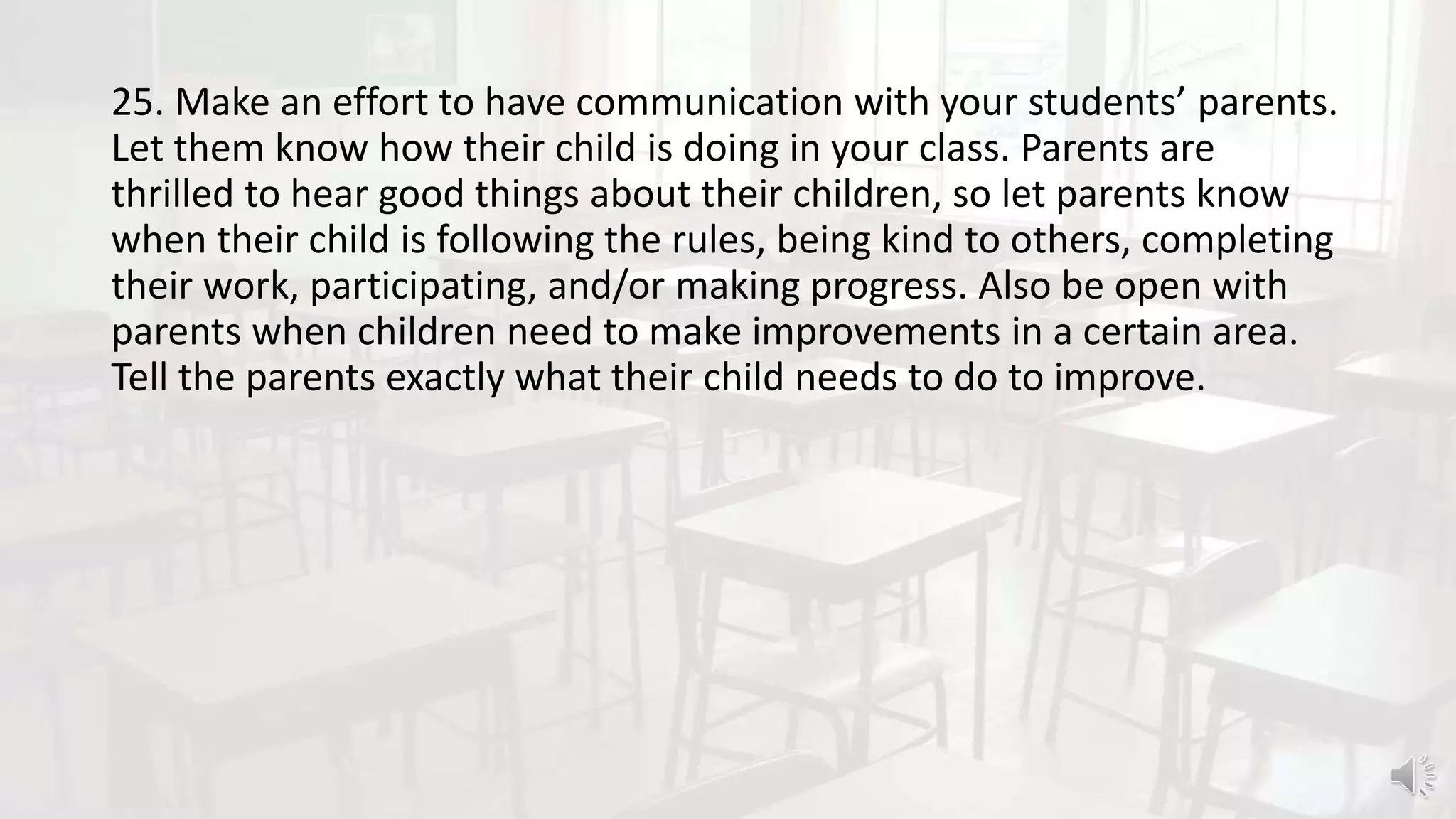
24. Praise individual students for making an effort (e.g., “You worked
really hard on that math assignment, Brian!” “Great participation
during science today, Maria!”). Again, use positive body language, at
times, to show your approval (e.g., smiling, giving thumbs up, nodding
in approval).
25. Make an effort to have communication with your students’ parents.
Let them know how their child is doing in your class. Parents are
thrilled to hear good things about their children, so let parents know
when their child is following the rules, being kind to others, completing
their work, participating, and/or making progress. Also be open with
parents when children need to make improvements in a certain area.
Tell the parents exactly what their child needs to do to improve.
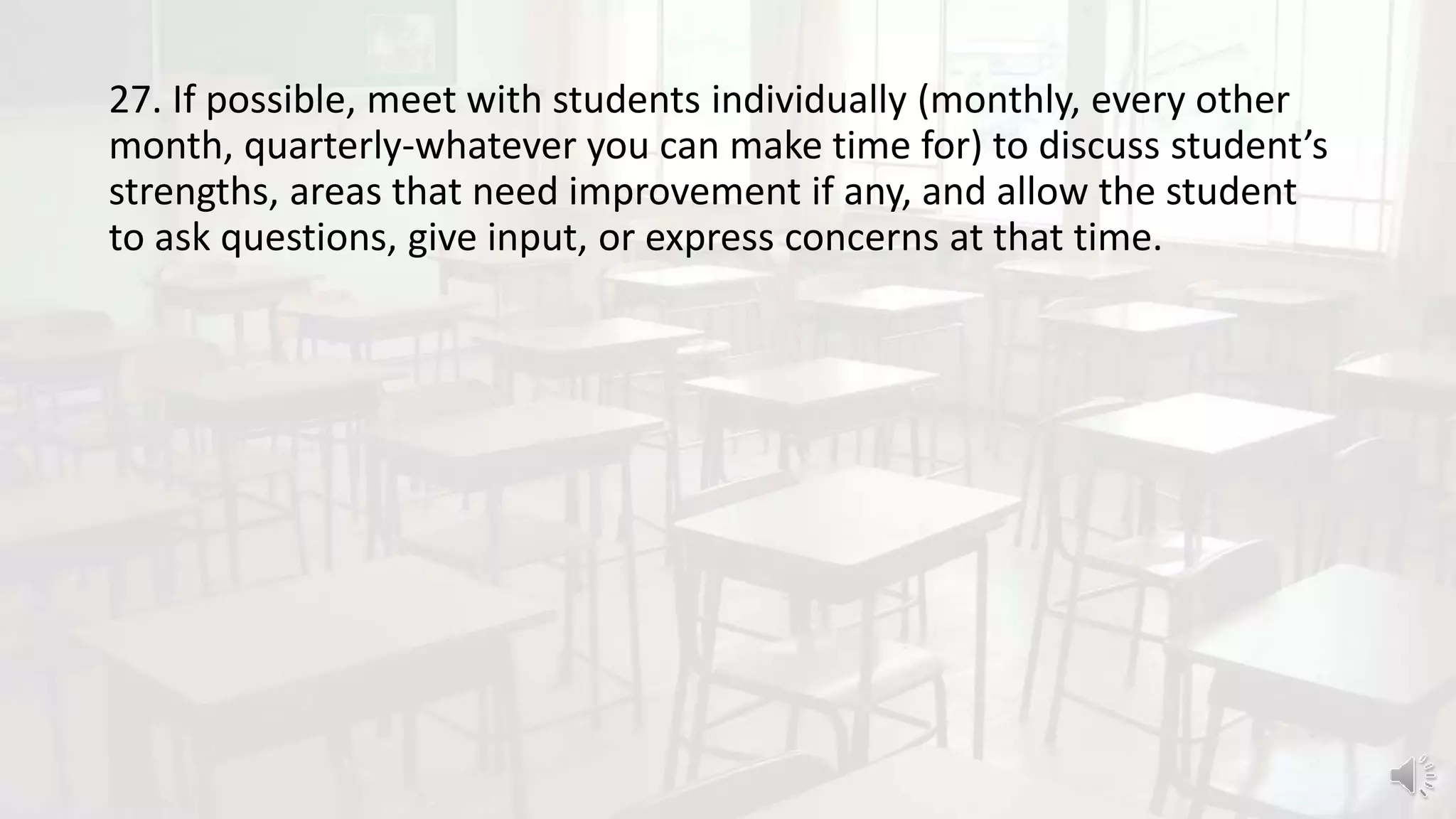
26. Hold class meetings once a week or once every two weeks to talk
about the things that your class is doing well with and the areas that
need improvement. Allow students to ask questions, make suggestions,
or express concerns at that time.
27. If possible, meet with students individually (monthly, every other
month, quarterly-whatever you can make time for) to discuss student’s
strengths, areas that need improvement if any, and allow the student
to ask questions, give input, or express concerns at that time.
28. Keep a calm demeanor. Do not let your students see you get
worked up or bothered by their behavior. Some students enjoy seeing
you get frustrated and this can lead to an increase in inappropriate
behavior.
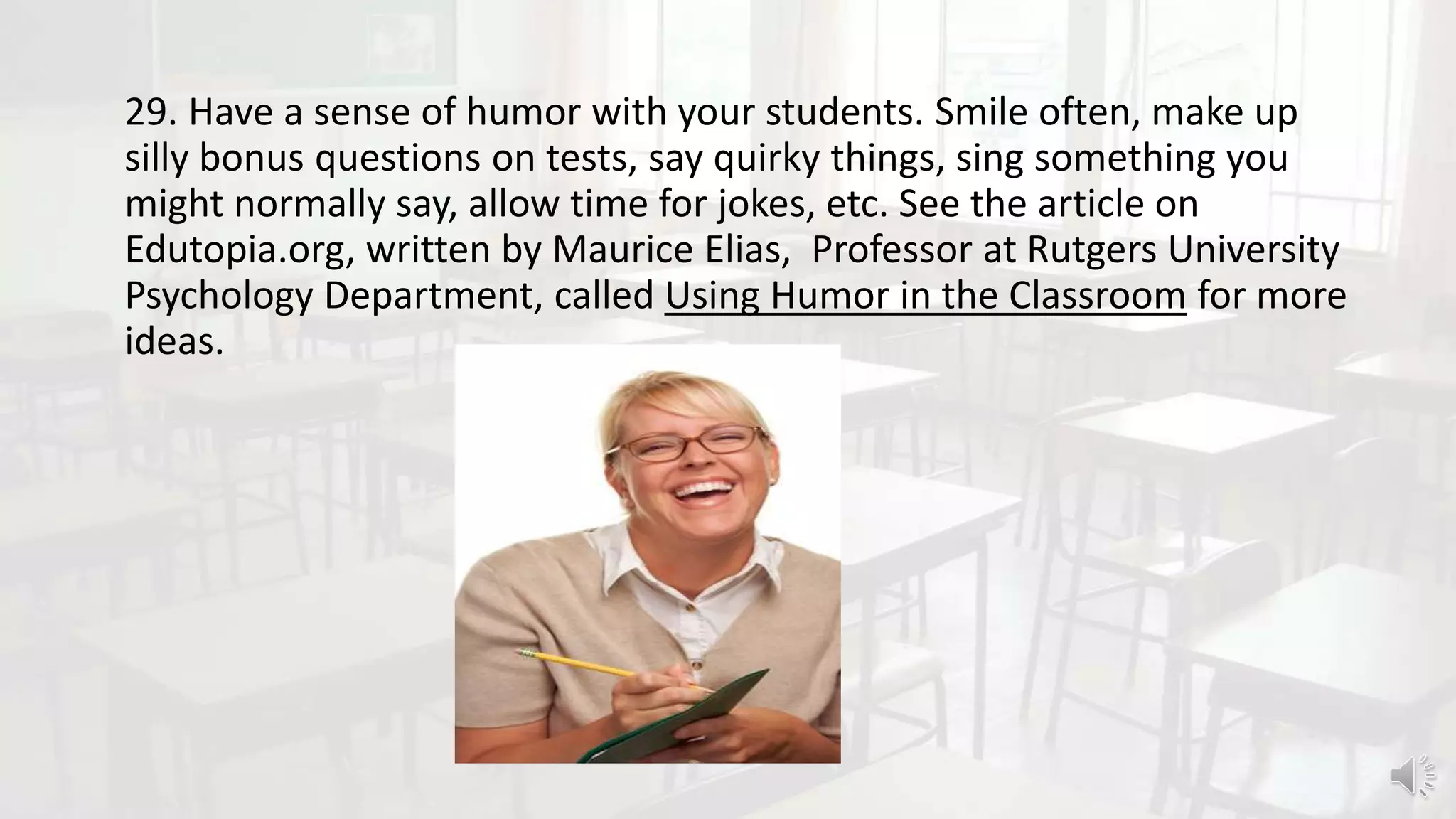
29. Have a sense of humor with your students. Smile often, make up
silly bonus questions on tests, say quirky things, sing something you
might normally say, allow time for jokes, etc. See the article on
Edutopia.org, written by Maurice Elias, Professor at Rutgers University
Psychology Department, called Using Humor in the Classroom for more
ideas.
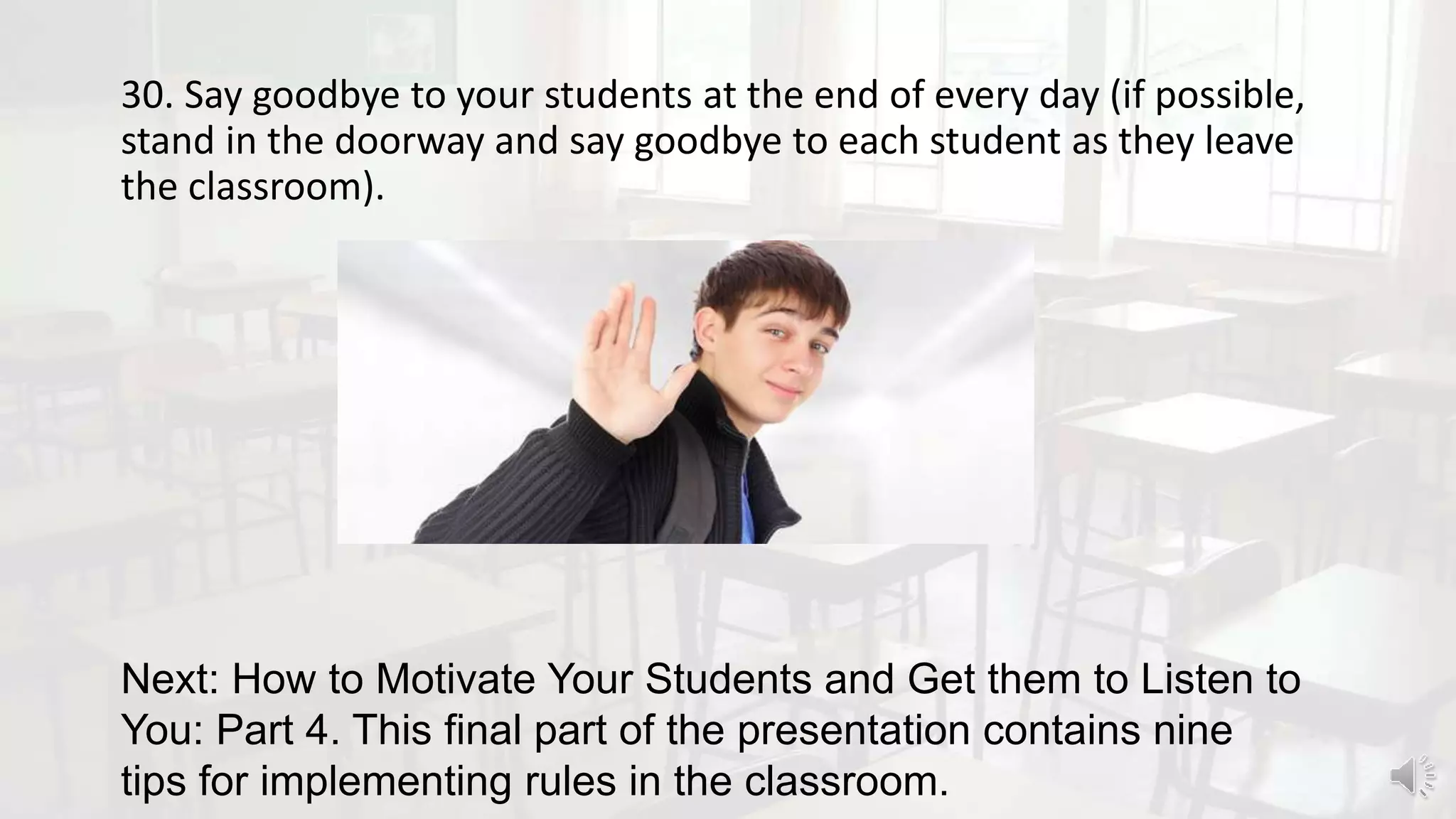
30. Say goodbye to your students at the end of every day (if possible,
stand in the doorway and say goodbye to each student as they leave
the classroom).
Next: How to Motivate Your Students and Get them to Listen to
You: Part 4. This final part of the presentation contains nine
tips for implementing rules in the classroom.

How to Motivate Your Students and Get Them to Listen to You: Part 3

  • 1.
    How to MotivateYour Students and Get Them to Listen to You: Part 3 Hello everyone! Rachel Wise here again, CEO of educationandbehavior.com. Thanks for joining me in Part 3 of How to Motivate Your Students and Get Them to Listen to You! I encourage you to watch Parts 1 and 2 of the series before Part 3. Here we will review tips 21 through 30!
  • 2.
    21. Teach studentshow to use graphic organizers during lectures to take notes on important points. See How to Use Graphic Organizers to Improve Reading Comprehension, Writing, Listening, Note Taking, and Study Skills for more on this topic.
  • 3.
    22. For childrenwho have trouble with language, give them a chance to show their skills receptively (e.g., pointing to the correct answer rather than saying the correct answer). For example, if you are a kindergarten teacher and you are asking children to name letters, show a child with language difficulties four choices and ask him to point to the letter you want them to identify. (“Point to the letter A”).
  • 4.
    23. Due todifferent learning styles in the classroom, use various teaching modalities to keep students engaged. This means to have lessons that encourage participation with different senses. Use visuals, allow students to participate in hands on activities, and explain things verbally. Some students learn best from hearing, others from seeing, and others from doing. Music and movement is also a great way to keep students engaged. Related Article: 10 Great Educational Songs for Kids: 1st through 3rd Grade
  • 5.
    24. Praise individualstudents for making an effort (e.g., “You worked really hard on that math assignment, Brian!” “Great participation during science today, Maria!”). Again, use positive body language, at times, to show your approval (e.g., smiling, giving thumbs up, nodding in approval).
  • 6.
    25. Make aneffort to have communication with your students’ parents. Let them know how their child is doing in your class. Parents are thrilled to hear good things about their children, so let parents know when their child is following the rules, being kind to others, completing their work, participating, and/or making progress. Also be open with parents when children need to make improvements in a certain area. Tell the parents exactly what their child needs to do to improve.
  • 7.
    26. Hold classmeetings once a week or once every two weeks to talk about the things that your class is doing well with and the areas that need improvement. Allow students to ask questions, make suggestions, or express concerns at that time.
  • 8.
    27. If possible,meet with students individually (monthly, every other month, quarterly-whatever you can make time for) to discuss student’s strengths, areas that need improvement if any, and allow the student to ask questions, give input, or express concerns at that time.
  • 9.
    28. Keep acalm demeanor. Do not let your students see you get worked up or bothered by their behavior. Some students enjoy seeing you get frustrated and this can lead to an increase in inappropriate behavior.
  • 10.
    29. Have asense of humor with your students. Smile often, make up silly bonus questions on tests, say quirky things, sing something you might normally say, allow time for jokes, etc. See the article on Edutopia.org, written by Maurice Elias, Professor at Rutgers University Psychology Department, called Using Humor in the Classroom for more ideas.
  • 11.
    30. Say goodbyeto your students at the end of every day (if possible, stand in the doorway and say goodbye to each student as they leave the classroom). Next: How to Motivate Your Students and Get them to Listen to You: Part 4. This final part of the presentation contains nine tips for implementing rules in the classroom.