Download as PDF, PPTX
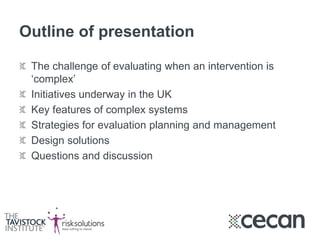
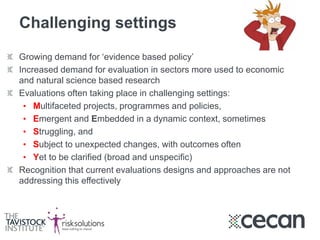
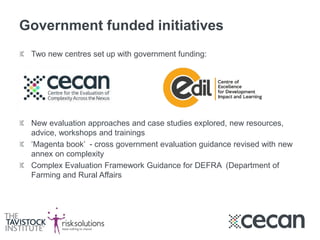
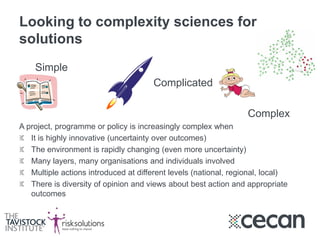
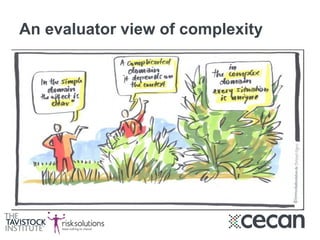
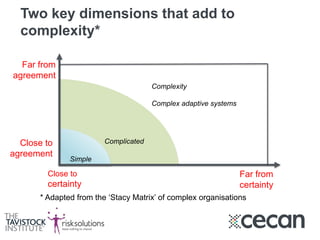
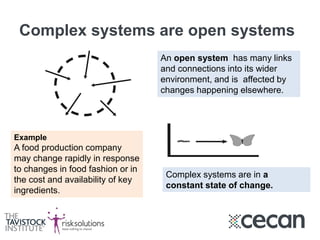
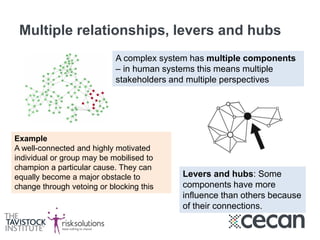
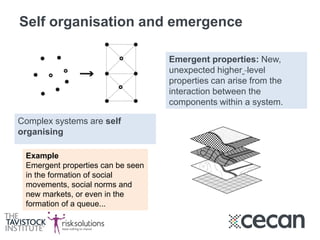
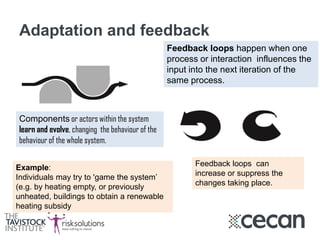
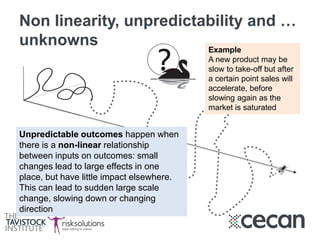
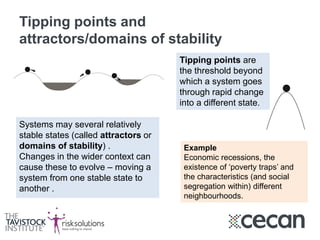
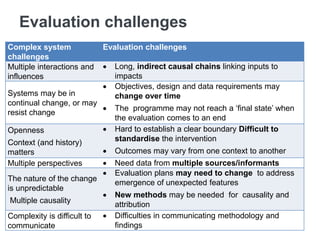
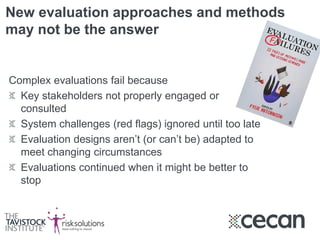
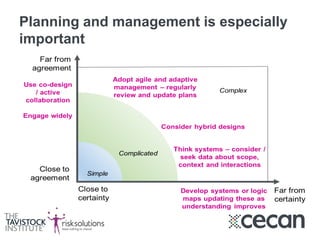
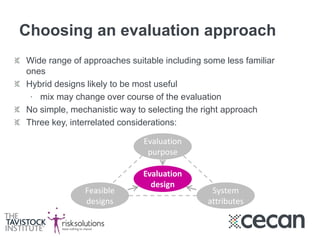
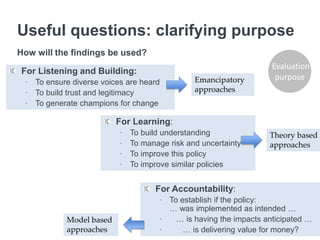
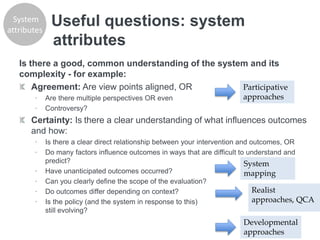
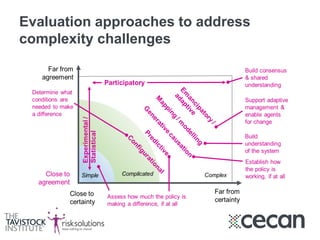

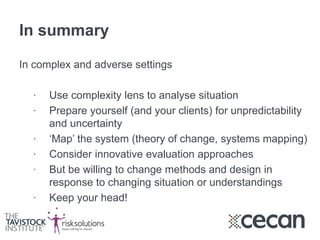


The presentation discusses evaluating complex interventions and programs. It notes that current evaluation approaches do not adequately address complex settings characterized by emergent outcomes, dynamic contexts, and uncertainty. Two new UK centers explore new evaluation approaches for complex systems. Such systems have multiple interacting components, self-organization, feedback loops, unpredictability, and tipping points. This poses challenges for evaluations having long causal chains, changing circumstances, openness to context, and multiple perspectives. New approaches discussed include participatory, realist, case study, system mapping and modeling methods. Key is understanding complexity, allowing flexibility, engaging stakeholders, and managing uncertainty.


