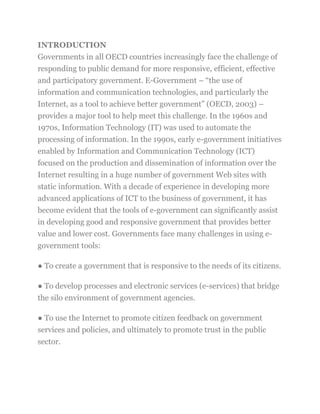
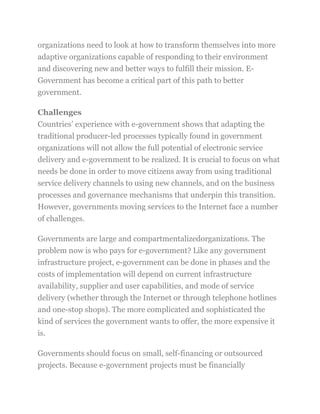
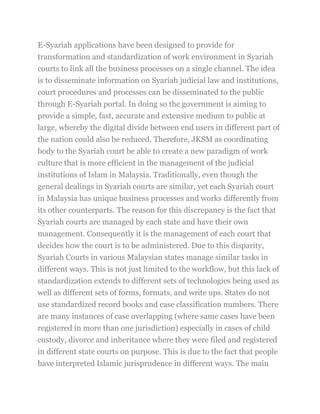
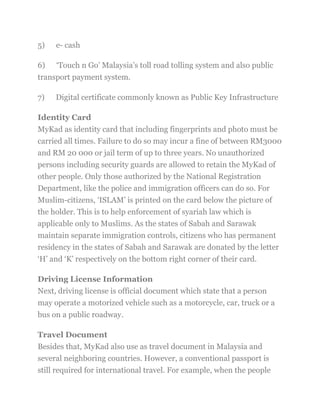
1. The document discusses key challenges governments face in implementing effective e-government programs, including coordinating across agencies, focusing on user needs, and addressing issues like financing, privacy, and security.
2. Some examples provided include Singapore's citizen-centered approach of establishing public access centers and Japan's national ID system which raised privacy concerns.
3. E-government aims to improve responsiveness and efficiency but requires addressing challenges like transforming bureaucratic structures, measuring costs and benefits, and gaining public trust and adoption of new electronic services.