How Does In Vitro
Fertilization
(IVF) Work?
How Does In Vitro
Fertilization
(IVF) Work?
I
Introduction
Initial Consultation
II
Ovulation Stimulation
Egg Retrieval
Sperm Collection
III
Fertilization
Embryo Culture Embryo
Transfer
IV
Implantation
Pregnancy Test
V Conclusion
INDEX
Introduction
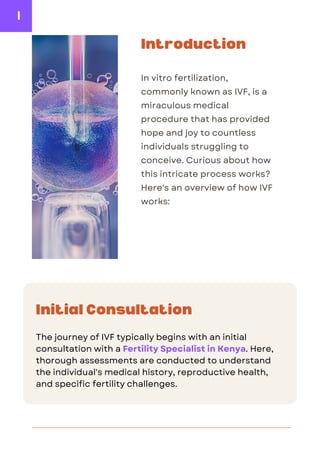
In vitro fertilization,
commonly known as IVF, is a
miraculous medical
procedure that has provided
hope and joy to countless
individuals struggling to
conceive. Curious about how
this intricate process works?
Here's an overview of how IVF
works:
The journey of IVF typically begins with an initial
consultation with a Fertility Specialist in Kenya. Here,
thorough assessments are conducted to understand
the individual's medical history, reproductive health,
and specific fertility challenges.
Initial Consultation
I
Ovulation Stimulation
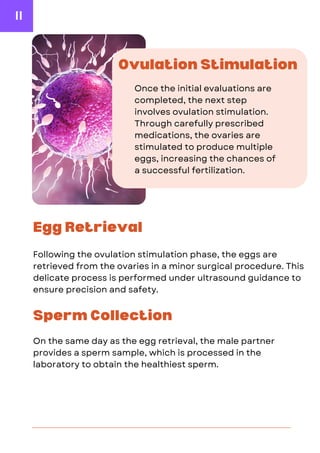
Once the initial evaluations are
completed, the next step
involves ovulation stimulation.
Through carefully prescribed
medications, the ovaries are
stimulated to produce multiple
eggs, increasing the chances of
a successful fertilization.
Egg Retrieval
Following the ovulation stimulation phase, the eggs are
retrieved from the ovaries in a minor surgical procedure. This
delicate process is performed under ultrasound guidance to
ensure precision and safety.
Sperm Collection
On the same day as the egg retrieval, the male partner
provides a sperm sample, which is processed in the
laboratory to obtain the healthiest sperm.
II
Embryo Culture
After successful fertilization, the
embryos are cultured in a laboratory
for a few days to monitor their
development. During this period, the
embryos are carefully assessed to
determine their viability for
implantation.
Embryo Transfer
Once the embryos have matured, the
final stage involves the transfer of the
selected embryo(s) into the uterus.
This procedure is relatively simple and
minimally invasive, aiming to optimize
the chances of a successful
pregnancy.
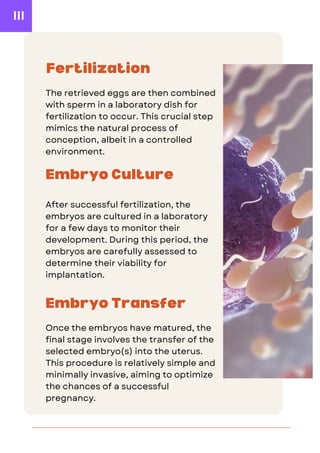
Fertilization
The retrieved eggs are then combined
with sperm in a laboratory dish for
fertilization to occur. This crucial step
mimics the natural process of
conception, albeit in a controlled
environment.
III
Pregnancy Test
Approximately two weeks after the
embryo transfer, a pregnancy test is
performed to determine if the IVF
cycle was successful.
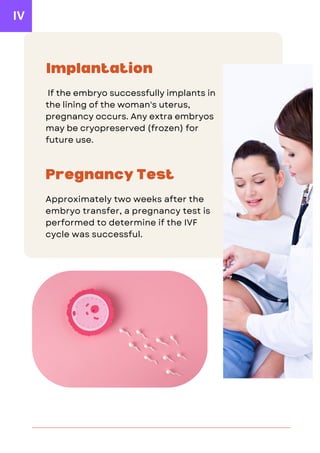
Implantation
If the embryo successfully implants in
the lining of the woman's uterus,
pregnancy occurs. Any extra embryos
may be cryopreserved (frozen) for
future use.
IV
www.sriramakrishnahospital.com
info@sriramakrishnahospital.com
Conclusion
In vitro fertilization is a remarkable technological
advancement that has revolutionized the field of
reproductive medicine, offering new possibilities to
individuals facing fertility challenges. Through a
meticulous and intricate process at Fertility
Hospitals In Kenya, IVF has brought joy and
fulfillment to countless families.
+91 7970 108 108
V

How Does In Vitro Fertilization (IVF) Work.pdf

  • 1.
    How Does InVitro Fertilization (IVF) Work? How Does In Vitro Fertilization (IVF) Work?
  • 2.
    I Introduction Initial Consultation II Ovulation Stimulation EggRetrieval Sperm Collection III Fertilization Embryo Culture Embryo Transfer IV Implantation Pregnancy Test V Conclusion INDEX
  • 3.
    Introduction In vitro fertilization, commonlyknown as IVF, is a miraculous medical procedure that has provided hope and joy to countless individuals struggling to conceive. Curious about how this intricate process works? Here's an overview of how IVF works: The journey of IVF typically begins with an initial consultation with a Fertility Specialist in Kenya. Here, thorough assessments are conducted to understand the individual's medical history, reproductive health, and specific fertility challenges. Initial Consultation I
  • 4.
    Ovulation Stimulation Once theinitial evaluations are completed, the next step involves ovulation stimulation. Through carefully prescribed medications, the ovaries are stimulated to produce multiple eggs, increasing the chances of a successful fertilization. Egg Retrieval Following the ovulation stimulation phase, the eggs are retrieved from the ovaries in a minor surgical procedure. This delicate process is performed under ultrasound guidance to ensure precision and safety. Sperm Collection On the same day as the egg retrieval, the male partner provides a sperm sample, which is processed in the laboratory to obtain the healthiest sperm. II
  • 5.
    Embryo Culture After successfulfertilization, the embryos are cultured in a laboratory for a few days to monitor their development. During this period, the embryos are carefully assessed to determine their viability for implantation. Embryo Transfer Once the embryos have matured, the final stage involves the transfer of the selected embryo(s) into the uterus. This procedure is relatively simple and minimally invasive, aiming to optimize the chances of a successful pregnancy. Fertilization The retrieved eggs are then combined with sperm in a laboratory dish for fertilization to occur. This crucial step mimics the natural process of conception, albeit in a controlled environment. III
  • 6.
    Pregnancy Test Approximately twoweeks after the embryo transfer, a pregnancy test is performed to determine if the IVF cycle was successful. Implantation If the embryo successfully implants in the lining of the woman's uterus, pregnancy occurs. Any extra embryos may be cryopreserved (frozen) for future use. IV
  • 7.
    www.sriramakrishnahospital.com info@sriramakrishnahospital.com Conclusion In vitro fertilizationis a remarkable technological advancement that has revolutionized the field of reproductive medicine, offering new possibilities to individuals facing fertility challenges. Through a meticulous and intricate process at Fertility Hospitals In Kenya, IVF has brought joy and fulfillment to countless families. +91 7970 108 108 V