in Elderly
Hospice Care and
Palliative Care
Agnieska Janier
Christine Dianne
Fabiosa
Prixie Gales
Ta ble of
Conten ts
Definition
Similarities and
Differences
Pharmacology
Nursing Care: Hospice
and Palliative
Hospice Care
Hospice is medical care designed
for the end of someone’s life. The
purpose of hospice is to improve
the quality of life that’s left.
Hospice provides pain and other
symptom relief, as well as
emotional, psychosocial, and
spiritual help to support patient
and their family.
-Healthline
Palliatice Care
Palliative care is specialized medical
care that focuses on providing patients
relief from pain and other symptoms of
a serious illness, no matter the
diagnosis or stage of disease. Palliative
care teams aim to improve the quality
of life for both patients and their
families. This form of care is offered
alongside curative or other treatments
you may be receiving.
-Mayoclinic
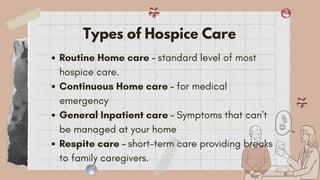
Types of Hospice Care
Routine Home care - standard level of most
hospice care.
Continuous Home care - for medical
emergency
General Inpatient care - Symptoms that can't
be managed at your home
Respite care - short-term care providing breaks
to family caregivers.
Hospice Care vs Palliative Care
Pharmacological Management
Palliative medicines are one-component of a
whole-person approach to supporting people with
life-limiting and terminal illnesses. Medicines may
be needed to treat or prevent symptoms associated
with the palliative diagnosis. The health problems
include are pain, dyspnea, nausea and vomiting,
anxiety, delirium and agitation, and constipation.
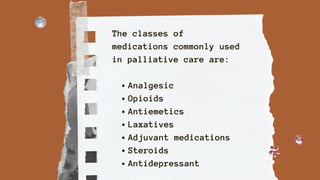
Analgesic
Opioids
Antiemetics
Laxatives
Adjuvant medications
Steroids
Antidepressant
The classes of
medications commonly used
in palliative care are:
Nursing Care
for
Hospice
Communication
Collaboration
Compassionate caring
Comfort
Cultural/spiritual
care.
Hospice care focuses on
the 5 Cs:
Nurses should be cognizant of their voice, body
language, and actions to foster therapeutic
communication, build rapport, and demonstrate
empathy and caring.
Provide compassionate caring demonstrated through
empathy, sympathetic awareness of the patient's and
family's suffering with a sincere desire to assuage it,
respect, and a nonjudgmental acceptance of the
patient's and family's wishes.
Assessing patient and family wishes regarding
cultural, ethnic, and/or religious rituals early in the
patient's care.
1.
2.
3.
4. Assessing for pain and other distressing symptoms,
providing evidence-based interventions to alleviate them.
5. Assessing anxiety levels of patients and other mental
and emotional states
6. Determining levels of perceptual or cognitive
impairment, as well as physical fitness
7. Evaluating the progress of a patient’s disease or
condition
8. Aiding the families of patients to solve any issues that
may result from end-of-life care
Assess patient and family's
physical, psychological,
social, and spiritual needs.
Assess effectiveness of
plan of care, including
prescribed medications
Provide comprehensive
medical and psychological
evaluation
Provide skilled and
comprehensive symptom
management
Provide consistent care across
settings; assist and support
palliative care physician and
primary care team
Formulate palliative care plan;
communicate plan to patient, family,
and medical team; monitor or modify
plan based on needs of child and
family
Guide patient and family through
difficult and sensitive situations
(eg, respond to questions and
concerns, reaffirm plan of care)
Educate and guide other
providers on fundamental
principles of palliative care
Nursing
Care for
Palliative
Thank
you

Hospice-and-Palliative.pdf

  • 1.
    in Elderly Hospice Careand Palliative Care Agnieska Janier Christine Dianne Fabiosa Prixie Gales
  • 2.
    Ta ble of Contents Definition Similarities and Differences Pharmacology Nursing Care: Hospice and Palliative
  • 3.
    Hospice Care Hospice ismedical care designed for the end of someone’s life. The purpose of hospice is to improve the quality of life that’s left. Hospice provides pain and other symptom relief, as well as emotional, psychosocial, and spiritual help to support patient and their family. -Healthline Palliatice Care Palliative care is specialized medical care that focuses on providing patients relief from pain and other symptoms of a serious illness, no matter the diagnosis or stage of disease. Palliative care teams aim to improve the quality of life for both patients and their families. This form of care is offered alongside curative or other treatments you may be receiving. -Mayoclinic
  • 4.
    Types of HospiceCare Routine Home care - standard level of most hospice care. Continuous Home care - for medical emergency General Inpatient care - Symptoms that can't be managed at your home Respite care - short-term care providing breaks to family caregivers.
  • 5.
    Hospice Care vsPalliative Care
  • 6.
    Pharmacological Management Palliative medicinesare one-component of a whole-person approach to supporting people with life-limiting and terminal illnesses. Medicines may be needed to treat or prevent symptoms associated with the palliative diagnosis. The health problems include are pain, dyspnea, nausea and vomiting, anxiety, delirium and agitation, and constipation.
  • 7.
  • 8.
  • 9.
    Nurses should becognizant of their voice, body language, and actions to foster therapeutic communication, build rapport, and demonstrate empathy and caring. Provide compassionate caring demonstrated through empathy, sympathetic awareness of the patient's and family's suffering with a sincere desire to assuage it, respect, and a nonjudgmental acceptance of the patient's and family's wishes. Assessing patient and family wishes regarding cultural, ethnic, and/or religious rituals early in the patient's care. 1. 2. 3.
  • 10.
    4. Assessing forpain and other distressing symptoms, providing evidence-based interventions to alleviate them. 5. Assessing anxiety levels of patients and other mental and emotional states 6. Determining levels of perceptual or cognitive impairment, as well as physical fitness 7. Evaluating the progress of a patient’s disease or condition 8. Aiding the families of patients to solve any issues that may result from end-of-life care
  • 11.
    Assess patient andfamily's physical, psychological, social, and spiritual needs. Assess effectiveness of plan of care, including prescribed medications Provide comprehensive medical and psychological evaluation Provide skilled and comprehensive symptom management Provide consistent care across settings; assist and support palliative care physician and primary care team Formulate palliative care plan; communicate plan to patient, family, and medical team; monitor or modify plan based on needs of child and family Guide patient and family through difficult and sensitive situations (eg, respond to questions and concerns, reaffirm plan of care) Educate and guide other providers on fundamental principles of palliative care Nursing Care for Palliative
  • 12.