Strengthening of The Horticulture
Information Support Network For
Small Farmers in Egypt
(HORTISUN)
‫مصر‬ ‫فى‬ ‫المزارعين‬ ‫لصغار‬ ‫البستانية‬ ‫المعلومات‬ ‫شبكة‬ ‫دعم‬
PARTNERS
• Agricultural Research Center (ARC)
• Union Federation of Producers and Exporters of
Horticultural Crops (UPEHC)
• Central Laboratory for Agricultural Expert
Systems (CLAES)
• Misr Alzeraya TV channel
• Research Institute For Sustainable
Environment (RISE)
• Fayoum Association for Organic Agriculture
Development (FAODA)
• Mobinil
TERMINAL WORKSHOP
OBJECTIVES
To inform about
Project results.
To have a constructive dialogue on
different extension systems.
Develop recommendations.
SOCIAL MEDIA
Hortisun.eg@gmail.com
Password: Hortisun2015
https://www.facebook.com/pages/Hortisun-
Egypt/694493177338181
http://Hortisun-Egypt.blogspot.com/
https://twitter.com/HORTISUN-Egypt
https://www.youtube.com/channel/UCrZq9XlkZ3I
ROmBAWuxKtkQ/playlists
http://www.slideshare.net/HORTISUN-Egypt
https://www.dropbox.com/login
https://www.linkedin.com/groups/Hortisun-Egypt-
8236626
hortisunegypt@yahoo.com
Password: Hortisun2015
http://www.flicker.com/photos/Hortisun-Egypt
INTRODUCTION
TO HORTISUN PROJECT
OBJECTIVES AND OVERVIEW
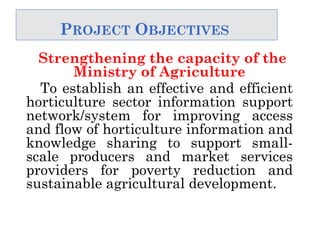
PROJECT OBJECTIVES
Strengthening the capacity of the
Ministry of Agriculture
To establish an effective and efficient
horticulture sector information support
network/system for improving access
and flow of horticulture information and
knowledge sharing to support small-
scale producers and market services
providers for poverty reduction and
sustainable agricultural development.
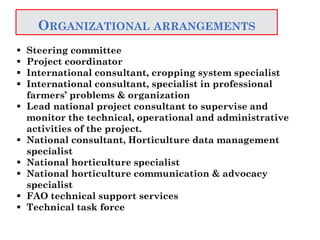
ORGANIZATIONAL ARRANGEMENTS
 Steering committee
 Project coordinator
 International consultant, cropping system specialist
 International consultant, specialist in professional
farmers’ problems & organization
 Lead national project consultant to supervise and
monitor the technical, operational and administrative
activities of the project.
 National consultant, Horticulture data management
specialist
 National horticulture specialist
 National horticulture communication & advocacy
specialist
 FAO technical support services
 Technical task force
PROJECT
ACHIEVEMENTS
1. STAKEHOLDER ANALYSIS
THROUGH A SURVEY
To
identify:
 Stakeholders involved
 Information (source , type needed , flow )
 Communication preferred .
• A functional specification for the
HORTISUN
• System components.
• An Arabic version of HORTIVAR
• A separate interface for horticulture growers’
problems based on growers’ problems system
of RADCON.
• A tool for collecting information from the
stakeholders related to the horticulture
value chain
• Analytic reports based on the information
collected which could be used for early
warning system.
To
Develop
2. Central Horticulture Information
And Communication Unit Within ARC
3. A Horticulture Information
Support Network (HORTISUN)
through CLAES
4. Arabic version of Hortivar
through CLAES
5. Production Of High Quality
Documentary Video Episodes
Through Misr Alzeraya TV Channel
1.Good Agricultural Practices (GAPs)
2.Horticultural crops production
3.Post harvest practices and How to
reduces losses through value chain
4.Plant disease, integrated pest and weed
Management
5.Green houses constitutions
6.Composting
7.Food safety along the supply chain
8.Mobile support information system
9.Nurseries
10.Value chain development
11.Marketing horticulture crops
On the following
horticultural
topics
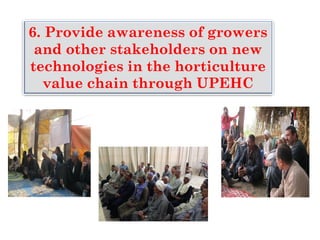
6. Provide awareness of growers
and other stakeholders on new
technologies in the horticulture
value chain through UPEHC
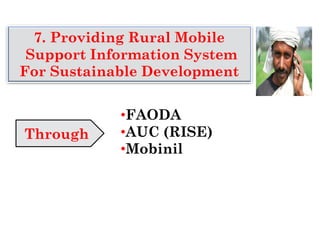
7. Providing Rural Mobile
Support Information System
For Sustainable Development
Through
•FAODA
•AUC (RISE)
•Mobinil
8. A Project Proposal For
Further Development of
HORTISUN
PROJECT IMPACT
Immediate impact of the project
Provide easy and continuous access
to horticulture related information.
Provide the awareness of small
growers and other stakeholders.
Strengthening the horticulture
information support network
systems.
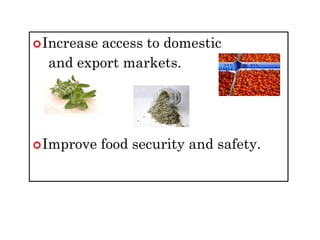
Increase access to domestic
and export markets.
Improve food security and safety.
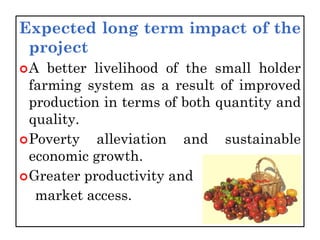
Expected long term impact of the
project
A better livelihood of the small holder
farming system as a result of improved
production in terms of both quantity and
quality.
Poverty alleviation and sustainable
economic growth.
Greater productivity and
market access.
Horticulture Research Center Presentation

Horticulture Research Center Presentation

  • 1.
    Strengthening of TheHorticulture Information Support Network For Small Farmers in Egypt (HORTISUN) ‫مصر‬ ‫فى‬ ‫المزارعين‬ ‫لصغار‬ ‫البستانية‬ ‫المعلومات‬ ‫شبكة‬ ‫دعم‬
  • 2.
    PARTNERS • Agricultural ResearchCenter (ARC) • Union Federation of Producers and Exporters of Horticultural Crops (UPEHC) • Central Laboratory for Agricultural Expert Systems (CLAES) • Misr Alzeraya TV channel • Research Institute For Sustainable Environment (RISE) • Fayoum Association for Organic Agriculture Development (FAODA) • Mobinil
  • 3.
    TERMINAL WORKSHOP OBJECTIVES To informabout Project results. To have a constructive dialogue on different extension systems. Develop recommendations.
  • 4.
  • 5.
  • 6.
    PROJECT OBJECTIVES Strengthening thecapacity of the Ministry of Agriculture To establish an effective and efficient horticulture sector information support network/system for improving access and flow of horticulture information and knowledge sharing to support small- scale producers and market services providers for poverty reduction and sustainable agricultural development.
  • 8.
    ORGANIZATIONAL ARRANGEMENTS  Steeringcommittee  Project coordinator  International consultant, cropping system specialist  International consultant, specialist in professional farmers’ problems & organization  Lead national project consultant to supervise and monitor the technical, operational and administrative activities of the project.  National consultant, Horticulture data management specialist  National horticulture specialist  National horticulture communication & advocacy specialist  FAO technical support services  Technical task force
  • 9.
  • 10.
    1. STAKEHOLDER ANALYSIS THROUGHA SURVEY To identify:  Stakeholders involved  Information (source , type needed , flow )  Communication preferred .
  • 11.
    • A functionalspecification for the HORTISUN • System components. • An Arabic version of HORTIVAR • A separate interface for horticulture growers’ problems based on growers’ problems system of RADCON. • A tool for collecting information from the stakeholders related to the horticulture value chain • Analytic reports based on the information collected which could be used for early warning system. To Develop 2. Central Horticulture Information And Communication Unit Within ARC
  • 12.
    3. A HorticultureInformation Support Network (HORTISUN) through CLAES 4. Arabic version of Hortivar through CLAES
  • 13.
    5. Production OfHigh Quality Documentary Video Episodes Through Misr Alzeraya TV Channel 1.Good Agricultural Practices (GAPs) 2.Horticultural crops production 3.Post harvest practices and How to reduces losses through value chain 4.Plant disease, integrated pest and weed Management 5.Green houses constitutions 6.Composting 7.Food safety along the supply chain 8.Mobile support information system 9.Nurseries 10.Value chain development 11.Marketing horticulture crops On the following horticultural topics
  • 14.
    6. Provide awarenessof growers and other stakeholders on new technologies in the horticulture value chain through UPEHC
  • 15.
    7. Providing RuralMobile Support Information System For Sustainable Development Through •FAODA •AUC (RISE) •Mobinil
  • 16.
    8. A ProjectProposal For Further Development of HORTISUN
  • 17.
    PROJECT IMPACT Immediate impactof the project Provide easy and continuous access to horticulture related information. Provide the awareness of small growers and other stakeholders. Strengthening the horticulture information support network systems.
  • 18.
    Increase access todomestic and export markets. Improve food security and safety.
  • 19.
    Expected long termimpact of the project A better livelihood of the small holder farming system as a result of improved production in terms of both quantity and quality. Poverty alleviation and sustainable economic growth. Greater productivity and market access.